
So, how much does a self-serve car wash make? A self-serve car wash can generate significant income, with typical annual revenues ranging from $50,000 to over $300,000, depending on factors like location, services offered, and customer volume.
Starting a self-serve car wash can be a rewarding venture for entrepreneurs. These businesses, often seen as stable income generators, rely on a simple yet effective car wash business model. While the initial investment can seem daunting, the potential car wash profitability is substantial. Let’s dive deep into the financial aspects of running a self-serve car wash, from revenue streams to operational costs and ultimately, the car wash ROI.
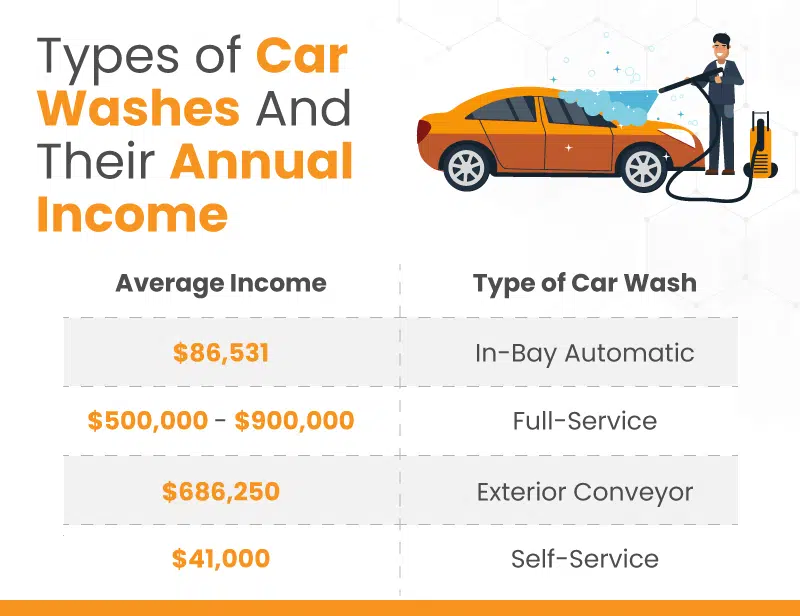
Image Source: koronapos.com
Deciphering Car Wash Revenue Streams
The primary source of income for a self-serve car wash comes from customers paying to use the bays and the equipment within them. However, successful operators diversify their income.
Pay-Per-Use Services
This is the bread and butter of any self-serve car wash. Customers pay for time or for specific functions like:
- High-pressure wash: For removing stubborn dirt and grime.
- Foam brush: To gently scrub away dirt.
- Wax application: For protecting the vehicle’s paint.
- Spot-free rinse: Using purified water to prevent water spots.
- Tire shine: For a polished look.
Self-serve car wash pricing is crucial here. Operators must balance competitive pricing with the need to cover costs and generate profit. Pricing can be structured in various ways:
- Per minute pricing: Common for bay usage, allowing customers to pay for the time they use.
- Package deals: Offering a set of services for a fixed price.
- Tokens or cards: Customers pre-load credit, which can encourage repeat business and offer discounts.
Ancillary Revenue Streams
To boost car wash revenue, operators can add other revenue-generating services:
- Vending Machines: Selling car cleaning supplies like microfiber towels, tire dressing, air fresheners, and snacks.
- Detailing Supplies: Offering a small selection of higher-end cleaning products for sale.
- Vacuum Stations: These are often a highly profitable add-on. Customers pay to use powerful vacuums to clean the interior of their cars. Many operators charge per minute or a flat fee for a set amount of time.
- Pet Wash Stations: A niche but growing market. Dedicated pet wash stations with specialized shampoos and drying features can attract a loyal customer base.
- Car Fragrances: Small vending machines dispensing car air fresheners.
- Mat Cleaning Machines: Specialized equipment for cleaning car mats.
Fathoming Car Wash Startup Costs
The initial car wash startup costs are a significant consideration for anyone looking to enter this industry. These costs can vary widely based on the size of the facility, the quality of the car wash equipment costs, land acquisition, and local construction expenses.
Key Startup Cost Components
- Land Acquisition or Lease: The cost of purchasing or leasing suitable land in a high-traffic area is often the largest upfront expense.
- Site Preparation and Construction: This includes grading, paving, drainage systems, and building the actual wash bays and equipment room.
- Car Wash Equipment Costs: This is a major investment. High-quality self-serve equipment, including pumps, wands, hoses, foaming brushes, water reclamation systems, and payment systems, can be expensive.
- High-pressure pumps: Essential for effective cleaning.
- Water heaters: For better cleaning performance, especially in colder climates.
- Foam applicators and brushes: For applying soap and scrubbing.
- Wax and tire shine applicators: Additional revenue-generating features.
- Water reclamation systems: Increasingly important for environmental compliance and cost savings.
- Vacuum units: Powerful industrial vacuums.
- Payment systems: Credit card readers, token or coin acceptors.
- Control systems and timers: To manage bay usage.
- Plumbing and Electrical Work: Connecting to water, sewer, and power lines, and installing the necessary electrical systems for the equipment.
- Permits and Licenses: Local government permits and business licenses.
- Initial Inventory: Cleaning chemicals, soaps, waxes, and vending machine stock.
- Marketing and Signage: Creating brand awareness and attracting initial customers.
Gauging Car Wash Operational Costs
Once established, a self-serve car wash has ongoing car wash operational costs that need to be managed effectively to ensure profitability.
Recurring Expenses
- Water and Sewer: This is a significant ongoing cost, especially in areas with high water rates.
- Utilities: Electricity for pumps, lighting, heaters, and payment systems. Natural gas may be needed for water heaters.
- Chemicals and Supplies: Soaps, waxes, tire shine, cleaning solutions, and supplies for vending machines.
- Maintenance and Repairs: Regular maintenance of car wash equipment costs is vital to prevent breakdowns and ensure customer satisfaction. This includes replacing worn-out parts, servicing pumps, and cleaning filters.
- Labor: While self-serve, some basic staffing might be needed for maintenance, cleaning, or customer assistance, especially for larger operations. Some owners manage this themselves.
- Insurance: General liability, property insurance, and potentially workers’ compensation.
- Property Taxes: If the land is owned.
- Marketing and Advertising: Ongoing efforts to attract and retain customers.
- Payment Processing Fees: For credit card transactions.
Analyzing Self-Serve Car Wash Income and Profitability
The self-service car wash income is directly tied to customer volume and the average amount each customer spends. Several factors influence this:
Factors Affecting Income
- Location, Location, Location: High-traffic areas with good visibility are paramount. Proximity to residential areas, retail centers, and major roads significantly impacts customer flow.
- Competition: The number of other car washes, both self-serve and automatic, in the vicinity plays a role.
- Pricing Strategy: Competitive yet profitable self-serve car wash pricing is key. Understanding what the local market will bear and what your competitors charge is essential.
- Service Offerings: The variety and quality of services offered can attract more customers and encourage higher spending.
- Seasonality and Weather: Car washes tend to be busier in warmer months and during dry periods. Winter can be challenging in colder climates, though some operators use heated bays or offer winter-specific services.
- Facility Upkeep: A clean, well-maintained, and modern-looking facility will attract more customers than a dilapidated one.
- Marketing and Promotions: Effective marketing campaigns and loyalty programs can drive customer traffic and repeat business.
Estimating Income
Let’s look at some hypothetical scenarios to estimate potential car wash revenue.
Scenario 1: Small, Basic Self-Serve Car Wash
- Bays: 4 bays
- Average Customer Spend: $8 per wash
- Average Daily Customers per Bay: 25 cars
-
Operating Days per Year: 300 days (allowing for some downtime/weather impact)
-
Daily Revenue: 4 bays * 25 customers/bay * $8/customer = $800
- Annual Revenue: $800/day * 300 days = $240,000
Scenario 2: Larger, Well-Equipped Self-Serve Car Wash with Vacuums
- Bays: 6 bays
- Average Bay Spend: $10 per wash
- Average Daily Bay Customers per Bay: 35 cars
- Vacuum Stations: 8 units
- Average Vacuum Revenue per Day: $20 per unit (e.g., 4 customers at $5 each per day)
-
Operating Days per Year: 350 days
-
Annual Bay Revenue: 6 bays * 35 customers/bay * $10/customer * 350 days = $735,000
- Annual Vacuum Revenue: 8 units * $20/unit/day * 350 days = $56,000
- Total Annual Revenue: $735,000 + $56,000 = $791,000
These are estimations, and actual figures can be higher or lower. Car wash profitability is achieved when revenue significantly exceeds car wash operational costs.
Calculating Car Wash ROI (Return on Investment)
The car wash ROI is a critical metric for investors and business owners. It tells you how much profit you’re making relative to the initial car wash investment.
The ROI Formula
A simple way to calculate ROI is:
ROI = (Net Profit / Total Investment) * 100%
Where:
- Net Profit: Total Revenue – Total Operational Costs.
- Total Investment: All car wash startup costs, including land, construction, and equipment.
Example Calculation
Let’s assume a total car wash investment of $500,000 for a small self-serve car wash.
- Annual Revenue: $240,000 (from Scenario 1)
-
Annual Operational Costs: Let’s estimate these at 40% of revenue for simplicity.
- Water/Sewer: $20,000
- Utilities: $15,000
- Chemicals: $10,000
- Maintenance: $8,000
- Insurance/Taxes: $7,000
- Miscellaneous: $5,000
- Total Operational Costs: $65,000 (This is a simplified estimation; actual costs can be higher)
-
Net Profit: $240,000 (Revenue) – $65,000 (Costs) = $175,000
-
ROI: ($175,000 / $500,000) * 100% = 35%
This 35% ROI is a strong return, but it’s crucial to have realistic cost projections and revenue forecasts. The actual car wash profitability will depend heavily on careful planning and management.
Operational Efficiency and Cost Management
Maximizing car wash profitability involves more than just attracting customers; it requires smart operational management and cost control.
Strategies for Efficiency
- Water Conservation: Implementing water reclamation systems can significantly reduce water bills and environmental impact. High-efficiency nozzles and regular checks for leaks are also important.
- Energy Management: Using LED lighting, ensuring equipment is properly maintained to run efficiently, and considering solar power can reduce utility costs.
- Chemical Optimization: Using concentrated chemicals and proper dilution ratios minimizes waste. Negotiating bulk purchase agreements with suppliers can also lower costs.
- Preventive Maintenance: A robust preventive maintenance schedule for all car wash equipment costs is far cheaper than emergency repairs and downtime. This ensures consistent operation and customer satisfaction.
- Technology Integration: Modern payment systems that accept credit cards and mobile payments can streamline transactions and reduce reliance on cash handling. Automated timers and bay management systems improve efficiency.
- Staffing (if applicable): If you employ staff, optimizing scheduling and ensuring they are well-trained can improve service quality and reduce labor costs. For many self-serve operations, the owner acts as the primary manager, reducing labor overhead.
The Self-Service Car Wash Business Model: A Closer Look
The car wash business model for self-serve operations is relatively straightforward, built on providing a service that customers can perform themselves at a lower cost than full-service options.
Key Strengths of the Model
- Lower Labor Costs: Compared to full-service or automatic car washes, self-serve models require minimal staffing, significantly reducing payroll expenses.
- Simpler Equipment: While still a substantial investment, the car wash equipment costs for self-serve bays are generally less complex and expensive than advanced automatic tunnel equipment.
- Customer Control: Customers have control over how they wash their cars, allowing them to focus on specific areas or use only the services they need.
- High Throughput Potential: In busy locations, self-serve bays can handle a high volume of customers, especially during peak hours.
Potential Challenges
- Weather Dependency: Performance can be significantly impacted by adverse weather conditions.
- Maintenance Intensity: While labor is low, the car wash equipment costs require diligent maintenance to prevent wear and tear, which can lead to breakdowns.
- Customer Education: Some customers may be unfamiliar with operating the equipment, requiring clear signage and instructions.
- Competition: The barrier to entry for a basic self-serve car wash can be lower, leading to more competition in certain markets.
Investing in a Self-Serve Car Wash: Key Considerations for ROI
When considering a car wash investment, evaluating the potential car wash ROI involves more than just crunching numbers. It requires a thorough understanding of the market and the operational realities.
Due Diligence Checklist
- Market Research: Thoroughly analyze the local market. Identify demand, competition, and demographic profiles of potential customers.
- Location Analysis: Assess traffic patterns, visibility, accessibility, and zoning regulations.
- Financial Projections: Develop realistic revenue forecasts based on realistic customer numbers and average transaction values. Create detailed budgets for car wash startup costs and ongoing car wash operational costs.
- Equipment Selection: Choose reputable suppliers for car wash equipment costs. Consider the durability, efficiency, and availability of spare parts.
- Financing Options: Explore various financing avenues, including business loans, SBA loans, and private investors.
- Exit Strategy: Consider potential exit strategies, such as selling the business or passing it on.
Frequently Asked Questions (FAQ)
Q1: What is the average profit margin for a self-serve car wash?
Profit margins can vary greatly, but many successful self-serve car washes aim for profit margins between 20% and 40% after all expenses are paid.
Q2: Can I run a self-serve car wash without employees?
Yes, many self-serve car washes are owner-operated, especially smaller ones. This significantly reduces labor costs, a major component of car wash operational costs. However, you may need to hire contractors for maintenance or cleaning if you cannot perform these tasks yourself.
Q3: How much does it cost to build a self-serve car wash?
Car wash startup costs can range from $100,000 to over $1 million. A significant portion of this is for land and car wash equipment costs. A basic 4-bay self-serve car wash might cost around $200,000 to $400,000 to build and equip.
Q4: What are the most common mistakes new self-serve car wash owners make?
Common mistakes include underestimating startup costs, choosing a poor location, not budgeting enough for ongoing maintenance and supplies, inadequate marketing, and not understanding local regulations.
Q5: How can I increase revenue at my self-serve car wash?
You can increase revenue by adding vacuum stations, vending machines, offering loyalty programs, improving the quality of chemicals used, enhancing the customer experience through better maintenance and signage, and running targeted promotions.
Q6: Is a self-serve car wash a good investment?
A self-serve car wash can be a very good investment, offering a strong car wash ROI when managed effectively. Its lower operational overhead compared to other business models, coupled with consistent demand for car cleaning services, makes it an attractive option. However, thorough research and a solid business plan are essential.
Q7: What are the typical car wash operational costs?
Key car wash operational costs include water and sewer, electricity, cleaning chemicals, maintenance and repairs, insurance, and property taxes. These will vary based on location, usage, and the efficiency of the equipment.
By carefully considering all these factors, aspiring entrepreneurs can gain a clear picture of how much a self-serve car wash can make and the steps needed to achieve success in this robust industry.