
So, how many knock sensors are in a car? Most cars today have one or two knock sensors. The exact number depends on the vehicle’s make, model, and engine configuration.
Cars use knock sensors to detect a problem called engine knock, also known as pinging or detonation. This is when the fuel-air mixture in your engine burns too quickly, creating a sharp, metallic sound. If left unchecked, engine knock can seriously damage your engine.
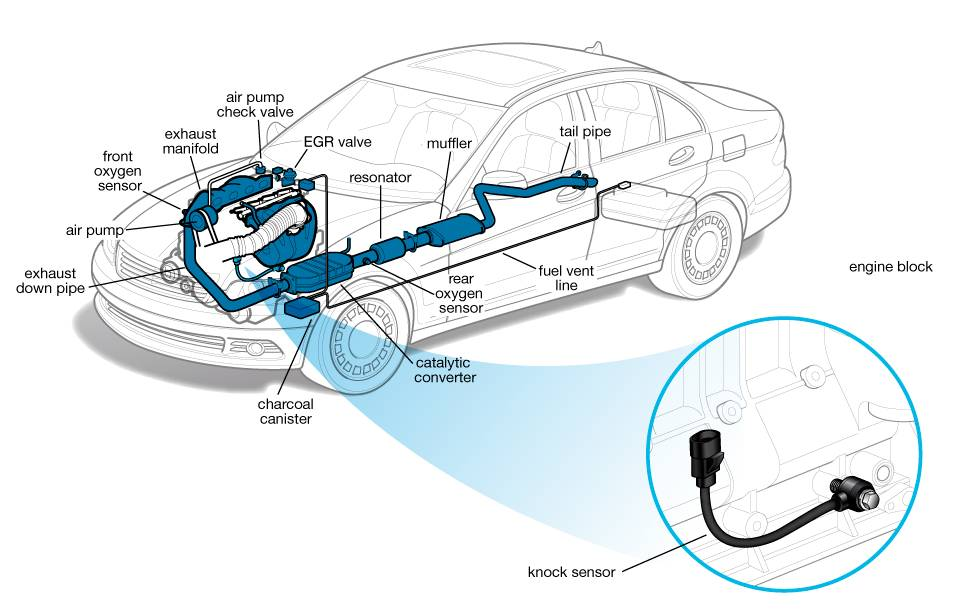
Image Source: images.cars.com
The Crucial Role of Knock Sensors
Knock sensors are small but mighty components in your car’s engine management system. Their primary knock sensor function is to listen for the tell-tale sounds of abnormal combustion, or engine knock. This unwelcome event happens when the fuel-air mixture ignites prematurely or unevenly, creating shockwaves that bounce around the combustion chamber. Think of it like a tiny, internal explosion happening at the wrong time.
How Knock Sensors Work: The Physics of Sound
How knock sensors work is quite ingenious. These sensors are essentially small microphones, typically piezoelectric devices. When the shockwave of engine knock hits the sensor, it vibrates. This vibration creates a small electrical voltage. The intensity and frequency of this voltage signal are directly related to the severity and nature of the knock.
The knock sensor is strategically mounted on the engine block, often near the cylinders. This placement allows it to effectively “hear” the vibrations produced by the combustion process. Different engine designs might place them in slightly different locations, but they are always positioned to pick up these specific vibrational frequencies. Finding the exact knock sensor location can vary, but it’s usually a good idea to consult your car’s service manual for precise details.
The ECM’s Listening Ear
This electrical signal generated by the knock sensor is then sent to the Engine Control Module (ECM), also known as the Engine Control Unit (ECU) or Powertrain Control Module (PCM). The ECM is the brain of your engine. It constantly monitors various sensors, including the knock sensor, to ensure the engine is running as efficiently and smoothly as possible.
The ECM knock sensor input is vital for the ECM’s ability to manage ignition timing. When the ECM receives a signal indicating knock, it interprets this as a sign that the current ignition timing is too aggressive for the conditions. In response, it will retard (delay) the ignition timing for that particular cylinder or across the engine. This delay reduces the pressure and temperature inside the combustion chamber, preventing further knock. Once the knock subsides, the ECM will gradually advance the ignition timing again to optimize power and fuel efficiency. This continuous feedback loop is what allows modern engines to adapt to different fuel qualities, altitudes, and driving conditions.
The Number of Knock Sensors: A Matter of Engine Design
The number of knock sensors in a car isn’t fixed; it’s directly tied to the engine’s cylinder count and layout.
Cars with Fewer Cylinders: The Simpler Setup
For many older vehicles or those with simpler engine designs, like inline-four or V6 engines, you might find just one knock sensor. This single sensor is typically mounted in a central location on the engine block, positioned to pick up vibrations from the majority of the cylinders.
Inline-Four Engines: A Single Listener
An inline-four engine has all four cylinders in a straight line. Due to the relatively even distribution of combustion forces, a single knock sensor mounted strategically can effectively monitor the combustion events in all cylinders. The ECM can then analyze the signal and, if necessary, adjust timing for the entire engine.
V6 Engines: Two Heads Are Often Better Than One
When you move to a V6 engine, which has cylinders arranged in two banks of three, the situation often changes. Many V6 engines will have two knock sensors, one for each bank of cylinders. This dual sensor setup allows for more precise engine knock detection. The ECM can receive specific data from each bank and make more targeted adjustments to ignition timing, leading to better performance and protection for the engine. Having V6 knock sensors in this configuration helps the ECM differentiate between knock occurring in one bank versus the other.
V8 Engines and Beyond: More Sensors for More Power
As engine complexity and cylinder count increase, so does the likelihood of multiple knock sensors.
V8 Engines: Precision in Every Cylinder
With a V8 engine, featuring two banks of four cylinders, it’s very common to find two knock sensors, one for each cylinder bank. This is similar to the V6 setup, providing the ECM with distinct information from each side of the V. In some higher-performance V8 engines, you might even find individual knock sensors for each cylinder or pairs of cylinders, though this is less common. This granular approach to engine knock detection allows for extremely fine-tuned ignition control. These V8 knock sensors are critical for managing the power output and preventing knock in these larger displacement engines.
Inline-Six and Other Configurations
Inline-six engines, with their inherent balance, might sometimes get away with a single knock sensor, but many modern ones employ two for better accuracy, especially in performance applications. Boxer engines (like those found in Subaru vehicles) also typically have a knock sensor for each bank of cylinders.
The Trend Towards More Sensors
As engine technology has advanced, the trend has been towards using more knock sensors, even on engines with fewer cylinders. This is because modern engines operate closer to their limits for efficiency and power. More precise knock detection allows the ECM to maintain optimal ignition timing more consistently, even under varying conditions, thereby improving fuel economy and reducing emissions.
Recognizing the Signs: Knock Sensor Symptoms
While knock sensors are designed to operate reliably for the life of the vehicle, they can fail. When a knock sensor goes bad, it can lead to a range of knock sensor symptoms.
The Check Engine Light: A Universal Warning
The most common indicator of a faulty knock sensor is the illumination of the Check Engine Light (CEL) on your dashboard. The ECM detects that the knock sensor is not providing expected signals, or that it’s sending abnormal signals, and flags it as a fault. The specific diagnostic trouble code (DTC) will often point directly to the knock sensor circuit or the sensor itself.
Performance Issues: The Engine Feels Sluggish
When a knock sensor fails, the ECM often defaults to a “limp mode” or a generally conservative ignition timing strategy to prevent engine damage. This typically results in a noticeable loss of engine power and acceleration. Your car might feel sluggish, unresponsive, or hesitant when you press the accelerator.
Poor Fuel Economy: Burning More Fuel for Less Power
Because the ECM cannot accurately detect or respond to engine knock, it will likely keep the ignition timing retarded. This conservative timing, while safe, is not optimal for fuel efficiency. As a result, you may notice a significant decrease in your car’s miles per gallon (MPG).
Rough Idling and Engine Hesitation
A failing knock sensor can also manifest as a rough idle. The engine might shake or vibrate more than usual when stopped. You might also experience hesitation or stumbling during acceleration, especially at lower RPMs.
The Sound of Trouble: Unexplained Pinging
Ironically, if a knock sensor fails to detect actual engine knock, you might start to hear the engine pinging or knocking, which the ECM is no longer able to correct. This is a serious sign that the sensor is not doing its job, and you should address it promptly to avoid internal engine damage.
Replacing a Knock Sensor: A DIY or Professional Job?
If you suspect a faulty knock sensor, the next step is usually to replace knock sensor. This can be a straightforward repair for the mechanically inclined, but it can also be challenging depending on the sensor’s knock sensor location.
Locating the Faulty Sensor
The first step in replacing a knock sensor is accurately identifying which sensor has failed. This often involves using an OBD-II scanner to read the DTCs. The codes will usually specify which knock sensor circuit is experiencing an issue.
Accessing the Sensor
The difficulty of accessing the knock sensor varies greatly. In some engines, they are easily accessible on the side of the engine block. In others, they might be buried beneath intake manifolds, exhaust components, or other engine parts, requiring extensive disassembly. For engines with multiple knock sensors, like many V8 knock sensors or V6 knock sensors, locating and accessing each one can be time-consuming.
The Replacement Process
Once the sensor is located, it’s typically held in place by a bolt. The electrical connector is unplugged, the bolt is removed, and the old sensor is pulled out. The new sensor is then installed in its place, the bolt tightened, and the connector reattached. It’s often recommended to apply a small amount of anti-seize compound to the threads of the new sensor to prevent it from seizing in the engine block over time.
When to Call a Professional
If you’re not comfortable working on your car’s engine, or if the knock sensor location is particularly difficult to access, it’s best to leave the replacement to a qualified mechanic. They have the tools, experience, and diagnostic equipment to ensure the job is done correctly and efficiently.
Common Knock Sensor Types
While the function remains the same, knock sensors can vary slightly in their construction and how they are designed to be mounted.
Piezoelectric Sensors
These are the most common type. They utilize the piezoelectric effect, where certain materials generate an electrical charge when subjected to mechanical stress or vibration. This is how they convert the engine’s vibrations into an electrical signal for the ECM.
Resonance-Based Sensors
Some sensors are tuned to resonate at specific frequencies associated with engine knock. This helps the ECM filter out other engine noises and vibrations that are not indicative of detonation.
Integrated vs. Separate Components
In some modern vehicles, the knock sensing function might be integrated into other engine components or even managed by advanced engine control software that analyzes data from multiple sensors, rather than relying solely on dedicated knock sensors. However, dedicated knock sensors remain the standard for most vehicles.
Troubleshooting and Diagnosis
Diagnosing knock sensor issues requires a systematic approach.
Reading Diagnostic Trouble Codes (DTCs)
As mentioned, the Check Engine Light is often the first sign. An OBD-II scanner will provide codes like:
* P0325: Knock Sensor 1 Circuit Malfunction (Bank 1 or Single Sensor)
* P0326: Knock Sensor 1 Performance (Bank 1 or Single Sensor)
* P0327: Knock Sensor 1 Low Input (Bank 1 or Single Sensor)
* P0328: Knock Sensor 1 High Input (Bank 1 or Single Sensor)
* Similar codes exist for Knock Sensor 2 (e.g., P0329, P0330, P0331, P0332) for engines with multiple sensors.
Checking Sensor Connections
Before replacing a sensor, it’s crucial to check the wiring and connector for any signs of damage, corrosion, or loose connections. A faulty connection can mimic a faulty sensor.
Testing the Sensor
A mechanic can test the knock sensor itself using a multimeter or an oscilloscope.
* Resistance Test: Checking the sensor’s internal resistance can sometimes reveal a fault.
* Tap Test: While the engine is running (or the ignition is on and the ECM is active), a mechanic can gently tap on the sensor with a tool. This should cause the ECM to momentarily retard timing, which can be observed with a scan tool. A lack of response or an incorrect response indicates a faulty sensor.
Considering Other Causes
It’s important to remember that the ECM might register a knock sensor code for reasons other than a faulty sensor. Other issues that can cause the ECM to falsely detect knock include:
* Carbon buildup in the combustion chambers: This can increase compression and lead to pre-ignition.
* Incorrect octane fuel: Using fuel with too low an octane rating can cause knocking.
* Overheating: High engine temperatures can promote abnormal combustion.
* Issues with other sensors: Faulty MAF (Mass Airflow) sensors, O2 (Oxygen) sensors, or coolant temperature sensors can lead to incorrect fuel-air mixtures or ignition timing, which might be interpreted as knock.
* Mechanical engine problems: Worn engine bearings or other internal issues can create vibrations that might be mistaken for knock.
The Evolution of Engine Knock Detection
The concept of detecting and preventing engine knock has evolved significantly over the decades.
Early Detection Methods
In the past, drivers were often responsible for listening for engine knock and adjusting their driving habits or fuel choices accordingly. Cars did not have sophisticated systems to manage this.
The Introduction of Knock Control
The development of electronic fuel injection and engine management systems in the late 1970s and 1980s paved the way for the integration of knock control systems. Early systems were often simpler, using a single sensor and a more basic control strategy.
Modern, Adaptive Systems
Today’s systems, particularly those in high-performance or complex engines (like many V8 knock sensors or modern V6 knock sensors), are incredibly sophisticated. They can often:
* Distinguish between different types of vibrations.
* Adapt ignition timing with remarkable precision.
* Even learn and compensate for changes in engine wear or component degradation over time.
* Provide the ECM with precise ECM knock sensor input for optimal engine operation under all conditions.
Impact of Knock Sensors on Engine Longevity
The presence and proper functioning of knock sensors have a direct positive impact on engine longevity. By preventing the destructive forces of engine knock, these sensors protect vital engine components such as pistons, connecting rods, and cylinder heads from excessive stress and damage. This means that maintaining a healthy knock detection system is crucial for ensuring your engine lasts as long as possible.
Frequently Asked Questions (FAQ)
Can I drive my car if the knock sensor is bad?
Yes, you can usually drive your car with a bad knock sensor, but it’s not recommended for extended periods. The ECM will likely default to a safe but less efficient timing setting, leading to reduced power and poor fuel economy. More importantly, if the sensor is not detecting actual knock, your engine could be severely damaged by detonation. It’s best to get it repaired as soon as possible.
Will a bad knock sensor cause my car to stall?
While a faulty knock sensor typically doesn’t cause stalling directly, the engine’s response to a faulty sensor (like defaulting to a very conservative timing) can sometimes lead to poor running conditions that might result in stalling, especially under load or at idle.
How do I know if my knock sensor needs replacement?
The most common signs are the illumination of the Check Engine Light, a noticeable loss of engine power, decreased fuel efficiency, and sometimes rough idling or hesitation. If you hear actual engine pinging and the Check Engine Light is on, it’s a strong indication of a knock sensor issue or the ECM’s inability to compensate.
Are knock sensors expensive to replace?
The cost of a knock sensor itself is generally moderate, ranging from $30 to $100 for the part, depending on the vehicle. However, the labor cost can vary significantly based on how difficult it is to access the sensor. If it’s in a hard-to-reach location requiring extensive disassembly, labor can add several hundred dollars to the repair bill.
Does the number of knock sensors affect engine performance?
Yes, more knock sensors, especially in V-configured engines like V6 knock sensors or V8 knock sensors, generally allow for more precise engine knock detection and therefore more accurate adjustment of ignition timing. This can lead to better overall performance, smoother operation, and improved fuel efficiency, as the engine can operate closer to its optimal timing without the risk of detonation.
In summary, knock sensors are unsung heroes of modern automotive engineering, working diligently to protect your engine from the damaging effects of detonation. Their number varies, but their mission remains the same: to ensure your engine runs smoothly, efficiently, and reliably.