
A strange sound when you turn your steering wheel can be unsettling. It’s a sign something isn’t quite right, and ignoring it can lead to bigger, more expensive problems down the road. The most common reasons for noises when turning include issues with the power steering system, worn-out suspension parts, or problems with the CV joints.
Cars are complex machines, and many parts work together to allow you to steer smoothly. When one of these parts starts to make noise as you turn, it’s your car’s way of telling you it needs attention. These noises can range from a simple squeak to a concerning grind. Let’s explore the common culprits and what you can do about them.
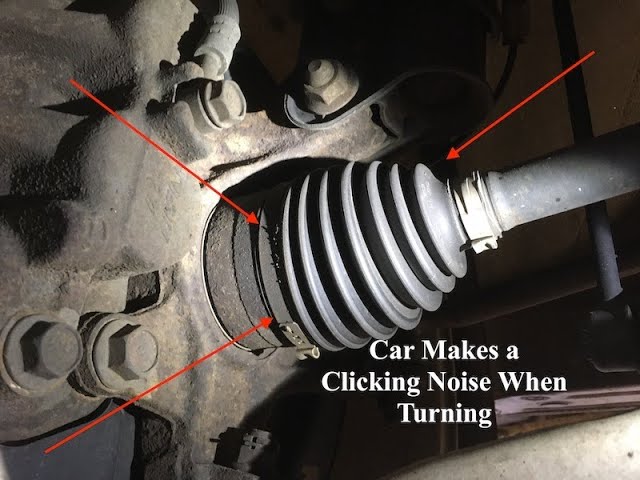
Image Source: i.ytimg.com
Deciphering the Different Sounds
The type of noise your car makes can offer clues about the problem. Pay close attention to the specific sound. Is it a grinding, a clicking, a squealing, a humming, a popping, or a clunking? Each sound often points to a different component.
Clicking Noise When Turning
A clicking noise when turning, especially when turning at low speeds or making a sharp turn, is frequently linked to worn-out Constant Velocity (CV) joints. These joints are part of your car’s drivetrain and allow the wheels to turn while still receiving power from the engine.
-
CV Joint Basics: CV joints are typically located on the axles that connect your transmission to the wheels. They are protected by a rubber boot filled with grease. If this boot tears, dirt and moisture can get in, and the grease can leak out, leading to wear and tear on the joint.
-
Symptoms:
- Clicking or popping sound, usually more noticeable during turns.
- The sound may get louder or faster with increased speed.
- In severe cases, a damaged CV joint can break, causing your car to lose power to the wheels.
Grinding Noise When Turning
A grinding noise when turning can be more alarming. This sound often indicates friction between metal parts that shouldn’t be rubbing together.
- Possible Causes:
- Worn Wheel Bearings: Wheel bearings allow your wheels to spin freely. When they wear out, they can create a grinding or rumbling sound, which often gets worse as you turn.
- Brake Issues: Sometimes, a brake caliper might be sticking or a brake pad might be worn down to the metal, causing a grinding sound during turns.
- Steering Components: Problems with the steering rack or other steering linkage components could also produce a grinding sound if parts are worn or misaligned.
Squealing Noise When Turning
A squealing noise when turning is commonly associated with the power steering system or other belt-driven components.
-
Low Power Steering Fluid: The most frequent cause of a squealing sound when turning is low power steering fluid. When the fluid level is low, the power steering pump can suck in air, causing a high-pitched squeal.
- Checking Fluid: Locate the power steering fluid reservoir (check your owner’s manual for its location). Ensure the fluid level is between the “min” and “max” lines when the engine is off and the steering wheel is in the straight-ahead position.
- Fluid Leaks: If the fluid is low, it often means there’s a leak somewhere in the system. This could be in the power steering pump, hoses, or steering rack.
-
Worn Serpentine Belt: The serpentine belt drives various components, including the power steering pump. If the belt is old, cracked, or not properly tensioned, it can slip on the pulleys, creating a squealing sound, especially when you put a load on the power steering by turning the wheel.
Humming Noise When Turning
A humming noise when turning can be a bit more subtle but still indicates a problem.
- Power Steering Pump Issues: A failing power steering pump can sometimes produce a humming sound, especially as you turn the wheel. This might be due to internal wear or a lack of lubrication.
- Wheel Bearing Problems: As mentioned earlier, worn wheel bearings can also cause a humming or groaning sound that changes with speed and turning.
Clunking Noise When Turning
A clunking noise when turning often points to issues within the suspension or steering system.
-
Loose Suspension Components:
- Ball Joints: These are critical pivot points in your suspension. If they become worn or loose, they can cause a clunking sound, particularly over bumps or when turning.
- Tie Rod Ends: These connect your steering rack to your steering knuckles. Worn tie rod ends can lead to a clunking or knocking sound.
- Sway Bar Links/Bushings: The sway bar (or stabilizer bar) helps reduce body roll during turns. Worn links or bushings can create a clunking noise.
-
Strut Mounts: The strut mount is the upper bearing that the strut pivots on when you turn. If it’s worn or damaged, it can make a clunking or popping noise.
Popping Noise When Turning
Similar to clicking, a popping noise when turning can also be attributed to worn CV joints. However, it could also indicate:
- Worn Ball Joints or Tie Rod Ends: As mentioned above, these components can produce popping or clunking sounds when they have excessive play.
- Strut Mounts: A worn strut mount can also result in a popping sensation or sound when the steering is turned.
Tire Noise When Turning
While not a mechanical noise, you might also notice specific tire noise when turning.
- Tire Scrubbing: If your tires are incorrect sizes for your vehicle, or if your alignment is significantly off, you might hear a scrubbing or squealing sound from the tires themselves as they fight against the intended turning motion.
- Aggressive Tire Tread: Some performance tires with aggressive tread patterns can produce more road noise, which might be more pronounced during turns.
Exploring Specific Causes in Detail
Let’s delve deeper into the common culprits for noises when turning.
CV Joint Issues
The Constant Velocity (CV) joint is a flexible joint that allows a driveshaft to transmit power to wheels that are turning or moving up and down. They are essential for the smooth operation of front-wheel-drive and all-wheel-drive vehicles.
- The Role of the CV Boot: The CV joint is covered by a protective rubber boot filled with grease. This boot keeps the grease in and contaminants like dirt and water out. When the boot tears, the grease escapes, and dirt enters, rapidly wearing down the joint.
- Identifying a Failing CV Joint: The classic symptom is a rhythmic clicking noise when turning, particularly noticeable when making a sharp turn at lower speeds. This sound is often louder on the side of the car where the worn CV joint is located. If left unaddressed, the joint can eventually seize or break, leaving you stranded.
Power Steering System Problems
The power steering system assists you in turning the steering wheel, making it easier to maneuver your vehicle. Problems here can manifest as various noises.
-
Low Power Steering Fluid: This is a very common cause of squealing noise when turning. The power steering pump needs fluid to operate correctly. If the fluid level drops, the pump can cavitate (trap air), leading to that characteristic squeal.
- Fix: Check your power steering fluid level and top it off if necessary. If the level is consistently low, you need to find and repair the leak. This might involve replacing a hose, seal, or the steering rack itself.
-
Worn Power Steering Pump: The pump itself can wear out over time. A failing pump might make a humming noise when turning or a groaning sound.
- Fix: Replacing a worn power steering pump is typically required. This is a moderately complex repair that involves draining the old fluid, removing the old pump, installing the new one, refilling with the correct fluid, and bleeding the system to remove air.
-
Issues with the Steering Rack/Gear: The steering rack is the mechanism that converts the rotational motion of the steering wheel into the linear motion that turns your wheels. If the internal seals or gears in the steering rack are worn, you might hear noises.
- Fix: A damaged steering rack often needs to be replaced. This is a significant repair, as it involves disconnecting the steering column, tie rods, and fluid lines, and then aligning the wheels afterward.
Suspension System Faults
The suspension system is responsible for absorbing shocks from the road and keeping your tires in contact with the pavement. It’s a complex network of springs, shock absorbers, control arms, ball joints, and bushings.
-
Worn Ball Joints: Ball joints are spherical bearings that allow suspension components to pivot. When they wear out, they develop play, leading to clunking noise when turning or a popping noise when turning.
- Fix: Worn ball joints must be replaced. This is a safety-critical component, and driving with a failing ball joint can lead to a loss of steering control.
-
Loose or Worn Tie Rod Ends: Tie rod ends are part of the steering linkage. If they are loose or worn, they can cause a clunking noise when turning, and also affect steering alignment and responsiveness.
- Fix: Tie rod ends need to be replaced. After replacement, a wheel alignment is essential.
-
Worn Sway Bar Links and Bushings: These components connect the sway bar to the suspension. When they wear out, they can cause a clunking noise when turning, especially on uneven surfaces or during turns.
- Fix: Replace the worn sway bar links and/or bushings.
-
Strut Mounts: The strut mount at the top of the shock absorber assembly contains a bearing that allows the strut to rotate with the steering. If this bearing wears out or the mount cracks, you’ll often hear suspension noise when turning, which can be a clunk, pop, or creak.
- Fix: Replace the strut mount. It’s often recommended to replace them in pairs on the same axle, and it’s a good time to consider replacing the struts themselves if they are also worn.
-
Control Arm Bushings: Control arms connect the vehicle’s chassis to its wheel hubs. They have rubber bushings that absorb vibrations and allow for controlled movement. Worn or cracked bushings can lead to suspension noise when turning, often a creaking or clunking.
- Fix: Replace the worn control arm bushings. This can sometimes involve replacing the entire control arm.
Wheel Bearing Problems
Wheel bearings are crucial components that allow your wheels to spin smoothly with minimal friction.
- Symptoms of Worn Wheel Bearings: A failing wheel bearing often produces a humming noise when turning or a grinding noise when turning. This noise typically changes with speed and may get louder when you turn in a specific direction. For example, a worn right-front wheel bearing might hum louder when you turn left.
- Fix: Wheel bearings need to be replaced. Depending on the vehicle, the bearing may be pressed into the hub assembly or the entire hub assembly may need to be replaced.
Brake System Components
While less common for noises only when turning, sometimes brake issues can be more noticeable during maneuvers.
-
Sticking Brake Caliper: If a brake caliper doesn’t fully release, the brake pad can rub against the rotor, creating a grinding noise when turning, particularly at lower speeds.
- Fix: A sticking caliper usually needs to be rebuilt or replaced. The brake pads and rotor might also need replacement if they’ve been damaged by the constant friction.
-
Debris in Brake System: Occasionally, a small stone or piece of debris can get lodged between the brake rotor and the dust shield, creating a scraping or grinding sound when turning.
- Fix: The debris needs to be carefully removed.
Diagnosing the Noise: A Step-by-Step Approach
When you hear a noise when turning, the first step is to try and gather as much information as possible.
Step 1: Note the Details
- When does the noise occur? Only when turning? Turning left, right, or both? At low speeds, high speeds, or all speeds?
- What does the noise sound like? Clicking, grinding, squealing, humming, clunking, popping?
- Where does the noise seem to be coming from? Front, rear, left side, right side?
- Does the noise change with speed?
Step 2: Visual Inspection
If you’re comfortable and have a safe space, a quick visual inspection can be helpful:
- Check Tire Condition: Look for any obvious damage, uneven wear, or foreign objects stuck in the tires.
- Inspect CV Boots: Look for torn or damaged rubber CV boots on the front axles. If you see grease splattered around the axle area, the boot is likely torn.
- Check Fluid Levels: Check your power steering fluid level.
Step 3: Professional Diagnosis
For most people, the best course of action is to take their vehicle to a trusted mechanic. They have the tools and expertise to accurately diagnose the problem.
- What to tell your mechanic: Provide them with all the details you gathered in Step 1. The more information you give them, the faster and more accurately they can diagnose the issue.
Fixing the Noise: Common Solutions
The fix depends entirely on the cause of the noise.
Replacing CV Joints
If a CV joint is confirmed to be faulty, the axle assembly containing the joint will need to be replaced.
- Process: This involves lifting the vehicle, removing the wheel, disconnecting various suspension and brake components to access the axle, unbolting the old axle, installing the new one, and then reassembling everything. A wheel alignment is usually recommended after this repair.
Addressing Power Steering Issues
- Low Fluid: Top up the fluid. If it’s low, the mechanic will pressure test the system to find and repair the leak.
- Worn Pump: The power steering pump will be replaced.
- Steering Rack: If the steering rack is the culprit, it will need to be replaced.
Repairing Suspension Components
- Ball Joints, Tie Rod Ends, Sway Bar Links: These worn components will be replaced individually.
- Strut Mounts: Replace the strut mounts, often in pairs.
- Control Arm Bushings: Replace worn bushings or the entire control arm.
Replacing Wheel Bearings
- Process: This can vary by vehicle. The wheel bearing assembly might be pressed out and a new one pressed in, or the entire hub assembly may be replaced.
Table: Common Noises and Their Likely Causes
| Noise Type | Likely Cause(s) | Potential Fix |
|---|---|---|
| Clicking/Popping | Worn CV joints, worn ball joints, worn tie rod ends | Replace CV axle, ball joints, or tie rod ends |
| Grinding | Worn wheel bearings, sticking brake caliper | Replace wheel bearing/hub assembly, service brakes |
| Squealing | Low power steering fluid, worn serpentine belt | Top up/fix leak in power steering fluid, replace belt |
| Humming | Worn wheel bearings, failing power steering pump | Replace wheel bearing/hub assembly, replace pump |
| Clunking | Loose/worn ball joints, tie rod ends, sway bar links, strut mounts | Replace worn suspension components |
| Tire Noise (Scrubbing) | Misalignment, incorrect tire size | Wheel alignment, check tire sizes |
Why Ignoring the Noise Is a Bad Idea
The noises you hear when turning are not just annoying; they are indicators of potential safety issues and can lead to much more extensive and costly repairs if left unchecked.
- Safety Risk: A failing CV joint can break, causing a loss of power to the wheel. Worn suspension or steering components can affect your car’s handling and stability, increasing the risk of an accident.
- Progressive Damage: A small issue, like a torn CV boot, will inevitably lead to more significant damage to the joint if not addressed. Similarly, a worn wheel bearing can damage the steering knuckle it’s pressed into.
- Cost Escalation: What might start as a relatively inexpensive repair (e.g., topping up power steering fluid) can quickly become a major expense if the underlying problem is ignored (e.g., replacing a damaged power steering pump or steering rack).
Maintaining Your Car to Prevent Future Noises
Regular maintenance is key to preventing these types of noises and ensuring your car’s longevity and safety.
- Regular Inspections: Have your mechanic inspect your suspension, steering, and drivetrain components during routine oil changes or other scheduled maintenance.
- Check Fluid Levels: Regularly check your power steering fluid level.
- Address Tire Issues Promptly: Ensure your tires are properly inflated and your wheel alignment is checked periodically.
- Listen to Your Car: Don’t ignore unusual sounds. The sooner you address a problem, the easier and cheaper it is usually to fix.
Frequently Asked Questions (FAQ)
Q1: Can I drive my car if it’s making a noise when I turn?
A1: It depends on the noise. A light squeal from low power steering fluid might be manageable for a short time, but a loud clicking, grinding, or clunking noise often indicates a more serious safety concern, and it’s best to avoid driving the car and get it checked immediately.
Q2: How much does it cost to fix a noise when turning?
A2: The cost varies greatly depending on the cause. Simple fixes like topping up power steering fluid can be very inexpensive. Replacing a CV joint might cost a few hundred dollars. Replacing a steering rack or multiple suspension components can run into the hundreds or even thousands of dollars. Always get an estimate from your mechanic.
Q3: Is a squealing noise when turning always the power steering fluid?
A3: While low power steering fluid is the most common cause of squealing, a worn serpentine belt slipping on the power steering pump pulley can also cause a similar sound. It’s important to have a mechanic diagnose the exact cause.
Q4: Can a clicking noise when turning be dangerous?
A4: Yes, a clicking noise when turning, especially if it’s consistent and loud, is often a sign of a worn CV joint. If a CV joint fails completely, your car can lose power to that wheel, making it difficult or impossible to drive. It’s a safety concern that needs prompt attention.
Q5: My car makes a noise when turning right but not left. What does that mean?
A5: This often helps pinpoint the location of the problem. If the noise only occurs when turning right, the issue is likely with a component on the left side of the car (e.g., a left CV joint, left wheel bearing, or left suspension component). The stress on these parts changes during turns.
By paying attention to the sounds your car makes and seeking professional help when needed, you can keep your vehicle running smoothly and safely.