
Have you ever heard a movie or a song and felt the sound deep in your chest? That powerful rumble often comes from a subwoofer, a special speaker that handles the lowest sounds. For music makers, that low-end punch is super important. It helps you hear the full story in your music.
But picking the right studio subwoofer can feel like a maze. So many brands and models! You might worry about spending too much money on something that doesn’t actually make your mixes sound better. Or maybe you’re scared of buying a subwoofer that’s too big or too small for your room, making your music sound weird.
This post is here to help you conquer those worries. We’ll break down what makes a great studio subwoofer. You’ll learn how to choose one that fits your space and your budget. By the end, you’ll feel confident about finding a subwoofer that makes your music truly come alive.
Our Top 5 Studio Subwoofers Recommendations at a Glance
Top 5 Studio Subwoofers Detailed Reviews
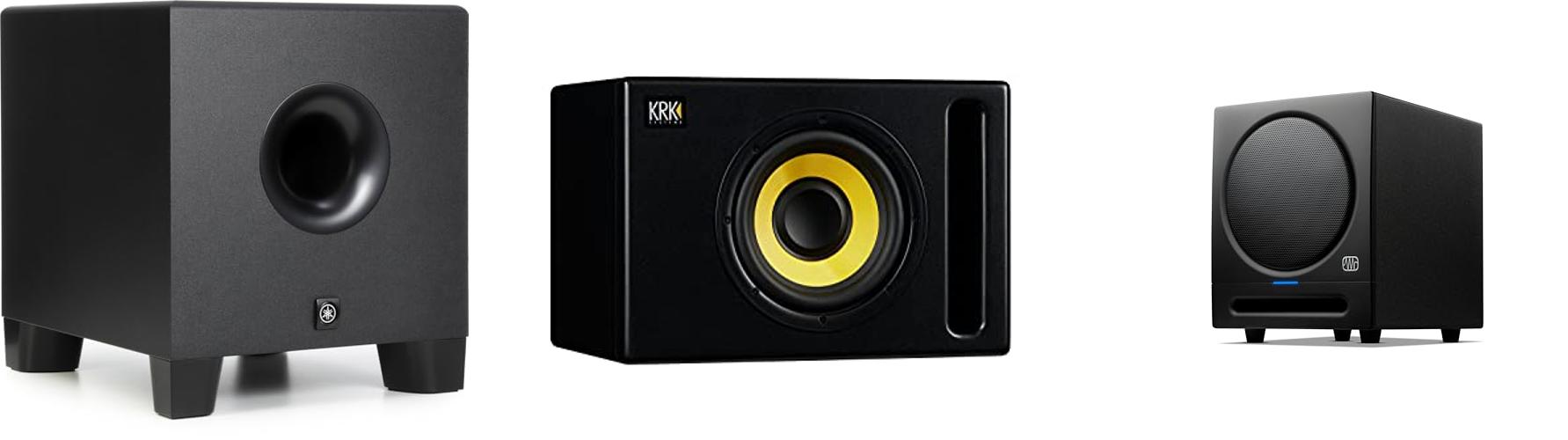
1. Yamaha HS8 Studio Subwoofer

Rating: 9.0/10
The Yamaha HS8 Studio Subwoofer in Black is a powerful addition to any home studio. This subwoofer helps you hear the deep, rumbling bass in your music. It makes your mixes sound more complete. You can feel the low notes with this speaker.
What We Like:
- It has an 8-inch speaker that delivers strong bass.
- The frequency response goes down to 22Hz, so you hear very low sounds.
- A 150W amplifier provides plenty of power.
- The LOW CUT switch and control let you adjust the bass.
- The HIGH CUT control helps blend the subwoofer with your main speakers.
- The PHASE switch lets you fix any sound timing issues.
What Could Be Improved:
- It is a bit large, so it might take up space in smaller rooms.
- The 80-120Hz range for the cut controls is good but could be wider for some setups.
Overall, the Yamaha HS8 is a fantastic tool for producers and music lovers. It brings a new level of depth to your listening experience.
2. KRK S8.4 S8 Generation 4 8″ 109 Watt Powered Studio Subwoofer

Rating: 8.7/10
Get ready to feel the bass with the KRK S8.4 S8 Generation 4 8″ 109 Watt Powered Studio Subwoofer! This powerful subwoofer is designed to add serious low-end punch to your studio setup. Its 8-inch woofer, made from a tough glass aramid composite, delivers deep bass all the way down to 30Hz. You’ll experience a massive sound with a max SPL of 112 dB, making sure you hear every detail. The cool, curved design and front-firing bass port give you lots of options for where to place it in your room. Plus, it has a strong, light Class D amplifier inside.
What We Like:
- Deep bass response down to 30Hz lets you hear all the low frequencies.
- 112 dB max SPL means it can get really loud without distortion.
- Curved design and front bass port offer flexible placement options.
- Powerful and lightweight Class D amplifier for efficient performance.
- Footswitch control (sold separately) makes it easy to turn the sub and crossover on and off.
What Could Be Improved:
- The footswitch is not included, so you’ll need to buy it separately if you want that feature.
The KRK S8.4 is a fantastic choice for anyone looking to enhance their studio’s low-end. It offers impressive power and flexibility for its size.
3. PreSonus Eris Sub 8BT — 8″ Inch Powered Subwoofer

Rating: 8.9/10
The PreSonus Eris Sub 8BT is an 8-inch powered subwoofer that brings big bass to your home audio, music production, or gaming setup. It’s compact but powerful, delivering clear and accurate low-end sound that you can truly feel. Plus, with Bluetooth 5.0, it’s super easy to connect wirelessly to your devices.
What We Like:
- It delivers studio-quality, accurate sound with a strong low end.
- The woven-composite woofer creates tight, impactful bass.
- It’s surprisingly loud for its size, reaching down to 30 Hz.
- Bluetooth 5.0 provides reliable wireless connectivity, and wired options are also available.
- Crossover controls help create a clean, well-balanced low-end sound.
- It offers a variety of input options, including balanced ¼-inch TRS, unbalanced RCA, and a front-panel aux input.
- You can tune the sound to your room and speakers with high- and low-frequency controls.
- A handy front-panel headphone output with a built-in amplifier makes it easy to switch to headphone listening.
- It’s designed to perfectly complement PreSonus Eris series studio monitors.
- A power-saving mode automatically turns off the subwoofer after 40 minutes of inactivity.
What Could Be Improved:
- The 8-inch driver might not satisfy those looking for the deepest, most rumbling bass for extremely demanding applications.
- While versatile, the front-firing design might require careful placement to avoid overpowering smaller rooms.
The PreSonus Eris Sub 8BT is a fantastic addition for anyone wanting to enhance their audio experience with powerful, accurate bass. Its blend of features and performance makes it a great choice for various listening and production needs.
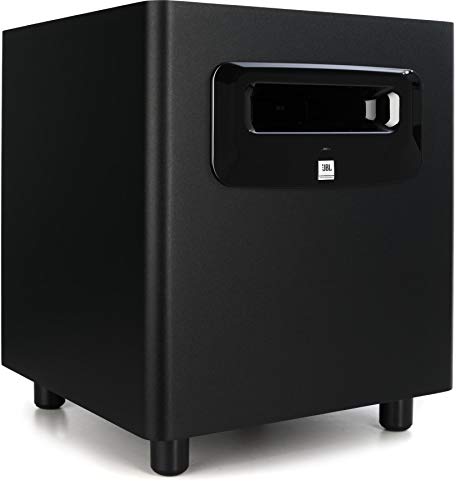
4. JBL Professional LSR310S – Studio Monitor Subwoofer
Rating: 9.5/10
Get ready to feel the bass like never before with the JBL Professional LSR310S Studio Monitor Subwoofer. This 10-inch black beauty is designed to bring deep, powerful low frequencies to your studio or listening space. It’s built with JBL’s legendary engineering to handle whatever you throw at it.
What We Like:
- The special JBL port design delivers amazing, deep bass. It works perfectly with the woofer for clear sound at any volume.
- The XLF setting is a game-changer for dance music producers. It makes your room sound like a club, inspiring your creativity.
- The custom-made driver is super tough. It produces strong bass down to 20 Hz and can handle loud volumes without problems.
- It has professional connections (XLR and 1/4″). You can easily add it to your existing speakers or use it for surround sound.
- The sensitivity switch makes it compatible with different audio gear. You won’t overload it with strong signals.
What Could Be Improved:
- For some home studios, the sheer power might be a bit much if not managed carefully.
- While versatile, advanced users might want even more EQ control options for fine-tuning.
The JBL LSR310S is a fantastic addition for anyone serious about accurate bass reproduction. It brings professional-grade low-end power to your fingertips.
5. ADAM Audio T10S Studio Subwoofer for recording

Rating: 9.4/10
The ADAM Audio T10S Studio Subwoofer is your secret weapon for hearing every detail in your music. It’s a compact powerhouse that adds serious bass to your studio setup. This subwoofer is designed to work perfectly with ADAM Audio’s T5V and T7V monitors, giving you a full sound experience.
What We Like:
- It extends your low-end sound, so you hear all the bass frequencies.
- It helps you get a clearer picture of what’s happening in the low frequencies, which you might miss otherwise.
- It’s made to work great with ADAM Audio T5V and T7V speakers.
- The downward-facing woofer gives you flexibility in where you place it in your studio.
- It has a bypass connection so you can easily turn it on and off with a footswitch to compare your mixes.
- You can adjust its settings to match your room and monitors for the most accurate sound.
- It has adjustable crossover settings, a phase rotation switch, and a volume control for easy calibration.
What Could Be Improved:
- It’s a single unit, so you might need to buy two for a true stereo low-end experience.
- While compact, it still requires dedicated space in your studio.
The T10S subwoofer truly brings your mixes to life by revealing the low-end information you need. It’s an excellent tool for anyone serious about achieving professional-sounding recordings, mixes, and masters.
Choosing the Right Studio Subwoofer: Your Guide to Deeper Sound
A good studio subwoofer is like the secret ingredient for amazing sound. It handles the low, rumbling bass notes that your main speakers might miss. This guide helps you find the perfect one for your music, podcasts, or whatever you create.
Key Features to Look For
1. Size Matters (Driver Size)
Subwoofer drivers come in different sizes, usually measured in inches. Bigger drivers (like 10-inch or 12-inch) can move more air. This means they can produce deeper and louder bass. Smaller drivers (like 8-inch) are good for smaller rooms or if you don’t need earth-shaking bass.
2. Power (Amplifier Wattage)
The amplifier’s wattage tells you how much power the subwoofer has. More watts usually mean a louder and more powerful sound. For home studios, 100-200 watts is often enough. For larger spaces or more intense bass needs, you might want 300 watts or more.
3. Frequency Response
This shows the range of bass frequencies the subwoofer can reproduce. Look for a subwoofer that goes low, like down to 20Hz (Hertz). This means it can play those super low notes you feel as much as you hear.
4. Connectivity Options
Check how you can connect the subwoofer to your audio setup. Most studio subwoofers have XLR or TRS inputs. Some might have RCA connections. Make sure it matches your existing gear.
5. Controls and Features
Good subwoofers have controls to adjust the sound.
- Volume: Lets you set the bass level.
- Crossover: This feature lets you control which frequencies the subwoofer plays. It helps blend the subwoofer with your main speakers.
- Phase Switch: This helps you align the subwoofer’s sound waves with your main speakers.
Important Materials
The materials used in a subwoofer’s construction affect its sound and durability.
- Cabinet: Look for sturdy, dense wood like MDF (Medium-Density Fiberboard). This helps prevent vibrations that can muddy the sound.
- Driver Cone: Materials like paper, polypropylene, or Kevlar are common. Each has its own characteristics for sound.
Factors That Improve or Reduce Quality
Several things make a subwoofer sound great or not so great.
- Build Quality: A well-built cabinet with minimal rattling or buzzing is key.
- Port Design: Subwoofers often have a port (a hole in the cabinet) to boost bass. The size and placement of this port matter.
- Amplifier Type: Class D amplifiers are efficient and common in modern subwoofers.
- Room Acoustics: Even the best subwoofer can sound bad in a poorly treated room. Room shape and furniture affect bass.
User Experience and Use Cases
How you use your subwoofer is important.
- Music Production: For mixing and mastering music, a subwoofer helps you hear the low end accurately. This means your basslines and kick drums will sound just right.
- Home Theater: If you enjoy movies, a subwoofer adds impact to explosions and soundtracks.
- DJing: DJs use subwoofers to make sure their beats hit hard and the crowd feels the music.
- Gaming: For gamers, a subwoofer can make explosions and engine sounds more immersive.
Choosing a subwoofer depends on your budget, room size, and what you want to do with it. Take your time, do some research, and listen if you can before you buy.
Frequently Asked Questions (FAQs)
Q: What is the most important feature of a studio subwoofer?
A: The most important features are often the driver size and the frequency response, as they directly affect how deep and clear the bass sounds.
Q: Do I really need a subwoofer for my studio?
A: If you work with music that has a lot of low-end frequencies (like hip-hop, electronic, or film scores), then yes, a subwoofer helps you hear and mix those frequencies accurately.
Q: How big should the driver be?
A: For smaller rooms or if you need a more subtle bass, an 8-inch driver is fine. For larger rooms or more powerful bass, a 10-inch or 12-inch driver is better.
Q: What does “crossover frequency” mean?
A: The crossover frequency is where your main speakers stop producing bass and the subwoofer takes over. Setting this correctly helps the bass sound smooth, not boomy.
Q: Can I use any subwoofer for my studio?
A: While you can use any subwoofer, studio subwoofers are designed for accurate sound reproduction. Consumer subwoofers are often tuned for a more “exciting” sound, which isn’t ideal for critical listening.
Q: How do I know if my subwoofer is too loud?
A: If the bass sounds distorted, boomy, or overpowers the rest of your music, it’s likely too loud. You should be able to hear the bass clearly without it being overwhelming.
Q: What is the benefit of a front-ported subwoofer versus a rear-ported one?
A: Front-ported subwoofers can sometimes be placed closer to walls without losing bass performance. Rear-ported subwoofers often need a little space behind them.
Q: How much should I spend on a studio subwoofer?
A: Prices vary widely. You can find decent entry-level subwoofers for a few hundred dollars, while professional-grade models can cost over a thousand.
Q: Can I use a subwoofer with my existing bookshelf speakers?
A: Yes, most studio subwoofers are designed to work with a variety of main speakers, including bookshelf speakers.
Q: How do I place my subwoofer in my room?
A: Experimentation is key! Generally, placing it in a corner can boost bass, but it might also make it muddy. Try different spots to find what sounds best in your specific room.
In conclusion, every product has unique features and benefits. We hope this review helps you decide if it meets your needs. An informed choice ensures the best experience.
If you have any questions or feedback, please share them in the comments. Your input helps everyone. Thank you for reading.