
Ever feel like your music is missing something? That the bass just doesn’t hit hard enough, or you can’t quite hear the lowest notes in a song? You’re not alone. Many music creators and listeners experience this frustration. It’s like trying to paint a masterpiece with only half the colors.
Choosing the right studio monitors with a subwoofer can feel like a puzzle. There are so many brands and models, and figuring out which ones will truly bring your sound to life can be overwhelming. You want to hear every detail, every rumble, and every whisper, but the sheer number of choices can lead to confusion and wasted money.
But what if we told you that finding that perfect low-end punch and crystal-clear detail is within reach? This post is here to guide you. We’ll break down what makes a great subwoofer setup for your studio monitors, helping you understand the key features and what to look for. By the end, you’ll have the knowledge to choose a system that makes your music sound exactly how you want it to.
Our Top 5 Studio Monitors With Subwoofer Recommendations at a Glance
Top 5 Studio Monitors With Subwoofer Detailed Reviews
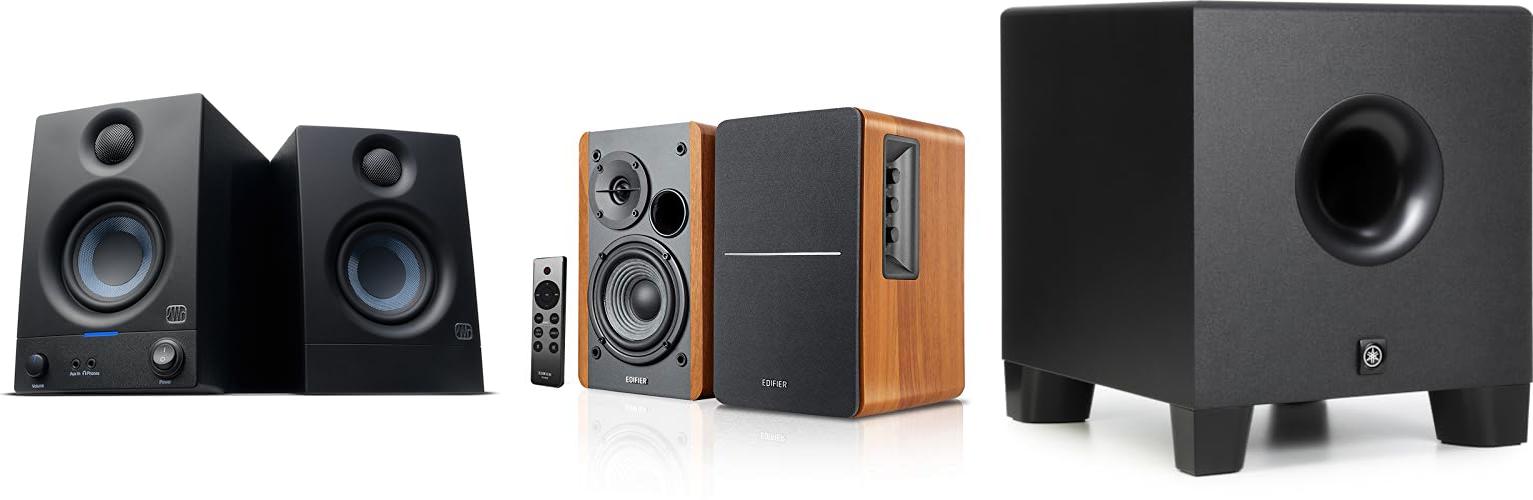
1. PreSonus Eris 3.5 Studio Monitors

Rating: 8.8/10
The PreSonus Eris 3.5 Studio Monitors are a pair of powered, active speakers designed for near-field listening. They work great for making music, enjoying your favorite songs, or just referencing sounds on your computer.
What We Like:
- Honest Sound: These monitors give you accurate sound, which is super important when you’re making music.
- Expressive Bass: The woofers are made with a special woven material. This gives you tight, strong bass you can really feel and makes the whole sound cleaner.
- Powerful for Their Size: Even though they’re small, they pack a punch with 50 watts of power. They get loud without making the sound muddy or unclear.
- Wide Listening Area: The tweeters create a wide “sweet spot.” This means you get good stereo sound even if you’re not sitting right in front of them.
- Easy Connections: You can connect professional gear with ¼-inch inputs, regular electronics with RCA inputs, and even your phone with the front aux input.
- Tune to Your Room: You can adjust the high and low frequencies. This helps the speakers sound their best no matter where you put them or what your room sounds like.
- Quick Headphone Switch: A front-panel headphone jack makes it easy to switch to headphones. The built-in amp makes your headphones sound great.
- Optional Subwoofer: You can add a matching subwoofer for even more bass and Bluetooth. This turns your setup into a powerful 2.1 system.
- Power Saver: The speakers automatically go into a power-saving mode after 40 minutes of not being used.
What Could Be Improved:
- The power-saving mode might be a bit too quick for some users.
- While they offer Bluetooth with the subwoofer, the base unit doesn’t have it.
Overall, the PreSonus Eris 3.5 monitors offer a fantastic listening experience for their price. They are a solid choice for anyone wanting better sound from their computer or music setup.
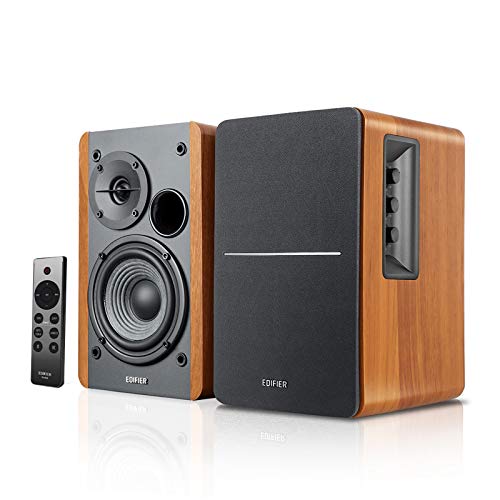
2. Edifier R1280DBs Active Bluetooth Bookshelf Speakers – Optical Input – 2.0 Wireless Studio Monitor Speaker – 42W RMS with Subwoofer Line Out – Wood Grain
Rating: 8.9/10
The Edifier R1280DBs Active Bluetooth Bookshelf Speakers bring a rich sound experience to your home. These speakers look great with their wood grain finish and pack a powerful punch for their size. They are perfect for listening to music, watching movies, or playing games.
What We Like:
- Bluetooth 5.0 makes it easy to connect your phone or computer without wires.
- Optical and coaxial inputs give you a clear, lossless sound connection for your TV or computer.
- The 42W power with a 4-inch subwoofer unit fills your room with great sound.
- The Soundfield Spatializer feature makes your music sound even better.
- You get a handy remote control for easy adjustments from your couch.
- Side panel knobs let you easily control volume, bass, and treble.
- The subwoofer line out lets you add an extra subwoofer for even deeper bass.
What Could Be Improved:
- The user manual could be a bit clearer.
- The remote control buttons are small and can be hard to see in low light.
These speakers offer a fantastic blend of sound quality, features, and style. They are a solid choice for anyone wanting to upgrade their audio setup.
3. Yamaha HS8 Studio Subwoofer

Rating: 8.6/10
The Yamaha HS8 Studio Subwoofer in Black is a powerful addition to any studio setup. It helps you hear the lowest sounds clearly. This subwoofer makes your music sound fuller and more complete. It’s designed for serious music creators and listeners.
What We Like:
- It has an 8-inch speaker that makes deep bass sound great.
- The subwoofer can reproduce sounds from 22Hz all the way up to 150Hz.
- A strong 150W amplifier powers the speaker, giving you plenty of volume.
- The LOW CUT switch lets you easily remove unwanted low sounds.
- You can adjust the LOW CUT control from 80Hz to 120Hz to fine-tune the bass.
- The HIGH CUT control also works between 80Hz and 120Hz, helping blend the subwoofer with your main speakers.
- The PHASE switch lets you match the subwoofer’s sound waves with your other speakers for better mixing.
What Could Be Improved:
- For some home studios, the 8-inch size might be a bit large.
- Setting up the perfect sound can take some time and experimentation with the controls.
The Yamaha HS8 delivers impressive low-end performance for its size. It’s a solid choice for anyone looking to enhance their studio monitoring.
4. Yamaha HS5 Pair 2-Way bass-Reflex bi-Amplified nearfield Studio Monitors with 5 inch woofers

Rating: 8.9/10
The Yamaha HS5 Pair is a set of two powerful studio monitors designed for clear sound. They are perfect for anyone who wants to hear their music or audio projects accurately. These monitors help you make better mixing and mastering decisions because they deliver a very honest sound.
What We Like:
- The 5-inch woofers and 1-inch dome tweeters work together to create a wide range of sounds, from deep bass to clear highs, covering 54Hz to 30kHz.
- Each monitor has a 70W amplifier (45W for the woofer and 25W for the tweeter) that provides plenty of power for a loud and clear sound.
- You can adjust the sound to fit your room with the ROOM CONTROL and HIGH TRIM features.
- They accept both balanced and unbalanced signals thanks to XLR and TRS phone jack inputs.
- This bundle gives you two monitors, so you have a complete stereo setup right away.
What Could Be Improved:
- For very large rooms or producers who need extreme low-end, some might want larger woofers.
- While they offer great value, professional studios with the biggest budgets might look for monitors with even more advanced features.
The Yamaha HS5 Pair offers fantastic sound quality for its price. They are a smart choice for aspiring and experienced audio professionals alike.
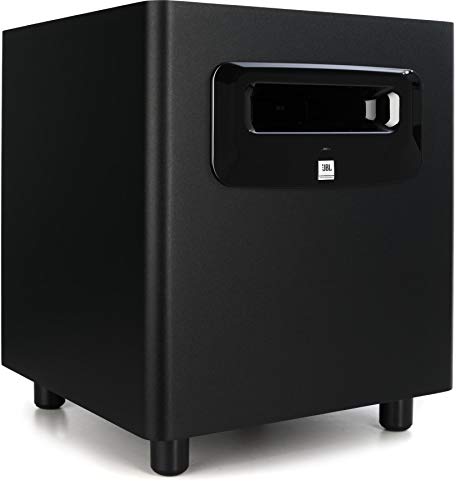
5. JBL Professional LSR310S – Studio Monitor Subwoofer
Rating: 9.2/10
Get ready to feel the bass with the JBL Professional LSR310S Studio Monitor Subwoofer. This 10-inch black subwoofer is built to bring serious low-end power to your studio. It’s designed to work with your existing studio monitors, making them sound even better.
What We Like:
- The special JBL port design gives you deep, strong bass. It works great at any volume.
- The XLF setting makes your music sound like it’s in a dance club. It’s perfect for making dance tracks.
- The custom-made driver delivers amazing low bass, all the way down to 20 Hz. It can also play very loud without breaking.
- You can connect it to almost any studio system with its balanced XLR and 1/4-inch inputs. It can also be used for surround sound.
- A switch lets you choose the right sensitivity for your gear. This means you won’t overload the subwoofer.
What Could Be Improved:
- While powerful, it might be too much for very small studio spaces.
- The focus is on low-end, so it’s best paired with monitors that handle the mids and highs well.
The JBL LSR310S subwoofer is an excellent choice for anyone who wants to add powerful and accurate bass to their studio setup. It brings a professional club feel right into your listening space.
Studio Monitors with Subwoofer: Your Guide to Better Sound
Are you looking to take your music production, mixing, or even just your home listening to the next level? Studio monitors with a subwoofer can make a huge difference. They deliver a full, rich sound that lets you hear every detail. This guide will help you choose the right set for your needs.
Why Add a Subwoofer to Your Studio Monitors?
Regular studio monitors are great, but they often struggle to reproduce the lowest bass frequencies. That’s where a subwoofer comes in. A subwoofer is a speaker specifically designed to handle these deep sounds. When paired with your studio monitors, it creates a complete sound system. You’ll hear the rumble of a bass guitar or the thump of a kick drum with clarity. This is super important for making good music or enjoying movies. You can accurately judge how your music will sound on different systems.
Key Features to Look For
1. Size and Power
- Driver Size: The woofer and tweeter sizes matter. Larger woofers generally produce more bass.
- Wattage: This tells you how loud the speakers can get. More wattage means more power.
2. Connectivity
- Inputs: Look for balanced XLR or TRS inputs. These help reduce noise.
- Outputs: Some subwoofers have outputs to connect to your main monitors.
3. Controls
- Crossover Frequency: This setting tells the subwoofer and your main monitors where to split the sound. A good range lets you fine-tune the bass.
- Volume Control: You’ll want to adjust the subwoofer’s volume to match your main speakers.
- Phase Switch: This helps integrate the subwoofer smoothly with your monitors.
Important Materials and Build Quality
The materials used in your monitors and subwoofer affect their sound and durability. Look for sturdy cabinets. Wood or MDF (medium-density fiberboard) are common and good choices. They help reduce unwanted vibrations. The speaker cones themselves are often made of paper, Kevlar, or polypropylene. Each has its own sonic characteristics. A well-built system sounds better and lasts longer.
Factors That Improve or Reduce Quality
Improving Quality
- Accurate Frequency Response: This means the speaker reproduces all frequencies (low, mid, high) evenly.
- Low Distortion: Clean sound with no unwanted crackling or buzzing.
- Good Cabinet Design: Prevents sound from being muddied by vibrations.
Reducing Quality
- Cheap Components: Can lead to poor sound and quick wear and tear.
- Poor Cabinet Construction: Vibrations can make the sound unclear.
- Limited Controls: Makes it hard to get the best sound for your room.
User Experience and Use Cases
Studio monitors with subwoofers are used by many people. Music producers use them to hear every bass note and impact in their tracks. Mixing engineers rely on them for accurate sound judgments. DJs can use them to feel the full impact of their music. Even home theater enthusiasts can enjoy a more immersive movie experience. The setup is usually straightforward. You connect your audio source to your main monitors, and then connect your main monitors to the subwoofer, or connect the subwoofer directly to your audio interface.
Frequently Asked Questions (FAQ)
Q: What is the main job of a subwoofer in a studio setup?
A: A subwoofer handles the very low bass sounds that regular speakers might miss. It makes the sound fuller and richer.
Q: How big should my studio monitors be?
A: This depends on your room size. For smaller rooms, 5-inch woofers are often enough. For larger rooms, 7 or 8-inch woofers might be better.
Q: Do I need a subwoofer if I only listen to music?
A: While not strictly necessary, a subwoofer can greatly improve your listening experience. You’ll hear music the way it was intended.
Q: What is a crossover frequency?
A: It’s a setting that decides which speaker handles which sound frequencies. The subwoofer gets the low sounds, and the monitors get the mids and highs.
Q: Is it hard to set up studio monitors with a subwoofer?
A: No, it’s usually quite simple. You connect your audio source to your monitors, and then the monitors to the subwoofer, or the subwoofer to your audio interface.
Q: Can I use any speakers with a subwoofer?
A: It’s best to use powered studio monitors designed to work together. This ensures the best sound quality.
Q: How do I know if my bass sounds good?
A: With good monitors and a subwoofer, you can clearly hear the bass. You can tell if it’s too loud, too quiet, or distorted.
Q: What does “balanced input” mean?
A: Balanced inputs (like XLR or TRS) help reduce unwanted noise and interference from cables, giving you a cleaner sound.
Q: Can I turn off the subwoofer sometimes?
A: Yes, many subwoofers have a volume control, so you can adjust or even mute them if needed.
Q: Will a subwoofer make my music sound better on other systems?
A: By hearing the full range of sound accurately, you can mix your music better. This means it will sound good everywhere.
In conclusion, every product has unique features and benefits. We hope this review helps you decide if it meets your needs. An informed choice ensures the best experience.
If you have any questions or feedback, please share them in the comments. Your input helps everyone. Thank you for reading.