
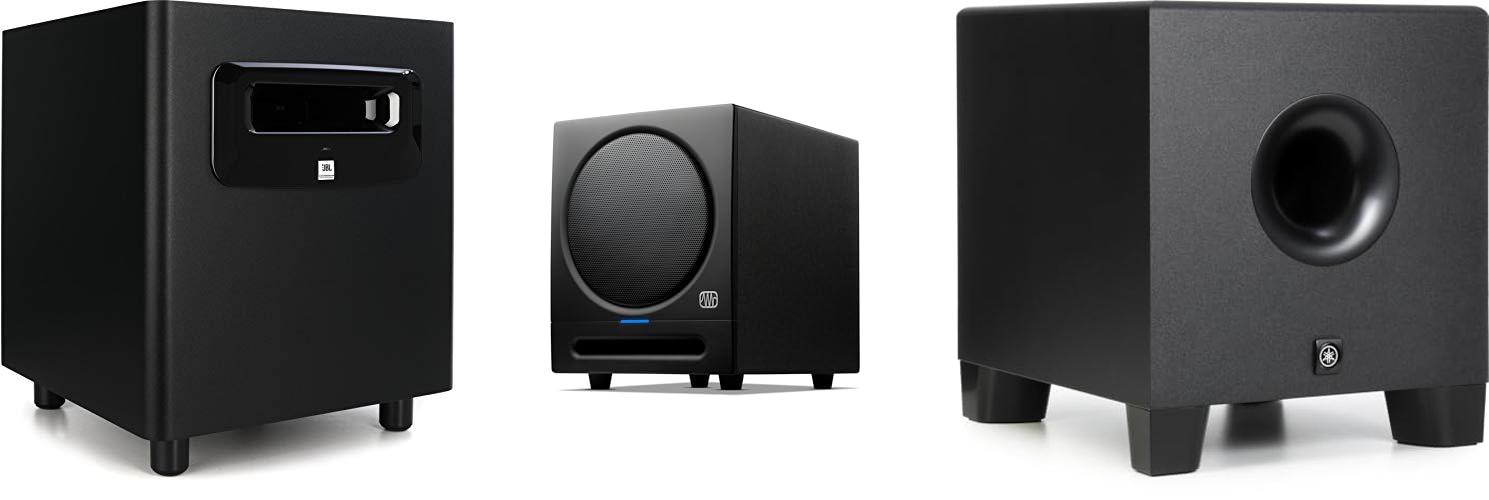
Ever mixed a song and wondered why the bass just doesn’t sound right? You tweak and twist, but that low-end rumble still feels… off. It’s a common frustration for music makers, and often, the missing piece of the puzzle is a good studio monitor subwoofer.
Choosing the right subwoofer can feel like a maze. There are so many brands, sizes, and features, it’s easy to get lost. You want to hear the deep bass clearly so you can make your music sound amazing, but you don’t want a muddy sound that hides important details. This can lead to wasted money and disappointing results.
But don’t worry! By the end of this post, you’ll understand what makes a studio monitor subwoofer tick. We’ll break down the important stuff so you can pick one that fits your setup and your budget. Get ready to unlock a whole new level of bass clarity in your studio.
Our Top 5 Studio Monitor Subwoofer Recommendations at a Glance
| Image | Product | Rating | Links |
|---|---|---|---|
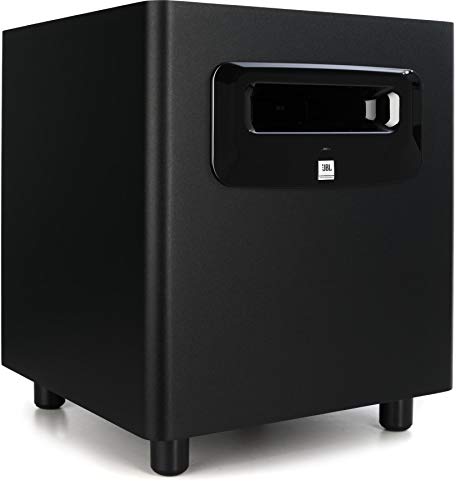 |
JBL Professional LSR310S – Studio Monitor Subwoofer | 9.2/10 | Check Price |
 |
PreSonus Eris Sub 8BT — 8″ Inch Powered Subwoofer | 9.4/10 | Check Price |
 |
Yamaha HS8 Studio Subwoofer | 9.2/10 | Check Price |
 |
KRK S8.4 S8 Generation 4 8″ 109 Watt Powered Studio Subwoofer | 9.4/10 | Check Price |
 |
Klipsch R-100SW 10″ Subwoofer | 8.5/10 | Check Price |
Top 5 Studio Monitor Subwoofer Detailed Reviews
1. JBL Professional LSR310S – Studio Monitor Subwoofer
Rating: 9.0/10
The JBL Professional LSR310S Studio Monitor Subwoofer is a powerful 10-inch black subwoofer built to bring serious low-end punch to your studio setup. It’s designed to enhance your listening experience with deep, dynamic bass that you can truly feel.
What We Like:
- It has a special port design that helps create deep, powerful bass.
- The XLF setting is awesome for dance music producers, making your room feel like a club.
- The custom driver delivers amazing low-frequency sound down to 20 Hz.
- It can handle loud volumes for long periods without problems.
- You can connect it to almost any studio monitor system with its balanced XLR and 1/4″ inputs.
- It works well with different audio sources thanks to its sensitivity switch.
What Could Be Improved:
- For some users, the size might be a bit large for very small studios.
- While it offers great value, professional studios might have budget for even higher-end options.
If you want to add serious bass to your music production or listening, the JBL LSR310S is a fantastic choice. It brings a professional club sound right into your workspace.
2. PreSonus Eris Sub 8BT — 8″ Inch Powered Subwoofer
Rating: 8.5/10
Get ready to feel the bass! The PreSonus Eris Sub 8BT is an 8-inch powered subwoofer that brings powerful, accurate low-end sound to your home audio, music production, gaming, or home theater setup. With its compact size and wireless Bluetooth connectivity, it’s easy to add this impressive bass speaker to your existing system.
What We Like:
- It delivers studio-quality, accurate sound with a deep, powerful low end thanks to its 8-inch woven-composite woofer.
- The 100-watt amplifier pushes out sound down to a rumbling 30 Hz, letting you hear every detail.
- Bluetooth 5.0 wireless connectivity makes it super easy to connect your devices, and there are also wired options for flexibility.
- It has controls for highpass and lowpass filters to help blend perfectly with your main speakers and avoid messy bass.
- You get plenty of connection choices, including balanced ¼-inch TRS, unbalanced RCA, and a front-panel ⅛-inch aux input.
- Fine-tune the sound to your room with high and low-frequency tuning knobs.
- A handy front-panel headphone output with a built-in amplifier lets you easily switch to headphone listening.
- It’s designed to work great with other PreSonus Eris studio monitors.
- The subwoofer automatically goes into a power-saving mode when not in use for 40 minutes.
What Could Be Improved:
- While it’s powerful, some users might desire even deeper bass for extreme applications.
- The power-saving mode, while eco-friendly, might take a moment to wake up when you start playing audio again.
The PreSonus Eris Sub 8BT is a fantastic choice for anyone looking to upgrade their audio experience with rich, accurate bass. It offers impressive features and sound quality for its size and price point.
3. Yamaha HS8 Studio Subwoofer
Rating: 8.9/10
The Yamaha HS8 Studio Subwoofer in Black is a powerful addition to any home studio. It helps you hear the deep bass sounds in your music. This subwoofer is designed to give you accurate bass reproduction. It makes your mixes sound better.
What We Like:
- It has an 8-inch speaker that delivers strong bass.
- The frequency response goes down to 22Hz, so you hear very low notes.
- A 150W amplifier powers it, giving you plenty of volume.
- The LOW CUT switch and control let you adjust the bass.
- The HIGH CUT control helps blend it with your main speakers.
- The PHASE switch makes sure the bass sounds right with your other speakers.
What Could Be Improved:
- It is a bit bulky, so it takes up some space.
- While the controls are good, they might seem a little basic to some advanced users.
This subwoofer is a fantastic tool for producers and audio engineers. It provides the deep low-end you need for precise mixing.
4. KRK S8.4 S8 Generation 4 8″ 109 Watt Powered Studio Subwoofer
Rating: 8.5/10
The KRK S8.4 S8 Generation 4 8″ 109 Watt Powered Studio Subwoofer is a powerful addition to any home studio. It helps you hear all the low-end sounds in your music. This subwoofer makes your music sound fuller and more complete.
What We Like:
- The 8-inch woofer is made of strong glass aramid composite. It delivers deep bass down to 30Hz.
- It can get really loud, up to 112 dB max SPL. This is great for checking your mixes at higher volumes.
- You can easily turn the subwoofer and its crossover filter on and off with a footswitch (sold separately).
- The curved design and front-firing bass port allow you to place it almost anywhere in your room.
- It uses a strong, light Class D amplifier. This means it’s efficient and doesn’t take up too much space.
What Could Be Improved:
- The footswitch is not included, which is an extra cost.
- For some users, the 8-inch size might not be enough for extremely deep bass in larger rooms.
Overall, the KRK S8.4 is a solid choice for producers wanting to improve their low-end monitoring. It offers great performance and flexibility for its price point.
5. Klipsch R-100SW 10″ Subwoofer
Rating: 8.8/10
Get ready to feel the rumble! The Klipsch R-100SW 10″ Subwoofer is designed to bring incredibly deep bass to your home theater or music setup. Its powerful 10-inch spun-copper woofer fires forward, pushing air and creating those satisfying low frequencies that make movies and music come alive. An all-digital amplifier pumps out a massive 300 watts of peak power, ensuring you get a loud and clear bass experience. Plus, with easy controls for volume, crossover, and phase, you can fine-tune the sound to perfectly match your room and your speakers.
What We Like:
- The 10″ front-firing spun-copper woofer delivers powerful and accurate bass.
- The all-digital amplifier provides a strong 300 watts of peak power for an immersive sound.
- Easy-to-use controls for volume, low-pass crossover, and phase allow for simple sound tuning.
- Line level LFE RCA inputs ensure compatibility with most AV receivers.
- The auto power on feature is convenient, turning the subwoofer on when it detects a signal.
What Could Be Improved:
- While powerful, some users might desire even deeper bass extension for the most demanding applications.
- The 14.5″ x 12.5″ x 16.4″ dimensions, while reasonable, might be a consideration for very small spaces.
This Klipsch subwoofer is an excellent way to upgrade your audio system. It offers impressive bass performance and user-friendly features at a great value.
Choosing the Right Studio Monitor Subwoofer: Feel the Bass!
So, you want to hear all the low-end sounds in your music? A studio monitor subwoofer is your ticket to a complete listening experience. It adds that deep rumble and powerful bass that regular studio monitors might miss. Think of it as the cherry on top for your sound system. This guide will help you pick the perfect one.
What to Look For: Key Features
1. Size Matters: Driver Diameter
Subwoofers have a driver, which is the part that makes the sound. The bigger the driver, the more bass it can produce. For most home studios, an 8-inch or 10-inch driver is a great start. If you have a larger room or need really deep bass, you might look at 12-inch or even bigger!
2. Power Up: Amplifier Wattage
The amplifier’s wattage tells you how loud and powerful the subwoofer can be. More watts usually mean a stronger, more impactful bass. For a small to medium studio, 100-200 watts is often enough. Bigger spaces or more demanding needs might require 300 watts or more.
3. Sound Control: Crossover Frequency
The crossover frequency is like a dial that tells the subwoofer where to start making bass sounds. It works with your main studio monitors. Setting it correctly makes sure the bass sounds smooth and blends well. A common range is between 50Hz and 150Hz. Many subwoofers let you adjust this.
4. Connecting Your Gear: Inputs and Outputs
Make sure the subwoofer has the right connections for your existing studio monitors and audio interface. You’ll often find XLR and TRS connections, which are standard in pro audio. Some subwoofers have “thru” outputs, meaning the sound goes through the subwoofer to your main monitors.
5. Built to Last: Build Quality
A solid cabinet will make your subwoofer sound better and last longer. Look for sturdy materials and good craftsmanship. This helps reduce unwanted vibrations and keeps the sound clear.
What’s Inside: Important Materials
The materials used in a subwoofer affect its sound and durability. The cabinet is usually made of MDF (Medium-Density Fiberboard). This is a strong wood composite that doesn’t vibrate much, which is good for clear bass. The driver itself might have a cone made of paper, Kevlar, or other strong materials. These materials help create accurate and powerful bass sounds.
Making the Sound Great: Factors That Improve or Reduce Quality
Improving Quality:
- Accurate Bass Response: The subwoofer should reproduce bass frequencies cleanly without sounding boomy or muddy.
- Low Distortion: It should play loud without making the bass sound fuzzy or distorted.
- Good Integration: It should blend seamlessly with your main studio monitors.
- Adjustable Controls: Being able to fine-tune the crossover and volume helps you get the best sound for your room.
Reducing Quality:
- Cheap Materials: Thin cabinets or poor-quality drivers can lead to muddy or weak bass.
- Lack of Controls: If you can’t adjust the crossover or volume, it’s harder to get a good sound.
- Overpowering Bass: A subwoofer that’s too big or too powerful for your room can make everything sound boomy.
- Poor Design: A poorly designed subwoofer might create unwanted vibrations or resonance.
Using Your Subwoofer: User Experience and Use Cases
A studio monitor subwoofer is a game-changer for music producers, mixing engineers, and even serious music listeners. Here’s how it helps:
- Mixing and Mastering: You can hear the low frequencies (bass guitar, kick drum, synth bass) much more accurately. This helps you make better decisions when mixing and mastering your tracks. You’ll know if your bass is too loud or too quiet.
- Sound Design: For film scoring, sound effects, or electronic music, subwoofers let you feel the impact of explosions, deep rumbles, and powerful synth lines.
- Home Theater: If you want to feel the rumble of movie explosions or the deep notes in your favorite soundtracks, a subwoofer adds that extra dimension.
- Gaming: For gamers, a subwoofer can make explosions, engine sounds, and in-game music much more immersive.
Setting up your subwoofer correctly is important. Place it on the floor, ideally in a corner or along a wall, to help the bass fill the room. Experiment with its placement and the crossover settings to find the sweet spot for your listening environment.
Frequently Asked Questions (FAQ)
Q: What is the main purpose of a studio monitor subwoofer?
A: The main purpose is to reproduce the lowest frequencies of sound, adding deep bass and impact that regular studio monitors often can’t.
Q: How do I know what size driver I need?
A: Smaller rooms usually work well with 8-inch or 10-inch drivers. Larger rooms or a need for very deep bass might benefit from 12-inch or larger drivers.
Q: What does “crossover frequency” mean?
A: The crossover frequency is a setting that determines the point at which the subwoofer starts producing bass sounds, working together with your main studio monitors.
Q: Do I need a subwoofer if I already have studio monitors?
A: Yes, if you want to hear and accurately mix the full range of low frequencies in your audio. Studio monitors alone may not reproduce these deep bass sounds.
Q: How much amplifier wattage is enough?
A: For most home studios, 100-200 watts is sufficient. Larger spaces or more powerful needs might require 300 watts or more.
Q: What kind of connections should I look for?
A: Standard connections like XLR and TRS are common and good to have for connecting to your audio interface and studio monitors.
Q: Can a subwoofer make my music sound boomy?
A: Yes, if it’s not set up correctly for your room or if it’s too powerful. Proper placement and adjusting the crossover frequency are key to avoiding boominess.
Q: How do I place a studio monitor subwoofer?
A: Placing it on the floor, often in a corner or along a wall, can help the bass fill the room effectively. Experimentation is important.
Q: Are expensive subwoofers always better?
A: Not always. While higher prices can mean better materials and features, you can find excellent subwoofers at various price points. Focus on the features that matter for your needs.
Q: Can I use a home theater subwoofer in my studio?
A: While possible, studio monitor subwoofers are designed for more accurate sound reproduction needed for mixing and mastering. Home theater subwoofers are often tuned for a more “exciting” sound, which might not be ideal for critical listening.
In conclusion, every product has unique features and benefits. We hope this review helps you decide if it meets your needs. An informed choice ensures the best experience.
If you have any questions or feedback, please share them in the comments. Your input helps everyone. Thank you for reading.