

Imagine you’re a chef trying to make the perfect meal. You have all the ingredients, but you need to adjust the flavors just right to make it taste amazing. In music, a Studio Equalizer is like that chef’s magic spice rack, helping you fine-tune sounds.
But finding the right equalizer can feel like searching for a needle in a haystack! So many buttons, knobs, and confusing terms can make your head spin. You want your music to sound clear and powerful, but the wrong equalizer can make it sound muddy or harsh. This is where Studio Equalizer comes in, and understanding it is key to making your audio shine.
By the end of this post, you’ll know what makes a Studio Equalizer tick. We’ll break down the confusing bits, so you can choose the perfect one for your needs. Get ready to unlock better sound and make your music truly sing!
Our Top 5 Studio Equalizer Recommendations at a Glance
| Image | Product | Rating | Links |
|---|---|---|---|
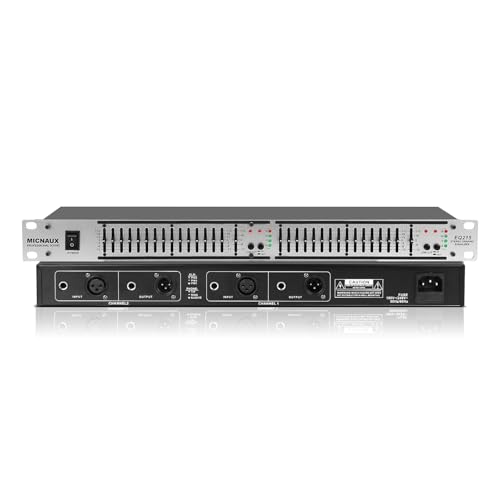 |
MICNAUX Stereo Equalizer for Home Audio System | 9.4/10 | Check Price |
 |
FL Studio 21 Producer Edition and Waves Musicians 2 Bundle | 8.9/10 | Check Price |
 |
MIZISNR Graphic Equalizer 31-Band Stereo EQ for Home Audio | 9.0/10 | Check Price |
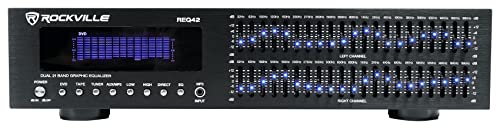 |
Rockville REQ42-B Dual 21-Band Graphic Equalizer | 9.2/10 | Check Price |
 |
FBQ1502HD | 8.6/10 | Check Price |
Top 5 Studio Equalizer Detailed Reviews
1. MICNAUX Stereo Equalizer for Home Audio System
Rating: 8.8/10
The MICNAUX EQ215S is a powerful dual-channel stereo graphic equalizer designed to elevate your home audio system. It offers professional-grade sound tuning with its 15 bands per channel. An upgraded chipset ensures clearer sound and better performance. This equalizer is ideal for anyone who loves music or works with sound.
What We Like:
- It has an upgraded chipset for really clear sound.
- Each channel has 15 bands you can adjust.
- You can change how loud or quiet each band is by +/-12dB.
- It has a LOW-CUT switch to get rid of unwanted noise like wind or hum.
- The BYPASS switch lets you easily compare the sound with and without the EQ.
- It fits into a standard 1U rack, making it easy to set up.
- It works with different types of audio connections like XLR and 1/4″ TRS.
What Could Be Improved:
- The adjustable range for gain and decay is a bit limited at +/-6dB to +/-12dB for some users.
- While versatile, it might be more complex for absolute beginners to home audio.
The MICNAUX EQ215S provides excellent control and noise reduction for your audio. It’s a solid choice for anyone serious about achieving the best sound from their system.
2. FL Studio 21 Producer Edition and Waves Musicians 2 Bundle
Rating: 8.7/10
Unlock your music-making potential with the FL Studio 21 Producer Edition and Waves Musicians 2 Bundle. This incredible package gives you everything you need to create amazing songs, from laying down beats to recording vocals. It’s like having a professional recording studio right on your computer!
What We Like:
- FL Studio 21 Producer Edition is a complete virtual studio. You can make full songs and record your voice.
- This bundle includes the exclusive Waves Musicians 2 pack. It has six must-have audio plugins.
- You get the Renaissance Compressor to make your tracks sound smooth.
- The Renaissance Equalizer helps you fine-tune your sounds.
- Renaissance Vox makes your vocals shine.
- Renaissance Axx adds punch and clarity to your recordings.
- Doubler creates cool stereo effects.
- SuperTap adds awesome echo and delay.
- You get lifetime free updates for FL Studio Producer. This means you’ll always have the latest features!
What Could Be Improved:
- The sheer number of features in FL Studio might feel a little overwhelming at first for total beginners.
- Learning all the nuances of the Waves plugins takes time and practice.
This bundle offers fantastic value for aspiring musicians. It equips you with powerful tools to bring your musical ideas to life.
3. MIZISNR Graphic Equalizer 31-Band Stereo EQ for Home Audio
Rating: 8.9/10
The MIZISNR Graphic Equalizer EQ-231 is a powerful tool for anyone serious about sound. It’s a dual-channel stereo graphic equalizer, meaning it has two separate channels to control your audio. This EQ is designed for both home audio enthusiasts and professional DJs, promising a better listening experience.
What We Like:
- It has a 31-band design on each channel. This gives you lots of control to shape your sound.
- You can adjust the gain and decay for each band from +/-6dB to +/-12dB. This lets you fine-tune your audio precisely.
- The EQ has a LOW-CUT switch. This helps get rid of unwanted low-frequency noise like wind or hum, making your audio clearer.
- A BYPASS switch makes it easy to test and use the equalizer. This simplifies setup and adjustments.
- It has 4-segment LED ladders. These show you how much gain reduction is happening and the output levels, giving you good visual feedback.
- The EQ offers flexible input and output options. It supports XLR balanced and 1/4″ TRS unbalanced connections, so it works with many audio systems.
- It’s great for live shows, installed sound systems, and studio use.
What Could Be Improved:
- The manual could be a bit clearer for beginners.
- While versatile, it might be overkill for someone just starting with basic home audio.
Overall, the MIZISNR EQ-231 is a fantastic equalizer for achieving professional sound quality. It offers detailed control and effective noise reduction for a superior audio experience.
4. Rockville REQ42-B Dual 21-Band Graphic Equalizer
Rating: 9.2/10
The Rockville REQ42-B Dual 21-Band Graphic Equalizer is a powerful tool for shaping your sound. It gives you precise control over your audio, whether you’re in a home studio or performing live. This equalizer helps you make your music sound exactly how you want it. It’s built tough and designed to fit into your professional audio setup.
What We Like:
- It has two 21-band equalizers, giving you lots of ways to adjust your sound from 20Hz to 20kHz.
- You can easily connect your gear with RCA inputs and outputs. It also has a handy 3.5mm jack for your MP3 player or phone.
- The unit is designed to fit in a standard 19-inch rack, making it simple to add to your existing equipment.
- Blue LED sliders and colorful displays make it easy to see what you’re doing. Dual VU meters show your audio levels clearly.
- It’s built with a strong metal case and weighs only 6 pounds. It works with 110V power, making it great for home studios, parties, or mobile DJing.
What Could Be Improved:
- While the LED indicators are helpful, some users might prefer more detailed frequency readouts.
- The RCA connections are standard, but some professional setups might benefit from XLR options.
This equalizer offers excellent sound control for its price. It’s a reliable choice for anyone looking to fine-tune their audio.
5. FBQ1502HD
Rating: 9.3/10
The FBQ1502HD is a powerful audio tool that helps you get the best sound. It’s great for live music, DJ sets, or even home studios. This device makes it easy to fix problems and make your audio sound clear and professional. It’s designed to be user-friendly, so you don’t need to be an audio expert to use it effectively.
What We Like:
- The FBQ Feedback Detection system is a real game-changer. It quickly shows you the exact sounds causing feedback, so you can get rid of them fast.
- You can also use it as an audio analyzer. This means you can check your sound quality and make adjustments to make it sound even better.
- It has a special mono subwoofer output. This lets you add a subwoofer to your system and control its sound with an adjustable crossover frequency.
- An extra low-cut filter is included. This filter removes annoying low noises, like rumbling from the floor.
- The FBQ feedback detection function helps you understand and control annoying feedback frequencies.
What Could Be Improved:
- While it’s a great analyzer, some users might want more advanced features for very specific audio engineering tasks.
- The design, while functional, could be updated to look more modern.
The FBQ1502HD is an excellent addition for anyone looking to improve their audio setup. It provides smart features that make getting great sound simpler.
Your Guide to Finding the Perfect Studio Equalizer
A studio equalizer is a powerful tool for music producers and audio engineers. It helps you shape the sound of your music. You can make instruments sound clearer, warmer, or brighter. This guide will help you choose the right equalizer for your studio.
Key Features to Look For
When you look for a studio equalizer, some features are more important than others.
- Frequency Bands: Equalizers have different numbers of frequency bands. More bands mean you have more control over specific sounds. Think of it like having more tools to fine-tune.
- Q Factor (Bandwidth): This controls how wide or narrow the adjustment is for a specific frequency. A narrow Q is good for fixing a problem sound. A wider Q is better for shaping the overall tone.
- Boost/Cut Range: This tells you how much you can increase or decrease a frequency. A larger range gives you more flexibility.
- Type of EQ: There are different types, like graphic and parametric. Parametric EQs offer more precise control, which is usually better for studio work.
- Bypass Switch: This lets you easily compare the sound with and without the EQ. It’s a simple but very useful feature.
- Metering: Good meters show you exactly what’s happening with the sound levels. This helps you avoid making sounds too loud or too quiet.
Important Materials
The materials used in an equalizer can affect its sound and durability.
- Metal Casing: Most good studio gear uses strong metal casings. This protects the inner parts and helps with shielding from electrical noise.
- High-Quality Components: Inside, things like capacitors and op-amps matter. Better components can lead to cleaner sound and less distortion.
Factors That Improve or Reduce Quality
Some things make an equalizer sound better, while others can make it sound worse.
- Circuit Design: A well-designed circuit is very important. It affects how clean and accurate the EQ is. Good designs minimize unwanted noise.
- Component Quality: As mentioned before, better parts lead to better sound. Cheap parts can add noise or make the sound less clear.
- Power Supply: A stable and clean power supply is crucial. It prevents hum and other electrical problems from getting into your audio.
- User Interface: A confusing interface makes it hard to use the EQ. A well-labeled and intuitive design improves the experience.
- Digital vs. Analog: Analog EQs are often praised for their “warmth” and character. Digital EQs can be more precise and offer more features. Both have their fans.
User Experience and Use Cases
How you use an equalizer depends on what you want to achieve.
- Recording Vocals: You can use an EQ to remove unwanted low rumble or make a voice sound clearer and more present.
- Mixing Instruments: You can shape the tone of guitars, drums, and keyboards. This helps them sit nicely in the mix.
- Mastering: In the final stage of mixing, EQs can give the whole song a polished sound.
- Creative Sound Design: EQs can be used to create unique and interesting sounds that aren’t found in nature.
Frequently Asked Questions (FAQ)
Q: What is an equalizer used for in a studio?
A: An equalizer is used to change the balance of different frequencies in an audio signal. You can make sounds brighter, warmer, or cut out unwanted noises.
Q: What is the difference between graphic and parametric EQs?
A: A graphic EQ has fixed frequency bands you adjust with sliders. A parametric EQ lets you choose the exact frequency, its bandwidth (Q), and how much you boost or cut it. Parametric EQs offer more control.
Q: How many frequency bands should I look for?
A: For general studio use, having at least 3-4 bands per channel is good. More bands give you finer control.
Q: What does the Q factor do?
A: The Q factor, or bandwidth, controls how wide or narrow the EQ effect is. A high Q affects a small range of frequencies, while a low Q affects a broader range.
Q: Is analog or digital EQ better?
A: It depends on what you want. Analog EQs are known for their character and warmth. Digital EQs are often more precise and offer more features. Many studios use both.
Q: Can I use an EQ to fix bad recordings?
A: An EQ can help fix some problems, like removing muddiness or harshness. However, it can’t completely fix a poorly recorded sound.
Q: What is a bypass switch and why is it important?
A: A bypass switch lets you turn the EQ on and off easily. This helps you compare the sound with and without the EQ to make sure you’re improving it.
Q: How much should I spend on a studio equalizer?
A: Prices vary a lot. You can find good entry-level EQs for a few hundred dollars. Professional-grade units can cost thousands.
Q: Should I get a hardware EQ or a plugin?
A: Hardware EQs are physical units. Plugins are software you use in your computer. Plugins are often more affordable and convenient for digital workflows. Hardware can offer a different sound and feel.
Q: How do I know if an EQ is good quality?
A: Look for good build quality, well-known brands, and positive reviews from other audio professionals. A good EQ should sound clean and be easy to use.
In conclusion, every product has unique features and benefits. We hope this review helps you decide if it meets your needs. An informed choice ensures the best experience.
If you have any questions or feedback, please share them in the comments. Your input helps everyone. Thank you for reading.