
Ever cranked up your favorite song in the car, only to be met with muddy bass and tinny highs? It’s a common frustration for any music lover on the go. Getting your car’s equalizer settings just right can feel like navigating a maze, leaving you wondering if you’ll ever achieve that perfect sound.
The truth is, a poorly tuned equalizer can turn even the best car stereo into a disappointment. You might have a fantastic sound system, but without the correct settings, your music will never truly shine. This is where understanding your car’s equalizer becomes a game-changer. It’s about more than just turning knobs; it’s about unlocking the full potential of your audio.
In this post, we’re going to break down the mysteries of car equalizer settings. You’ll learn simple, effective ways to adjust your sound to match your music and your taste. Get ready to transform your daily commute into a concert hall on wheels. Let’s dive in and find those perfect settings!
Our Top 5 Settings For Equalizer In Car Recommendations at a Glance
| Image | Product | Rating | Links |
|---|---|---|---|
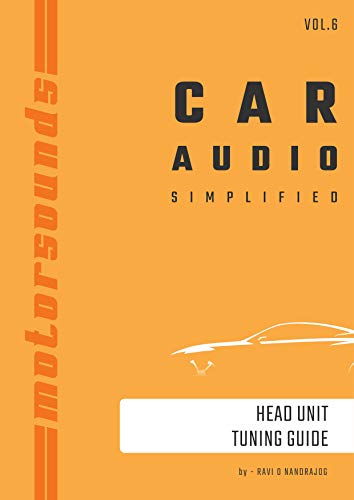 |
Motorsounds Car Audio Simplified – Head Unit Tuning Guide : Covers the entire concept of Frequencies | 9.5/10 | Check Price |
Top 5 Settings For Equalizer In Car Detailed Reviews
1. Motorsounds Car Audio Simplified – Head Unit Tuning Guide : Covers the entire concept of Frequencies
Rating: 9.5/10
This Motorsounds Car Audio Simplified – Head Unit Tuning Guide is your key to unlocking amazing sound in your car. It’s the sixth book in a series dedicated to making car audio easy to understand. This guide breaks down complex topics like frequencies, crossovers, equalizers, filters, and time alignment. You’ll learn how these elements work together to create a better listening experience. The book aims to simplify the tuning process for your car’s head unit.
What We Like:
- Explains difficult car audio concepts in a simple way.
- Covers important tuning tools like equalizers and crossovers.
- Helps you understand how to make your car’s sound system sound its best.
- Part of a series, so you can learn more about car audio.
What Could Be Improved:
- The “N/A” for features means we don’t have specific details on what makes this book stand out beyond its content.
- More examples or diagrams could make the explanations even clearer.
This guide is a fantastic resource for anyone wanting to improve their car’s audio without getting overwhelmed. It empowers you to take control of your sound.
Finding the Perfect Sound: Your Guide to Car Equalizer Settings
Want your car’s music to sound amazing? A car equalizer is your secret weapon. It lets you tweak the sound, making bass thumpier or treble clearer. This guide will help you choose the right one and get the best sound.
Key Features to Look For
When shopping for a car equalizer, keep these important features in mind:
Number of Bands
- More bands mean more control. A 5-band equalizer is good for basic adjustments. A 7-band or 10-band equalizer offers finer tuning.
Frequency Range
- This shows the lowest and highest sound frequencies the equalizer can adjust. A wider range gives you more flexibility.
Input and Output Options
- Check if it has the right connections for your car stereo and speakers. Look for RCA inputs and outputs.
Built-in Amplifier
- Some equalizers have amps built-in. This can boost your speaker’s power.
User Interface
- Is it easy to understand and use? Look for clear buttons and a simple display.
Important Materials
The materials used affect how long your equalizer lasts and how well it works.
Durable Casing
- A strong metal casing protects the electronics inside. This is important for a car environment, which can be bumpy.
High-Quality Components
- Look for brands that use good internal parts. This leads to better sound quality and fewer problems.
Factors That Improve or Reduce Quality
Several things can make your equalizer’s sound better or worse.
Sound Quality
- A good equalizer produces clear, undistorted sound. It should handle loud volumes without crackling.
Ease of Installation
- If you’re installing it yourself, a unit with clear instructions and standard connectors makes things easier.
Durability
- Car interiors can get hot or cold. A well-built equalizer can handle these changes. Cheap ones might break.
Advanced Features
- Some equalizers have features like digital signal processing (DSP). These can automatically improve your sound.
User Experience and Use Cases
How you use your equalizer matters.
For Music Lovers
- If you love bass-heavy music, you’ll want to boost those low frequencies. For acoustic music, you might want to emphasize the mids and highs.
For Audiophiles
- Those who crave perfect sound will appreciate equalizers with many bands. This allows for very precise adjustments.
For Road Trips
- You can adjust settings to overcome road noise. This makes dialogue in podcasts or vocals in songs easier to hear.
Simple Adjustments
- Even a basic 5-band equalizer can make a big difference. You can easily make music sound richer.
Frequently Asked Questions about Car Equalizer Settings
Q: What is a car equalizer?
A: A car equalizer is a device that lets you change the levels of different sound frequencies. You can make the bass louder or the treble sharper.
Q: How many bands do I need on an equalizer?
A: For basic listening, 5 bands are usually enough. If you want to fine-tune your sound a lot, consider 7 or 10 bands.
Q: Can an equalizer fix bad speakers?
A: An equalizer can improve the sound, but it can’t magically fix very poor-quality speakers. It works best with decent speakers.
Q: How do I set the bass on my equalizer?
A: To make bass louder, turn up the lower frequency bands (like 60Hz or 100Hz). Be careful not to overdo it, or the sound can get muddy.
Q: How do I make music sound clearer?
A: To make music clearer, try turning up the higher frequency bands (like 5kHz or 10kHz). This boosts the treble and can make vocals stand out.
Q: What is a graphic equalizer?
A: A graphic equalizer has sliders for each frequency band. You move the sliders up or down to adjust the sound. This is the most common type.
Q: What is a parametric equalizer?
A: A parametric equalizer offers more control. You can adjust the frequency, the width of the frequency band (Q factor), and the gain (how much you boost or cut).
Q: Do I need an equalizer if my car stereo has bass and treble controls?
A: Yes. A stereo’s bass and treble controls are very basic. An equalizer gives you much more detailed control over many more sound frequencies.
Q: Can I install a car equalizer myself?
A: Yes, many people can install a car equalizer themselves. You will need some basic tools and knowledge of car wiring. If you are unsure, it is best to have a professional do it.
Q: How do I set an equalizer for different types of music?
A: For rock music, you might boost bass and mids. For classical music, you might want a flatter, more balanced sound. Experiment to find what sounds best to you for each genre.
In conclusion, every product has unique features and benefits. We hope this review helps you decide if it meets your needs. An informed choice ensures the best experience.
If you have any questions or feedback, please share them in the comments. Your input helps everyone. Thank you for reading.