
Imagine your favorite music, crystal clear and filling your room with energy. That’s the magic a great amplifier brings to your sound system. But when you start looking for a “rated integrated amplifier,” the choices can feel overwhelming, right? You see so many numbers and features, and it’s hard to know which one will truly make your music sound its best.
Choosing the right integrated amplifier can feel like a puzzle. You want something that sounds amazing, works well with your speakers, and doesn’t break the bank. The confusion often comes from understanding what those “ratings” really mean and how they affect the sound you hear. It’s easy to get lost in technical jargon.
That’s where this guide comes in. We’ll break down what makes a rated integrated amplifier truly great. You’ll learn how to understand those important ratings so you can pick an amplifier that fits your needs perfectly. By the end, you’ll feel confident about choosing the perfect heart for your audio system.
Our Top 5 Rated Integrated Amplifiers Recommendations at a Glance
Top 5 Rated Integrated Amplifiers Detailed Reviews
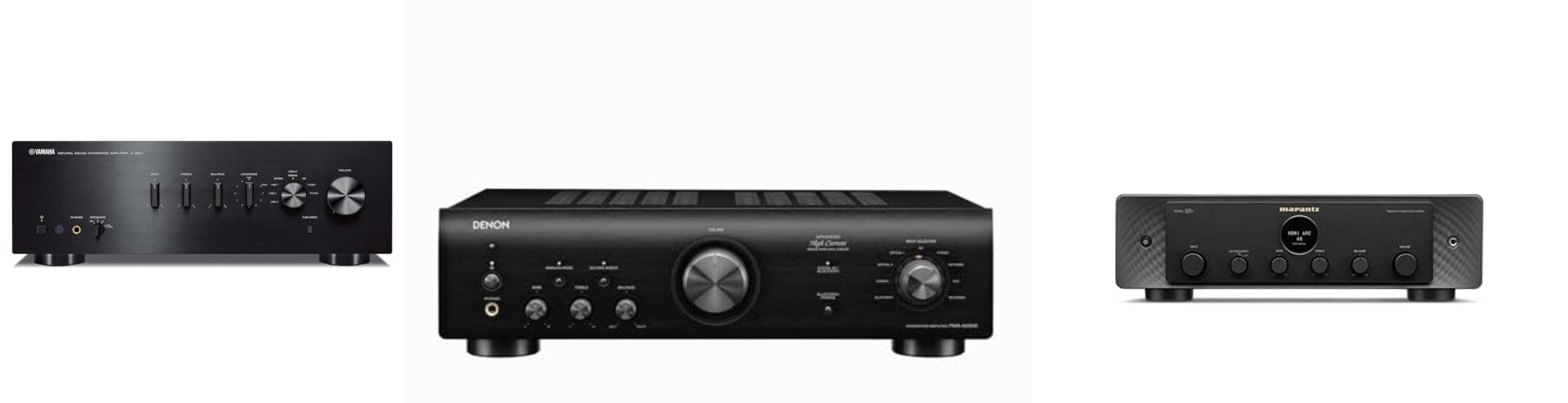
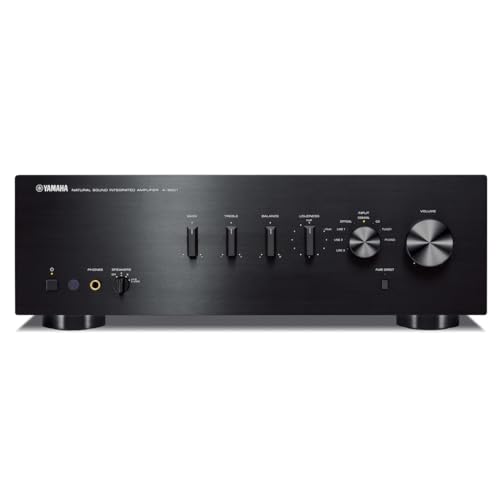
1. YAMAHA A-S501BL Natural Sound Integrated Stereo Amplifier (Black)
Rating: 8.9/10
The YAMAHA A-S501BL Natural Sound Integrated Stereo Amplifier in sleek black is a powerhouse for any music lover. It delivers clear, rich sound that brings your favorite songs to life. This amplifier is designed to be the heart of your audio system, connecting all your music sources with ease.
What We Like:
- It packs a punch with 85 watts of power for each channel, giving you plenty of volume and detail.
- You can easily connect digital devices like CD players or streamers using the gold-plated digital coax or TOSLINK optical inputs.
- It also has gold-plated analog inputs, so you can connect your turntable (it even has a phono input!) and other older audio gear.
- You can connect two sets of speakers, or even run them both at the same time for a bigger sound experience.
- The auto standby feature is smart; it turns off after 8 hours of inactivity, saving energy.
- Its standby power consumption is super low, just 0.5 W, which is great for the environment and your electricity bill.
What Could Be Improved:
- While it offers great sound, some might wish for even more advanced digital features like Wi-Fi streaming built-in.
- The design is classic and functional, but not as modern or minimalist as some other high-end amps.
This Yamaha amplifier is a fantastic choice for anyone who values pure sound and versatile connections. It’s built to last and provides an enjoyable listening experience for years to come.
2. Denon PMA-600NE Stereo Integrated Amplifier

Rating: 8.6/10
The Denon PMA-600NE Stereo Integrated Amplifier is a fantastic choice for anyone looking to upgrade their home audio system without breaking the bank. It packs a punch with 70W of power per channel, making it capable of driving a wide range of speakers. Plus, it’s loaded with features like Bluetooth, a built-in DAC, and a phono pre-amp, giving you tons of ways to connect your music sources. It even has a special “Analog Mode” to shut off digital circuits for a pure analog listening experience.
What We Like:
- Amazing sound quality for its price.
- You can turn off the digital parts for a cleaner analog sound.
- It has Bluetooth, so you can easily play music from your phone.
- Plenty of inputs for CD players, turntables, and more.
- The sound is clear, powerful, and really immersive.
- Denon has a long history of making great audio gear, so it’s built to last.
- It has a slim and modern design that looks good anywhere.
What Could Be Improved:
- Some users might prefer more digital inputs.
- The remote control could be more intuitive for some.
This Denon amplifier offers a superb listening experience with its thoughtful design and impressive features. It’s a smart investment for any music lover.
3. Marantz Model 40n Integrated Stereo Amplifier with HEOS Built-in (Black)

Rating: 8.8/10
The Marantz Model 40n Integrated Stereo Amplifier in sleek black is your all-in-one solution for amazing sound. It’s designed to be the heart of your music system. You just need to add your favorite speakers, and Marantz handles the rest. This amplifier is built for today’s music lovers, offering a truly “Most Musical Sound.”
What We Like:
- It’s incredibly easy to set up. Just add speakers, and you’re ready to go.
- It’s built for streaming. You can easily play music from Spotify, Apple Music, Tidal, and more, thanks to HEOS technology.
- AirPlay and Bluetooth are also included for more streaming options.
- The sound is expertly tuned by Marantz’s Sound Masters for the best listening experience.
- It provides 70 watts of power per channel, enough to drive most speakers beautifully.
- Voice control is a breeze. It works with Amazon Alexa, Google Assistant, and Apple Siri.
What Could Be Improved:
- While it has many streaming services, some niche platforms might not be directly supported without workarounds.
- The 70-watt power output might be limiting for very large rooms or extremely demanding, inefficient speakers.
The Marantz Model 40n truly simplifies high-quality audio. It delivers a rich, detailed sound that makes music come alive.
4. NQ-GA40P3 Nyquist 40W PoE++ Plenum-Rated Integrated Amplifier Module

Rating: 9.3/10
The Nyquist NQ-GA40P3 is a powerful and versatile amplifier module designed for distributed sound systems. It packs 40 watts of audio power, meaning it can drive bigger speakers or more speakers to cover larger areas. This module is also plenum-rated, which is a fancy way of saying it’s safe to install in spaces like ceilings, making installation super flexible. Plus, it uses Power-over-Ethernet Plus (PoE++), so you can power it through your network cable, simplifying your setup.
What We Like:
- The 40W power output is great for driving loud speakers or many speakers for wider coverage.
- It supports 25V/70V distributed sound systems, making it adaptable to different setups.
- Plenum-rating means you can install it almost anywhere, like in ceilings.
- PoE++ compliance simplifies installation by allowing power and data over a single Ethernet cable when used with compatible switches.
- The balanced line input and output offer flexibility for connecting other audio gear.
What Could Be Improved:
- An optional power injector is needed if you don’t have a PoE++ switch, adding an extra purchase.
- The NQ-GAXMR1 transformer is required to use the 25V/70V capabilities, which is an additional component to consider.
This amplifier module offers robust power and flexible installation options, making it a solid choice for many sound system needs.
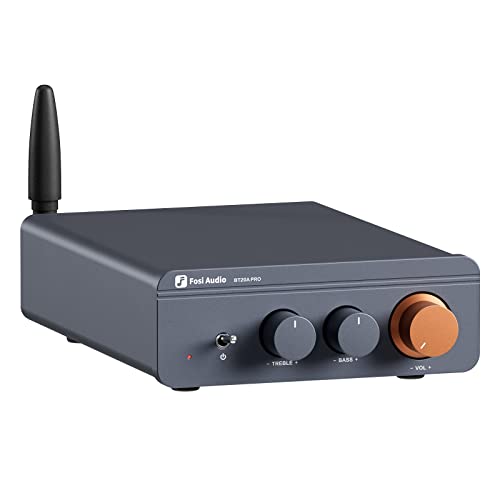
5. Fosi Audio BT20A Pro Bluetooth 5.0 Amplifier
Rating: 9.1/10
The Fosi Audio BT20A Pro is a powerful and versatile Bluetooth amplifier. It brings high-quality sound to your home or even outdoors. This mini stereo receiver uses a TPA3255 chip to deliver a strong 300 Watts of power to each of its two channels. You can connect your passive speakers and enjoy clear, detailed audio. Its compact size makes it easy to place anywhere.
What We Like:
- It packs a punch with 300W x 2 power output, thanks to the TPA3255 chip.
- You can customize your sound by swapping out the included NE5532 Op-Amps with other compatible ones.
- Bluetooth 5.0 offers a stable wireless connection with easy pairing and a memory function.
- Built-in bass and treble controls let you fine-tune your audio to your liking.
- It’s very energy efficient, using less than 2.5W when idle.
- The package includes everything you need to get started.
What Could Be Improved:
- While the Op-Amp swapping is a great feature, it requires some technical know-how.
- The Bluetooth connection can be removed by holding the volume button, which might be accidentally triggered.
The Fosi Audio BT20A Pro is an excellent choice for anyone looking to upgrade their audio system with wireless convenience and impressive sound quality. It offers great value with its features and performance.
Choosing Your Perfect Sound Companion: A Guide to Rated Integrated Amplifiers
An integrated amplifier is like the heart of your stereo system. It takes the music signal from your sources (like a CD player or streamer) and makes it powerful enough to drive your speakers. It combines a preamplifier (which controls volume and source selection) and a power amplifier (which boosts the signal) into one neat package. This guide will help you find the best one for your listening pleasure.
1. Key Features to Look For
A. Power Output (Watts):
This tells you how loud the amplifier can play. More watts usually mean it can drive bigger speakers or fill larger rooms. For most small to medium-sized rooms, 50-100 watts per channel is plenty.
B. Inputs and Outputs:
- Inputs: These are where you connect your music sources. Look for enough inputs for all your devices. Common inputs include RCA (for analog sources like turntables), digital inputs (like optical or coaxial for streamers or CD players), and sometimes even USB for direct computer connection.
- Outputs: The most important output is for your speakers. Some amplifiers also have pre-out jacks, which let you connect a separate power amplifier later if you want to upgrade.
C. Phono Stage:
If you love vinyl, a built-in phono stage is a must. This special input is designed to work with your turntable’s cartridge, making your records sound their best.
D. Connectivity (Bluetooth, Wi-Fi):
Many modern integrated amps offer wireless streaming. Bluetooth is easy for quick connections. Wi-Fi allows for higher quality streaming and access to internet radio and music services.
E. Remote Control:
A remote control makes it easy to adjust volume and switch sources without getting up.
2. Important Materials
The materials used in an amplifier’s construction can affect its sound quality and durability. High-quality metals like aluminum are often used for the chassis. This helps to shield the sensitive electronic components from outside interference and dissipate heat. Inside, good quality capacitors and resistors are used for cleaner sound.
3. Factors That Improve or Reduce Quality
A. What Makes it Better:
- Clean Power Supply: A well-designed power supply ensures the amplifier gets stable electricity, leading to clearer sound.
- Good Internal Wiring: High-quality internal wires can transmit the audio signal with less loss.
- Robust Build Quality: A solid, well-built amplifier is more likely to last longer and perform consistently.
- Reputable Brands: Companies with a long history of making audio equipment often produce higher quality products.
B. What Can Make it Worse:
- Cheap Components: Using low-cost parts can lead to a less detailed and more distorted sound.
- Poor Heat Dissipation: If an amplifier gets too hot, it can affect its performance and lifespan.
- Interference: If the casing isn’t well-shielded, outside electrical noise can get into the audio signal.
4. User Experience and Use Cases
A. Simplicity for Beginners:
Many integrated amplifiers are designed to be user-friendly. You simply connect your sources, plug in your speakers, and you’re ready to go. This makes them perfect for people just starting their audio journey.
B. The Audiophile’s Choice:
For experienced listeners, an integrated amplifier can be a fantastic central hub. It offers a clean signal path and can be paired with high-quality speakers for an exceptional listening experience. Some higher-end models even offer advanced features like room correction or digital-to-analog converters (DACs).
C. Versatile for Different Setups:
Whether you’re building a dedicated music room, a home theater system, or just want to upgrade your computer audio, an integrated amplifier can fit. It’s a great all-in-one solution that simplifies your setup.
Choosing the right integrated amplifier is an exciting step towards better sound. Consider your needs, your budget, and the features that matter most to you. Happy listening!
Frequently Asked Questions (FAQ)
Q1: What is the main difference between an integrated amplifier and a receiver?
A1: An integrated amplifier combines a preamplifier and a power amplifier. A receiver adds a radio tuner (like FM/AM) to the integrated amplifier’s functions. Some receivers also include video switching for home theater systems.
Q2: Do I need a separate preamplifier and power amplifier?
A2: Not necessarily. An integrated amplifier does the job of both in one box. Separate components are usually for those seeking the absolute highest level of performance and flexibility.
Q3: How much power (watts) do I need?
A3: For most home listening, 50-100 watts per channel is sufficient for medium-sized rooms and most speakers. If you have very large rooms or inefficient speakers, you might need more power.
Q4: What is a phono stage, and do I need one?
A4: A phono stage is a special circuit designed to boost and equalize the tiny signal from a turntable’s cartridge. You need one if you plan to connect a record player directly to your amplifier.
Q5: Can I connect my TV to an integrated amplifier?
A5: Yes, if your TV has audio outputs (like optical or RCA) and your amplifier has corresponding inputs. This can significantly improve your TV’s sound quality.
Q6: What does “Class A,” “Class AB,” or “Class D” mean for amplifiers?
A6: These are different ways amplifiers amplify the audio signal. Class A is known for its purity but is less efficient. Class AB is a good balance of sound quality and efficiency. Class D is very efficient and often found in smaller, more modern designs.
Q7: Is a built-in DAC important?
A7: A DAC (Digital-to-Analog Converter) converts digital music files (like from a streamer or computer) into an analog signal your amplifier can understand. A good built-in DAC can improve the sound quality of digital sources.
Q8: How important is the build quality of the amplifier’s casing?
A8: The casing, often made of metal, helps to block out electrical noise and dissipate heat. A robust build quality contributes to a cleaner sound and a longer lifespan for the amplifier.
Q9: Can I connect two pairs of speakers to an integrated amplifier?
A9: Some integrated amplifiers have “Speaker A” and “Speaker B” outputs, allowing you to connect and control two pairs of speakers independently or simultaneously.
Q10: What is the difference between an integrated amplifier and a power amplifier?
A10: An integrated amplifier has both a preamplifier (volume and source control) and a power amplifier (signal boosting) in one unit. A power amplifier only has the signal boosting stage and requires a separate preamplifier to control it.
In conclusion, every product has unique features and benefits. We hope this review helps you decide if it meets your needs. An informed choice ensures the best experience.
If you have any questions or feedback, please share them in the comments. Your input helps everyone. Thank you for reading.