
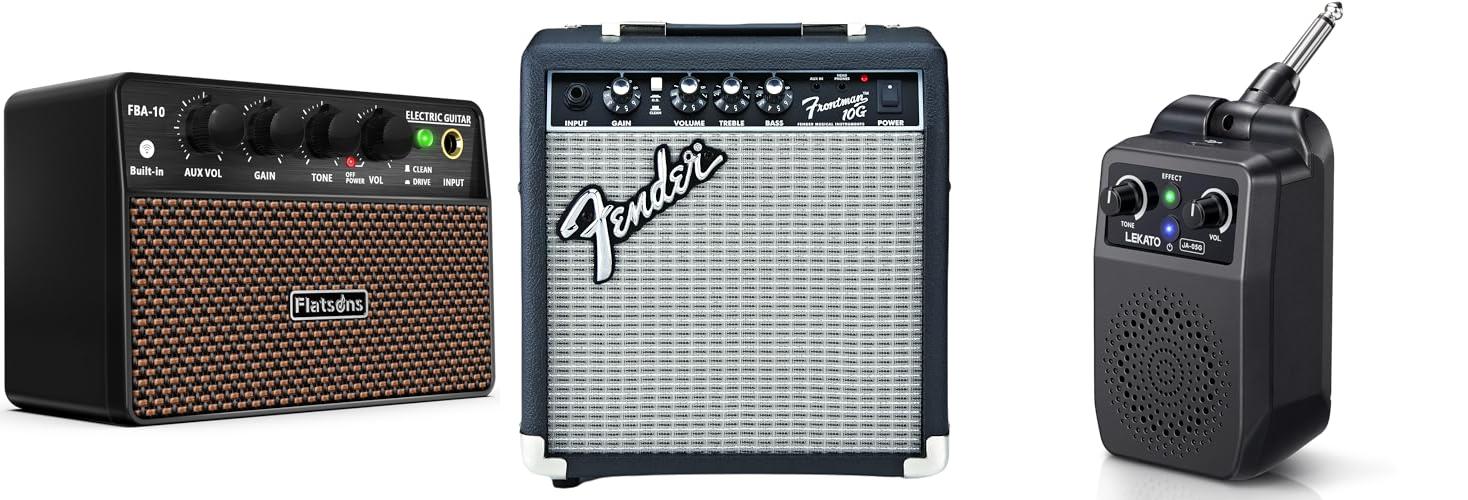
Imagine this: you’ve just learned your first power chord, and the sound that comes out is… well, let’s just say it’s not quite the roaring riff you heard in your head. That’s where a good practice guitar amplifier comes in. It’s your secret weapon for turning those bedroom strumming sessions into something truly inspiring.
But walking into a guitar shop or browsing online can feel overwhelming. So many knobs, so many brands! It’s easy to get lost and wonder if you’re picking the amp that will actually help you get better, or just add to the clutter. You want an amp that sounds great, won’t break the bank, and is easy to use. Finding that perfect balance can be a real challenge.
This post is here to cut through the confusion. We’ll explore what makes a great practice amp and guide you through the features that really matter. By the end, you’ll feel confident about choosing an amplifier that will make your guitar practice more enjoyable and productive. Let’s dive in and find the amp that helps you rock!
Our Top 5 Practice Guitar Amplifier Recommendations at a Glance
Top 5 Practice Guitar Amplifier Detailed Reviews
1. Flatsons FBA-10 Guitar Amp

Rating: 9.3/10
The Flatsons FBA-10 is a compact and versatile 10W mini electric guitar amplifier. It’s designed for easy practice anywhere, from your room to a park. It features both clean and drive channels, a long-lasting rechargeable battery, and wireless capabilities.
What We Like:
- It uses pure analog technology for a clear and natural guitar sound.
- You can easily switch between a clean tone and a powerful drive tone.
- The amp has a headphone jack for quiet practice and an AUX jack to play along with music.
- It has wireless audio streaming, so you can play music from your phone or tablet.
- The amp is small and lightweight, making it easy to take with you.
- A full charge gives you up to 6 hours of playtime.
- The vintage-style woven grille looks cool and helps the sound.
- Flatsons offers good customer support and a 12-month guarantee.
What Could Be Improved:
- A slight buzzing or hissing can be normal on the drive channel, especially when the battery is low or while charging.
This amp is a fantastic option for guitarists who need a portable and reliable practice companion. Its blend of classic sound and modern features makes it a great choice for any guitarist on the go.
2. Fender Frontman 10G Guitar Amp

Rating: 8.9/10
The Fender Frontman 10G Guitar Amp is a compact powerhouse, perfect for beginners and practice sessions. This 10-watt amp packs a punch with its 6-inch Fender Special Design speaker, ready to help you explore a wide range of sounds from mellow blues to roaring metal.
-
What We Like:
- It’s small and light, making it easy to carry around.
- The controls are simple to understand and use. You can easily adjust the gain, volume, treble, and bass.
- The overdrive switch lets you quickly switch to a rockier sound.
- The closed-back design gives the bass tones a nice, full sound.
- It comes with a 2-year warranty, showing Fender’s confidence in its quality.
-
What Could Be Improved:
- For a beginner, the 10 watts might be enough, but more experienced players might want more power for jamming with others.
- While it covers many sounds, serious tone chasers might find it a bit limited.
The Fender Frontman 10G is a solid choice for anyone starting their guitar journey. It’s built with Fender’s legendary quality and offers a great sound for its size.
3. LEKATO Mini Electric Guitar Amp 5W

Rating: 9.4/10
The LEKATO Mini Electric Guitar Amp 5W is a compact and versatile amplifier designed for guitarists on the go. It packs a punch with its 5-watt speaker and offers a variety of built-in effects to spice up your practice sessions. Plus, its Bluetooth connectivity and rechargeable battery make it super convenient for playing anywhere, anytime.
What We Like:
- It has four awesome built-in effects: clean, distortion, overdrive, and reverb. This means you can try out different sounds easily.
- The amp is super small and light. You can easily fit it in your backpack and take it with you when you travel or just want to practice somewhere new.
- It’s a plug-and-play amp. It has a 6.35mm plug, so you just connect it directly to your guitar and start playing. No messy wires!
- The Bluetooth feature is a game-changer. You can connect your phone and play along to your favorite songs, making practice way more fun.
- It’s rechargeable and lasts for about 6 hours on a full charge. This saves you from buying batteries and searching for power outlets when you’re outside.
What Could Be Improved:
- The amp’s volume is adequate for practice, but it might not be loud enough for playing with a band or in a noisy environment.
- The Bluetooth function works for playing music from your device, but it doesn’t support Bluetooth headphones or speakers.
- It’s important to use the correct charger (5V 2A). Using a charger with a higher voltage can damage the amp.
This LEKATO amp is a fantastic option for any guitarist looking for a portable and feature-rich practice companion. It makes learning and playing more enjoyable with its built-in effects and convenient Bluetooth connectivity.
4. JOYO Mini Guitar Amp 5W Portable – Rechargeable Bluetooth Combo Amplifier with Built-in Effects (Clean

Rating: 8.9/10
Unleash your inner rockstar with the JOYO Mini Guitar Amp. This 5W portable amp is a game-changer for any guitarist looking for convenience and great sound. It’s rechargeable, has Bluetooth, and even packs built-in effects. You can practice anywhere without being tied down by cords. It’s a compact powerhouse designed for electric guitars and even electronic wind instruments.
What We Like:
- It works with all kinds of electric guitars. It even comes with an extension plug to help Strat-type guitars.
- It’s super portable and easy to use. Just plug it in and play! No more messy cords.
- It has four cool built-in effects: clean, distortion, overdrive, and reverb. You can switch between them easily.
- The Bluetooth 5.1 feature lets you play along with your favorite songs or just enjoy music.
- It’s rechargeable and lasts about 5 hours on a single charge. This is great for practicing on the go.
What Could Be Improved:
- The charging voltage needs to be just right (5V 2A). Using a stronger charger could damage the amp.
- While it’s great for practice, the 5W power might not be enough for larger jam sessions or performances.
The JOYO Mini Guitar Amp is a fantastic, user-friendly option for guitarists who want to practice and have fun anywhere. Its portability and built-in features make it a standout choice for beginners and experienced players alike.
5. CXLWZ Electric Guitar Amp 20 Watt Amplifier Portable Amp with Headphone Input Gain Powe Including Professional Noise Reduction Cable (Black)

Rating: 9.4/10
The CXLWZ Electric Guitar Amp 20 Watt Amplifier is a powerful yet portable option for guitarists. It delivers 20 watts of sound, perfect for practicing at home or even playing at small gigs. This amp comes with a special cable that helps reduce unwanted noise, giving you a cleaner sound.
What We Like:
- It’s powerful enough for practice and small performances.
- It has an AUX input so you can play along with music from your phone.
- The headphone jack lets you practice quietly without bothering anyone.
- You can easily adjust the sound with knobs for gain, bass, treble, and volume.
- It’s built tough with protective edges and rubber feet for stability.
- It’s lightweight and has a handle, making it easy to carry around.
- The included noise-reduction cable ensures a better sound.
What Could Be Improved:
- For very loud performances, 20 watts might not be enough.
- While durable, the materials are standard for this price point.
This CXLWZ amp is a solid choice for any guitarist needing a reliable and portable practice companion. It offers great features for its size and price.
Your First Strum: A Guide to Choosing a Practice Guitar Amplifier
So, you’ve got a guitar and you’re ready to make some noise! That’s awesome. But to really hear your guitar sing, you need an amplifier. Think of it as the voice for your instrument. Choosing the right practice amp might seem a little confusing at first, but this guide will help you find the perfect one to get you jamming.
What to Look For: Key Features
Power (Wattage):
This tells you how loud the amp can get. For practicing at home, a smaller amp with 10-30 watts is usually plenty. You don’t need to blast the neighbors away! Smaller amps are also easier to carry.
Speaker Size:
The speaker moves the air and makes the sound. Bigger speakers (like 10-inch or 12-inch) often give a fuller sound. Smaller speakers (like 6-inch or 8-inch) are good for tiny amps that are super portable.
Channels:
Some amps have different channels. A “clean” channel gives you a pure guitar sound. A “drive” or “distortion” channel adds that rock and roll grit. Having both lets you explore different styles of music.
Tone Controls:
These knobs help you shape your sound. You’ll usually find controls for Bass (low sounds), Mid (middle sounds), and Treble (high sounds). A “Gain” knob controls how much distortion you get. Experimenting with these is part of the fun!
Headphone Jack:
This is a lifesaver for quiet practice! Plug in headphones, and you can play as loud as you want without bothering anyone.
Auxiliary Input (Aux In):
This lets you plug in your phone or MP3 player. You can play along with your favorite songs. It’s a great way to learn new tunes.
Materials That Matter
Most practice amps use strong plywood for the cabinet. This helps the sound come out clear. The speaker cone is usually made of paper or a strong synthetic material. Grilles protect the speaker. Metal or strong fabric grilles work well.
What Makes an Amp Great (or Not So Great)
Quality Factors:
- Good Sound: Does it sound clear and pleasant? Does it have a good range of tones?
- Durable Build: Does it feel solid and well-made? Will it last a long time?
- Easy Controls: Are the knobs and buttons simple to understand and use?
- Reliable Electronics: Does it work without crackling or buzzing sounds?
Factors That Can Reduce Quality:
- Cheap Plastic Parts: These can break easily.
- Poor Speaker Quality: A bad speaker makes any amp sound weak.
- Flimsy Cabinet: A weak cabinet can vibrate and make unwanted noise.
- Limited Tone Options: If you can only get one sound, it gets boring fast.
Using Your Amp: User Experience and Use Cases
Practice amps are designed for learning and fun. You’ll use them to:
- Learn Chords and Scales: Hear yourself clearly as you practice the basics.
- Play Along with Songs: Use the Aux In to jam with your favorite artists.
- Experiment with Sounds: Try out different amp settings and effects.
- Write Your Own Music: Hear your ideas come to life.
- Practice Quietly: The headphone jack is your best friend for late-night sessions.
A good practice amp should be easy to set up and use right away. You want to spend more time playing and less time fiddling with complicated settings. Most are plug-and-play simple.
Frequently Asked Questions (FAQ)
Q: Do I need a really powerful amp to practice?
A: No, for home practice, a lower wattage amp (10-30 watts) is usually perfect. You don’t need to be super loud.
Q: What’s the difference between a solid-state and a tube amp for practice?
A: Solid-state amps are more common for practice. They are usually cheaper, lighter, and don’t need maintenance like tube amps. Tube amps have a classic sound, but are often more expensive and fragile.
Q: Can I use my practice amp for small gigs?
A: Maybe a very, very small acoustic gig. But practice amps are usually too quiet for most band settings. They’re best for solo playing at home.
Q: How important is the speaker size?
A: Speaker size affects the fullness of the sound. Larger speakers (10-12 inches) generally give a richer tone. Smaller speakers (6-8 inches) are fine for portability.
Q: What does “clean” and “distortion” mean on an amp?
A: “Clean” is your normal, clear guitar sound. “Distortion” (or “overdrive” or “gain”) adds a fuzzy, gritty, or crunchy sound, which is great for rock and blues.
Q: Is a headphone jack really necessary?
A: It’s highly recommended for practice! It lets you play anytime without disturbing others, especially if you live with people or in an apartment.
Q: Can I plug effects pedals into a practice amp?
A: Yes! Most practice amps have an input jack for effects pedals. This lets you add even more cool sounds to your guitar.
Q: What if an amp sounds “fizzy” or “thin”?
A: That might mean the amp’s electronics or speaker aren’t very good. Try to test amps in person if you can, or read reviews to avoid this.
Q: How much should I expect to spend on a good practice amp?
A: You can find decent practice amps for around $100 to $250. More expensive ones might offer more features or better sound quality.
Q: What’s the best way to learn how to use my amp’s features?
A: Read the amp’s manual! Also, YouTube has tons of videos where people demonstrate different amp settings and sounds. Experimenting is also key!
In conclusion, every product has unique features and benefits. We hope this review helps you decide if it meets your needs. An informed choice ensures the best experience.
If you have any questions or feedback, please share them in the comments. Your input helps everyone. Thank you for reading.