

Imagine trying to host a backyard party or lead a community event without clear sound. Frustrating, right? Getting your music or voice heard loud and clear often comes down to one crucial piece of gear: a powered mixer amplifier. But with so many brands and features out there, picking the perfect one can feel like navigating a maze.
You want your sound system to be reliable and easy to use, but the sheer number of choices can be overwhelming. Perhaps you’ve spent hours scrolling through specs, only to feel more confused than when you started. This is where a powered mixer amplifier shines – it combines a mixer and an amplifier into one convenient unit, simplifying your setup and saving you space.
This guide is here to cut through the noise and help you understand exactly what you need. We’ll break down the key features to look for, explain what those technical terms really mean, and help you find a powered mixer amplifier that fits your budget and your sound needs. Get ready to discover how to choose the right one so your next event sounds fantastic!
Our Top 5 Powered Mixer Amplifier Recommendations at a Glance
Top 5 Powered Mixer Amplifier Detailed Reviews
1. Rockville RPM109 V2 12 Channel Powered Mixer

Rating: 8.9/10
The Rockville RPM109 V2 is a powerful 12-channel powered mixer. It delivers a massive 4800W of peak power, with 600W RMS per channel at 4 ohms. This mixer is packed with features for both live performances and studio work. You can easily connect your microphones and instruments. It also lets you play music from Bluetooth, USB, or SD cards. You can even record your mixes directly to a computer.
What We Like:
- It has plenty of power to fill a room with sound.
- You get 12 channels for many inputs, including 8 mic inputs with phantom power.
- Bluetooth, USB, and SD card support make playing music super easy.
- You can shape your sound with 3-band EQ on each channel and a 7-band stereo EQ for the whole mix.
- There are 24 built-in digital effects to add flair to your sound.
- It’s built tough with a wood enclosure and good cooling to keep it running smoothly.
- You can record your music directly to your computer using the USB interface.
What Could Be Improved:
- While powerful, the 600W RMS might be a bit much for very small practice spaces.
- The sheer number of features might take a little time to learn for beginners.
This mixer offers a lot of bang for your buck. It’s a solid choice for anyone needing a versatile and powerful audio solution.
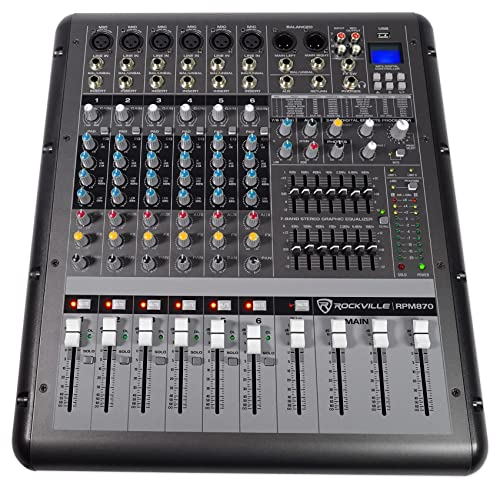
2. Rockville RPM870 6000w Powered Mixer
Rating: 9.2/10
The Rockville RPM870 6000w Powered Mixer is a powerful and versatile tool for bands and DJs. It packs a lot of features into one unit, making it a great choice for live performances and parties. You can connect microphones, instruments, and even stream music wirelessly.
What We Like:
- Super clear sound thanks to 8 XDR2 low-noise mic preamps.
- You can plug in almost anything with USB, Bluetooth, and RCA options.
- It’s really powerful, so your music will be loud and clear.
- The built-in effects add a professional touch to your sound.
- You have lots of control over your sound with EQs and channel buttons.
- It works anywhere in the world with its switchable power.
What Could Be Improved:
- While powerful, the 6000w peak rating might be overkill for smaller gigs.
- The 16 built-in effects are good, but a few more options would be nice.
For bands and DJs looking for an all-in-one mixer, the Rockville RPM870 is a strong contender. It offers great sound quality and plenty of features to get the job done.
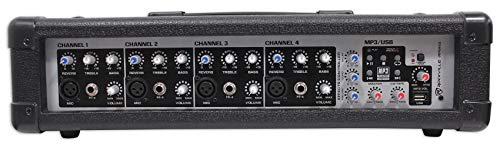
3. Rockville RPM45 1800w Powered 4-Channel Mixer Amplifier
Rating: 9.1/10
The Rockville RPM45 1800w Powered 4-Channel Mixer Amplifier is a fantastic piece of gear for anyone needing a powerful and versatile audio solution. It packs a punch with 1800 watts of peak power, making your sound clear and loud. This mixer amplifier is perfect for live music, karaoke nights, or even presentations in smaller venues. Its user-friendly design and robust features make it a top choice for musicians and event organizers alike.
What We Like:
- It delivers impressive 1800w peak power for loud and clear sound, perfect for live performances.
- You get lots of ways to connect your gear with 4 XLR/1/4″ inputs, USB, and AUX options.
- You can easily tweak your sound with built-in echo, delay, and reverb effects, plus bass and treble controls for each channel.
- The sturdy wooden case protects it well, and its compact size makes it easy to carry to gigs.
- It includes phantom power for condenser microphones and a cooling fan for long, reliable use.
What Could Be Improved:
- While powerful, the RMS power per channel might be a bit low for very demanding situations in larger venues.
- The manual could be more detailed for beginners exploring all the advanced features.
This Rockville mixer amplifier offers great value and performance for its price point. It’s a reliable and capable tool for bringing your music or presentations to life.
4. Rockville RPM48S 2000W Powered 4 Channel Mixer/Stereo Amplifier

Rating: 9.1/10
The Rockville RPM48S is a powerful and versatile 2000W powered mixer and stereo amplifier. It’s designed for DJs and live events, offering plenty of power for small to medium-sized venues. This unit combines a mixer and amplifier into one easy-to-use package, making it a great choice for anyone needing a reliable sound solution.
What We Like:
- It has a big 2000W output. This makes your sound clear and strong.
- It comes with 4 channels. You can plug in microphones or instruments easily.
- You can play music from Bluetooth, USB, or SD cards. This gives you lots of ways to play your music.
- It has a 3-band EQ. You can adjust the bass, mid, and treble sounds.
- It is not too heavy. It weighs only 17.08 lbs, so you can carry it around easily.
What Could Be Improved:
- The 2000W is a peak power. The RMS power is 250W per channel, which is still good but not the full 2000W.
- While versatile, it might lack some advanced features found on more expensive professional mixers.
The Rockville RPM48S is a solid choice for its power and features. It’s a great value for DJs and live performers looking for a convenient and capable audio system.
5. Rockville RPM85 2400W Powered 8 Channel Mixer

Rating: 9.0/10
The Rockville RPM85 2400W Powered 8 Channel Mixer is a powerful and versatile audio solution. It’s designed to handle live music and events with ease. This mixer offers plenty of power to drive your speakers. It also gives you lots of ways to connect your gear and shape your sound.
What We Like:
- It delivers a strong 2400W of peak power. This is great for small to medium-sized venues.
- You can stream music wirelessly with Bluetooth. You can also play music from USB drives or SD cards.
- It has 8 channels, each with mic/line inputs. This means you can connect many microphones and instruments.
- The 5-band graphic EQ lets you fine-tune your sound. You can also add echo and delay effects to make vocals and instruments sound better.
- It provides +15V phantom power. This is necessary for condenser microphones to work.
- The mixer is built tough with a rugged wood cabinet. It’s also compact and not too heavy, making it easy to move around for gigs or in a studio.
- Each channel has its own controls for reverb, bass, and treble. This gives you a lot of control over each sound source.
What Could Be Improved:
- While powerful, the RMS power is 300W x 2 @ 4 Ohms. Some users might want even more power for larger venues.
- The phantom power is +15V. Some condenser mics might require a higher voltage, though most will work.
This Rockville mixer is a solid choice for anyone needing a capable and flexible sound system for live performances or events. Its combination of power, connectivity, and sound control makes it a valuable tool for musicians and event organizers.
Your Guide to Choosing the Best Powered Mixer Amplifier
Are you looking for a way to make your music sound amazing? A powered mixer amplifier is a great tool for this. It mixes sound signals together and makes them louder so you can hear them better. This guide will help you pick the right one for your needs.
What is a Powered Mixer Amplifier?
Think of it like this: a powered mixer amplifier is a superhero for your sound. It takes all your microphones and instruments, blends them into one perfect sound, and then makes that sound strong enough to fill a room or even a stage. It’s an all-in-one device that simplifies your setup.
Key Features to Look For
When you shop for a powered mixer amplifier, keep these important things in mind.
Number of Channels
- What it means: Channels are like different inputs for your sound sources. Each microphone or instrument needs its own channel.
- Why it matters: If you have a small band with just a singer and a guitar, you won’t need as many channels as a group with drums, bass, keyboards, and multiple singers.
- Recommendation: Choose a mixer with more channels than you think you’ll need. This gives you room to grow and add more instruments later.
Power Output (Wattage)
- What it means: This tells you how loud the amplifier can make your sound. It’s measured in watts (W).
- Why it matters: A higher wattage means a louder sound. If you’re playing in a small room, you don’t need super high wattage. For outdoor events or large venues, you’ll need more power.
- Recommendation: Match the wattage to the size of the space you’ll be using. It’s better to have a little extra power than not enough.
Built-in Effects
- What it means: Many powered mixer amplifiers come with built-in effects like reverb (makes sound echoey) or delay (makes sound repeat).
- Why it matters: These effects can make your vocals or instruments sound richer and more professional without needing extra equipment.
- Recommendation: If you like to add a little sparkle to your sound, look for mixers with good quality built-in effects.
Portability and Size
- What it means: How easy is it to carry around? Does it fit in your car?
- Why it matters: If you move around a lot for gigs, a lighter and smaller mixer is a big help.
- Recommendation: Check the weight and dimensions. Some are designed to be compact and lightweight.
Important Materials and Build Quality
The materials used in a powered mixer amplifier affect how long it lasts and how well it works.
- Metal Casing: Most good mixers have a strong metal casing. This protects the inside parts from bumps and drops, which is important if you travel a lot.
- Durable Knobs and Faders: The knobs and faders are what you use to control the sound. They should feel solid and move smoothly. Cheap plastic parts can break easily.
- Good Quality Connectors: The places where you plug in your microphones and cables should be sturdy. Loose or flimsy connectors can cause sound problems.
Factors That Improve or Reduce Quality
Several things can make a powered mixer amplifier sound great or not so great.
What Makes it Better:
- Clear Preamps: The preamps are the first part of the mixer that handle your sound. Good preamps give you a clean and clear sound with very little background noise.
- Good EQ Controls: EQ (equalization) lets you adjust the bass, mid, and treble sounds. Helpful EQ controls allow you to fine-tune your audio to perfection.
- Reliable Cooling System: Amplifiers get hot when they work hard. A good cooling system (like fans) keeps the mixer from overheating and shutting down.
What Makes it Worse:
- Background Noise (Hum or Buzz): If you hear unwanted noise when nothing is playing, it usually means the mixer isn’t well-made.
- Distortion at High Volumes: When you turn the volume up too high, the sound can become fuzzy or distorted. This means the amplifier might not be strong enough or is of lower quality.
- Flimsy Construction: A mixer that feels cheap and light might not last very long, especially with regular use.
User Experience and Use Cases
How you use your powered mixer amplifier will guide your choice.
Who Uses Them and Why?
- Musicians and Bands: They use them for live shows in small to medium-sized venues. It helps them control the sound of their instruments and vocals.
- DJs: DJs might use them to connect their turntables or controllers and amplify their music for parties.
- Public Speakers and Presenters: For events like conferences or school assemblies, they use them to make sure everyone can hear the speaker clearly.
- Home Studios: Some people use them for recording or practicing at home, especially if they have multiple instruments.
Ease of Use:
- Simple Layout: A good mixer has clear labels and a logical arrangement of controls. This makes it easy to figure out how to use it, even if you’re new to sound equipment.
- All-in-One Solution: The biggest advantage is having everything in one box. This means fewer cables and less time setting up.
Frequently Asked Questions (FAQ)
Q: What is the main difference between a powered mixer and a regular mixer?
A: A powered mixer has a built-in amplifier to make the sound louder. A regular mixer only mixes the sound; you need a separate amplifier for power.
Q: How many channels do I really need?
A: Count how many microphones and instruments you will use at once. Always get a few extra channels for future needs.
Q: Is more wattage always better?
A: Not necessarily. More wattage means louder sound, but you only need enough for the space you’re in. Too much power can be wasted.
Q: Can I use a powered mixer amplifier for my home stereo system?
A: While you can, it’s usually more complicated than a standard home stereo receiver. They are designed more for live sound.
Q: How do I connect my microphone to a powered mixer?
A: You plug your microphone into one of the input jacks (usually labeled “Mic In” or “XLR”) on the mixer.
Q: What does “phantom power” mean?
A: Phantom power is a small amount of voltage that some microphones, especially condenser mics, need to work. Powered mixers often have a button to turn this on.
Q: How do I avoid feedback (that high-pitched squeal)?
A: Feedback often happens when a microphone is too close to a speaker. Adjusting EQ can also help reduce it.
Q: Can I connect a powered mixer to powered speakers?
A: Yes, you can. You would connect the output of the powered mixer to the input of the powered speakers.
Q: What is the lifespan of a powered mixer amplifier?
A: With good care and proper use, a quality powered mixer amplifier can last for many years, often a decade or more.
Q: Where is the best place to buy a powered mixer amplifier?
A: You can find them at music stores, electronics shops, and online retailers. Reading reviews is very helpful before buying.
In conclusion, every product has unique features and benefits. We hope this review helps you decide if it meets your needs. An informed choice ensures the best experience.
If you have any questions or feedback, please share them in the comments. Your input helps everyone. Thank you for reading.