

Imagine a concert where the music is so quiet you can barely hear the singer. Or a home theater system where the explosions in your favorite movie are just faint whispers. That’s what happens without a key piece of audio equipment: the power amplifier. It’s the unsung hero that takes a small audio signal and makes it big enough to fill a room, power speakers, and bring sound to life.
But choosing the right power amplifier can feel like a puzzle. There are so many numbers and features to understand! You might wonder, “Which one is too big? Which one is too small?” Getting it wrong can mean weak sound, damaged speakers, or even a system that just doesn’t work. This can be frustrating when you just want to enjoy your music or movies.
This post is here to help. We’ll break down what a power amplifier does in simple terms. You’ll learn what to look for so you can pick the perfect one for your needs. By the end, you’ll feel confident about understanding power amplifiers and making a smart choice. Let’s dive into the world of powerful sound!
Our Top 5 Power Amplifier Recommendations at a Glance
Top 5 Power Amplifier Detailed Reviews
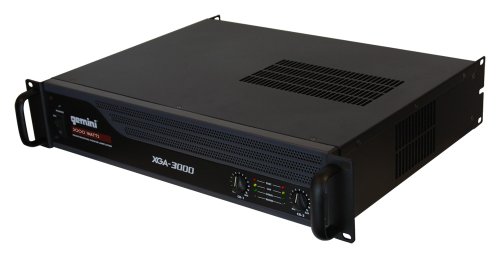
1. Gemini Professional 3000W 2-Channel Power Amplifier – PA & DJ Power Amp with XLR/RCA Inputs
Rating: 8.6/10
The Gemini Professional XGA-3000 is a powerful 2-channel amplifier built for loud and clear sound. It’s perfect for DJs, bands, and anyone who needs to boost their audio for live events. This amp delivers serious wattage to make your music and announcements really stand out.
What We Like:
- It packs a punch with 3000W of peak power, giving you lots of volume.
- You can connect all sorts of gear easily with XLR, 1/4″ TRS, and RCA inputs.
- It has Speakon and binding post outputs, so connecting speakers is simple.
- The built-in protection features keep your system safe from damage.
- A smart cooling fan keeps it running quietly and prevents overheating.
- It’s built tough in a 2U rackmount design, ready for any setup.
What Could Be Improved:
- While it offers great value, some users might prefer more advanced digital features.
- The RMS wattage per channel, while respectable, might not be enough for extremely large venues without additional units.
This amplifier is a solid choice for anyone needing reliable power for their audio needs. It offers great sound and protection, making your live performances sound their best.
2. Behringer Europower Ep4000 Professional 4

Rating: 9.3/10
The Behringer Europower EP4000 is a powerful stereo amplifier that brings big sound to your audio setup. It’s designed to handle demanding audio needs, whether you’re setting up for a live show or powering a serious home stereo. This amp packs a serious punch with its impressive wattage, ensuring your speakers get plenty of clean power to make your music shine.
What We Like:
- It delivers a massive 4,000 watts of power, which is great for loud events.
- It can power two speakers at 2,000 watts each, or one big speaker at 4,000 watts when in bridge mode.
- The Accelerated Transient Response (ATR) technology helps with clear and sharp sound, especially for quick musical notes.
- Easy-to-see lights show you if the amp is getting a signal, if it’s working hard (clip), or if it’s powered on.
- It has different ways to connect your sound sources, like XLR and 1/4″ TRS plugs.
- The speaker connections are safe and work with most speaker wires.
- You can turn on filters to cut out low rumbly sounds that you don’t need.
What Could Be Improved:
- While powerful, some users might find it a bit heavy to carry around.
- For very sensitive ears, there might be a slight hum at low volumes.
The Behringer Europower EP4000 is a solid choice for anyone needing a strong and reliable amplifier. It offers impressive power and useful features for a great audio experience.
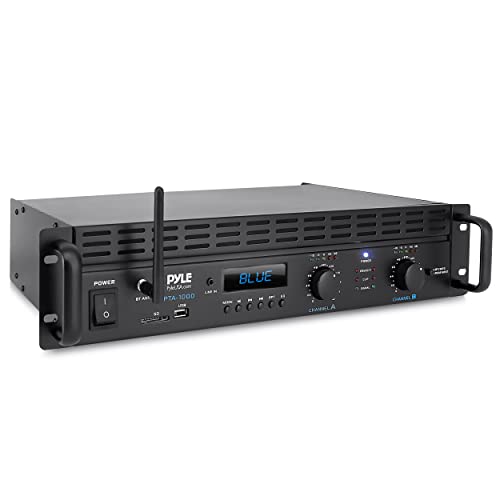
3. Pyle 2-Channel Bluetooth Power Amplifier- 2000W Bridgeable Rack Mount Pro Audio Sound Wireless Home Stereo Receiver w/TRS XLR Input
Rating: 9.4/10
The Pyle PTA1000BT 2-Channel Bluetooth Power Amplifier is a powerful and versatile sound system component. It offers a massive 2000 watts of power, perfect for making your music or home theater system roar. You can easily connect your phone or tablet wirelessly with its built-in Bluetooth. This amplifier is designed for both home stereo and professional audio setups, giving you lots of options.
What We Like:
- It delivers an impressive 2000 watts of power, making your speakers sound amazing.
- Bluetooth connectivity lets you stream music easily from your devices.
- You can connect many different types of speakers with its flexible input and output options.
- The front control panel is easy to use with its clear LCD screen and indicator lights.
- A built-in cooling fan keeps the amplifier running smoothly and prevents it from getting too hot.
What Could Be Improved:
- For some users, the 2000-watt power might be more than they need for a small home system.
- While it has many inputs, some users might prefer more modern digital input options like USB or optical.
This Pyle amplifier is a fantastic choice for anyone looking to boost their audio setup with powerful sound and convenient wireless streaming. It’s built to last and perform, making your entertainment experience even better.
4. Crown Two-channel-450W at 4Ω Power Amplifier

Rating: 8.7/10
The Crown XLi1500 is a powerful and versatile two-channel amplifier. It delivers a strong 450 watts of power to each channel when connected to 4-ohm speakers. This amplifier is built for performance and reliability, making it a solid choice for sound systems. It offers different ways to connect your audio sources and speakers. The amplifier also has features to keep it running cool and prevent overheating.
What We Like:
- It offers stereo, parallel, and bridge-mono modes, giving you flexibility in how you use it.
- You can choose between 0.775V and 1.4V input sensitivity, which helps match it with different audio gear.
- It has both RCA and XLR inputs, plus binding post and SpeakON outputs, so it connects easily to many devices.
- The forced-air cooling system keeps the amplifier from getting too hot, ensuring it runs smoothly.
- Clear indicator lights show signal, clip, and fault status for each channel.
- It’s a robust amplifier that provides plenty of power for its size.
What Could Be Improved:
- The AC input voltage is fixed at 220V, 50/60Hz, meaning it might not work in all regions without a voltage converter.
- While it has indicator lights, more detailed diagnostics might be helpful for advanced users.
The Crown XLi1500 is a dependable amplifier that packs a punch. It’s a great option for anyone needing solid power and flexible connectivity for their sound setup.
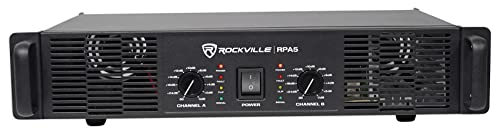
5. Rockville RPA5 2-Channel Power Amplifier
Rating: 9.5/10
The Rockville RPA5 2-Channel Power Amplifier is a powerful and flexible audio solution for DJs, live sound events, and professional audio setups. It delivers a strong output that can handle demanding situations, and it comes with features that make it easy to connect and configure.
What We Like:
- It packs a punch with 200W RMS per channel at 4 ohms, and it can even go up to 1000W peak power.
- The stereo/mono switch and built-in crossover give you control over how your sound is delivered, especially great for subwoofers.
- It stays cool with two fans and has protection features to keep it running smoothly.
- Its tough 2U rack-mountable design makes it easy to put in your gear setup and move around.
- You get lots of connection options with XLR, 1/4″, and RCA inputs, plus various output types.
What Could Be Improved:
- While powerful, the 4-ohm rating might be limiting for some extremely high-end or specialized speaker systems.
- The peak power rating can be a bit misleading; the RMS rating is the true measure of sustained power.
This amplifier offers a robust and adaptable performance for many audio needs. It’s a solid choice for anyone looking for reliable power and versatile connectivity.
Finding Your Perfect Sound: A Power Amplifier Buying Guide
So, you want to make your music sound amazing, right? A power amplifier is like the engine for your sound system. It takes the sound signal from your source (like a phone or music player) and makes it strong enough to push your speakers. This guide will help you pick the right one.
Key Features to Look For
When you’re shopping for a power amplifier, keep these important things in mind:
Power Output (Watts)
This tells you how loud the amplifier can get. More watts usually mean a louder sound. Think about the size of your room and how loud you like your music. A small room might not need a super powerful amp.
Channels
Amps have channels. A stereo amp has two channels (left and right for regular speakers). A surround sound system might need more channels for different speakers.
Input/Output Types
Check what kind of connections the amp has. RCA is common. Some newer amps have XLR for a cleaner signal, or even digital inputs like optical. Make sure it matches your other gear.
Impedance (Ohms)
This is how much the amp resists electrical flow. Most speakers are 8 ohms. Your amp needs to be compatible with your speaker’s ohms.
Frequency Response
This shows how well the amp reproduces different sound frequencies (low bass to high treble). A wider range means more accurate sound.
Signal-to-Noise Ratio (SNR)
A higher SNR means less unwanted noise in your music. You want a quiet background for clear sound.
Important Materials
The stuff an amplifier is made of matters.
- Chassis: A strong metal case (like aluminum or steel) helps protect the insides and can reduce vibrations.
- Internal Components: Good quality capacitors and resistors help make the sound clear and strong.
- Heat Sinks: These metal fins help keep the amp cool. Good heat sinks mean the amp can work harder without overheating.
Factors That Improve or Reduce Quality
What makes a power amplifier sound great or not so great?
What Makes it Better:
- Good Build Quality: When an amp is built well, it lasts longer and sounds better.
- High-Quality Components: Top-notch parts inside the amp make a big difference in sound clarity.
- Smart Design: Engineers who know what they’re doing create amps that sound balanced and powerful.
- Enough Power: An amp that’s strong enough for your speakers won’t struggle.
What Makes it Worse:
- Cheap Parts: Low-quality components can make music sound muddy or distorted.
- Poor Cooling: If an amp gets too hot, it can sound bad or even break.
- Underpowered: An amp that’s too weak for your speakers will sound strained and weak.
- Electrical Interference: Bad shielding can let unwanted noise sneak into your music.
User Experience and Use Cases
How will you use your power amplifier?
Home Audio Systems
This is the most common use. You connect your music player to a pre-amp (which controls volume and sources), then to the power amp, and finally to your speakers. It makes your music at home sound like it’s coming from a concert hall.
Home Theater Setups
For movies, you might need an amp with more channels to power surround sound speakers. This makes explosions rumble and dialogue crystal clear.
Professional Audio (Studios)
Musicians and producers use powerful amps in studios to monitor their sound accurately. They need amps that reproduce sound exactly as it is.
Live Performances
For bands playing live, power amplifiers are essential to make their music loud enough for everyone to hear. These are usually very powerful and built to be tough.
Frequently Asked Questions (FAQ)
Q: What is a power amplifier used for?
A: A power amplifier makes your music signal strong enough to drive your speakers, so you can hear your music loud and clear.
Q: Do I need a separate power amplifier?
A: It depends. Many receivers and home stereo systems have a power amplifier built-in. If you want better sound or more power, you might need a separate one.
Q: How do I know how much power (watts) I need?
A: Consider your room size and speaker sensitivity. For small rooms, 50-100 watts per channel is often enough. For larger rooms or less sensitive speakers, you might need more.
Q: What is the difference between a stereo and a mono amplifier?
A: A stereo amplifier has two channels (left and right). A mono amplifier has only one channel, usually for a subwoofer or a single speaker.
Q: Can I use an amplifier with a different ohm rating than my speakers?
A: It’s best to match them. Using an amp with a lower ohm rating than your speakers can damage the amp. Using one with a higher ohm rating might just make your speakers sound quieter.
Q: What does “Class D” mean for amplifiers?
A: Class D amplifiers are very efficient. They use less power and produce less heat, making them a good choice for compact or powerful systems.
Q: What is a pre-amplifier, and do I need one?
A: A pre-amplifier controls your sound sources and volume. Some power amplifiers have a built-in pre-amp, but separate ones offer more control and features.
Q: How important is the frequency response?
A: It’s important for accurate sound. A wider frequency response means the amplifier can reproduce a fuller range of sounds, from deep bass to high treble.
Q: Will a more expensive amplifier always sound better?
A: Not always. While good materials and design cost money, you can find great-sounding amplifiers at different price points. Focus on features that matter to you.
Q: How do I connect my power amplifier?
A: You typically connect your music source (or pre-amp) to the amplifier’s inputs using cables. Then, you connect your speakers to the amplifier’s outputs with speaker wire.
In conclusion, every product has unique features and benefits. We hope this review helps you decide if it meets your needs. An informed choice ensures the best experience.
If you have any questions or feedback, please share them in the comments. Your input helps everyone. Thank you for reading.