
Ever feel like your music just isn’t hitting the right notes? Maybe the bass is too booming, or the vocals get lost in the mix. You’re not alone! Many music lovers struggle to get that perfect sound from their speakers or headphones.
Choosing a music equalizer can be confusing. There are so many settings and terms that can make your head spin. You want your music to sound amazing, but figuring out how to adjust those sliders can feel like a puzzle. This is where a good equalizer comes in handy, letting you fine-tune your audio to your liking.
In this post, we’ll break down what a music equalizer is and why it matters. You’ll learn how to use its features to make your favorite songs sound clearer, richer, and more powerful. Get ready to unlock a whole new level of listening pleasure!
Our Top 5 Music Equalizer Recommendations at a Glance
Top 5 Music Equalizer Detailed Reviews
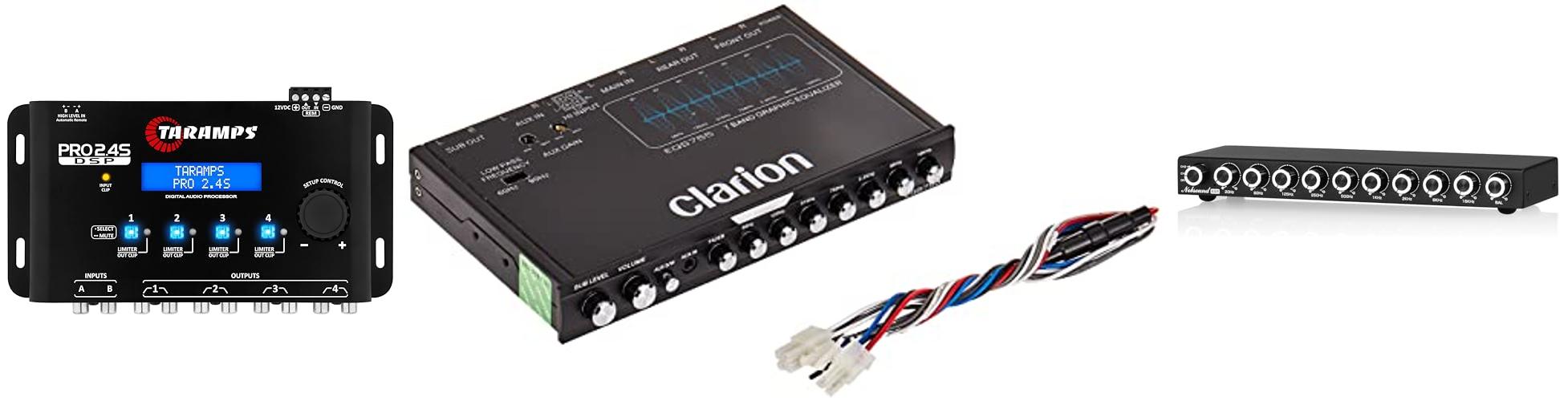
1. Taramp’s Pro 2.4S DSP Crossover full Digital Signal Processor and Equalizer with sequencer 15-band Graphic Equalization 12 preset EQ 2-Channel in and 4-Channel Out

Rating: 8.8/10
The Taramp’s Pro 2.4S DSP Crossover is a powerful digital tool for car audio enthusiasts. It lets you fine-tune your sound system like a pro. This device acts as the brain of your audio setup, controlling how each speaker gets its signal. You can adjust the sound to your exact liking, making your music sound amazing.
What We Like:
- It has a 15-band graphic equalizer. This means you get 15 sliders to adjust different sound frequencies. You can boost or cut sounds by up to 12dB.
- There’s also an input parametric equalizer. This lets you make even more detailed adjustments to the sound coming into the processor.
- The crossover feature is very flexible. You can set high-pass and low-pass filters for your speakers. You can choose from different cutoff frequencies and filter types.
- Each output channel has its own level control. You can set the volume for each speaker individually.
- It comes with 12 preset EQ settings. These are ready-made sound profiles for different music styles like Rock, Hip Hop, and Pop.
- The sequencer feature adds another layer of control for advanced users.
What Could Be Improved:
- The interface might seem a bit complex for beginners.
- Detailed setup might require some learning and experimentation.
This processor offers incredible control over your car’s sound system. It’s a fantastic choice for anyone serious about achieving perfect audio quality.
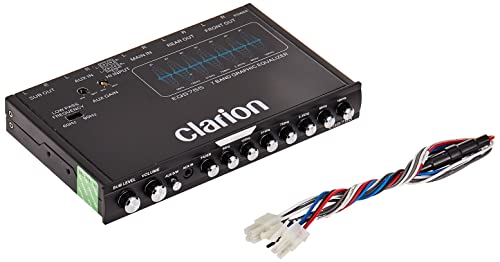
2. Clarion EQS755 7-Band Car Audio Graphic Equalizer with Front 3.5mm Auxiliary Input
Rating: 8.9/10
Take control of your car’s sound with the Clarion EQS755 7-Band Car Audio Graphic Equalizer. This black equalizer lets you fine-tune your music to perfection. It has a compact design that fits easily into your dashboard. You can connect your phone or MP3 player using the front 3.5mm aux input. There’s also a rear RCA aux input and even high-level speaker inputs. This means you can connect almost anything to your car stereo.
What We Like:
- It offers a 7-band graphic equalizer to shape your sound.
- You get 6-channel, 8-volt RCA outputs for clear sound to your amps.
- It includes a built-in low-pass filter for better bass control.
- Front 3.5mm and rear RCA auxiliary inputs make connecting devices easy.
- High-level speaker inputs allow you to upgrade factory systems.
- Independent master volume and subwoofer level control are very handy.
- The ground loop isolation circuit helps prevent annoying noise.
What Could Be Improved:
- The blue illumination might not match all car interiors.
- The dimensions, while compact, might still require some careful fitting in certain dashboards.
The Clarion EQS755 is a powerful tool for any music lover wanting better car audio. You can really make your music sound amazing with this equalizer.
3. Nobsound 9-Band Stereo EQ Preamp: HiFi Equalizer Audio Processor with Tone Controls

Rating: 9.1/10
The Nobsound 9-Band Stereo EQ Preamp (EQ9) is a powerful tool for any home stereo enthusiast. It lets you fine-tune your sound with precision. You can adjust nine different sound frequencies. This helps you get the perfect bass, middle, and treble for your music, movies, or games. Its clean sound and low distortion mean you hear every detail without any annoying fuzz.
What We Like:
- 9-Band EQ: You can adjust nine sound levels from low bass to high treble. This lets you shape your sound exactly how you want it for music, movies, or games.
- 111dB SNR: The sound is very clear with no background noise. You can hear all the quiet details even when the music is loud.
- 0.001% THD: The sound is super clean. It makes the bass tight, the middle sounds clear, and the high notes sharp without sounding harsh.
- 2 RCA In/Out: You can connect more than one sound device. It’s easy to switch between them and hook it up to your existing stereo system.
- Tone Controls: You can easily switch back to the original sound. The balance knob helps make sure the sound is even for both your left and right speakers.
What Could Be Improved:
- The EQ adjustment knobs could be a bit more tactile for easier fine-tuning.
- While the bypass is great, an option for a subtle shelving EQ could add even more versatility.
This EQ preamp offers fantastic control over your audio. It’s a great way to get the most out of your home stereo system.
4. Music Equalizer & Bass Booster

Rating: 8.9/10
Ready to seriously upgrade your music listening? The Music Equalizer & Bass Booster app puts you in complete control of your sound. It’s like having a professional sound engineer right in your pocket, letting you fine-tune every note and feel every beat. Whether you’re chilling at home or on the go, this app makes your music sound amazing.
What We Like:
- You get full media audio control.
- The Bass Boost effect makes your speakers sound much bigger.
- Experience 3D Virtualizer for awesome stereo surround sound.
- A five-band music equalizer lets you adjust the sound just right.
- Choose from 10 preset equalizer settings like Rock, Pop, and Jazz.
- Control your music right from the notification panel.
- Use handy gestures, even when your screen is locked and dim, to save battery.
- Gesture control makes playing or pausing music super easy.
- Control your volume with simple gestures.
- Skip to the next or previous song with a quick gesture.
What Could Be Improved:
- The interface could be a little simpler for brand new users.
- More advanced customization options might be nice for audiophiles.
This app is a fantastic tool for anyone who loves music and wants to hear it at its best. Get ready to rediscover your favorite songs with incredible sound quality.
5. Nobsound AK2515 Pro Audio Spectrum Analyzer with VFD Display

Rating: 9.1/10
The Nobsound AK2515 Pro Audio Spectrum Analyzer is a powerful tool for anyone who loves sound. It helps you see your audio in detail, making it great for musicians, sound engineers, and even serious home audio fans. This device offers a clear VFD display that shows you exactly what your sound looks like across different frequencies.
What We Like:
- The 25×15 VFD display shows sound frequencies very clearly.
- It has a super accurate clock with a special crystal inside.
- You can connect your audio through a 3.5mm AUX port or a microphone input.
- The Advanced AGC and special algorithms make the display look great with any sound.
- You can change brightness, speed, and many other settings to make it perfect for you.
- It has five different music spectrum modes and five clock modes.
- The noise filtering helps make your sound clearer.
- It remembers your settings even when you turn it off.
What Could Be Improved:
- While the VFD is clear, a higher resolution display might offer even more detail for very critical analysis.
- The user interface for adjusting the many customization options could be more intuitive for first-time users.
The Nobsound AK2515 Pro is a feature-rich spectrum analyzer that brings professional audio visualization to your fingertips. It’s a fantastic addition for anyone wanting to understand and appreciate their audio on a deeper level.
Your Guide to Awesome Sound: Choosing a Music Equalizer
Ready to make your music sound amazing? A music equalizer helps you fine-tune the sound of your audio. It lets you boost or cut certain frequencies, like bass or treble. This guide will help you pick the perfect equalizer for your needs.
Key Features to Look For
1. Number of Bands
Equalizers have “bands.” Each band controls a specific range of sound frequencies. More bands mean more control. A basic equalizer might have 3 or 5 bands. A more advanced one could have 10, 15, or even 31 bands. For most people, 5 to 10 bands is a good starting point.
2. Type of Equalizer
- Graphic Equalizers: These are the most common. They have sliders for each frequency band. You can easily see and adjust the sound.
- Parametric Equalizers: These offer more precise control. You can adjust the frequency, the “Q” (how wide or narrow the adjustment is), and the gain (how much you boost or cut). They are often found in professional audio gear.
- Shelving Equalizers: These boost or cut all frequencies above or below a certain point. They are great for general adjustments to bass or treble.
3. Controls and Interface
Look for clear labels and easy-to-use controls. Sliders, knobs, and buttons should feel solid and responsive. A good display can also help you see your settings at a glance.
4. Connectivity and Compatibility
Think about where you will use the equalizer. Does it connect to your computer, stereo system, or headphones? Make sure it has the right inputs and outputs (like RCA, XLR, or 3.5mm jacks).
Important Materials
The materials used in an equalizer can affect its durability and sound. Metal casings are generally more robust than plastic ones. High-quality internal components also contribute to better sound performance and longevity.
Factors That Improve or Reduce Quality
Factors That Improve Quality:
- High-Quality Components: Good capacitors and resistors inside the equalizer lead to cleaner sound.
- Low Noise Floor: A good equalizer adds very little unwanted hiss or hum to your audio.
- Accurate Frequency Response: The equalizer should accurately adjust the frequencies you intend to change without introducing distortion.
Factors That Reduce Quality:
- Cheap Components: Low-quality parts can degrade sound and cause unwanted noise.
- Poor Design: A poorly designed circuit can create interference or distortion.
- Over-Processing: Pushing the equalizer too hard can make music sound unnatural or harsh.
User Experience and Use Cases
For Home Audio Enthusiasts:
If you want to improve the sound of your home stereo system or computer speakers, a graphic equalizer is a great choice. You can tailor the sound to your room and your listening preferences. Want more punch in your bass for electronic music? Boost those low frequencies. Find vocals too sharp? Cut some of the higher frequencies.
For Musicians and Producers:
Musicians and producers often use more advanced equalizers, like parametric ones. They use them to shape the sound of individual instruments during recording or mixing. This helps each instrument sit well in the overall mix and sound its best.
For Live Sound:
Equalizers are essential for live sound engineers. They use them to control feedback (that annoying squealing sound) and to make sure instruments and vocals sound clear and balanced in a live venue.
Choosing the right equalizer depends on your budget and what you want to achieve. With the right equalizer, you can unlock a richer, more satisfying listening experience.
Frequently Asked Questions (FAQ)
Q: What is the main purpose of a music equalizer?
A: The main purpose is to adjust the balance of different sound frequencies. This helps you make music sound clearer, fuller, or more to your liking.
Q: How many bands do I need on an equalizer?
A: For most home users, 5 to 10 bands offer good control. More bands give you finer adjustments.
Q: What’s the difference between a graphic and parametric equalizer?
A: Graphic equalizers use sliders for fixed frequency bands. Parametric equalizers offer more control by letting you adjust the frequency, width, and level of the boost or cut.
Q: Can an equalizer fix bad recordings?
A: An equalizer can help improve the sound of a recording, but it can’t magically fix a very poor recording. It’s best for fine-tuning good audio.
Q: How do I know if an equalizer is good quality?
A: Look for solid construction, clear controls, and good reviews that mention low noise and accurate sound shaping.
Q: What does “boosting” a frequency mean?
A: Boosting a frequency means making that part of the sound louder. For example, boosting the bass makes the low sounds more prominent.
Q: What does “cutting” a frequency mean?
A: Cutting a frequency means making that part of the sound quieter. For example, cutting the treble can make the sound less bright.
Q: Can I use an equalizer with my headphones?
A: Yes, many equalizers are designed to work with headphones, especially those that connect to computers or portable audio devices.
Q: Will an equalizer make all my music sound the same?
A: No, an equalizer allows you to customize the sound for different types of music or even specific songs. You can create different presets.
Q: Is it hard to learn how to use an equalizer?
A: Basic use is quite simple. Experimenting with the sliders or knobs will help you learn what each adjustment does to your sound.
In conclusion, every product has unique features and benefits. We hope this review helps you decide if it meets your needs. An informed choice ensures the best experience.
If you have any questions or feedback, please share them in the comments. Your input helps everyone. Thank you for reading.