
Ever felt the ocean’s roar or the gentle lapping of waves? Now, imagine that sound amplified, filling your boat with crystal-clear music that makes every outing more exciting. But choosing the right marine amplifier can feel like navigating a stormy sea of options. It’s easy to get lost with so many brands and features, and the wrong choice can lead to disappointing sound or even damage to your equipment.
That’s where we come in. This guide cuts through the confusion. We’ll show you exactly what to look for, from power and durability to the best features for your needs. By the time you finish reading, you’ll have the confidence to pick an amplifier that will transform your boating experience, delivering incredible sound that lasts.
So, let’s dive in and explore the world of marine amplifiers, ensuring your next adventure on the water is soundtracked perfectly.
Our Top 5 Marine Amplifier Recommendations at a Glance
Top 5 Marine Amplifier Detailed Reviews
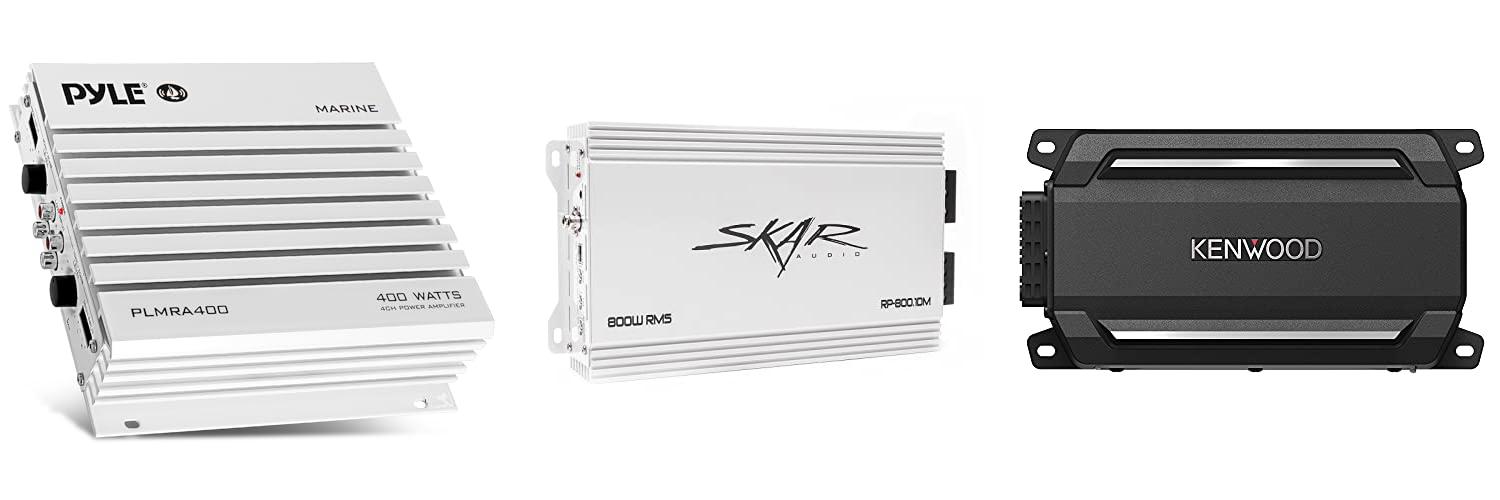
1. Pyle Hydra Marine Amplifier – Upgraded Elite Series 400 Watt 4 Channel Audio Amplifier

Rating: 8.5/10
Ready to crank up the tunes on your boat or off-road vehicle? The Pyle Hydra Marine Amplifier – Upgraded Elite Series 400 Watt 4 Channel Audio Amplifier (PLMRA400) brings powerful, clear sound to your adventures. This 4-channel amp is built tough for marine environments, meaning it can handle splashes and stay protected. It connects easily to your existing stereo and boosts your speaker’s performance, making every song sound fantastic.
What We Like:
- It’s a premium 4-channel amplifier that delivers high-quality stereo sound.
- It has easy-to-use RCA stereo inputs, and you can connect speaker wires if your receiver doesn’t have RCA outputs.
- The amplifier has built-in protection against short circuits and overheating, keeping your system safe.
- It packs a powerful 400 watts of total power (100W x 4) with a strong dual MOSFET power supply.
- It’s marine-grade and waterproof, with gold-plated connectors to prevent rust.
- You can adjust the input GAIN levels to fine-tune your sound.
What Could Be Improved:
- While it’s marine-rated, the IP-01 rating suggests it’s more splash-proof than fully submersible.
- The product description doesn’t specify the exact dimensions, which might be important for installation.
This Pyle amplifier is a solid choice for anyone wanting to upgrade their audio system with reliable, powerful, and weather-resistant sound.
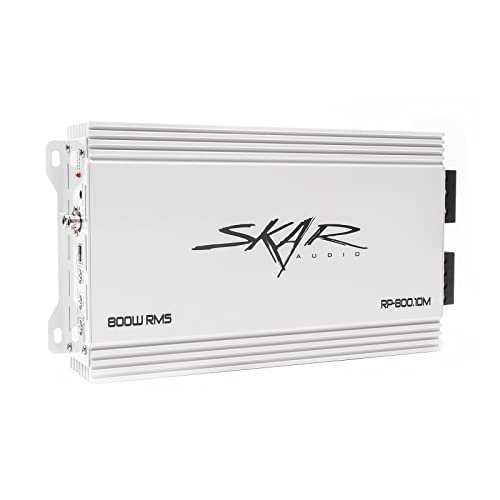
2. Skar Audio RP-800.1DM 800 Watt Monoblock Class D Marine Subwoofer Amplifier
Rating: 8.9/10
Get ready to crank up the bass on your boat with the Skar Audio RP-800.1DM 800 Watt Monoblock Class D Marine Subwoofer Amplifier. This amp is built tough for the water, delivering serious power to your subwoofers. It’s designed to handle the elements and keep your music booming, no matter how rough the waves get.
What We Like:
- It packs a punch with 800 watts RMS power at 1 ohm, and can even hit 1,200 watts at peak.
- It’s made for the marine environment, with special coatings to keep water and rust away from its parts.
- You can fine-tune your bass with the built-in EQ, giving you more control over your sound.
- It stays cool and runs efficiently, thanks to its smart heatsink design.
- It comes with a remote control so you can adjust your subwoofer volume easily.
What Could Be Improved:
- While it’s marine-grade, it’s always a good idea to keep it as dry as possible for the longest life.
- The frequency response is focused on bass, so it won’t be used for full-range speakers.
This amplifier is a solid choice for anyone looking to add powerful, reliable bass to their marine audio system. It’s built to last and deliver great sound on the water.
3. KENWOOD KAC-M5014 4-Channel Compact Digital Amplifier (600W) for Car

Rating: 8.9/10
Upgrade your vehicle’s sound system with the KENWOOD KAC-M5014 4-Channel Compact Digital Amplifier. This powerful 600W amp brings crystal-clear audio to cars, boats, UTVs, and even motorcycles. It’s built tough to handle tough conditions, so you can enjoy your music wherever your adventures take you.
What We Like:
- Powerful sound: It delivers 600W of power, which is double what many other amps offer. Your music will sound amazing.
- Built to last: The aluminum chassis resists rust and the special drain design keeps water and sand away. It’s made to survive harsh environments.
- Waterproof and dustproof: With IPX6, IPX7, and IPX6 certifications, it can handle strong water sprays, get submerged, and keep dirt out. It’s also tested against salt spray for extra protection.
- Resists vibrations: This amp is tested to withstand shaking and rattling, so it keeps working well even on bumpy rides.
- Clearer sound: Special parts inside reduce distortion and noise, giving you cleaner and more accurate sound, even when the volume is turned up.
- Compact size: It’s small and easy to fit into different vehicles.
What Could Be Improved:
- Limited availability: Finding this specific model might be a bit challenging sometimes.
- Installation complexity: While the amp itself is great, some users might find the wiring and installation process a little tricky if they aren’t experienced with car audio.
If you want to seriously boost your vehicle’s audio and enjoy music that sounds fantastic in any setting, the KENWOOD KAC-M5014 is a top-notch choice.
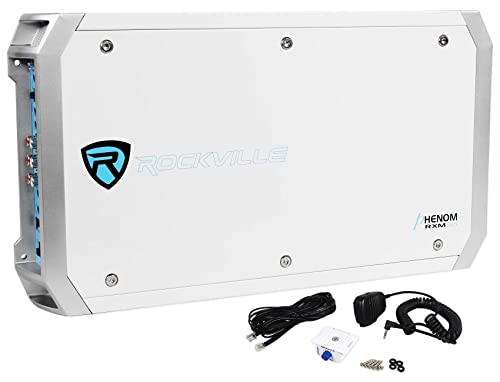
4. Rockville RXM-S6 2600W Peak/660W RMS 6-Channel Marine Amplifier
Rating: 8.7/10
The Rockville RXM-S6 is a powerful 6-channel marine amplifier designed to bring incredible sound to your boat. With a massive 2600W peak power, it delivers clear and loud music for all your adventures on the water. This amp is built tough to handle the marine environment and comes with a handy PA microphone for important announcements.
What We Like:
- It blasts out a huge 2600W peak power, giving you plenty of volume for your boat speakers and subwoofers.
- The amp is built tough with special coatings and stainless steel screws, so it won’t get damaged by water or salt.
- You can set it up in different ways to connect your speakers, whether you have a few or many.
- The included PA microphone lets you easily talk to everyone on board by automatically lowering the music volume.
- You can fine-tune your sound with adjustable settings like the crossover and bass equalizer.
- It even has an auto-start feature, so it turns on with your boat’s ignition.
What Could Be Improved:
- While powerful, the RMS output per channel (110W at 2 ohms) might not be enough for extreme audiophiles seeking the loudest possible sound.
- The complex wiring options, while versatile, could be a bit confusing for beginners to set up.
This amplifier offers a fantastic combination of power, durability, and useful features for any boater looking to upgrade their sound system. It makes your time on the water more enjoyable with great music and clear communication.
5. Rockville RXM-F3 1600W Peak/260W RMS 4-Channel Class A/B Marine Amplifier with PA Microphone

Rating: 8.7/10
Upgrade your boat’s sound system with the Rockville RXM-F3 1600W Peak/260W RMS 4-Channel Class A/B Marine Amplifier. This powerful amplifier is built tough for the water, delivering great sound and even letting you make announcements with its included PA microphone. It’s designed to handle the elements and connect easily with your existing stereo.
What We Like:
- Powerful Sound: It pumps out 1600W of peak power, so your music will sound clear and loud on the water. The Dyno-Certified RMS ratings mean you get honest power for distortion-free audio.
- Built for the Sea: This amp has a special waterproof coating and stainless steel screws to protect it from salt, moisture, and temperature changes. It’s made to last on your boat.
- PA Microphone Included: Talk to your crew or make announcements easily. The amp automatically lowers the music volume when you speak into the microphone.
- Easy to Connect: You can connect it to almost any boat stereo, even if it doesn’t have special audio outputs. The smart auto turn-on feature makes setup simple.
- Customize Your Sound: Easily adjust the sound with built-in controls for high-pass, low-pass, or band-pass filters, and a bass equalizer. This lets you fine-tune the audio for your speakers and subwoofers.
What Could Be Improved:
- While it offers good power, serious audiophiles might want even more RMS output for extremely demanding setups.
- The user manual, while functional, could offer more in-depth guidance for complex installations or advanced tuning.
The Rockville RXM-F3 amplifier is a solid choice for anyone looking to boost their boat’s audio system with durable, versatile, and powerful sound.
Choosing the Right Marine Amplifier: Power Up Your Boat’s Sound
Ready to crank up the tunes on your next boating adventure? A marine amplifier is your ticket to loud, clear music that cuts through the wind and waves. But with so many options, how do you pick the best one? This guide will help you find the perfect amp for your boat.
Key Features to Look For
When you’re shopping for a marine amplifier, keep these important features in mind:
- Power Output (Wattage): This tells you how loud your speakers can get. More watts usually mean louder sound. Look for an amp with enough power for your speakers.
- Number of Channels: Amps have channels, like lanes on a highway. A 4-channel amp can power four speakers. A 2-channel amp powers two speakers. Some amps are monoblock, meaning they power just one subwoofer.
- Water Resistance/Protection: This is super important for boats! Look for amps with good ratings against water and dust. This keeps them working well in salty air and splashes.
- Signal-to-Noise Ratio (SNR): A higher SNR means cleaner sound. It tells you how much unwanted noise the amp makes compared to the music signal. Aim for a higher number here.
- Frequency Response: This shows the range of sounds the amp can produce. A wider range means fuller sound, from deep bass to crisp highs.
- Built-in Crossovers: These help send the right sound frequencies to your speakers. They make your music sound better and protect your speakers.
Important Materials
The materials used in a marine amplifier affect its durability and performance:
- Marine-Grade Components: Good marine amps use special parts that resist corrosion and moisture. This is crucial for a boat’s environment.
- Aluminum Heat Sinks: These help keep the amp cool. Good heat sinks prevent overheating, which can damage the amp.
- Sealed Connections: Waterproof connectors are a must. They stop water from getting into the wires.
Factors That Improve or Reduce Quality
Certain things make a marine amplifier better or worse:
- Build Quality: A well-built amp feels solid. It uses good solder joints and sturdy wiring. This means it will last longer.
- Brand Reputation: Trusted brands often make better products. They have a history of making reliable marine electronics.
- Protection Circuits: Good amps have built-in protection against short circuits, overheating, and voltage problems. These protect your amp and your boat’s electrical system.
- Cheap Components: Using low-quality parts will make an amp break down faster. It can also lead to poor sound.
- Poor Sealing: If an amp isn’t sealed well, water can get inside. This will cause corrosion and damage.
User Experience and Use Cases
How you use your boat and what you want from your music affects your amplifier choice:
- Weekend Cruising: If you enjoy casual trips, a simpler 2 or 4-channel amp might be enough. It will provide a good sound upgrade.
- Watersports: For wakeboarding or tubing, you need power to hear music over engine noise and water. A more powerful amp with plenty of channels is a good idea.
- Fishing Trips: Even on a fishing trip, good music makes the day better. A reliable amp with good water resistance is key.
- Parties on the Water: If you host gatherings, you’ll want an amp that can really fill the space with sound. Consider a powerful multi-channel amp or even multiple amps.
Frequently Asked Questions (FAQ)
Q: What is the most important feature in a marine amplifier?
A: Water resistance is the most important feature. Your amp will be exposed to splashes and humidity, so it needs to be built for that.
Q: How much power (wattage) do I need?
A: It depends on your speakers and how loud you want your music. Check your speaker’s power handling. A good rule is to match or slightly exceed your speakers’ RMS wattage with the amp’s RMS wattage.
Q: Can I use a regular car amplifier on my boat?
A: It’s not recommended. Car amps are not designed for the wet and salty marine environment. They will likely corrode and fail quickly.
Q: What does “RMS wattage” mean?
A: RMS wattage is the amp’s continuous power output. It’s a better measure of an amp’s true power than “peak wattage.”
Q: How many channels should my marine amplifier have?
A: This depends on how many speakers you want to power. A 2-channel amp powers two speakers. A 4-channel amp powers four speakers. A 5-channel amp can power four speakers and a subwoofer.
Q: What is a monoblock amplifier?
A: A monoblock amplifier is designed to power only one speaker or, more commonly, one subwoofer. They are often very powerful.
Q: Do I need a separate amplifier for a subwoofer?
A: Yes, it’s best to use a dedicated monoblock amplifier for a subwoofer. Subwoofers need a lot of power, and a separate amp ensures they get it without straining other channels.
Q: How do I protect my marine amplifier from corrosion?
A: Ensure it’s properly installed in a dry location. Use marine-grade wiring and connections. Clean any salt spray off the amp regularly with a soft cloth.
Q: What is a crossover, and do I need one?
A: A crossover directs specific sound frequencies to the right speakers. For example, it sends bass to your subwoofer and treble to your tweeters. Most good marine amps have built-in crossovers.
Q: Where is the best place to install a marine amplifier?
A: Install it in a dry, protected area. Under a seat or inside a console are good spots. Ensure there’s good airflow around it for cooling.
In conclusion, every product has unique features and benefits. We hope this review helps you decide if it meets your needs. An informed choice ensures the best experience.
If you have any questions or feedback, please share them in the comments. Your input helps everyone. Thank you for reading.