
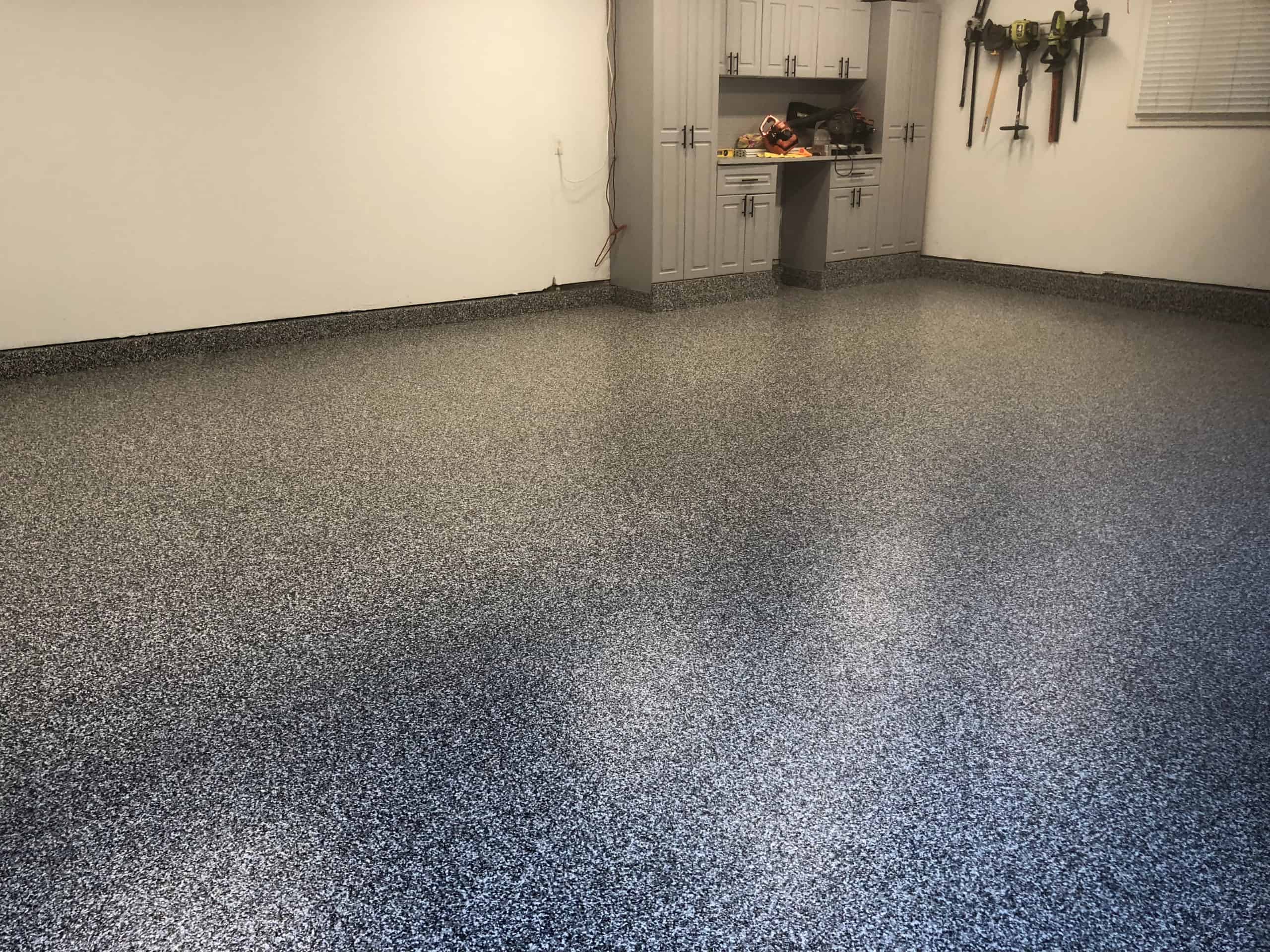
Image Source: amazinggaragefloors.net
How Much Epoxy For 2 Car Garage? Perfect Coverage Guide
What is the ideal amount of epoxy for a 2-car garage? For a typical 2-car garage measuring approximately 400 square feet, you’ll generally need between 2 to 3 gallons of a standard 2-coat epoxy system.
This guide will help you accurately determine the garage floor epoxy quantity you’ll need for your project, ensuring you have enough for perfect coverage without excessive waste. We’ll delve into factors that influence epoxy garage floor coverage, how to use a 2 car garage epoxy calculator, and the best practices for applying epoxy coating for 2 car garage floors. Whether you’re considering a simple epoxy paint for garage or a robust epoxy resin for garage floor, this comprehensive information will equip you to succeed. We’ll also cover calculating epoxy for garage projects and understanding epoxy coverage rate to help with your garage floor resurfacing epoxy plans.
Deciphering Your Garage’s Square Footage
The first and most crucial step in figuring out how many gallons epoxy for 2 car garage is to know the exact dimensions of your garage floor. Most 2-car garages are around 400 square feet, but yours might be larger or smaller depending on the design and how the cars are parked.
To get an accurate measurement:
- Measure the Length: Use a tape measure to find the length of your garage floor from the front wall to the back wall.
- Measure the Width: Measure the width of your garage floor from one side wall to the other.
- Calculate the Area: Multiply the length by the width. The result is the square footage of your garage floor.
Example:
If your garage is 20 feet long and 20 feet wide, the area is 20 ft * 20 ft = 400 sq ft.
If your garage is 22 feet long and 20 feet wide, the area is 22 ft * 20 ft = 440 sq ft.
It’s always better to slightly overestimate your square footage than to underestimate it. This ensures you don’t run out of product halfway through your project.
Understanding Epoxy Coverage Rates
Every epoxy product has an advertised epoxy coverage rate. This tells you how much surface area a specific amount of epoxy (usually a gallon or a kit) is designed to cover. This rate is typically provided by the manufacturer and is essential for accurate calculating epoxy for garage needs.
Coverage rates can vary significantly based on several factors:
- Product Type: Different epoxy formulations have different viscosities and solid content, affecting how thinly they can be spread.
- Number of Coats: Most garage floor epoxy systems recommend at least two coats for durability and a uniform finish. Each coat will require its own calculation.
- Application Thickness: Applying the epoxy thicker than recommended will reduce coverage. Applying it too thinly can compromise durability.
- Surface Porosity: A very porous concrete surface will absorb more of the first coat, potentially requiring more epoxy than a sealed or less porous surface.
- Additives: If you are adding decorative flakes or metallic pigments, this can slightly affect the overall coverage of the base epoxy.
Typical Epoxy Coverage Rates:
Most 100% solids epoxy coatings, which are popular for garage floors due to their durability, have coverage rates ranging from 150 to 250 square feet per gallon per coat.
Water-based or lower-solids epoxy paints might have slightly different coverage, often in the range of 200 to 300 square feet per gallon per coat.
Crucially, always check the specific product’s label or technical data sheet for the most accurate coverage rate. This information is your best guide for garage floor epoxy quantity.
Using a 2 Car Garage Epoxy Calculator
Many manufacturers and retailers offer online 2 car garage epoxy calculator tools. These are fantastic resources that simplify the calculation process.
How these calculators typically work:
- Enter Garage Dimensions: You input the length and width of your garage.
- Specify Number of Coats: You indicate how many coats of epoxy you plan to apply.
- Select Product Type: You might choose the specific epoxy product you intend to use, which helps the calculator apply the correct coverage rate.
- Account for Primer/Topcoat: Some calculators will also ask if you are using a primer or a clear topcoat, which have their own coverage rates.
These calculators are designed to do the math for you, providing a recommended garage floor epoxy quantity in gallons or kits. They are an excellent way to avoid errors in calculating epoxy for garage projects.
Calculating Epoxy for Garage Floors: A Step-by-Step Approach
Let’s walk through how to calculate your needs manually, which is essential if you don’t have access to a calculator or want to double-check the results.
Step 1: Determine Your Garage Floor Area
As discussed, measure your garage and calculate the square footage.
Step 2: Identify the Epoxy Coverage Rate
Find the epoxy coverage rate for the specific product you are using. This is usually listed in square feet per gallon (sq ft/gal) per coat.
Step 3: Calculate Epoxy Needed Per Coat
Divide your total garage floor area by the coverage rate of the product.
Formula:
Epoxy per coat (gallons) = Total Garage Area (sq ft) / Epoxy Coverage Rate (sq ft/gal)
Step 4: Account for Multiple Coats
If your epoxy system requires two coats, multiply the epoxy needed per coat by the number of coats.
Formula:
Total Epoxy Needed (gallons) = Epoxy per coat (gallons) * Number of Coats
Step 5: Factor in Primer and Topcoat (If Applicable)
If your epoxy system includes a primer and/or a clear topcoat, repeat steps 3 and 4 for each of these products, as they often have different coverage rates.
Example Calculation for a 400 sq ft Garage:
Let’s assume you are using a 100% solids epoxy with a coverage rate of 200 sq ft/gal per coat and you plan to apply two coats.
- Area: 400 sq ft
- Coverage Rate: 200 sq ft/gal
- Number of Coats: 2
Calculation:
- Epoxy per coat: 400 sq ft / 200 sq ft/gal = 2 gallons
- Total Epoxy Needed: 2 gallons/coat * 2 coats = 4 gallons
In this scenario, you would need 4 gallons of the base epoxy for your two coats. If your epoxy comes in kits, you’ll need to see how many gallons are in a kit and order accordingly. Some kits are designed for specific square footage ranges.
Factors Influencing Epoxy Consumption
While calculations provide a baseline, several real-world factors can influence your final garage floor epoxy quantity:
Concrete Condition and Porosity
- New Concrete: Newly poured concrete might be more porous, especially if it hasn’t fully cured or if it was troweled aggressively, creating a denser surface.
- Old Concrete: Aged concrete can develop micro-cracks and surface imperfections that might absorb more epoxy. It could also have previous coatings or sealers that affect absorption.
- Acid Etching vs. Grinding: Acid etching can leave the concrete more porous than mechanical grinding. Grinding typically results in a more consistent surface that accepts epoxy more evenly.
- Previous Sealers: If the concrete has a sealer, it might prevent the epoxy from penetrating, leading to a thinner film and potentially requiring careful surface preparation.
If your concrete is very porous, expect to use closer to the higher end of the coverage rate, or even slightly more, especially for the first coat.
Surface Preparation
Proper surface preparation is critical for epoxy adhesion, but it can also impact consumption.
- Filling Cracks and Pits: If you need to fill significant cracks or divots with an epoxy patching compound, this will be a separate material requirement and won’t directly affect your main epoxy quantity. However, a properly filled surface will accept the main epoxy more uniformly.
- Cleaning and Degreasing: Thorough cleaning removes contaminants that could hinder adhesion. While this doesn’t directly use epoxy, it’s a vital step before application.
Application Method
The tools and techniques you use can affect how evenly the epoxy is spread.
- Rollers: High-quality epoxy rollers are designed to apply a consistent film. The nap of the roller can affect how much product is held and released.
- Squeegees: Using a squeegee, especially a notched squeegee, helps control the thickness of the epoxy application and ensures a more uniform spread. This is a preferred method for achieving the advertised epoxy coverage rate.
- Brush Application: For edges and tight spots, brushes are used. They can sometimes lead to thicker application if not careful.
Environmental Conditions
- Temperature: Epoxy’s viscosity changes with temperature. Warmer temperatures make it thinner, easier to spread, and can increase coverage slightly. Colder temperatures make it thicker, potentially reducing coverage and making application more difficult. Always adhere to the manufacturer’s recommended application temperature range.
- Humidity: High humidity can sometimes affect the curing process and potentially influence the final appearance, though it doesn’t directly alter the garage floor epoxy quantity needed for coverage.
Types of Epoxy for Garages and Their Coverage
When planning your epoxy coating for 2 car garage, it’s important to consider the different types of products available.
100% Solids Epoxy
- Description: These are the most durable and professional-grade epoxy coatings. They contain very little to no volatile organic compounds (VOCs) and provide a thick, robust, and long-lasting finish. They are typically two-part systems that are mixed together.
- Coverage: Generally 150-250 sq ft per gallon per coat. Due to their thickness and toughness, they provide excellent wear resistance.
- Recommendation: Ideal for garages with heavy vehicle traffic, workshops, or if you desire the most durable finish.
Water-Based Epoxy
- Description: These are easier to clean up and have lower VOCs, making them more environmentally friendly. They are typically a two-part system but have a higher water content.
- Coverage: Often 200-300 sq ft per gallon per coat. They are generally thinner than 100% solids epoxy.
- Recommendation: Good for lighter-duty garages, areas with less vehicle traffic, or for DIYers seeking easier application and cleanup. They offer a good balance of protection and affordability.
Epoxy Paint (Latex or Acrylic Base)
- Description: Often marketed as “epoxy,” these are typically high-quality latex or acrylic paints with some epoxy resins added. They are single-component and the easiest to apply.
- Coverage: Similar to water-based epoxies, often 200-300 sq ft per gallon per coat.
- Recommendation: Best for garages with minimal traffic, primarily used for aesthetics and light protection. They are the most budget-friendly option but lack the durability of true epoxy systems. If you’re just looking for a basic refresh, this is a viable epoxy paint for garage option.
Epoxy Resin for Garage Floor
- Description: This term often refers to the base resin component of a two-part epoxy system. When mixed with a hardener (the other part), it forms the durable coating. For garage floors, you’ll be looking for specifically formulated “garage floor epoxy kits” or “epoxy coating kits,” which include both the resin and hardener, and often decorative flakes or other additives.
- Coverage: The coverage rate is dictated by the specific formulation of the epoxy resin for garage floor system as a whole.
How Many Gallons Epoxy for 2 Car Garage? – Putting It All Together
Let’s consolidate the information with a practical example for a standard 400 sq ft 2-car garage.
Scenario 1: High-Performance 100% Solids Epoxy (2 Coats)
- Garage Size: 400 sq ft
- Product Coverage: 200 sq ft/gal per coat
- Coats: 2
- Calculation: (400 sq ft / 200 sq ft/gal) * 2 coats = 4 gallons total
In this case, you would need to purchase enough product to yield 4 gallons of mixed epoxy. This might be two 2-gallon kits or one 4-gallon kit, depending on how the product is packaged.
Scenario 2: Water-Based Epoxy (2 Coats)
- Garage Size: 400 sq ft
- Product Coverage: 250 sq ft/gal per coat
- Coats: 2
- Calculation: (400 sq ft / 250 sq ft/gal) * 2 coats = 3.2 gallons total
Since you can’t buy 0.2 gallons, you would round up. You’d likely need to purchase 4 gallons of product to ensure you have enough for both coats with a small buffer.
Scenario 3: Epoxy Paint (1 Coat)
- Garage Size: 400 sq ft
- Product Coverage: 280 sq ft/gal per coat
- Coats: 1
- Calculation: (400 sq ft / 280 sq ft/gal) * 1 coat = 1.43 gallons total
Again, round up. You would likely need 2 gallons of epoxy paint for garage.
Important Note on Kits: Many epoxy products are sold in kits. These kits are often designed for specific square footage ranges (e.g., a kit for 200-250 sq ft). If you have a 400 sq ft garage and a kit covers 250 sq ft for a single coat, you’ll need at least two kits to do two coats. Always verify what’s included in the kit and its recommended coverage.
Preparing to Buy: What to Look For
When you’re ready to purchase your epoxy coating for 2 car garage, consider these points:
- Product Type: Decide if you need the extreme durability of 100% solids, the ease of water-based, or the simplicity of epoxy paint.
- Kit vs. Individual Components: Some systems are sold as pre-measured kits, which simplifies mixing. Others may require you to buy resin and hardener separately.
- Color and Finish: Epoxy comes in a wide range of colors and finishes, including solid colors, metallic effects, and clear topcoats.
- Additives: Consider decorative flakes for grip and aesthetics, or anti-slip additives for added safety. These might influence the amount of base epoxy needed slightly.
- Primer: Some systems recommend a primer for better adhesion and to seal porous concrete. If so, factor its coverage rate into your calculations.
- Topcoat: A clear epoxy or urethane topcoat can add extra UV protection and scratch resistance, especially if you’re using lighter colors or metallic pigments that might show scratches more easily.
Frequently Asked Questions (FAQ)
Q1: How much epoxy do I need for a 2-car garage if it’s not a standard rectangle?
A: Measure the specific dimensions and calculate the square footage. If it’s an L-shape or has odd angles, break it down into smaller rectangular or square sections, calculate the area of each section, and then add them all together.
Q2: Does the thickness of the epoxy matter for coverage?
A: Yes, absolutely. The manufacturer’s coverage rate assumes a specific film thickness. Applying the epoxy thicker will reduce coverage, and applying it too thinly will compromise durability. Using a squeegee helps maintain consistent thickness.
Q3: I found a product that says “covers up to 500 sq ft.” Is that enough for my 400 sq ft garage?
A: This is where you need to be careful. “Up to” often means at the thinnest possible application, usually for a single coat. For a 2-coat epoxy system on a 400 sq ft garage, you’ll likely need more than what a “covers up to 500 sq ft” claim for a single coat might suggest for the entire project. Always check if the stated coverage is for one or two coats.
Q4: What if I want to add decorative flakes? How does that affect the amount of epoxy?
A: Decorative flakes are typically broadcast into the wet epoxy. While they don’t significantly reduce the amount of epoxy you need for coverage, they can make it slightly harder to achieve a perfectly uniform spread if you’re using a squeegee. Most flake instructions recommend applying them heavily into a wet coat. It’s generally advisable to have a little extra epoxy on hand to ensure complete flake saturation.
Q5: Can I just buy one gallon for my 400 sq ft garage?
A: Unless you are using a very thin epoxy paint and only applying one very light coat on a non-porous surface, one gallon is almost certainly not enough for a 2-car garage floor. Most 2-coat systems require at least 2-3 gallons.
Q6: What’s the best way to ensure I have enough epoxy for my 2 car garage?
A: Calculate your square footage accurately. Check the product’s specific coverage rate for the number of coats you plan to apply. Add a 10-15% buffer to your final calculation to account for variations in application, spills, or minor touch-ups.
By following these guidelines and utilizing the provided information on epoxy garage floor coverage, you can confidently determine the correct garage floor epoxy quantity for your project, ensuring a beautiful and durable finish for your garage.