
How much base coat do you need to paint a car? Generally, you’ll need between 1 to 1.5 gallons of base coat for a standard-sized car, but this can vary based on the car’s size, the number of coats applied, and the specific paint product used.
Painting a car is a detailed process that involves several layers of specialized coatings. Each layer plays a crucial role in the final appearance and durability of your vehicle’s finish. From the initial preparation to the final clear coat, understanding the purpose and application of each component is key to achieving a professional-looking result. This guide will delve into the world of automotive paint, focusing on the base coat and how much you’ll likely need.
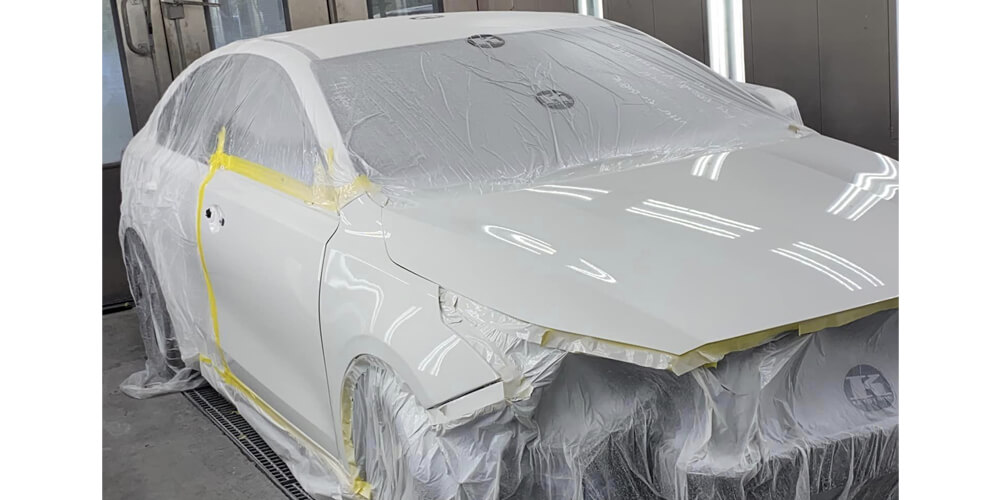
Image Source: www.supersybon.com
The Layers of Automotive Paint
When you look at a beautifully painted car, you’re not just seeing one color. You’re seeing a system of coatings, each with its own job. Let’s break down these automotive paint layers explained:
1. Surface Preparation and Cleaning
Before any paint touches your car, the surface must be perfect. This involves removing dirt, grease, old paint, and rust. A clean, smooth surface is essential for the paint to adhere properly.
2. Primer Coats for Car Body
The first layer of paint applied is typically primer. Primer coats for car body serve multiple functions:
- Adhesion: Primer helps the subsequent paint layers stick firmly to the car’s metal or plastic surface.
- Corrosion Resistance: Many primers contain rust inhibitors, offering a crucial layer of protection against the elements.
- Surface Smoothing: Primer fills in minor imperfections and scratches, creating a uniform surface for the color coat.
- Color Uniformity: It helps ensure that the final color coat appears consistent, especially when covering a dark or uneven original color.
Automotive primer application is critical. It’s usually applied in thin, even coats. The amount of primer needed depends on the condition of the car’s body and the type of primer used. For a standard car, you might use anywhere from half a gallon to a full gallon of primer.
How Much Primer for Auto Painting?
Figuring out how much primer for auto painting is a common question. A good rule of thumb is to have about 1 quart (0.25 gallons) of primer for every gallon of paint you plan to use, but this can vary.
- Small Cars/Spot Repairs: 1-2 quarts
- Medium Sedans: 2-3 quarts
- Large SUVs/Trucks: 3-4 quarts or more
It’s always better to have a little extra primer than not enough. This ensures you can apply the recommended number of coats without running out.
3. Base Coat
This is the layer that provides the actual color of your car. Modern automotive paints often use a base coat/clear coat system. The base coat contains the pigments that give the car its hue and metallic or pearl effects.
- Color Depth: The base coat determines the color’s vibrancy and appearance.
- Special Effects: Metallic flakes, pearls, and other visual effects are embedded in the base coat.
When you’re spraying, you’re looking for spray gun base coat coverage. This means how well the paint lays down and hides the surface underneath with each pass of the spray gun.
How Many Coats of Base Coat?
The question of how many coats of base coat are needed is vital for getting the color right. Typically, 2 to 4 coats of base coat are recommended.
- Light Colors: May require more coats for full coverage, especially over a dark primer or old paint.
- Dark Colors: Often cover better with fewer coats.
- Metallic/Pearl Finishes: These often require specific application techniques and consistent coat thickness to avoid mottling or unevenness. Sometimes, a “miser coat” (a very light, misty coat) is applied first to help orient the metallic flakes.
4. Clear Coat
The clear coat is the protective top layer. It’s transparent and acts like a shield for the base coat.
- Protection: It protects the base coat from UV rays, acid rain, scratches, and other environmental damage.
- Gloss and Depth: Clear coat provides the deep, glossy finish that makes a car’s paint look rich and vibrant.
Clear coat is applied in multiple layers, usually 2 to 3, to build up its protective properties and achieve a smooth, reflective surface.
Deciphering Base Coat Needs
Now, let’s focus on the core question: How Much Base Coat To Paint A Car. The amount of base coat you need is influenced by several factors:
Factors Affecting Base Coat Quantity
-
Vehicle Size and Complexity:
- Small Cars (e.g., compacts, sports cars): These generally require less paint.
- Medium Sedans/Coupes: A standard amount.
- Large Sedans, SUVs, Trucks, Vans: These have significantly more surface area, demanding more paint. Complex shapes with many curves and panels also require more material due to overspray and the need for consistent coverage.
-
Number of Coats Applied:
- As mentioned, 2-4 coats are typical. If you opt for more coats for deeper color or better coverage, you’ll need more base coat.
-
Paint Product Type:
- Solvent-Based Paints: These often spray thinner and may require more coats for full opacity.
- Water-Based Paints: Tend to have better hiding power and can sometimes cover more area per gallon.
- Manufacturer Recommendations: Always consult the paint manufacturer’s technical data sheet (TDS). They provide specific coverage rates and application guidelines for their products.
-
Application Method and Equipment:
- Spray Gun Type: Different spray guns have varying transfer efficiencies. High-volume, low-pressure (HVLP) guns are more efficient, meaning less paint is wasted as overspray, thus potentially reducing the total amount needed compared to older conventional spray guns.
- Spray Gun Settings: Nozzle size, air pressure, and fluid flow settings all impact how the paint sprays and covers.
-
Color of the Base Coat:
- Light colors: Often have less pigment concentration and may require more coats to achieve full opacity.
- Dark colors: Usually have higher pigment concentration and might cover better with fewer coats.
- Special Effect Colors (Metallics, Pearls): These can be trickier. Achieving an even metallic flake distribution often means spraying a consistent amount of paint, which might require more product to avoid “mottling” or “striping” effects.
-
Surface Condition and Color:
- Painting over a drastically different color (e.g., dark red over faded white) will necessitate more coats than painting a similar color over a well-primed surface.
- The condition of the underlying car paint prep layers also matters. If the primer isn’t perfectly uniform in color, you might need an extra coat of base.
Estimating Base Coat Volume
Let’s put some numbers to it. Paint manufacturers usually provide a coverage rate, often in square feet per gallon per coat. However, this is an ideal, laboratory-tested figure. In a real-world automotive painting scenario, you’ll experience overspray and the need for overlapping passes.
A common, practical estimate for painting a standard-sized car (like a sedan) with 2-3 coats of base coat is:
- For a small car/coupe: 1 quart to 1.5 quarts (0.25 – 0.375 gallons) of ready-to-spray base coat.
- For a medium sedan: 1.5 quarts to 1 gallon (0.375 – 1 gallon) of ready-to-spray base coat.
- For a large SUV/Truck: 1 gallon to 1.5 gallons (1 – 1.5 gallons) of ready-to-spray base coat.
What is “Ready-to-Spray”? Most base coats are concentrated and need to be mixed with a reducer (solvent or water, depending on the paint type) before application. The quantity mentioned above refers to the mixed, usable product. Always check the mixing ratio provided by the manufacturer. For example, a quart of concentrated base coat might become 1.5 quarts or even 2 quarts when mixed with reducer.
Example Calculation:
Let’s say you have a mid-size sedan.
* Manufacturer states coverage: 100 sq ft per gallon per coat (at typical film thickness).
* Your sedan has an approximate exterior surface area of 200 sq ft.
* You plan to apply 3 coats.
Ideal calculation: (200 sq ft / 100 sq ft/gallon) * 3 coats = 6 gallons. This is clearly too much.
This highlights why real-world estimates are used. The “coverage” is for a very thin, uniform film. Automotive painters build up the color in multiple, slightly thicker coats than this theoretical minimum.
A more practical approach:
- Small Cars: 1 quart of concentrate (makes ~1.5-2 quarts sprayable). This is often enough for 2-3 coats on smaller vehicles.
- Medium Cars: 1 gallon of concentrate (makes ~1.5-2 gallons sprayable). This is generally sufficient for 2-3 coats on most sedans.
- Large Cars/Trucks: 1.5 to 2 gallons of concentrate (makes ~2-3 gallons sprayable). This accounts for the larger surface area and potential need for extra coats or touch-ups.
Crucial Tip: Always buy slightly more than you think you’ll need. Running out mid-job can lead to color matching issues if you have to buy a different batch later.
Base Coat Application Tips
Getting the amount right is only half the battle; applying it correctly is equally important. Here are some base coat application tips:
- Consistent Technique: Maintain a consistent distance from the panel and a steady spraying speed. Overlap each pass by about 50-75%.
- Spray Gun Adjustment: Ensure your spray gun base coat coverage is even. Adjust your spray pattern and fluid flow to lay down a consistent film thickness. A common technique is to spray “wet” enough for the paint to flow out smoothly but not so wet that it runs.
- Flash Times: Allow adequate “flash time” between coats. This is the time for solvents to evaporate, allowing the next coat to adhere properly. Check the paint manufacturer’s TDS for recommended flash times.
- Temperature and Humidity: These environmental factors significantly affect drying and adhesion. Follow the manufacturer’s guidelines for ideal conditions.
- Practice: If you’re new to painting, practice on scrap panels first to get a feel for your spray gun and the paint.
Can I Use Spray Paint Automotive Primer?
Yes, you can use spray paint automotive primer for small touch-ups or minor repairs. Aerosol cans of primer are readily available and convenient. However, for a full car or large sections, using a primer from a can applied with a spray gun is generally recommended for better control, adhesion, and a smoother finish. The quality and consistency of aerosol primers can vary, and they are often not as durable or as effective at filling as bulk primers.
The Role of Primer Coats for Car Body
The primer coats for car body are the foundation of your paint job. Without proper priming, even the best base coat will fail.
- Durability: A good primer system enhances the overall durability of the paint job.
- Fillers: Some primers, known as “high-build” or “filler” primers, are designed to fill minor dents and imperfections, reducing the need for extensive body filler work.
- Sealant: Primer also seals the surface, preventing solvents in subsequent paint layers from bleeding through from previous repairs or older paint.
When considering how much primer for auto painting, remember that applying primer too thinly might not provide adequate coverage or adhesion, while applying it too thickly can lead to issues like shrinkage or solvent trapping.
Base Coat Thickness: A Delicate Balance
The ideal base coat thickness is crucial for both the appearance and longevity of the paint job. Too thin, and the color won’t be uniform, and the underlying layers might show through. Too thick, and you risk issues like:
- Mottling: Especially with metallics, if coats are too heavy or unevenly applied, the metallic flakes can clump together, creating dark and light patches.
- Runs and Sags: Over-application can cause the paint to drip and sag.
- Solvent Trapping: If the outer layers dry too quickly, solvents can be trapped within the thicker base coat, leading to future adhesion problems or clouding of the finish.
- Adhesion Issues: The clear coat needs to bond properly to the base coat. An excessively thick base coat can compromise this bond.
Manufacturers provide target film thicknesses (often in mils or microns). These are usually in the range of 1-2 mils (25-50 microns) per dry coat for base coat. This is very thin and why multiple coats are necessary to build up coverage.
Common Questions and Considerations
How much base coat do I need for a motorcycle?
For a motorcycle, you’ll need significantly less base coat than for a car. Typically, 1 to 2 quarts of ready-to-spray base coat will be more than enough for most motorcycles, allowing for multiple coats and touch-ups.
Can I paint a car with rattle cans?
While it’s possible to paint a car with rattle cans, it’s generally not recommended for a professional or long-lasting finish. Rattle cans are better suited for very small touch-ups. Achieving an even, consistent color, especially with metallics or pearls, is very difficult with aerosol cans due to inconsistent spray patterns and limited volume.
What happens if I use too much base coat?
As discussed, using too much base coat can lead to runs, sags, mottling (especially with metallics), poor adhesion, and solvent trapping. It’s important to apply it in thin, even coats.
What happens if I don’t use enough base coat?
If you don’t use enough base coat, you’ll likely experience poor hiding power. The original color or primer might show through, leading to an uneven or inconsistent color appearance. You might see blotchiness or stripes, particularly with metallic paints.
How do I ensure even spray gun base coat coverage?
Achieve even spray gun base coat coverage by:
* Maintaining a consistent spray gun distance (typically 6-8 inches).
* Using a steady, even trigger control.
* Overlapping each spray pass by 50-75%.
* Ensuring your spray gun is properly adjusted for the specific paint product.
* Spraying in a consistent pattern, moving your arm, not just your wrist.
What is the recommended order of automotive paint layers?
The typical order is:
1. Bare metal preparation
2. Epoxy primer (optional, but recommended for corrosion protection)
3. High-build primer or sealer
4. Primer surfacer (sanded smooth)
5. Base coat (color)
6. Clear coat
7. Optional: Wet sanding and polishing the clear coat.
Do I need to sand between base coats?
Generally, no. You only need to sand between coats if the paint manufacturer specifically recommends it, or if there are imperfections like runs or dust nibs. However, you do need to ensure the base coat has flashed off properly before applying the next coat. For certain finishes, a light “miser coat” or “fog coat” is applied first, and then subsequent coats are applied while that first coat is still slightly wet. Always follow the TDS.
How to estimate paint for a two-tone job?
For a two-tone job, you’ll divide your total paint estimate between the two colors. If you estimate 1 gallon for a single-color job, you might use half a gallon of each color for a 50/50 split. For different color proportions, adjust accordingly. Remember to factor in potential overspray from masking.
Conclusion
Estimating how much base coat to paint a car requires careful consideration of the vehicle’s size, the desired finish, the paint product itself, and your application technique. While general guidelines exist, always refer to the specific product’s technical data sheet for the most accurate recommendations. Purchasing slightly more paint than you think you’ll need is a wise precaution to ensure a flawless finish without mid-job interruptions. By respecting each layer of the automotive paint system and applying them with care, you can achieve a stunning and durable result.
Frequently Asked Questions (FAQ)
Q1: Can I use regular spray paint to paint my car?
A1: No, regular spray paint found in hardware stores is not formulated for automotive use. Automotive paints, including base coats, primers, and clear coats, are designed to withstand harsh environmental conditions, UV exposure, and mechanical stress, offering far greater durability and a better finish than standard spray paints.
Q2: How long does automotive paint need to cure?
A2: The “drying” or “touch dry” time is much shorter than the full “cure” time. Base coats typically need to flash off before clear coat is applied, which might take 15-30 minutes. Clear coats can become touch dry in a few hours, but full curing can take anywhere from 24 hours to several weeks, depending on the product and environmental conditions. During the curing process, the paint hardens and becomes more resistant to damage.
Q3: What is the best type of primer for car painting?
A3: The best type of primer depends on the surface and the desired outcome. Epoxy primers offer excellent adhesion and corrosion resistance on bare metal. High-build or filler primers are excellent for filling minor imperfections and creating a smooth surface. Urethane primer surfacers are popular for their durability and ease of sanding. A combination might be used, starting with an epoxy, followed by a high-build primer.
Q4: How much does it cost to paint a car?
A4: The cost of painting a car can vary wildly. DIY jobs using budget-friendly paints and basic equipment might cost a few hundred dollars in materials. Professional, high-quality paint jobs from reputable shops can range from $3,000 to $10,000 or even more, depending on the car, the quality of the paint, the extent of bodywork needed, and the shop’s reputation.
Q5: What are the risks of not using enough clear coat?
A5: Not using enough clear coat can lead to premature fading of the base coat, reduced UV protection, and a duller finish over time. It also makes the paint more susceptible to scratches and environmental damage, as the clear coat is the primary protective layer. The gloss and depth of the finish will also be compromised.