

Imagine watching your favorite action movie. The explosions shake the room, the car chases feel real, and the music swells with power. Now, imagine that feeling is missing. That’s often what happens when a home cinema system lacks a great subwoofer. It’s the heart of sound, the part that makes you *feel* the movie, not just hear it.
But finding that perfect subwoofer can feel like a quest. There are so many choices, and the technical terms can be confusing. What size should it be? How much power does it need? Will it even fit in your room? These questions can make choosing a subwoofer feel overwhelming and might leave you with a system that just doesn’t deliver the punch you’re hoping for.
This post is here to guide you through the exciting world of home cinema subwoofers. We’ll break down what makes a subwoofer great, explain the key features in simple terms, and help you understand what to look for. By the end, you’ll be confident in choosing a subwoofer that will transform your movie nights from good to absolutely epic.
Our Top 5 Home Cinema Subwoofer Recommendations at a Glance
Top 5 Home Cinema Subwoofer Detailed Reviews
1. Polk Monitor XT10 Home Subwoofer

Rating: 9.4/10
The Polk Monitor XT10 Home Subwoofer is a fantastic addition to any home theater setup. It brings powerful, deep bass to your movies, music, and games. This subwoofer is designed to make your audio experience more exciting and immersive.
What We Like:
- It delivers really deep and powerful bass, reaching as low as 24Hz.
- The 100W amplifier ensures loud and impactful sound.
- It’s built with high-quality materials for a premium feel.
- The modern design looks great in any room.
- It’s compatible with Dolby Atmos, DTS:X, and Auro 3D for amazing surround sound.
- The sound is clear and free of unwanted noise thanks to its special cabinet design.
- You can easily connect it to most receivers with several connection options.
- It works well with other Polk Monitor XT speakers for a complete home theater system.
- It has simple controls for volume, crossover, and phase.
What Could Be Improved:
- While it offers great bass, some users might want even more power for very large rooms.
- The down-firing design, while good for isolation, can sometimes make placement a bit trickier than a front-firing subwoofer.
Overall, the Polk Monitor XT10 subwoofer is an excellent choice for anyone wanting to upgrade their home audio. It provides impressive bass and enhances your entertainment experience significantly.
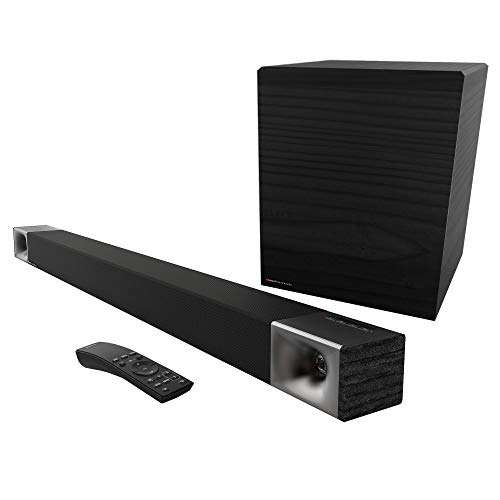
2. Klipsch Cinema 600 Sound Bar 3.1 Home Theater System with HDMI-ARC for Easy Set-Up
Rating: 9.5/10
Get ready for an amazing home theater experience with the Klipsch Cinema 600 Sound Bar 3.1 Home Theater System. This all-in-one system makes it super easy to upgrade your TV’s sound. It’s a 45-inch soundbar with a powerful 10-inch wireless subwoofer. You’ll get incredible, room-filling sound that makes movies and music come alive. Plus, setting it up is a breeze thanks to HDMI-ARC. Just one cable connects everything, and you can control it all with a single remote. This system is designed to give you that big, theater-like sound right in your living room.
What We Like:
- Best-in-class 600W peak power delivers loud, clear sound.
- The 10-inch wireless subwoofer provides deep, booming bass.
- HDMI-ARC makes setup incredibly simple with just one cable.
- One remote control for the soundbar and subwoofer is very convenient.
- 5.1 decoding creates virtual surround sound for an immersive experience.
- Powerful audio performance with crisp highs and deep lows.
What Could Be Improved:
- While it offers virtual surround, it doesn’t have true Dolby Atmos or DTS:X for the most advanced immersive audio.
- The soundbar itself is quite long (45 inches), so make sure it fits your TV stand or wall mount space.
The Klipsch Cinema 600 is a fantastic choice for anyone wanting to significantly boost their TV’s audio. It delivers impressive sound and makes setup hassle-free.
3. ULTIMEA 5.1CH Surround Sound Bar with Subwoofer

Rating: 9.3/10
The ULTIMEA Poseidon M60 (2025 Model) is a powerful 5.1 channel surround soundbar system designed to bring a cinema-like experience right into your living room. It features real Dolby Atmos and advanced technologies like VoiceMX and BassMX to deliver immersive audio.
What We Like:
- It’s easy to set up for a true Dolby Atmos 5.1 experience without extra rear speakers.
- VoiceMX technology makes dialogue super clear, so you won’t miss a word.
- The 300W output and dedicated subwoofer provide big, room-filling sound with deep bass.
- HDMI eARC ensures the best sound quality for Dolby Atmos.
- The Ultimea app gives you lots of control to customize the sound.
- Bluetooth 5.4 offers a very stable and fast wireless connection.
What Could Be Improved:
- While it creates a wide soundstage, the lack of physical rear speakers might not satisfy hardcore surround sound enthusiasts.
- The 18mm driver in the subwoofer, while good, may not satisfy those seeking extremely powerful, earth-shaking bass.
The ULTIMEA Poseidon M60 is a fantastic option for anyone wanting a significant audio upgrade for their smart TV without a complicated setup. It balances immersive sound with user-friendly features.
4. Klipsch Synergy Black Label Sub-120 12” Front-Firing Subwoofer with 200 Watts of continuous & 400 watts of Dynamic Power

Rating: 9.2/10
Get ready for a sound experience like no other with the Klipsch Synergy Black Label Sub-120. This 12-inch subwoofer brings powerful bass to your home theater, making movies and music truly come alive. Its sleek black design fits perfectly in any room, and it’s built to last. You’ll feel every explosion and every beat with its impressive power.
What We Like:
- The spun copper Cerametallic woofers create incredibly clear and powerful bass.
- A 12-inch front-firing driver delivers deep, rumbling lows.
- With 200 watts of continuous power and 400 watts of dynamic power, it packs a serious punch.
- It easily connects to most AV receivers, making setup a breeze.
- The strong, removable grille protects the woofer and looks great.
- Its modern black finish blends in seamlessly with your home decor.
What Could Be Improved:
- Connection wires are not included, so you’ll need to buy those separately.
- For the best sound, you need to place it in a corner, which might limit placement options.
This subwoofer is a fantastic way to upgrade your home entertainment system. For truly immersive sound, the Klipsch Sub-120 is a top-notch choice.
5. Rockville Rock Shaker 6.5 Black 200W Peak/100W RMS Powered Home Theater Subwoofer

Rating: 9.2/10
Get ready to feel the rumble with the Rockville Rock Shaker 6.5 Black subwoofer! This compact powerhouse packs a serious punch, bringing deep, rich bass to your movies, music, and games. Its sleek design won’t cramp your style, making it a perfect fit for any room.
What We Like:
- Deep Bass: The 200W peak power and 6.5″ woofer create immersive sound that you can feel.
- Customizable Sound: Easily adjust the crossover and phase controls to match your speakers and room for the best bass.
- Easy Connections: RCA and speaker-level inputs and outputs make it simple to connect to your existing audio gear.
- Space-Saving Design: Its small size (11″ x 11.8″ x 12.6″) means you get big sound without a big footprint.
- Built to Last: A Class-D amplifier and quality woofer construction ensure clear, distortion-free bass.
What Could Be Improved:
- While powerful for its size, extremely large rooms might benefit from a larger subwoofer.
- Some users might prefer wireless connectivity options for easier placement.
The Rockville Rock Shaker 6.5 is an excellent choice for anyone looking to add impressive bass to their home audio setup without breaking the bank or sacrificing space.
Bring the Boom: Your Guide to Home Cinema Subwoofers
Ready to feel the rumble of explosions and the deep thrum of movie soundtracks? A home cinema subwoofer is your ticket to a truly immersive audio experience. It’s the heart of your home theater’s bass, adding that extra punch that smaller speakers just can’t deliver. This guide will help you pick the perfect subwoofer so your movies and music sound amazing.
What to Look For: Key Features
When you’re shopping for a subwoofer, keep these important features in mind:
- Size Matters (Driver Size): Subwoofers have a driver, which is the speaker cone that makes the sound. Larger drivers (like 10-inch, 12-inch, or even 15-inch) generally move more air and produce deeper, more powerful bass. Smaller drivers might be okay for smaller rooms, but for a true cinema feel, bigger is often better.
- Power (Wattage): This tells you how loud the subwoofer can get. More watts mean more power and a stronger bass output. Look for a wattage that matches your room size and your desired volume level.
- Frequency Response: This shows you the range of low frequencies the subwoofer can reproduce. A lower number means it can go deeper. Aim for a subwoofer that can reach at least 20Hz (Hertz) for that satisfying, deep bass.
- Enclosure Type: Subwoofers come in different box types.
- Sealed Enclosures: These are generally smaller, more accurate, and have tighter bass. They are good for music and movies where you want precise sound.
- Ported (or Vented) Enclosures: These have a port or tube that lets air out. They can produce louder, more impactful bass, making them great for action movies and gaming.
- Connections: Make sure the subwoofer has the right connections to hook up to your AV receiver or sound system. Most common are RCA inputs.
Built to Last: Important Materials
The materials used in a subwoofer affect its sound and durability.
- Driver Cone Material:
- Paper or Pulp: These are common and can produce good sound.
- Polypropylene or Composite Materials: These are often stronger and more durable, helping to reduce distortion and improve bass accuracy.
- Kevlar or Carbon Fiber: These high-end materials are very strong and light, leading to exceptional performance and clarity.
- Cabinet Material: A sturdy cabinet is crucial.
- MDF (Medium-Density Fiberboard): This is the most common and a good choice. It’s dense and helps prevent vibrations that can color the sound.
- Wood Composite: Similar to MDF, it provides a solid foundation.
Sound Quality: What Makes it Great (or Not So Great)?
Several things can make a subwoofer sound amazing or disappointing.
- Factors That Improve Quality:
- Solid Cabinet Construction: A well-built, non-resonant cabinet is key. It stops the box from rattling and muddying the bass.
- High-Quality Amplifier: The internal amplifier powers the driver. A good amplifier provides clean power for accurate and powerful bass.
- Proper Tuning: How the enclosure is designed and the driver is matched to it greatly impacts the sound.
- Room Acoustics: Even the best subwoofer can sound bad in a poorly treated room. Your room’s shape and furniture affect how bass travels.
- Factors That Reduce Quality:
- Cheap Materials: Thin cabinet walls or flimsy driver components can lead to distortion and weak bass.
- Underpowered Amplifier: If the amp isn’t strong enough, the subwoofer will struggle to produce deep, clear bass.
- Poor Design: A subwoofer that isn’t well-engineered will sound muddy or boomy.
- Placement Issues: Putting a subwoofer in a corner can sometimes make the bass too loud and boomy.
Living with Your Subwoofer: User Experience and Use Cases
A subwoofer isn’t just for watching movies. It enhances many audio experiences.
- Movie Enthusiasts: This is where subwoofers shine. Feel the impact of explosions, the rumble of engines, and the deep tones of a dramatic score. It makes action, sci-fi, and horror movies truly come alive.
- Music Lovers: Many music genres benefit from good bass. Rock, electronic, hip-hop, and even some classical music gain depth and richness with a subwoofer. It adds a physical presence to the music.
- Gamers: Feel every explosion, every footstep, and every roar of a virtual engine. A subwoofer adds a new level of immersion to video games.
- Room Size: Consider where you’ll put it. A small subwoofer might get lost in a large room, while a huge one might overwhelm a small space.
- Ease of Setup: Most subwoofers are plug-and-play. You connect them to your AV receiver and adjust a few settings.
Home Cinema Subwoofer FAQs
Q: What is the most important feature of a home cinema subwoofer?
A: The most important features are driver size, power (wattage), and frequency response. These directly impact how deep and powerful the bass will be.
Q: Do I need a subwoofer if I have a soundbar?
A: Many soundbars have built-in subwoofers or come with a wireless one. If yours doesn’t, a separate subwoofer will add significant bass and improve your audio experience.
Q: How big should my subwoofer be?
A: For smaller rooms (under 150 sq ft), an 8-inch or 10-inch driver might be enough. For medium to large rooms, a 10-inch or 12-inch driver is usually recommended. Very large rooms might benefit from a 15-inch driver or even two subwoofers.
Q: Can a subwoofer improve my music listening experience?
A: Yes! Many music genres, like rock, electronic, and hip-hop, benefit greatly from the added depth and impact that a subwoofer provides.
Q: What does “frequency response” mean for a subwoofer?
A: It tells you the range of low sounds the subwoofer can make. A lower number, like 20Hz, means it can produce deeper bass notes.
Q: Is a sealed or ported subwoofer better?
A: Sealed subwoofers offer tighter, more accurate bass, good for music. Ported subwoofers can produce louder, more booming bass, great for action movies.
Q: How much power (wattage) do I need?
A: For small to medium rooms, 100-300 watts is usually sufficient. Larger rooms or those who like it loud might want 300 watts or more.
Q: Where should I place my subwoofer in the room?
A: Experiment! Corners can boost bass but might make it boomy. Placing it along a wall or even in the listening area can often provide more balanced sound.
Q: What is “distortion” in a subwoofer?
A: Distortion happens when the subwoofer can’t accurately reproduce the sound. It can make the bass sound muddy or unpleasant. Good materials and construction help reduce distortion.
Q: Do I need a special cable for my subwoofer?
A: Most subwoofers use a standard RCA cable, often called a “subwoofer cable” or “LFE cable,” to connect to your AV receiver.
In conclusion, every product has unique features and benefits. We hope this review helps you decide if it meets your needs. An informed choice ensures the best experience.
If you have any questions or feedback, please share them in the comments. Your input helps everyone. Thank you for reading.