
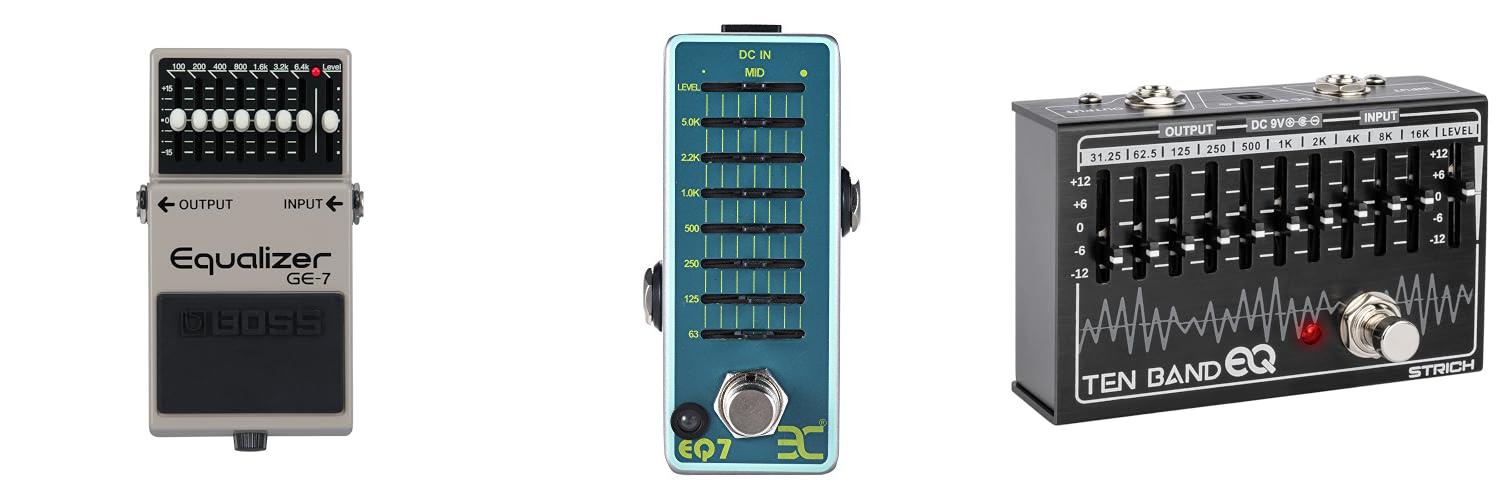
Ever felt like your guitar sound is just… okay? You know it could be so much better, but you’re not sure how to get there. Maybe your solos don’t cut through the mix, or your rhythm playing sounds muddy. It’s a common problem for guitarists, and finding the right equalizer can feel like searching for a needle in a haystack.
The world of guitar equalizers is huge! There are so many different types, each with its own knobs and settings. It can be confusing to figure out which one will actually help your guitar sing. You want a sound that’s yours, that fits the music perfectly. But with all the choices, it’s easy to feel overwhelmed and unsure if you’re making the right pick.
This post is here to help you cut through the noise. We’ll break down what makes a great guitar equalizer and what to look for. By the end, you’ll feel confident about choosing an EQ that will make your guitar sound amazing, whether you’re playing live or just practicing at home. Let’s dive in and unlock your guitar’s true potential!
Our Top 5 Equalizer For Guitar Recommendations at a Glance
Top 5 Equalizer For Guitar Detailed Reviews
1. BOSS GE-7 Equalizer

Rating: 9.3/10
The BOSS GE-7 Equalizer is a compact stompbox designed to give guitarists precise control over their sound. It features seven easy-to-use sliders, each letting you shape a specific frequency range. This pedal is built to help you dial in the perfect tone for any situation.
What We Like:
- Seven sliders let you adjust specific sound frequencies.
- These frequencies are chosen specifically for guitar players.
- You can boost or cut each frequency by a lot, up to 15dB.
- A special level slider helps you set the overall volume.
- It’s small and doesn’t take up much space on your pedalboard.
- BOSS offers a great five-year warranty, so you’re covered.
What Could Be Improved:
- Some players might want more than seven bands for even finer control.
- While good for guitar, it might not be the best choice for other instruments.
The BOSS GE-7 Equalizer is a fantastic tool for any guitarist looking to shape their tone. It offers a lot of power in a small package, making it a valuable addition to your setup.
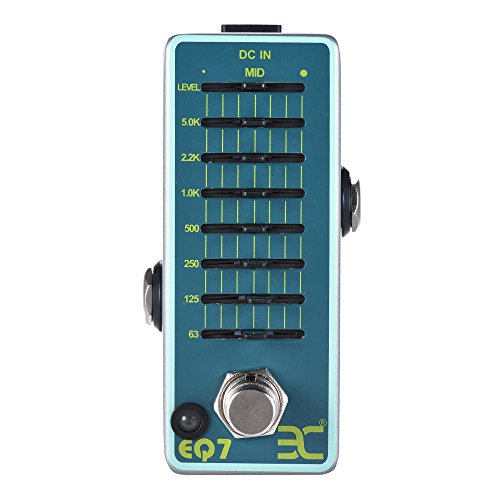
2. EX 7 Band EQ Equalizer Mini Guitar Pedal
Rating: 9.4/10
The EX 7 Band EQ Equalizer Mini Guitar Pedal is a tiny powerhouse that helps guitarists sculpt their sound. It gives you control over seven different sound frequencies. This means you can make your guitar sound exactly how you want it, whether you’re playing at home or on a big stage. It’s built tough and easy to use, making it a great addition to any pedalboard.
What We Like:
- It offers precise control over seven sound frequencies, letting you fine-tune your guitar’s tone.
- It keeps your guitar’s original sound when it’s not on, thanks to true bypass.
- It’s very small and fits easily on crowded pedalboards.
- The metal case is strong and can handle being used a lot.
- It’s simple to set up and use right away.
- It has a special knob to control the overall volume, which is great for solos.
- It doesn’t use much power, so it can last a long time on a battery.
What Could Be Improved:
- The power adapter is not included with the pedal.
This pedal is a fantastic tool for any guitarist looking to get more control over their sound. Its small size and durable build make it a reliable choice for both practice and performance.
3. STRICH EQ Pedal for Electric Guitar

Rating: 9.0/10
Unleash your guitar’s full sonic potential with the STRICH TEN BAND EQ pedal. This powerful equalizer gives you precise control over your sound. It features ten frequency bands, letting you shape every nuance of your tone. Whether you play guitar or bass, this pedal offers incredible versatility.
What We Like:
- Built tough with a sturdy aluminum alloy casing.
- Ten frequency bands give you lots of ways to change your sound.
- Easy-to-use sliders make adjusting your tone a breeze.
- The true bypass design keeps your original sound clean and clear.
- It’s small and light, making it easy to take anywhere.
What Could Be Improved:
- You’ll need to buy a separate 9V DC power adapter.
The STRICH TEN BAND EQ pedal is a fantastic tool for any musician. It delivers excellent sound control in a durable and portable package.
4. JOYO 6-Band EQ Pedal Electric Guitar Equalizer (100Hz 200Hz 400Hz 800Hz 1.6kHz 3.2kHz) Provides ±18dB for Each Band (JF-11)

Rating: 8.9/10
Unlock your guitar’s true potential with the JOYO 6-Band EQ Pedal. This little powerhouse lets you sculpt your sound with incredible precision. You get six different frequency bands to play with, each offering a massive ±18dB boost or cut. This means you can really dial in that perfect tone for any situation. Whether you want to add sparkle to your solos, make your rhythm guitar punch through the mix, or clean up muddy low-end, this pedal has you covered. It’s an often-overlooked but super effective way to make your guitar sound amazing.
What We Like:
- Six adjustable frequency bands (100Hz, 200Hz, 400Hz, 800Hz, 1.6kHz, 3.2kHz) give you lots of control.
- Each band offers a generous ±18dB of adjustment to fine-tune your sound.
- Boost highs for clearer overdrive or cut lows to reduce muddiness.
- Mids can be boosted to help your guitar stand out in a band.
- True bypass design ensures your original guitar tone remains pure.
- Sturdy aluminum-alloy housing with a classic finish is built to last.
- JOYO is a trusted brand with a long history of making great guitar gear.
What Could Be Improved:
- It’s recommended to buy a separate JOYO power adapter and audio cable for best performance, adding to the initial cost.
This JOYO EQ pedal is a fantastic tool for any guitarist looking to seriously shape their tone. It’s a simple yet powerful way to get the most out of your instrument.
5. SONICAKE EQ Equalizer Guitar Effects Pedal Tone Group 10-Band

Rating: 9.1/10
The SONICAKE EQ Equalizer Guitar Effects Pedal Tone Group 10-Band is a powerful tool for any musician looking to fine-tune their sound. This 100% analog pedal is built on the foundation of a classic EQ effect pedal. It gives you incredible control over your tone. With 11 sliders, you can easily adjust the sound of your instrument. It’s great for electric guitar, bass, keyboards, and more. You can boost or cut the volume of specific sound frequencies. This helps you get the perfect sound for any song or style. The pedal offers a wide adjustment range for each frequency band. This means you can make big changes or subtle tweaks. It’s designed to be user-friendly. You can quickly shape your tone on the fly.
What We Like:
- 100% analog sound for a classic, warm tone.
- 11 sliders offer very precise control over 10 different frequency bands.
- ±15dB adjustable gain for each band allows for significant tone shaping.
- Works with many different instruments, not just guitars.
- True bypass circuit ensures your original signal stays clean when the pedal is off.
- Compact and easy to use for quick adjustments.
What Could Be Improved:
- Power supply is not included, so you’ll need to buy that separately.
- While easy to use, understanding all 10 bands might take a little practice for beginners.
This SONICAKE EQ Equalizer is a fantastic choice for musicians who want detailed control over their sound. It offers great flexibility and a classic analog feel.
Your Guide to Finding the Best Guitar Equalizer
So, you want to make your guitar sound amazing? A guitar equalizer (EQ) can help! It’s like a special tool that lets you shape your guitar’s sound. You can make it brighter, warmer, or give it more punch. Let’s find the right EQ for you.
Key Features to Look For
What makes a good EQ?
- Frequency Bands: Think of these as sliders. More sliders mean you can tweak more parts of your guitar’s sound. Some EQs have a few, while others have many. More bands give you more control.
- Boost/Cut Range: This tells you how much you can turn sounds up or down. A bigger range means you can make bigger changes.
- Bypass Switch: This lets you turn the EQ on and off easily. It’s super handy for comparing your sound with and without the EQ.
- True Bypass: This is a special kind of bypass. When the pedal is off, it doesn’t mess with your guitar’s signal at all. Your original sound stays pure.
- EQ Type: There are graphic EQs (with sliders) and parametric EQs (with knobs that control frequency, gain, and bandwidth). Graphic EQs are usually easier to use for quick adjustments.
Important Materials
What’s it made of?
Most guitar EQs are built tough. They usually have a strong metal casing. This protects the electronics inside. Some pedals might have plastic parts, but metal is generally better for durability. The knobs and switches should also feel solid.
Factors That Improve or Reduce Quality
What makes an EQ great or not so great?
- Sound Quality: The best EQs add clarity and character to your guitar. They don’t make your sound noisy or muddy. Good EQs let you shape your tone without losing its natural feel.
- Build Quality: A pedal that feels solid and well-made will last longer. Cheaply made pedals might break easily.
- Noise Floor: This is the background hiss or hum a pedal makes. The best EQs have a very low noise floor, so you don’t hear unwanted noise when you play.
- Ease of Use: If the controls are confusing, it’s hard to get the sound you want. Simple layouts with clear labels are best.
User Experience and Use Cases
Who uses EQs and why?
Guitar EQs are for everyone! From beginners to pros, they help you get the perfect sound.
- For Clean Tones: You can add sparkle or warmth to your clean guitar sound. Make it cut through the mix.
- For Distorted Tones: EQs can tame harsh high frequencies in distortion. They can also add more low-end punch.
- For Live Shows: EQs help you adjust your sound to different rooms. You can make sure your guitar is heard clearly by everyone.
- For Recording: EQs are essential in the studio. They help you fine-tune your guitar’s tone for the best recording.
A good EQ is a versatile tool. It helps your guitar sound its absolute best in any situation.
Frequently Asked Questions About Guitar Equalizers
Q: What is a guitar equalizer?
A: A guitar equalizer is a device that lets you adjust the different frequencies of your guitar’s sound. You can make it sound brighter, warmer, or change its overall tone.
Q: How do I use an EQ pedal?
A: You connect the EQ pedal between your guitar and your amplifier. Then, you use the sliders or knobs to boost (turn up) or cut (turn down) specific frequencies to shape your sound.
Q: What are frequency bands?
A: Frequency bands are like different sections of sound. An EQ pedal has controls for each band, allowing you to adjust how loud or quiet those specific parts of your guitar’s sound are.
Q: What does “boost/cut range” mean?
A: The boost/cut range shows how much you can increase or decrease the volume of a specific frequency band. A wider range means you can make bigger changes to your tone.
Q: What is a bypass switch?
A: A bypass switch lets you turn the EQ effect on or off. This is useful for hearing how the EQ changes your sound compared to your original tone.
Q: What is “true bypass”?
A: True bypass means that when the EQ pedal is switched off, it completely removes itself from your signal path. Your guitar’s sound goes straight to your amp without any alteration.
Q: Are EQs only for electric guitars?
A: While EQs are very common for electric guitars, they can also be used with acoustic guitars, basses, and even keyboards to shape their sound.
Q: Can an EQ pedal fix a bad guitar sound?
A: An EQ pedal can help improve a guitar sound by shaping its frequencies. However, it cannot magically fix a fundamentally bad instrument or amplifier. It’s a tone-shaping tool, not a magic wand.
Q: How many frequency bands should I look for?
A: For most players, an EQ with 5 to 10 frequency bands is a good starting point. More bands offer finer control but can be more complex to use.
Q: Where should I place an EQ pedal in my effects chain?
A: You can place an EQ pedal in different spots. Before distortion pedals, it can shape the tone going into the distortion. After distortion, it can further shape the distorted sound. Experiment to see what sounds best for you.
In conclusion, every product has unique features and benefits. We hope this review helps you decide if it meets your needs. An informed choice ensures the best experience.
If you have any questions or feedback, please share them in the comments. Your input helps everyone. Thank you for reading.