
Imagine a race car. It needs a powerful engine to zoom past the finish line, right? In the world of audio, a Competition Amplifier is like that super engine for your sound system. It’s the heart that pumps energy to your speakers, making music loud and clear.
But picking the right competition amplifier can feel like trying to solve a puzzle. There are so many choices, and it’s easy to get confused. You want an amplifier that’s strong enough for your needs but also fits your budget. Getting it wrong means your sound might be weak, or you might waste money on something you don’t really need.
This post is here to help you win the battle of choosing! We’ll break down what makes a good competition amplifier. You’ll learn what to look for, understand confusing terms, and discover how to find the perfect match for your car audio system. By the end, you’ll feel confident in making a smart choice.
Our Top 5 Competition Amplifiers Recommendations at a Glance
Top 5 Competition Amplifiers Detailed Reviews
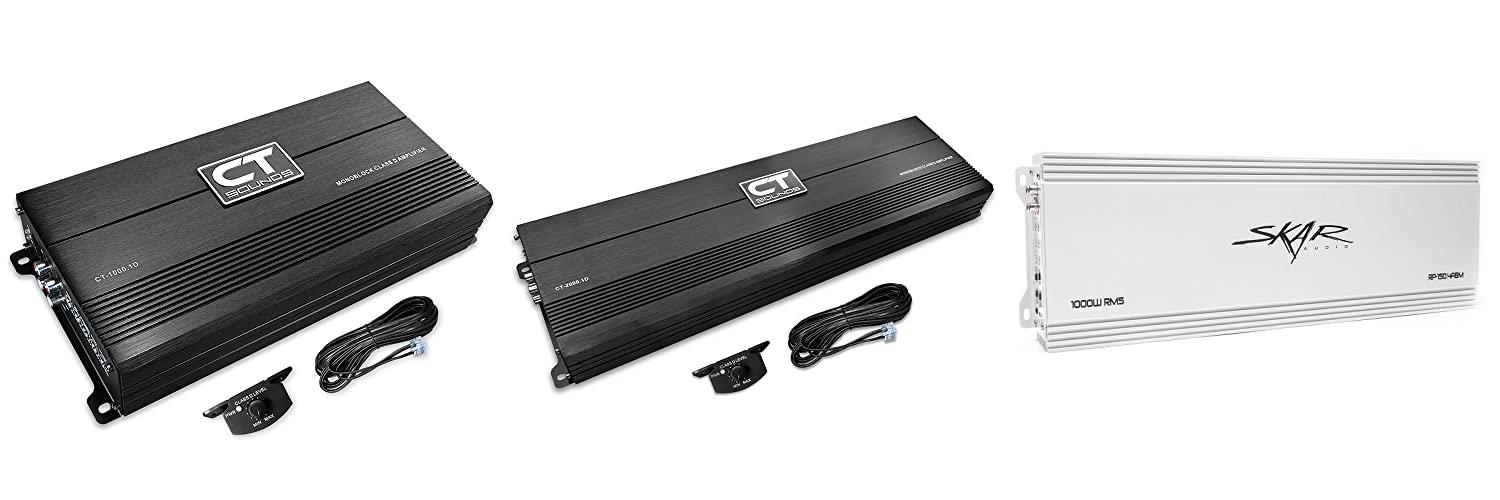
1. CT Sounds CT-1000.1D Compact Class D Car Audio Monoblock Amplifier

Rating: 9.2/10
Get ready to feel the bass with the CT Sounds CT-1000.1D Compact Class D Car Audio Monoblock Amplifier. This little powerhouse packs a serious punch, delivering a massive 1000 watts of clean power. It’s designed to make your car audio system sound amazing, even with the most demanding music.
What We Like:
- It delivers 1000 watts RMS power, which is a lot of sound!
- Its compact size makes it super easy to fit into any car.
- It’s very efficient, so it won’t drain your car’s battery too much.
- The amplifier stays cool even when playing loud music for a long time.
- It has built-in safety features to protect itself from problems.
- A bass knob is included, so you can easily control the bass.
What Could Be Improved:
- While it offers great power, the 1-ohm rating might be the most demanding on your car’s electrical system.
- The compact design might mean some connections are a bit tighter than on larger amps.
The CT Sounds CT-1000.1D is a fantastic choice for anyone wanting big sound without taking up a lot of space. This amplifier will make your car’s music thump.
2. CT Sounds CT-2000.1D Compact Class D Car Audio Monoblock Amplifier

Rating: 8.7/10
Get ready for some serious bass with the CT Sounds CT-2000.1D Compact Class D Car Audio Monoblock Amplifier. This little powerhouse packs a punch, delivering a massive 2000 watts of RMS power. It’s designed to be super efficient, so it won’t drain your car’s battery. Plus, it stays cool even when you’re rocking out to your favorite tunes.
What We Like:
- Incredible 2000 watts RMS power at 1-ohm, so your subs will really thump.
- Compact size makes it easy to fit anywhere in your car.
- Very efficient design, saving your car’s electrical system.
- Built-in protection keeps it safe from voltage issues, overloads, and overheating.
- Bass knob included for easy control of your bass.
- Stays cool during long listening sessions thanks to its special design.
What Could Be Improved:
- Higher wattage at 4-ohm could be better for some setups.
- Specific details on the proprietary heat dissipation design could be clearer.
The CT Sounds CT-2000.1D is a fantastic amplifier for anyone who wants big sound without a big footprint. You get tons of power and smart features in a small package.
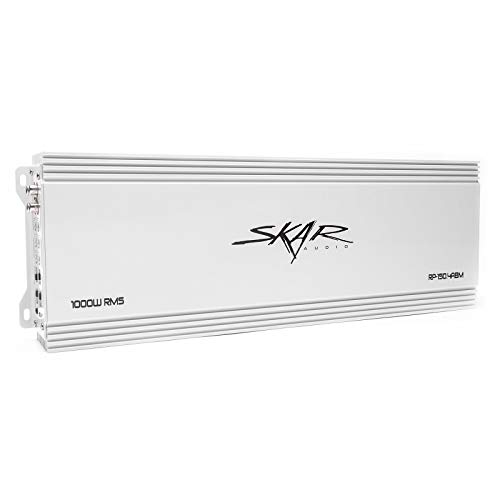
3. Skar Audio RP-150.4ABM 1
Rating: 9.1/10
Get ready to crank up the volume on your boat with the Skar Audio RP-150.4ABM amplifier! This powerful 1,000-watt amp is built tough for the water. It delivers clear, strong sound to all your speakers. The Skar Audio RP-150.4ABM is designed to handle the elements and keep your music playing loud and clear.
What We Like:
- It delivers a huge 1,000 watts of power.
- It’s built for marine use with special waterproof coatings.
- You can adjust the sound with controls like bass boost.
- It has strong protection circuits to keep it safe.
- It provides a very clean sound with a high signal-to-noise ratio.
What Could Be Improved:
- It might be a bit too powerful for smaller boats or systems.
- Installation might take some effort if you’re new to car audio.
This Skar Audio amplifier is a fantastic choice for anyone wanting to seriously upgrade their boat’s sound system. It brings the power and the durability you need for a great time on the water.
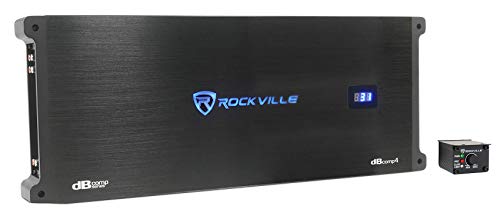
4. Rockville dBcomp4 Competition 3000W Mono 1-Ohm Car Amplifier
Rating: 8.7/10
The Rockville dBcomp4 Competition 3000W Mono 1-Ohm Car Amplifier is a powerhouse designed to make your car audio system thump. This amplifier delivers an incredible 3000 watts of RMS power at 1 ohm, meaning it can really push your subwoofer to its limits. It’s built with advanced technology to give you the best sound possible, and it’s made to last. Whether you’re a serious car audio enthusiast or just want to upgrade your sound, this amp is a solid choice.
What We Like:
- Massive 3000W RMS power output at 1 ohm for serious bass.
- Advanced sound controls like adjustable crossover and subsonic filter let you fine-tune your audio.
- Efficient MOSFET technology ensures stable power and great sound quality.
- User-friendly features like a remote subwoofer control and digital voltage display make it easy to use and monitor.
- Built-in protection circuitry keeps the amplifier safe from damage.
What Could Be Improved:
- The 3000W power rating might be overkill for some smaller car audio setups.
- While user-friendly, installing a high-power amplifier like this might require some car audio knowledge.
Overall, the Rockville dBcomp4 is a fantastic amplifier for anyone seeking extreme power and precise control over their car’s subwoofer. It offers a compelling blend of performance, features, and protection.
5. Alpine S-A60M S-Series Class D Mono Amplifier

Rating: 9.0/10
The Alpine S-A60M S-Series Class D Mono Amplifier packs a punch for its size. It delivers a powerful 600 watts RMS to one channel, or 330 watts RMS to one channel if you’re looking for a slightly different setup. This amp is designed to upgrade your car’s sound system, giving your speakers the power they need to really sing. Its efficient Class D design means it runs cooler and uses less power, which is a win for your car’s electrical system. Plus, it’s built to be user-friendly for installation.
What We Like:
- It offers strong power output (600W RMSx1) for impressive bass.
- You can easily connect it to any car stereo, even your factory one, thanks to its preamp and speaker-level inputs.
- The variable bass boost lets you fine-tune your low-end sound exactly how you want it.
- It’s a Class D amplifier, meaning it’s more energy-efficient and runs cooler than older amp types.
- The signal-to-noise ratio of 85 dBA means you get clear sound with less unwanted noise.
What Could Be Improved:
- While powerful, some users might want even more RMS power for extremely large subwoofers.
- The 330W RMSx1 option is good, but it’s a significant drop from the 600W rating.
This Alpine amplifier is a solid choice for anyone looking to boost their car’s audio. It provides great power and flexibility, making it easy to get a better sound experience.
Choosing Your Competition Amplifier: Unleash the Power!
So, you’re ready to turn up the volume and make some serious noise? Whether you’re a budding DJ, a car audio enthusiast, or just love booming bass, a competition amplifier is your secret weapon. But with so many options, how do you pick the right one? Let’s break it down.
What to Look For: Key Features
When you’re shopping for a competition amplifier, keep an eye out for these important features:
- Power Output (RMS): This is how much continuous power the amp can push. Look for a higher RMS rating for louder, cleaner sound. Don’t be fooled by “peak” power numbers; RMS is the real deal.
- Channels: Most amps have 1, 2, 4, or 5 channels. A 1-channel amp (mono) is great for subwoofers. A 4-channel amp can power your front and rear speakers.
- Signal-to-Noise Ratio (SNR): A higher SNR means less background hiss. Aim for an SNR of 90dB or higher for crystal-clear audio.
- Frequency Response: This tells you the range of sounds the amp can reproduce. A wider range means it can handle both deep bass and high treble.
- Class of Amplifier: Common classes are A, B, AB, and D. Class D amps are super efficient and run cooler, making them popular for competition.
Important Materials
The stuff your amplifier is made of matters.
- Heat Sinks: These are metal fins that help keep the amp cool. Good heat sinks are usually made of aluminum. They prevent the amp from overheating and shutting down.
- Internal Components: High-quality capacitors and transistors inside the amp lead to better sound and durability.
Factors That Affect Quality
Some things make an amplifier sound amazing, while others can make it sound… well, not so amazing.
- Build Quality: A sturdy, well-built amplifier will last longer and perform better. Look for solid connections and a robust casing.
- Cooling System: Amps get hot when they work hard. A good cooling system, like effective heat sinks and sometimes even fans, is crucial. This keeps the amp from overheating and cutting out.
- Power Supply: A stable and strong power supply ensures the amp gets the juice it needs to perform at its best.
User Experience and Use Cases
Who uses these powerful amps, and why?
- Car Audio Competitions: This is where competition amps really shine. Enthusiasts push their systems to the limit, seeking the loudest and cleanest sound possible.
- Home Audio Enthusiasts: Some people love having incredibly powerful sound at home for parties or just for an immersive listening experience.
- Professional Sound Systems: In some venues, powerful amplifiers are used to fill large spaces with sound.
The right competition amplifier can transform your audio experience. Do your research, consider your needs, and get ready to feel the bass!
Frequently Asked Questions (FAQ) about Competition Amplifiers
Q: What is RMS power, and why is it important?
A: RMS power stands for Root Mean Square. It shows how much power an amplifier can send out continuously. It’s the most honest way to know how loud and clean your amp will be. Always look for RMS power ratings.
Q: Can I use a competition amplifier in my everyday car?
A: Yes, you can! But be careful. These amps are very powerful. Make sure your car’s electrical system can handle the extra power draw. You might need a bigger battery or alternator.
Q: What’s the difference between a Class A and a Class D amplifier?
A: Class A amplifiers are known for their amazing sound quality but use a lot of power and get very hot. Class D amplifiers are much more efficient, use less power, and run cooler. They are great for subwoofers.
Q: How do I know if my speakers can handle the power from a competition amplifier?
A: Check your speaker’s power handling rating. It’s usually listed in watts. Your amplifier’s RMS power output for each channel should be close to, but not much higher than, your speaker’s power handling rating. This prevents damage.
Q: Do I need a special wiring kit for a competition amplifier?
A: Yes, you usually do. Competition amps need thicker wires to handle the high current. A good wiring kit ensures safe and efficient power delivery to your amplifier.
Q: How important is the signal-to-noise ratio (SNR)?
A: The SNR is very important for clean sound. A higher SNR number means less unwanted noise or hiss from the amplifier. Aim for 90dB or higher.
Q: Will a competition amplifier make my car’s alternator fail?
A: It’s possible if your alternator is old or not strong enough. Powerful amps draw a lot of power. You might need to upgrade your alternator or add a second battery to support it.
Q: What does “bridging” an amplifier mean?
A: Bridging means combining two channels of an amplifier to power a single speaker, usually a subwoofer. This gives that speaker much more power.
Q: How can I keep my competition amplifier from overheating?
A: Make sure it has good ventilation. Don’t put it in a tight, enclosed space. Good heat sinks are also important, as we discussed.
Q: Are competition amplifiers more expensive than regular car amplifiers?
A: Generally, yes. They are built with better components and designed to produce more power, which increases the cost.
In conclusion, every product has unique features and benefits. We hope this review helps you decide if it meets your needs. An informed choice ensures the best experience.
If you have any questions or feedback, please share them in the comments. Your input helps everyone. Thank you for reading.