
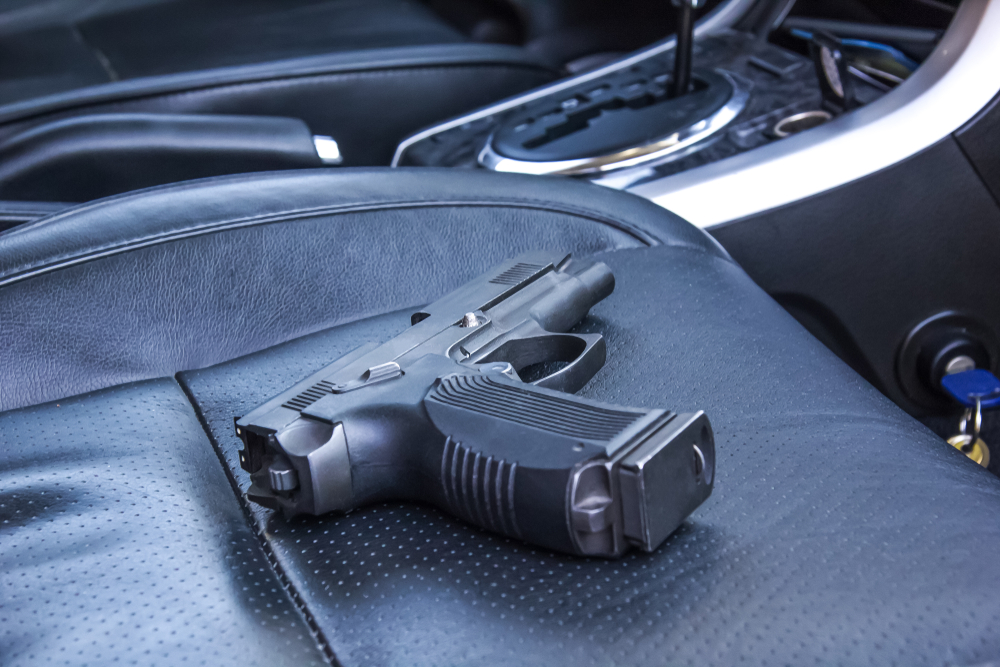
Image Source: invictus-law.com
Can You Carry A Gun In Your Car Without Permit: Rules
In most states, you can carry a gun in your car without a permit if the firearm is unloaded and stored in a separate case from the ammunition. However, specific rules vary greatly by state.
The question of whether you can carry a gun in your car without a permit is a complex one, with answers that depend heavily on where you are located. Car firearm laws are notoriously diverse across the United States, influenced by a patchwork of federal and state regulations. This blog post aims to provide a comprehensive overview of vehicle gun transport, covering concealed carry in car, open carry in vehicle, and the crucial differences between states. We will delve into state gun laws, the concept of permitless carry states, the overarching impact of federal gun laws, and best practices for transportation of firearms to ensure lawful gun carriage. Navigating firearm regulations can be confusing, so let’s break it down.
Navigating Vehicle Gun Transport: A State-by-State Look
The ability to carry a firearm in your vehicle without a permit is not a universal right. It hinges on the specific laws of the state you are in, and sometimes, even the states you are traveling through.
Federal Gun Laws and Their Impact on Car Carriage
While federal law sets a baseline for firearm ownership and possession, it largely defers to states when it comes to carrying firearms, especially in vehicles. The primary federal law relevant to interstate transportation of firearms is the Firearm Owners’ Protection Act (FOPA) of 1986.
- FOPA’s Section 926A: This provision allows for the interstate transportation of firearms, provided the firearm is unloaded and cased, and ammunition is stored separately. Crucially, this protection applies only when traveling between states where you are legally permitted to possess the firearm. It does not grant the right to carry a firearm in a state where possession is prohibited. FOPA is a critical piece of legislation for those who travel frequently with firearms, but it’s not a free pass to ignore state laws.
State-Specific Regulations: The Core of Vehicle Gun Carriage
The real complexity lies in state gun laws. While some states have adopted permitless carry, also known as constitutional carry, meaning you can carry a handgun openly or concealed without a permit, this often does not automatically extend to carrying firearms in vehicles without restrictions.
- Unloaded and Cased: Many states require that a firearm in a vehicle be unloaded and in a locked case, separate from ammunition, regardless of whether you have a permit. This is often referred to as “transportation of firearms” regulations rather than “carry” laws.
- Accessible vs. Inaccessible: Some states differentiate between a firearm being readily accessible to the driver or passengers versus being secured. Generally, if a firearm is within reach and loaded, it’s considered accessible and likely illegal without a proper permit.
Comprehending Concealed Carry in a Car
Concealed carry in car is where many state laws become particularly nuanced. Even in states that allow permitless carry, there can be specific rules about how a handgun must be stored or whether it can be concealed without a permit.
Permitless Carry States and Their Vehicle Rules
In permitless carry states, the ability to carry a handgun openly or concealed generally extends to vehicles. However, even in these states, there are often important distinctions:
- Handguns vs. Long Guns: Regulations for handguns and long guns (rifles and shotguns) can differ significantly.
- Loaded vs. Unloaded: Most states, even permitless carry ones, still require handguns to be unloaded and in a case when transported without a permit, especially if they are not on your person.
- Specific Location within the Vehicle: Some laws might dictate that the firearm must be in the trunk or a glove compartment, while others are more permissive.
Table 1: General Permitless Carry State Approaches to Vehicle Firearms (Illustrative, Not Exhaustive)
| State Example | Handgun in Vehicle Without Permit (General Rule) | Notes |
|---|---|---|
| Arizona | Generally permitted, loaded or unloaded, concealed or open, as long as legally owned. | Permissive, but good to check specific vehicle regulations. |
| Texas | Permitted, unloaded and in a locked container, or carried openly or concealed on your person with legal possession. | Specific rules apply for “motorized vehicles” and “watercraft.” |
| Alaska | Generally permitted, loaded or unloaded, concealed or open, as long as legally owned. | Similar to Arizona, but always verify current statutes. |
| Kansas | Permitted, loaded or unloaded, concealed or open, as long as legally owned. | No specific “cased” requirement for permitless carry in vehicle for permitless states. |
It is crucial to remember that this table is a generalization. Always consult the most current statutes for your specific state.
Requirements for Concealed Carry with a Permit
If your state requires a permit for concealed carry, that permit generally extends to carrying a concealed firearm in your vehicle.
- Reciprocity: If you have a concealed carry permit from your home state, it may be recognized in other states, but you must be aware of reciprocity agreements.
- Vehicle as a “Home”: In many jurisdictions, a vehicle is considered an extension of one’s home, meaning concealed carry rules that apply at home may also apply in a car. However, this is not a universal interpretation.
Open Carry in Vehicle: Distinct Regulations
Open carry in vehicle is another aspect of vehicle gun transport with its own set of rules. What constitutes “open carry” in a vehicle can also vary.
- Visible Firearm: Generally, open carry means the firearm is visible. This can be challenging to achieve in a vehicle without it being considered improperly stored or accessible.
- Permit Requirements: Some states allow open carry in a vehicle without a permit, while others require a permit even for open carry.
- Loaded vs. Unloaded: Again, the loaded status of the firearm is a critical factor.
Examples of Open Carry in Vehicles
- California: Generally requires firearms to be unloaded and in a locked container, separate from ammunition, regardless of permit status, for transport. Open carry is highly restricted.
- New York: Similar to California, with strict regulations on unloaded and cased transport. Open carry is generally not permitted without a specific license.
Lawful Gun Carriage: Best Practices and Considerations
Ensuring lawful gun carriage in your vehicle requires diligence and a thorough knowledge of applicable laws.
Ammunition Storage
A common requirement across many states, especially for unlicensed transport, is that ammunition must be stored separately from the firearm.
- Separate Containers: This means the handgun in a case in the trunk, and the ammunition in a different case or container, also perhaps in the trunk.
- Not “Readily Accessible”: The goal is often to make the firearm and ammunition not “readily accessible” to the occupants of the vehicle.
Handgun vs. Long Gun Transport
Firearm regulations often treat handguns and long guns differently:
- Handguns: Typically subject to stricter regulations due to their ease of concealment and common use for self-defense.
- Long Guns (Rifles and Shotguns): While still regulated, they are often less restricted for transportation, particularly unloaded and cased.
Travel Through Multiple States
When traveling across state lines, the most restrictive state’s laws often prevail. This means that even if your home state allows you to carry a loaded handgun openly in your car without a permit, if you travel to a state that requires it to be unloaded and cased, you must comply with those laws.
- FOPA Protection: Remember, FOPA’s protection only applies if you are legally allowed to possess the firearm in both your origin and destination states. It does not allow you to carry in a state where you are prohibited from doing so.
Frequently Asked Questions (FAQ)
Q1: Can I keep a loaded handgun in my glove compartment without a permit?
A1: In many states, the answer is no. A loaded firearm in the glove compartment is typically considered readily accessible and may require a concealed carry permit, even if your state has permitless carry for other situations. Always check your specific state’s laws.
Q2: Is my concealed carry permit valid in my car if I’m not a resident of that state?
A2: This depends on reciprocity agreements between states. If your state has a reciprocity agreement with the state you are in, your permit is likely valid. However, if the state you are visiting does not recognize your permit, or if it is a permitless carry state with different rules for non-residents, you could be in violation of the law.
Q3: Do I need a permit to carry an unloaded rifle in my car?
A3: Generally, most states have fewer restrictions on transporting unloaded rifles and shotguns compared to handguns. Often, they must be unloaded and in a case, but a permit is usually not required. However, specific laws still apply, especially concerning carrying them in areas where they are prohibited.
Q4: What does “unloaded” mean in terms of firearm transport?
A4: “Unloaded” typically means that there is no round in the chamber and no magazine inserted into the firearm, or if there is a magazine inserted, the chamber itself is empty. Some states may have even more specific definitions.
Q5: Are there differences in vehicle gun laws between rural and urban areas?
A5: While state laws apply statewide, some local ordinances or interpretations might exist, though they are often preempted by state law. The primary differentiator remains state-level legislation and individual federal regulations.
Conclusion:
The question of whether you can carry a gun in your car without a permit is multifaceted. While permitless carry states offer greater freedom, specific firearm regulations regarding vehicle gun transport remain paramount. Always prioritize lawful gun carriage by thoroughly researching and adhering to the state gun laws of every jurisdiction you travel through, paying close attention to requirements for transportation of firearms, concealed carry in car, and open carry in vehicle. Understanding these car firearm laws is not just about compliance; it’s about responsible gun ownership and ensuring your safety and the safety of others.