
Yes, a broken timing belt can absolutely cause your car not to start. This is a common reason for an engine to fail to ignite or run properly.
When you turn the key in your car, you expect the engine to spring to life with a familiar roar. But what happens when all you get is a click, a slow crank, or nothing at all? A car not starting is a frustrating problem, and one of the most serious culprits is often hidden deep within your engine: the timing belt. This vital component synchronizes the movement of your engine’s internal parts. If it fails, the consequences can be severe, leading to anything from a slipped timing belt to a seized engine.
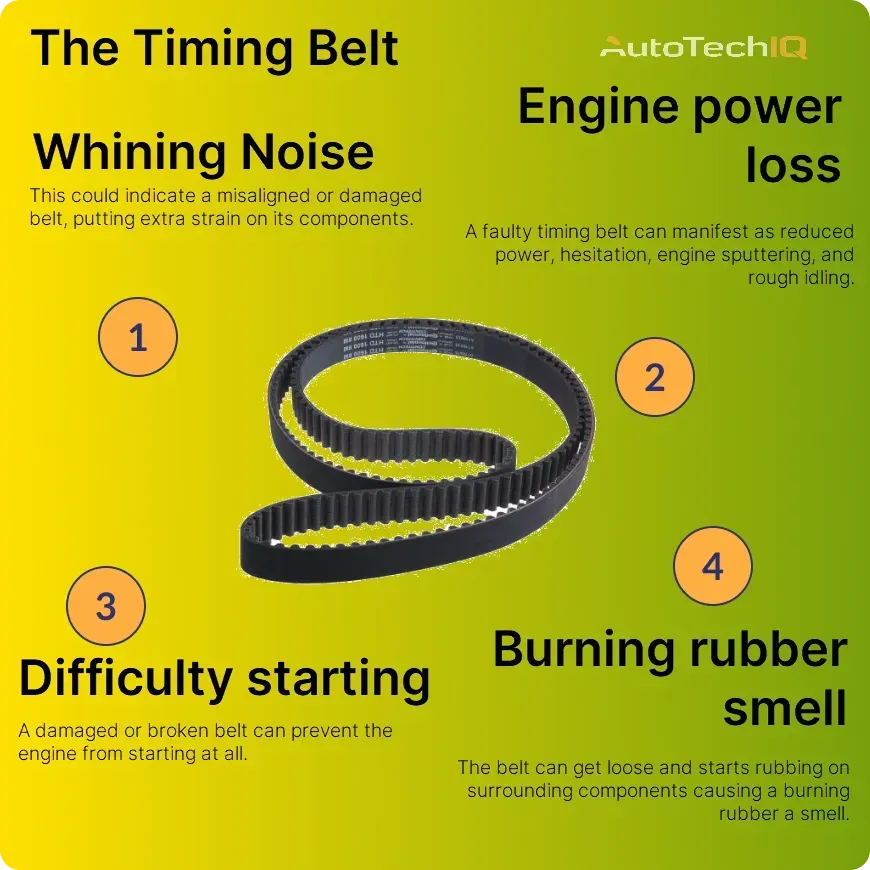
Image Source: www.autotechiq.com
The Crucial Role of the Timing Belt
Think of the timing belt as the conductor of an orchestra. It ensures that all the moving parts inside your engine work together in perfect harmony and at precisely the right moment. Specifically, it connects the crankshaft to the camshaft(s).
- Crankshaft: This is a rotating shaft that converts the up-and-down motion of the pistons into rotational motion, which ultimately powers your wheels.
- Camshaft: This shaft controls the opening and closing of your engine’s valves. These valves let the air-fuel mixture into the cylinders and allow exhaust gases to escape.
The timing belt makes sure that when a piston is moving up, the intake and exhaust valves are closed. It also ensures that when the piston is at the right point in its stroke, the valves open at the correct time to let in fuel and air, and then to expel the burnt gases. This dance of mechanical precision is critical for combustion to occur.
How a Timing Belt Failure Leads to a No-Start Situation
A timing belt failure can manifest in several ways, each preventing your engine from starting:
1. The Broken Timing Belt
If the timing belt snaps or breaks completely, the connection between the crankshaft and camshaft(s) is severed. This means the pistons and valves are no longer moving in sync.
- Engine Not Cranking: In some cases, especially in “interference engines” (more on this later), a broken timing belt can cause the engine to stop abruptly and refuse to crank over. The sudden loss of synchronization can lead to valves colliding with pistons. This physical damage can jam the engine, preventing it from turning at all. When your engine not cranking, it’s a clear sign of a major internal issue.
- Engine Cranking, No Start: More commonly, when a timing belt breaks, the engine might still crank over when you turn the key. You’ll hear the starter motor spinning the crankshaft, but the engine won’t catch and run. This is because the valves aren’t opening and closing correctly. Without the proper timing for air intake, fuel delivery, and spark, combustion cannot happen. This is often described as an “engine cranking no start” condition. The engine is turning, but it’s not “breathing” correctly to start.
2. The Slipped Timing Belt
Sometimes, a timing belt doesn’t break but rather slips on its sprockets. This can happen if the belt teeth are worn down or if the tensioner fails. When the belt slips, it jumps a tooth or more.
- Incorrect Camshaft Timing and Crankshaft Timing: Even a jump of a single tooth can throw off the precise camshaft timing and crankshaft timing. This misalignment means that valves might be opening or closing at the wrong time relative to the piston’s position. The engine control unit (ECU) is sending signals for spark and fuel injection, but the mechanical timing is off. This results in a lack of compression or improper air-fuel mixture, preventing the engine from starting. This can also lead to symptoms like rough idling or stalling if the engine can start but runs poorly.
3. Timing Belt Failure Leading to a Seized Engine
In interference engines, if the timing belt breaks or slips badly, the pistons can actually collide with the open valves. This catastrophic event can bend or break valves, damage piston tops, and even crack cylinder heads.
- Seized Engine: When these internal components collide and get damaged, they can physically lock up the engine’s rotating assembly. The crankshaft, connecting rods, pistons, and valves are no longer free to move. This is what’s known as a seized engine. If your engine is seized, it absolutely will not crank over. The starter motor will be met with immense resistance, and it may not even engage. A seized engine is the most severe outcome of timing belt failure.
Timing Belt Symptoms: What to Look Out For
While a complete no-start is a dramatic symptom, a failing timing belt can sometimes provide earlier warnings. Recognizing these timing belt symptoms can save you from a much more expensive repair:
- Ticking Noise from the Engine: A worn or loose timing belt can sometimes make a ticking or rattling sound, especially when the engine is cold. This can be caused by the belt slapping against its covers or by a failing tensioner.
- Rough Idling: If the timing is slightly off due to a slipped belt, the engine might run unevenly when idling. You might notice vibrations or the engine revs fluctuating.
- Engine Misfires: An improperly timed ignition can lead to misfires, where one or more cylinders fail to combust properly. This can feel like a hesitation or stumble during acceleration.
- Check Engine Light: Modern cars have sophisticated sensor systems. If the camshaft timing or crankshaft timing deviates significantly from the expected parameters, the engine control unit (ECU) will likely trigger the “Check Engine” light. The diagnostic trouble codes (DTCs) stored might point to camshaft or crankshaft position sensor issues, which can be indirectly related to timing belt problems.
- Visible Wear or Damage: If you were to inspect the timing belt (which usually requires removing covers), you might see signs of wear like cracking, fraying, missing teeth, or oil contamination.
The Difference: Interference vs. Non-Interference Engines
The severity of a timing belt failure depends heavily on the type of engine your car has:
- Interference Engines: In these engines, the valves and pistons occupy the same space in the cylinder at different times, but their paths do not overlap if the timing is correct. However, if the timing belt breaks or slips, a valve can remain open when a piston moves up, leading to a collision. Most modern engines, especially overhead cam (OHC) and dual overhead cam (DOHC) engines, are interference engines. This is why a broken timing belt in these cars often results in severe internal engine damage.
- Non-Interference Engines: In these engines, there is sufficient clearance between the valves and pistons, even when the timing belt is off. If the timing belt breaks on a non-interference engine, the valves and pistons won’t collide. The engine will simply stop running. While this still requires a new timing belt and potentially related components (like the water pump, which is often replaced concurrently), it avoids the extensive internal damage seen in interference engines.
Diagnosing a Timing Belt Related No-Start
When your car won’t start, a mechanic will go through a systematic diagnostic process. A faulty timing belt is a prime suspect, especially if you hear an engine cranking no start or if the engine simply won’t turn over at all.
Here’s how they might approach it:
- Listen to the Engine: The sound the engine makes (or doesn’t make) is crucial.
- No Crank: If there’s no crank at all, it could be a dead battery, starter issue, or a seized engine (potentially due to timing belt failure).
- Cranks but Won’t Start: This is more indicative of a fuel, spark, or timing issue.
- Check for Spark: A mechanic will check if the spark plugs are firing. If there’s engine no spark, it points to a problem with the ignition system. However, a severely misaligned timing belt can also prevent proper spark.
- Check for Fuel: They’ll verify if the fuel pump is working and if fuel is reaching the injectors.
- Inspect the Timing Belt: If the above checks don’t reveal an obvious cause, the next step is to inspect the timing belt. This often involves removing the upper timing belt covers. A mechanic will look for:
- Broken Timing Belt: A clearly snapped belt.
- Slipped Timing Belt: They’ll align the crankshaft timing marks with the camshaft marks. If the marks don’t align correctly, the belt has slipped.
- Worn or Damaged Belt: Cracks, fraying, or missing teeth.
- Failed Tensioner or Idler Pulleys: These components keep the timing belt taut. If they fail, the belt can slip or jump.
What to Do If You Suspect Timing Belt Failure
If you suspect your timing belt is the reason your car won’t start, it’s crucial to stop trying to start the engine immediately. Repeated attempts, especially if the engine is seized, can cause further, more expensive damage.
Here are your options:
- Tow Your Vehicle to a Qualified Mechanic: This is the safest and most recommended course of action. A mechanic has the expertise and tools to accurately diagnose the problem and perform the necessary repairs.
- DIY (If You Are Experienced): If you have significant automotive mechanical experience, you might consider tackling the repair yourself. However, be aware that timing belt replacement is a complex job that requires precision. Incorrect installation can lead to another timing belt failure or engine damage.
Replacing a Timing Belt: More Than Just the Belt
When a timing belt needs replacement, especially after a failure, it’s often recommended to replace other related components at the same time. This is because these parts have similar lifespans and are easily accessible once the timing covers are off.
Key components to consider replacing include:
- Timing Belt Tensioner: This component maintains the correct tension on the timing belt. A failing tensioner can cause the belt to slip or break.
- Idler Pulleys: These are guide pulleys that help route the timing belt smoothly. They can wear out and cause noise or premature belt failure.
- Water Pump: On many vehicles, the water pump is driven by the timing belt. If the water pump fails, it can lead to engine overheating, which can damage the timing belt and other components. Replacing it during a timing belt job is cost-effective as the labor is already being done.
- Seals (Camshaft and Crankshaft Seals): These seals prevent oil leaks. If they start leaking, oil can contaminate the new timing belt, leading to premature failure.
Table: Common Timing Belt Replacement Components
| Component | Reason for Replacement with Timing Belt |
|---|---|
| Timing Belt | Preventive maintenance or replacement after failure. |
| Timing Belt Tensioner | Ensures proper belt tension; failure can cause slipping or breakage. |
| Idler Pulleys | Guide the belt; wear can lead to noise or premature belt wear. |
| Water Pump | Often driven by the timing belt; costly to replace separately. |
| Camshaft Seals | Prevent oil leaks that can degrade the timing belt; accessible during the job. |
| Crankshaft Seals | Prevent oil leaks that can degrade the timing belt; accessible during the job. |
Can a Timing Belt Cause a No-Start? A Summary
To reiterate, a broken timing belt or a slipped timing belt is a very common cause for a car not to start. The precise mechanism depends on whether your engine is an interference or non-interference type, and the specific nature of the failure.
- Interference engines with a broken timing belt can result in catastrophic timing belt failure, leading to bent valves, damaged pistons, and even a seized engine. This will prevent the engine from cranking or starting.
- Even a minor slip in camshaft timing or crankshaft timing can prevent the correct air-fuel mixture and spark, resulting in an engine cranking no start condition without necessarily causing internal collision damage.
- A complete break in an interference engine often leads to engine not cranking due to mechanical blockage.
- You might experience various timing belt symptoms before complete failure, such as ticking noises or rough idling.
- If you encounter an engine no spark situation that isn’t resolved by checking ignition components, the timing belt should be a high suspect.
Frequently Asked Questions (FAQ)
Q1: How long does a timing belt typically last?
A1: The lifespan of a timing belt varies by manufacturer and vehicle model, but they generally need replacement every 60,000 to 100,000 miles, or every 7 to 10 years, whichever comes first. Always consult your owner’s manual for the recommended service interval.
Q2: If my timing belt breaks, will my engine be ruined?
A2: It depends on whether your car has an interference or non-interference engine. In interference engines, a broken timing belt can cause severe internal damage, potentially leading to a seized engine. In non-interference engines, the engine will stop running but usually without internal damage.
Q3: Can I hear if my timing belt is about to break?
A3: Sometimes. A worn or loose timing belt might produce a ticking or rattling noise from the engine. However, many timing belts fail without any prior audible warning.
Q4: What is the difference between a timing belt and a timing chain?
A4: A timing belt is typically made of rubber and reinforced with cords, requiring replacement at scheduled intervals. A timing chain is made of metal and is designed to last the life of the engine. However, timing chains can still stretch or break, and their tensioners and guides can wear out, causing similar symptoms to timing belt issues.
Q5: If my car won’t start and cranks over, could it be the timing belt?
A5: Yes, this is a classic symptom of a slipped timing belt or a broken timing belt in an interference engine, resulting in an engine cranking no start scenario. The engine is turning, but the internal components are not synchronized for combustion.
Q6: Should I replace my water pump when I replace my timing belt?
A6: It is highly recommended to replace the water pump, tensioner, and idler pulleys whenever you replace the timing belt. These components are often driven by or work in conjunction with the timing belt, and their failure can necessitate repeating the timing belt job soon after. Replacing them all at once is more cost-effective in the long run.
Q7: What are the symptoms of a slipped timing belt?
A7: Symptoms of a slipped timing belt can include a rough idle, engine misfires, hesitation during acceleration, the check engine light illuminating, and in severe cases, an engine cranking no start condition.
Q8: What does it mean when my engine makes no spark?
A8: Engine no spark means the ignition system is not generating the high-voltage spark needed to ignite the air-fuel mixture in the cylinders. While this can be due to issues with the spark plugs, ignition coils, or ignition control module, a severely misaligned timing belt can also disrupt the signals that trigger the spark, leading to a no-spark situation.
Q9: Can a timing belt failure cause a seized engine?
A9: Yes, in interference engines, a catastrophic timing belt failure where pistons collide with valves can lead to severe internal damage that effectively locks up the engine, causing it to be seized engine. An engine that is seized will not crank over.
By now, it’s clear that the timing belt is a critical component. Its failure can silence your car and, in many cases, lead to significant repair bills. Regular maintenance and awareness of potential timing belt symptoms are your best defense against an unexpected no-start situation.