
Yes, sciatica can absolutely be caused by a car accident. Trauma from a collision can directly impact the structures supporting the sciatic nerve, leading to its inflammation and the characteristic pain.
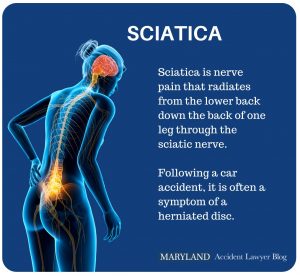
Image Source: www.marylandaccidentlawyerblog.com
The Impact of a Collision on Your Sciatic Nerve
Car accidents are sudden, violent events. Even a seemingly minor fender-bender can exert significant force on your body. This force can transmit shockwaves through your spine, impacting the delicate nerve roots that form the sciatic nerve. When these nerves are compressed, irritated, or damaged, you can experience sciatica. This is often referred to as car accident sciatica.
Whiplash and Sciatica: A Common Connection
One of the most frequent injuries sustained in car accidents is whiplash. This occurs when your head and neck are abruptly thrown forward and then backward, or vice versa. While whiplash primarily affects the neck, the force involved can ripple down your spine. This can lead to whiplash and sciatica if the impact causes changes in your lumbar spine that pinch the sciatic nerve. The rapid acceleration and deceleration can jostle vertebrae, potentially leading to disc issues or muscle spasms that press on the nerve.
Spinal Injury Car Crash: The Root of the Problem
A spinal injury car crash is a serious concern. The spine is a complex structure, and any injury to it, especially in the lower back (lumbar spine), can affect the sciatic nerve. The sciatic nerve originates from nerve roots in the lumbar and sacral spine. If these nerve roots are compressed or damaged due to the trauma, sciatica is a likely outcome. This might happen from a direct impact, a jarring motion, or the displacement of spinal structures.
Symptoms of Sciatica After a Collision
Experiencing sciatica symptoms post accident can be varied and depend on the specific nature of the injury. The hallmark of sciatica is pain that radiates along the path of the sciatic nerve. This typically starts in the lower back or buttock and can travel down the back of the leg, all the way to the foot.
Common symptoms include:
- Radiating Pain: A burning, sharp, or shooting pain that travels down one leg.
- Numbness or Tingling: A “pins and needles” sensation in the leg or foot.
- Weakness: Difficulty moving the leg or foot, or a feeling of instability.
- Loss of Reflexes: In some cases, reflexes in the affected leg might be diminished.
- Pain Aggravation: The pain may worsen with prolonged sitting, standing, coughing, or sneezing.
- Buttock Pain: Often, the initial pain is felt in the buttock, which is a common starting point for the sciatic nerve.
Back Pain Car Accident: More Than Just a Ache
Back pain car accident is a very common complaint. However, it’s crucial to differentiate between general back pain and sciatica. Sciatica is a specific type of pain caused by sciatic nerve compression. If your back pain is accompanied by leg pain, numbness, or tingling, it could be a sign of sciatica, indicating a more significant issue like nerve damage auto accident.
How a Car Accident Can Cause Sciatica: Mechanisms of Injury
Several mechanisms can lead to auto injury nerve compression, resulting in sciatica following a car accident.
Lumbar Spine Trauma and Disc Herniation
The lumbar spine, located in the lower back, is particularly vulnerable during car accidents. Trauma to this area can lead to conditions that directly affect the sciatic nerve.
Herniated Disc Car Accident: A Primary Culprit
One of the most common causes of sciatica after a car accident is a herniated disc car accident. The intervertebral discs are like cushions between your vertebrae. In a collision, the sudden force can cause a disc to bulge or rupture, pushing its inner material out. If this material presses on a sciatic nerve root, it can cause severe sciatica.
Vertebral Fractures and Subluxations
The impact of a car accident can also cause fractures (breaks) in the vertebrae. Even if a fracture doesn’t directly impinge on the nerve, it can lead to instability and misalignment of the spine, indirectly compressing the sciatic nerve. A subluxation, or a partial dislocation of a spinal joint, can also put pressure on the nerve.
Muscle Spasms and Inflammation
The violent motion of a car accident can cause muscles in the lower back and buttocks to spasm and become inflamed. These tense muscles can tighten around the sciatic nerve, leading to irritation and pain.
Piriformis Syndrome
The piriformis muscle is a small muscle located deep in the buttock. The sciatic nerve runs underneath or, in some people, through this muscle. If the piriformis muscle is injured or becomes inflamed due to the accident’s trauma, it can compress the sciatic nerve, causing sciatica-like symptoms. This is known as piriformis syndrome.
Direct Nerve Injury
In severe accidents, there might be direct trauma to the sciatic nerve itself. This could involve stretching, bruising, or even tearing of the nerve fibers. Such injuries are serious and can result in significant and long-lasting sciatica.
Diagnosing Sciatica After a Car Accident
Accurate diagnosis is key to effective treatment. If you suspect your sciatica is linked to a car accident, it’s essential to seek medical attention promptly.
Medical Evaluation
A doctor will typically start by taking a detailed medical history, asking about the accident and your symptoms. They will then perform a physical examination to assess your range of motion, muscle strength, reflexes, and sensation. They’ll be looking for specific signs that point towards nerve compression.
Imaging Tests
To confirm the diagnosis and identify the exact cause of sciatica, your doctor may order imaging tests:
- X-rays: These can reveal fractures, bone spurs, or significant spinal misalignments.
- MRI (Magnetic Resonance Imaging): This is often the most useful test for diagnosing sciatica after an accident. It provides detailed images of soft tissues, including discs, nerves, and muscles, allowing doctors to pinpoint herniated discs, nerve root compression, or inflammation.
- CT Scan (Computed Tomography): A CT scan can also provide detailed images of the bones and can sometimes be used to assess disc herniations, especially if an MRI is not possible.
- Electromyography (EMG) and Nerve Conduction Studies (NCS): These tests can help assess the function of the nerves and muscles. They can determine if the nerve is being compressed and how severely. This is particularly helpful in cases of suspected nerve damage auto accident.
Treatment Options for Sciatica After a Car Accident
The treatment approach for sciatica following a car accident depends on the severity of the injury and the underlying cause. The goal is to reduce inflammation, relieve nerve compression, and restore function.
Non-Surgical Treatments
Most cases of sciatica can be effectively managed with non-surgical treatments.
Conservative Therapies
- Rest and Activity Modification: While complete bed rest is usually not recommended, it’s important to avoid activities that worsen your pain. Gentle movement and gradually increasing activity are encouraged.
- Physical Therapy: A tailored physical therapy program is a cornerstone of sciatica treatment. Therapists can teach you exercises to strengthen your core and back muscles, improve flexibility, and decompress the spine. They may also use techniques like spinal decompression, stretching, and manual therapy.
- Medications:
- Pain Relievers: Over-the-counter medications like ibuprofen or naproxen can help reduce pain and inflammation.
- Muscle Relaxants: These can be prescribed to alleviate muscle spasms that may be contributing to nerve compression.
- Nerve Pain Medications: Medications like gabapentin or pregabalin may be used for nerve-specific pain.
- Heat and Cold Therapy: Applying ice packs can help reduce inflammation in the initial stages, while heat can help relax muscles and ease pain.
- Epidural Steroid Injections: In some cases, a doctor may inject corticosteroid medication directly into the space around the affected nerve root. This can provide significant relief from pain and inflammation, though the effects are often temporary.
Surgical Treatments
Surgery is generally considered only when conservative treatments have failed to provide relief after a significant period (typically 6-12 weeks), or if there are severe neurological deficits like progressive weakness or loss of bowel or bladder control.
Types of Surgery
- Microdiscectomy: If a herniated disc is the cause, a surgeon may remove the portion of the disc that is pressing on the sciatic nerve. This is a minimally invasive procedure.
- Laminectomy: This surgery involves removing a small portion of the bone (lamina) from the vertebra to create more space for the spinal cord and nerve roots.
- Spinal Fusion: In cases of significant spinal instability due to fractures or other issues, a surgeon may fuse two or more vertebrae together to stabilize the spine.
Recovery and Long-Term Outlook
The recovery period for sciatica after a car accident can vary greatly. Some individuals experience rapid improvement, while others may take several months to recover. Factors influencing recovery include the severity of the injury, the specific cause of sciatica, adherence to treatment, and overall health.
What to Expect During Recovery
- Patience is Key: Recovering from a spinal injury car crash takes time. Avoid rushing back into strenuous activities too soon.
- Listen to Your Body: Pay attention to pain signals. If an activity increases your pain, stop and reassess.
- Consistency with Therapy: Regular participation in physical therapy and performing prescribed exercises at home are crucial for long-term recovery and preventing recurrence.
- Lifestyle Modifications: Maintaining a healthy weight, practicing good posture, and using proper lifting techniques can help reduce stress on your spine and prevent future episodes of sciatica.
When to Seek Further Medical Attention
It’s important to monitor your symptoms during recovery. You should seek immediate medical attention if you experience:
- Sudden or worsening weakness in your leg or foot.
- Loss of bowel or bladder control.
- Numbness or tingling that is severe or spreading.
- Intense, unmanageable pain.
Prevention and Preparedness
While not all car accidents are preventable, taking precautions can help minimize the risk of severe injury.
Defensive Driving
Practicing defensive driving techniques can reduce the likelihood of being involved in a collision. This includes maintaining safe distances, obeying traffic laws, and avoiding distractions.
Vehicle Safety Features
Ensure your vehicle is equipped with modern safety features such as airbags and anti-lock brakes. Properly adjusting your seat and headrest can also help protect your spine in the event of an accident.
Post-Accident Care
If you are involved in a car accident, even if you feel fine initially, it’s advisable to get checked by a medical professional. Some injuries, like disc herniations or nerve compression, may not manifest symptoms immediately. Early diagnosis and treatment can significantly improve your outcome and prevent long-term complications like chronic sciatica.
Frequently Asked Questions (FAQ)
Q1: How soon after a car accident can sciatica symptoms appear?
Sciatica symptoms can appear immediately after a car accident or develop days, weeks, or even months later. The delayed onset is often due to inflammation that builds up over time or subtle shifts in spinal structures that gradually put pressure on the nerve.
Q2: Can a minor car accident cause sciatica?
Yes, even a minor car accident can cause sciatica. The forces involved in a collision can be significant, and the jarring motion can lead to disc problems or muscle spasms that irritate the sciatic nerve, regardless of the apparent severity of the accident.
Q3: What is the prognosis for sciatica caused by a car accident?
The prognosis for sciatica caused by a car accident is generally good, especially with timely and appropriate treatment. Many people experience significant pain relief and a return to normal activities. However, in cases of severe nerve damage or chronic compression, recovery may be slower or require ongoing management.
Q4: Should I see a doctor if I have back pain after a car accident, even without leg pain?
Yes, it’s always a good idea to get checked by a medical professional after any car accident, even if you only have back pain. Some injuries, like lumbar spine trauma, may not immediately present with sciatica symptoms but can lead to them later if left untreated. Early evaluation can catch potential problems.
Q5: Can sciatica from a car accident be permanent?
While sciatica can be a persistent condition for some, it is not always permanent, especially when caused by car accident trauma. With proper medical care, physical therapy, and lifestyle adjustments, many individuals can achieve significant relief and long-term recovery. However, severe nerve damage or underlying spinal instability might require long-term management or lead to chronic symptoms.
Q6: What’s the difference between general back pain after an accident and sciatica?
General back pain after an accident is usually a dull ache or soreness in the back muscles. Sciatica, on the other hand, is characterized by pain that radiates from the lower back or buttock down the leg, often accompanied by numbness, tingling, or weakness. It signifies a problem with the sciatic nerve itself, not just the muscles or general tissues of the back.
Q7: What role does auto injury nerve compression play in sciatica after a collision?
Auto injury nerve compression is the direct mechanism by which many car accidents cause sciatica. The trauma of the crash can squeeze, pinch, or stretch the sciatic nerve or its roots, leading to inflammation and the characteristic pain and other symptoms of sciatica.
Q8: How is a herniated disc car accident diagnosed and treated?
A herniated disc car accident is typically diagnosed using MRI scans, which clearly show the disc material pressing on the nerve. Treatment usually begins with conservative methods like physical therapy, pain medication, and sometimes steroid injections. Surgery, such as microdiscectomy, is an option if conservative treatments fail or if there are severe symptoms.
In conclusion, the connection between car accidents and sciatica is undeniable. The forces involved in a collision can directly impact the spine and the sciatic nerve, leading to a range of debilitating symptoms. If you have been in a car accident and are experiencing symptoms suggestive of sciatica, seeking prompt medical evaluation and treatment is crucial for recovery and long-term well-being.