
Do you ever listen to your favorite music and feel like the bass is just… missing? Or maybe it’s too loud and muddy, drowning out everything else? Getting the bass just right on your equalizer can be tricky. It’s like trying to find the perfect recipe – too much of one ingredient, and the whole dish is off!
Many people struggle with bass settings. They see all those sliders and knobs and don’t know where to start. They want that deep, satisfying thump, but end up with a boomy mess. This can be frustrating, especially when you just want to enjoy your music or get the best sound from your games.
But don’t worry! This guide will help you understand bass settings on your equalizer. You’ll learn how to make your bass sound clear, powerful, and exactly how you want it. We’ll break down what each setting does so you can stop guessing and start sounding great. Get ready to finally get the bass you’ve been dreaming of!
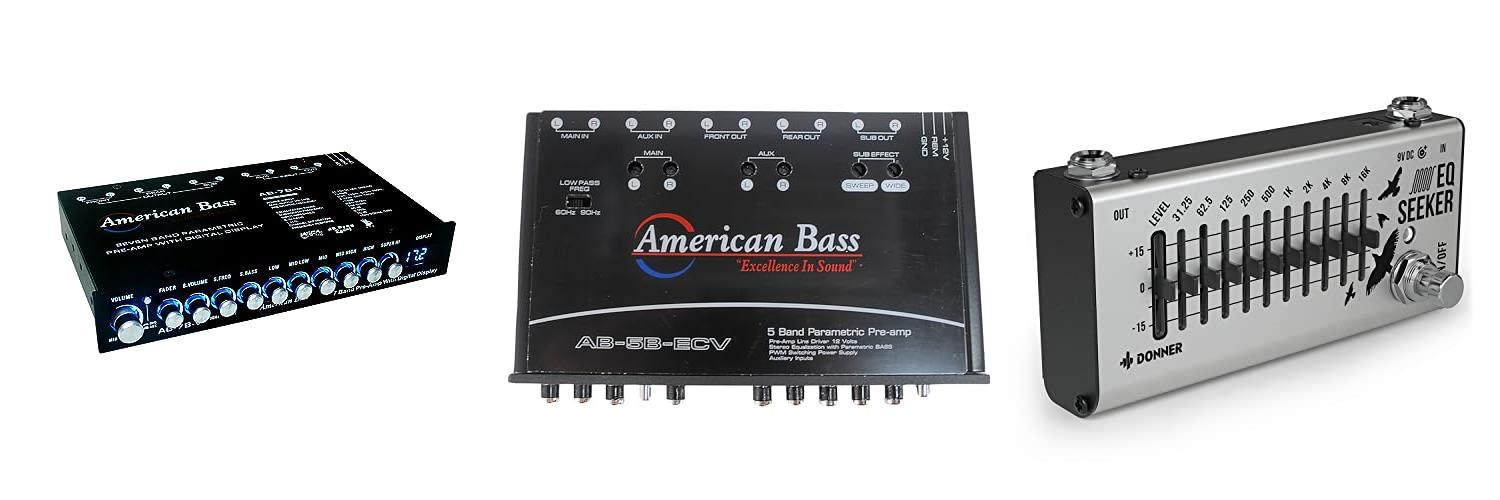
Our Top 5 Bass Settings On Equalizer Recommendations at a Glance
Top 5 Bass Settings On Equalizer Detailed Reviews
1. American Bass High End 7 Band Equalizer Voltage Display

Rating: 8.8/10
Get ready to fine-tune your car’s sound system with the American Bass High End 7 Band Equalizer Voltage Display. This device gives you precise control over your audio. You can adjust seven different sound frequencies to make your music sound exactly how you want it. It also shows you the voltage of your system, so you can keep an eye on power levels. This equalizer is designed to improve your listening experience by letting you sculpt your sound.
What We Like:
- Offers seven specific frequency bands (50Hz, 125Hz, 315Hz, 750Hz, 2.2KHz, 6KHz, 12KHz) for detailed sound adjustments.
- Provides a powerful 7V preamp output for a strong signal to your amplifiers.
- Includes two RCA inputs, allowing you to connect multiple audio sources.
- Features a fader control to balance sound between front and rear speakers.
- Has a dedicated sub frequency control (30-300Hz) and volume control for your subwoofer.
- The built-in voltage display helps monitor your car’s electrical system.
- Compact dimensions (9″Lx 8″Wx 2″H) make installation easier.
What Could Be Improved:
- The specific “high end” labeling might suggest a higher price point than some budget-conscious buyers expect.
- While the frequency steps are detailed, some users might prefer a wider or more customizable range.
This equalizer is a fantastic tool for anyone serious about audio quality in their vehicle. It puts powerful sound shaping capabilities right at your fingertips.
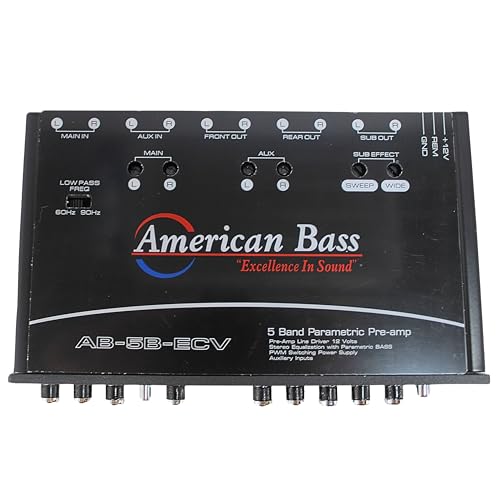
2. American Bass 5 Band Equalizer with Built in Voltmeter Digital Display AB-5B-ECV
Rating: 9.2/10
Get ready to transform your car’s sound system with the American Bass 5 Band Equalizer with Built in Voltmeter Digital Display AB-5B-ECV. This equalizer is designed to give you total control over your audio, making every drive an immersive concert experience. It’s packed with features that let you fine-tune your music exactly how you like it.
What We Like:
- It has a built-in digital voltmeter that shows you the voltage, so you know your system is running well.
- The 7V line driver gives your audio a powerful boost for crystal-clear sound.
- You can adjust the sound with five bands, giving you a 12dB boost or cut for each.
- It has a master volume control and separate controls for left and right channels.
- Three stereo RCA outputs let you connect to your front, rear, and subwoofer amps easily.
- The dedicated subwoofer control lets you add serious punch to your bass.
- It has a wide frequency response, meaning it can handle all kinds of music.
- The sound quality is excellent with a high signal-to-noise ratio and very low distortion.
What Could Be Improved:
- The user manual could be a bit clearer for beginners.
- While the display is digital, a slightly larger font size might be helpful for some.
This American Bass equalizer is a fantastic tool for any car audio enthusiast looking to achieve perfect sound. It offers a lot of control and power for the price, making your music sound better than ever.
3. Donner EQ Pedal

Rating: 9.0/10
The Donner EQ Pedal, the EQ Seeker, is a powerful tool for any guitarist or bassist. Its compact size makes it easy to fit on any pedalboard, and it works well with all kinds of music. Donner built this pedal with good parts to make sure it sounds great and holds up on the road. It gives you lots of control over your sound.
What We Like:
- It’s small and easy to use.
- It works for any music style.
- It has 10 bands to shape your tone.
- You can boost or cut each sound level by 15 dB.
- The all-aluminum body is strong and lasts a long time.
- True bypass means your guitar’s sound stays clear and strong.
What Could Be Improved:
- The power adapter is not included, so you need to buy one separately.
The Donner EQ Seeker offers fantastic sound control in a tough, small package. It’s a solid choice for musicians looking to fine-tune their instrument’s tone.
4. JOYO EQ Pedal 10 Band Equalizer (31.25Hz-16kHz) for Electric Guitar

Rating: 8.6/10
The JOYO EQ Pedal 10 Band Equalizer (R-12) is a versatile tool for any guitarist or bassist. It gives you precise control over your sound, from the lowest bass notes to the highest guitar frequencies. Whether you play a 4-string bass or a 7-string guitar, this pedal can shape your tone.
What We Like:
- It offers 10 bands of EQ, letting you fine-tune your sound.
- The frequency range is wide, covering 31.25Hz to 16kHz, perfect for many instruments.
- It works with both electric guitars and basses, including multi-string models.
- An independent volume knob lets you boost or cut your signal.
- The cool design with ambience lights looks great on any pedalboard.
- JOYO has a good reputation for making quality budget gear.
What Could Be Improved:
- It’s recommended to buy a separate JOYO power adapter for best performance.
- The pedal’s instructions suggest ensuring proper connection to avoid noise.
This JOYO EQ pedal is a fantastic option for musicians who want to sculpt their sound. Its extensive EQ control and stylish design make it a valuable addition to any rig.
5. STRICH EQ Pedal for Electric Guitar

Rating: 8.7/10
The STRICH TEN BAND EQ is a powerful tool for any guitarist or bassist looking to shape their sound. This pedal gives you precise control over ten different frequency bands, letting you fine-tune your tone with ease. Its sturdy aluminum alloy build means it can handle life on the road, and its compact size makes it easy to take anywhere.
What We Like:
- Built tough with a durable aluminum alloy casing that can withstand bumps and drops.
- Offers ten different frequency bands for detailed sound shaping, plus a master control.
- Sliders are smooth and easy to move for quick and accurate adjustments.
- Each band can boost or cut sound by up to 12dB, giving you lots of options.
- True bypass design keeps your original guitar signal clean and strong.
- It’s small and light, making it great for gigging musicians who travel a lot.
- Works well with both electric guitars and bass guitars.
What Could Be Improved:
- The power adapter is not included, which is an extra cost to consider.
If you want to dial in your perfect guitar or bass tone, the STRICH TEN BAND EQ pedal is a fantastic option. Its solid construction and versatile controls make it a valuable addition to any pedalboard.
Mastering Your Bass: A Guide to Equalizer Settings
Getting the right bass sound can make or break your music. An equalizer, or EQ, is your best friend for shaping that low-end punch. This guide will help you understand bass settings on your EQ so you can get the best sound for your music, whether you’re listening at home, in your car, or on the go.
1. Key Features to Look For
When you’re picking out an EQ, think about what you need. Some EQs have simple knobs, while others have more detailed sliders.
- Number of Bands: More bands mean more control. A simple EQ might have 2 or 3 bands (bass, mid, treble). A more advanced one could have 5, 7, or even more. For bass, you’ll want to pay attention to the lower frequency bands.
- Frequency Range: This tells you the lowest and highest sounds your EQ can affect. For bass, you’re mostly concerned with the lower end of the spectrum, usually from around 20 Hz (very deep rumble) to 200 Hz (where bass notes start to have more definition).
- Boost/Cut Amount: This shows how much you can turn a sound up (boost) or down (cut). Look for an EQ that lets you make noticeable changes without distorting the sound.
- Q Factor (Bandwidth): This is a bit more technical. It controls how wide or narrow the EQ band is. A narrow Q affects a small range of frequencies, while a wide Q affects a larger range. For bass, you might use a wider Q to add general warmth or a narrower Q to target a specific muddy or boomy sound.
2. Important Materials
While the “materials” of an EQ aren’t like the materials of a chair, the quality of the components inside matters.
- Internal Components: High-quality capacitors and resistors help ensure a clean and accurate sound. Cheaper components can add unwanted noise or color to your bass.
- Build Quality: A sturdy build means your EQ will last. If it’s a physical device, look for solid knobs and a well-made casing. For software, good coding means fewer bugs.
3. Factors That Improve or Reduce Quality
The best EQ settings depend on your gear and your ears.
- Your Speakers or Headphones: What sounds good on one set of speakers might sound different on another. Your listening gear heavily influences how you perceive bass.
- The Source Material: A poorly recorded bass line won’t magically sound amazing with any EQ. The quality of the original recording is crucial.
- Room Acoustics: If you’re listening in a room with lots of echo, it can make bass sound boomy or muddy.
- Understanding Frequencies: Knowing what different frequencies do helps you make better adjustments.
4. User Experience and Use Cases
How you use your EQ depends on what you’re trying to achieve.
- Adding Punch: To make bass hit harder, you might boost frequencies between 80 Hz and 150 Hz. This gives it that “thump.”
- Reducing Boominess: If your bass sounds muddy or overly resonant, try cutting frequencies between 100 Hz and 250 Hz.
- Adding Warmth: A slight boost in the 150 Hz to 300 Hz range can add richness and body to the bass.
- Clarifying Bass Notes: To hear individual bass notes more clearly, you might boost frequencies from 500 Hz upwards, but be careful not to make it sound too thin.
- Car Audio: Car interiors can mess with bass. You might need to boost bass to overcome road noise or cut certain frequencies to avoid rattling.
- Home Listening: Here, you have more control. You can aim for a balanced sound that’s not too overpowering.
- DJing: DJs often use EQs to blend tracks, cutting or boosting bass to make songs transition smoothly.
Frequently Asked Questions (FAQ) About Bass EQ Settings
Q: What are the main Key Features to look for in a bass EQ?
A: Key features include the number of frequency bands, the range of frequencies it can adjust, how much you can boost or cut those frequencies, and the Q factor which controls the width of the adjustment.
Q: What materials are important for EQ quality?
A: While not physical materials like wood or metal, the quality of internal electronic components and the overall build quality of the device or software are important.
Q: How do my speakers affect my bass EQ settings?
A: Your speakers or headphones greatly influence how you hear bass. What sounds good on one set might sound different on another, so you need to adjust your EQ based on your listening gear.
Q: Can room acoustics change how my bass sounds?
A: Yes, room acoustics can make bass sound boomy or unclear. Adjusting your EQ can help compensate for these room effects.
Q: How can I add more “punch” to my bass?
A: To add punch, try boosting frequencies generally between 80 Hz and 150 Hz. This gives the bass a stronger impact.
Q: My bass sounds muddy. What EQ setting should I use?
A: To reduce muddiness, try cutting frequencies between 100 Hz and 250 Hz. This can help clean up the low end.
Q: How do I make my bass sound warmer?
A: You can add warmth by slightly boosting frequencies in the 150 Hz to 300 Hz range. This adds richness to the bass tone.
Q: What EQ setting helps me hear individual bass notes better?
A: To hear individual notes more clearly, you might boost frequencies above 500 Hz. However, be careful not to make the bass sound too thin.
Q: Are EQ settings different for car audio than for home listening?
A: Yes, car interiors can affect bass sound. You might need to adjust EQ differently in a car to overcome road noise or prevent rattles compared to a controlled home environment.
Q: Is it better to boost or cut frequencies on an EQ?
A: It’s often better to cut unwanted frequencies rather than boosting desired ones. Cutting can lead to a cleaner sound without adding as much strain to your system.
In conclusion, every product has unique features and benefits. We hope this review helps you decide if it meets your needs. An informed choice ensures the best experience.
If you have any questions or feedback, please share them in the comments. Your input helps everyone. Thank you for reading.