
Ever felt like your music is missing that deep, satisfying rumble? You know, the kind that makes your chest vibrate and your car speakers sing? Getting the bass just right can be tricky, and it’s a common frustration for many music lovers. Trying to adjust those equalizer knobs can feel like a guessing game, leaving you with muddy lows or a bassline that just disappears.
This confusion is exactly why we’re diving into the world of bass equalizer settings. You’re not alone if you’ve wondered if there’s a magic formula for perfect bass. But there isn’t one single answer! The best settings depend on your speakers, your room, and the music you’re listening to. We’ll help you understand what each adjustment does so you can finally stop guessing and start hearing the bass you’ve been dreaming of.
By the end of this post, you’ll have a clear understanding of how to tweak your equalizer to make your bass sound powerful, clear, and exactly how you want it. Get ready to unlock a whole new level of listening enjoyment as we explore the secrets to killer bass settings!
Our Top 5 Bass Settings For Equalizer Recommendations at a Glance
Top 5 Bass Settings For Equalizer Detailed Reviews
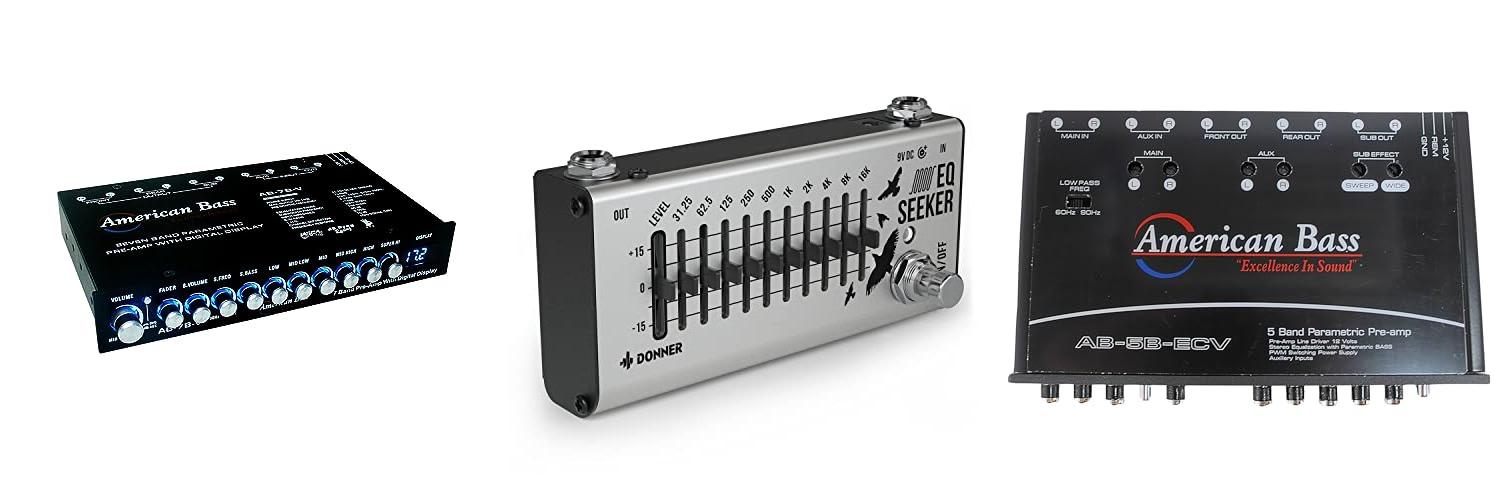
1. American Bass High End 7 Band Equalizer Voltage Display

Rating: 9.0/10
Amp up your car’s sound system with the American Bass High End 7 Band Equalizer Voltage Display. This device lets you fine-tune your music with precision. You can adjust seven different sound frequencies to get the perfect sound for any song. It also has a voltage display so you know your system is getting enough power. Plus, it includes a fader to balance sound between the front and back speakers. You can even control the subwoofer for extra bass.
What We Like:
- Offers precise control over your car audio with 7 frequency bands.
- Includes a voltage display for system health monitoring.
- Fader control helps balance audio between front and rear speakers.
- Dedicated subwoofer frequency and volume control for powerful bass.
- Compact dimensions (9″Lx 8″Wx 2″H) make installation easier.
- Provides 7 V preamp output for a strong signal to your amplifiers.
- Accepts 2 RCA inputs for connecting multiple audio sources.
What Could Be Improved:
- The frequency steps are fixed, limiting extremely fine-tuning for some users.
- The user interface could be more intuitive for absolute beginners.
This equalizer is a fantastic tool for anyone serious about car audio. It empowers you to sculpt your sound and enjoy a truly customized listening experience on the road.
2. Donner EQ Pedal

Rating: 8.5/10
The Donner EQ Pedal, also known as the EQ Seeker, is a powerful tool for guitar and bass players. Its small size makes it easy to fit on any pedalboard. This pedal helps you shape your sound for any kind of music. Donner built it with good parts to make sure it sounds great and lasts a long time on the road.
What We Like:
- It’s a compact and convenient size, fitting easily onto your pedalboard.
- It works well for all music styles, giving you lots of sound options.
- The 10 bands of EQ let you fine-tune your sound precisely.
- You can boost or cut each frequency by 15 dB, giving you a wide range of control.
- The pedal has a tough aluminum-alloy body, making it very durable.
- True bypass means your guitar’s original sound stays pure when the pedal is off, with no extra noise.
What Could Be Improved:
- A power adapter is not included, so you’ll need to buy one separately.
The Donner EQ Seeker is a solid and versatile equalizer pedal. It offers great sound shaping and is built to withstand regular use.
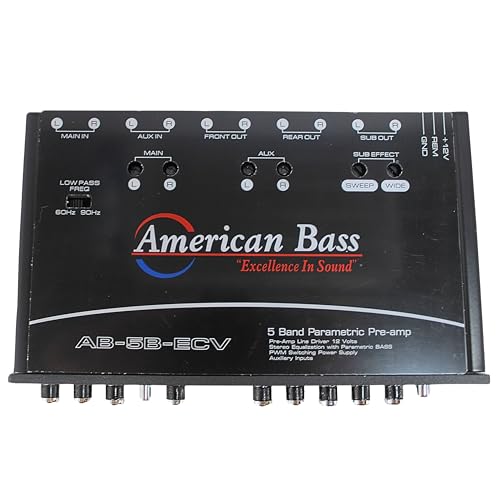
3. American Bass 5 Band Equalizer with Built in Voltmeter Digital Display AB-5B-ECV
Rating: 9.4/10
Get ready to seriously upgrade your car’s sound system with the American Bass 5 Band Equalizer with Built in Voltmeter Digital Display AB-5B-ECV. This gadget is packed with features to help you get the best possible sound from your music.
What We Like:
- It has a built-in voltmeter that shows you the power of your system.
- The 7V line driver gives your audio a strong, clean signal.
- You can precisely control your sound with the master volume and left/right adjustments.
- The five equalizer bands let you boost or cut sound by 12dB, giving you lots of control.
- Three RCA outputs let you connect to your front, rear, and subwoofer amps easily.
- The dedicated subwoofer control helps you get amazing bass.
- It works with a wide range of frequencies, from deep lows to crisp highs.
What Could Be Improved:
- The digital display might be a bit small for some users to see easily at a glance.
- While the controls are precise, some users might find the sheer number of options overwhelming at first.
This American Bass equalizer is a powerful tool for anyone serious about car audio. It offers fantastic control and sound quality for a truly customized listening experience.
4. Denpetec Car Bass Controller

Rating: 9.2/10
The Denpetec Car Bass Controller is a handy gadget for anyone who loves to fine-tune their car’s sound system. It lets you easily control your amplifier’s power, stereo, equalizer, or crossover volume right from your dashboard. This means you can adjust the bass and other sound settings without fumbling with your main stereo unit.
What We Like:
- It gives you two ways to adjust the sound: by gain and by frequency. This means you can really customize how your music sounds.
- It’s perfect for adding a subwoofer to your car or for making sure multiple amplifiers work well together.
- Using it is super simple. Just turn the knob to get the sound you want.
- It fits most cars and connects easily, so you don’t need to worry about complicated wiring.
What Could Be Improved:
- While it’s universal, some users might find that the exact fit or look isn’t perfect for every single car model.
- The instructions could be a bit clearer for absolute beginners to car audio.
This Denpetec Car Bass Controller makes adjusting your car’s audio incredibly easy. It’s a great way to get more control over your sound without a lot of hassle.
5. BOSS GEB-7 Seven-Band Graphic Bass Equalizer Guitar Pedal

Rating: 9.4/10
The BOSS GEB-7 Seven-Band Graphic Bass Equalizer Pedal is a fantastic tool for bass players. It helps you shape your bass guitar’s sound. You can easily adjust seven different frequencies. This pedal works well with all kinds of bass guitars, even those with more strings like five- and six-string basses. It’s also a great choice for acoustic-electric basses. You can use it to make your bass louder or quieter with its handy level control knob.
What We Like:
- It offers a full range of sound control.
- It handles five- and six-string basses perfectly.
- It works great for acoustic-electric basses.
- The level control knob lets you boost or cut your sound.
- It’s built tough, like most BOSS pedals.
What Could Be Improved:
- Some players might want more frequency bands for finer adjustments.
- The pedal’s footprint is standard, so it takes up a bit of pedalboard space.
This equalizer pedal gives you the power to dial in your perfect bass tone. It’s a reliable and versatile addition to any bass player’s setup.
Your Guide to Awesome Bass Settings on Your Equalizer
Want your music to thump? Feeling like your bass is a bit weak or muddy? An equalizer (EQ) lets you control the sound of your music. Mastering bass settings on your EQ is key to getting that powerful, clear low-end you crave. This guide will help you find the best settings for your ears.
What to Look for in Bass Settings
Key Features to Consider
- Frequency Bands: Your EQ has sliders for different sound frequencies. Bass frequencies are usually at the lower end, around 20Hz to 250Hz. More bands in this range give you finer control.
- Boost/Cut Range: This tells you how much you can increase (boost) or decrease (cut) a specific frequency. A wider range means more power to shape your sound.
- Q Factor (Bandwidth): This controls how wide or narrow the EQ adjustment is. A narrow Q affects a small range of frequencies, while a wide Q affects a broader range.
- Presets: Some EQs come with pre-set “bass boost” or “rock” settings. These can be a good starting point.
Important Materials (for the EQ itself)
While we’re talking about settings, the EQ’s build matters. Look for EQs made with durable materials. Metal casings are often sturdier than plastic ones. Good quality knobs and sliders feel better and last longer. This helps ensure your EQ works reliably for a long time.
Factors That Improve or Reduce Quality
- Boosting Too Much: Over-boosting bass can make your sound muddy and distorted. Your music will lose clarity.
- Cutting Too Much: Cutting too much bass can make your music sound thin and lifeless. It won’t have that satisfying punch.
- Poorly Designed EQ: Some EQs have noisy circuits. This adds unwanted hiss or hum to your audio.
- Room Acoustics: The room you listen in greatly affects bass. A room with lots of soft surfaces might absorb bass. A room with hard surfaces might make bass sound boomy.
- Speaker Quality: Your speakers or headphones play a huge role. Cheap speakers might not reproduce low bass frequencies well, no matter how you set your EQ.
User Experience and Use Cases
Using an EQ is about making your music sound best for *you*. Here are some common scenarios:
- Home Listening: You might want a warmer, fuller bass for relaxing or enjoying your favorite albums.
- Car Audio: Car interiors can be tricky. You might need to boost bass to overcome road noise or adjust it to avoid rattling.
- Live Performance: For bands, EQ helps bass cut through other instruments without overpowering them.
- Gaming: Explosions and engine sounds in games benefit from a strong, clear bass presence.
- Movies: Deep bass adds impact to movie sound effects and scores.
The best user experience comes from an EQ that is easy to understand and adjust. Simple layouts and clear labels help beginners. Experienced users might want more detailed control.
Frequently Asked Questions (FAQ) About Bass Settings
Q: What are the best bass frequencies to boost?
A: Generally, frequencies between 60Hz and 200Hz provide the “body” and “punch” of bass. Experiment to find what sounds good to you.
Q: How do I fix muddy bass?
A: Muddy bass often comes from too much energy in the low-mids (around 200Hz to 500Hz). Try gently cutting these frequencies.
Q: My bass sounds weak. What should I do?
A: Try boosting frequencies between 60Hz and 100Hz. Also, make sure you’re not cutting too much bass elsewhere.
Q: Should I always use a “bass boost” preset?
A: Presets are good starting points, but they aren’t always perfect. Your ears are the best judge. Always tweak presets to fit your needs.
Q: How much bass boost is too much?
A: If your bass sounds distorted, boomy, or takes over the entire sound, you’ve boosted too much. Less is often more.
Q: Does room acoustics really affect bass?
A: Yes, very much! Hard surfaces can make bass sound boomy, while soft surfaces can make it sound weak. You might need to adjust your EQ based on the room.
Q: Can I use EQ on my headphones?
A: Absolutely! Headphone EQ settings can greatly improve the bass response and overall listening experience.
Q: What is the difference between boosting and cutting bass?
A: Boosting increases the volume of certain bass frequencies. Cutting decreases their volume.
Q: Is there a “one size fits all” bass setting?
A: No. The best bass setting depends on the music genre, your equipment, your room, and your personal preference.
Q: How can I learn to EQ bass better?
A: Practice! Listen to different types of music. Experiment with boosting and cutting different bass frequencies. Pay attention to how the sound changes.
In conclusion, every product has unique features and benefits. We hope this review helps you decide if it meets your needs. An informed choice ensures the best experience.
If you have any questions or feedback, please share them in the comments. Your input helps everyone. Thank you for reading.