
Do you ever feel like your music is missing something? That the deep, rumbling bass just isn’t hitting you the way it should? You’re not alone! Many people struggle to get that perfect low-end sound from their audio. It’s frustrating when you want to feel the music, but it just sounds flat or muddy.
Choosing a bass equalizer can feel like a puzzle. There are so many different kinds, and figuring out which one is best for your needs can be confusing. You might worry about spending money on something that won’t make a real difference. Or maybe you’re just unsure what all those knobs and sliders actually do!
But what if you could easily understand how to make your music thump and roar? This post will help you cut through the confusion. We’ll explore what a bass equalizer is and how it works. By the end, you’ll know how to pick the right one to bring your favorite songs to life and truly feel the beat.
Our Top 5 Bass Equalizer Recommendations at a Glance
Top 5 Bass Equalizer Detailed Reviews
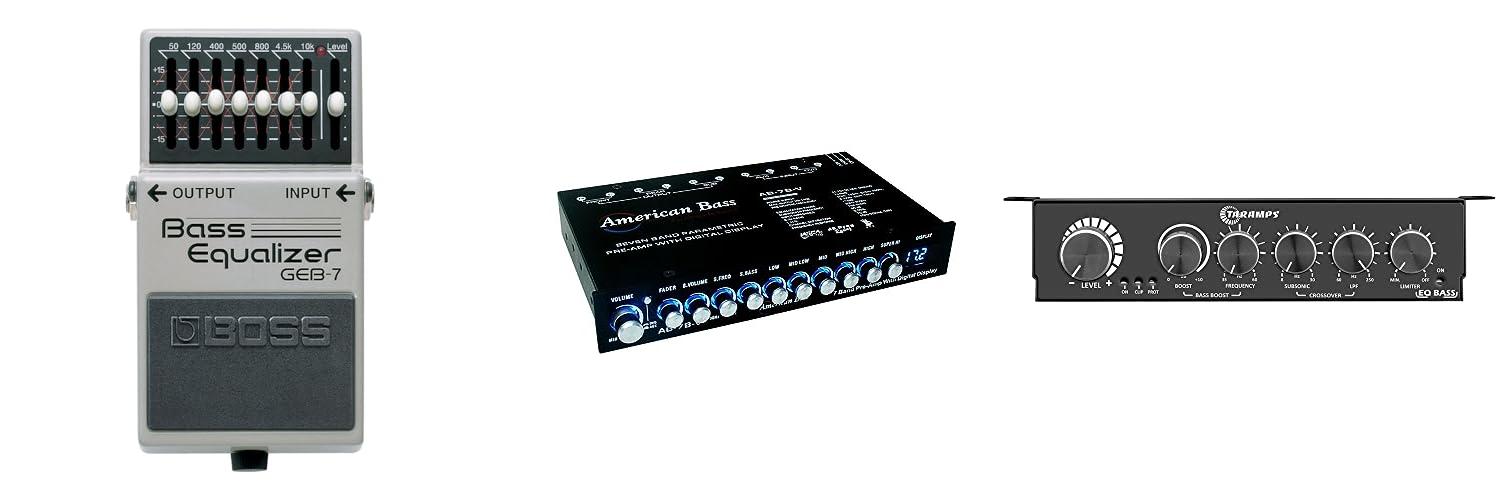
1. BOSS GEB-7 Seven-Band Graphic Bass Equalizer Guitar Pedal

Rating: 9.3/10
The BOSS GEB-7 Seven-Band Graphic Bass Equalizer is a powerful tool for bass players. It gives you seven bands of EQ control to shape your sound. This pedal works great for all kinds of basses, even those with five or six strings. It’s also a good choice for acoustic-electric basses. You can use it to make your bass sound louder or quieter with the handy level control knob.
What We Like:
- This pedal has a full range response, so it sounds good on all basses, including five and six-string models.
- It’s great for electric-acoustic bass players.
- The level control knob lets you boost or cut your signal, giving you more control over your volume.
- It’s a sturdy pedal, built to last.
- It’s easy to understand and use right away.
What Could Be Improved:
- Some users might want more detailed control than seven bands offer.
- While versatile, it might not replace a dedicated pre-amp for some players.
The BOSS GEB-7 is a solid EQ pedal that offers a lot of tone-shaping options for bassists. It’s a reliable and effective way to fine-tune your sound.
2. American Bass High End 7 Band Equalizer Voltage Display

Rating: 9.1/10
Unlock the full potential of your car audio with the American Bass High End 7 Band Equalizer Voltage Display. This device gives you precise control over your sound. You can fine-tune your music to perfection. The voltage display also helps you keep an eye on your car’s electrical system.
What We Like:
- Precise Sound Control: Seven adjustable frequency steps (50Hz, 125Hz, 315Hz, 750Hz, 2.2KHz, 6KHz, 12KHz) let you shape your audio exactly how you want it.
- Flexible Connectivity: It offers 7V preamp output for strong signal strength and 2 RCA inputs to connect multiple sources.
- Easy Fading: The fader control lets you adjust the balance between front and rear speakers smoothly.
- Subwoofer Integration: Dedicated sub frequency (30-300Hz) and volume control make it easy to dial in your bass.
- Voltage Monitoring: The built-in voltage display keeps you informed about your car’s power.
- Compact Design: Its dimensions (9″Lx 8″Wx 2″H) make it easy to fit into most car dashboards.
What Could Be Improved:
- Instruction Clarity: Some users found the initial setup instructions a little challenging to follow.
- Button Feel: The tactile feedback on the control buttons could be slightly more pronounced for some preferences.
The American Bass High End 7 Band Equalizer Voltage Display is a powerful tool for any serious car audio enthusiast. It provides excellent control and useful features for a superior listening experience.
3. Taramp’s EQ BASS Digital Audio for Control Your Bass Volume

Rating: 8.9/10
The Taramp’s EQ BASS Digital Audio is a powerful tool for taking control of your car’s bass. It lets you adjust your amplifier’s volume, bass boost, and even filter out unwanted high or low sounds. This device makes sure your music sounds just right, no matter what kind of stereo or head unit you have. You can fine-tune your audio for a truly personalized listening experience. It’s designed to be easy to use, so you can get the best sound without a lot of hassle.
What We Like:
- Gives you full remote control over your amplifier settings.
- Easily matches your head unit’s signal for better sound.
- Lets you precisely tune your audio to your liking.
- Makes it simple to adjust amplifier settings from anywhere.
- Empowers users with enhanced control and audio refinement.
What Could Be Improved:
- The frequency response stops at 250Hz, which might limit some advanced tuning for extremely high bass frequencies.
- While it matches most head units, some very old or unusual models might require an adapter.
This EQ BASS is a fantastic upgrade for anyone serious about their car audio. It offers great control and makes it simple to achieve the perfect bass sound.
4. Donner EQ Pedal

Rating: 8.9/10
The Donner EQ Pedal, 10 Band Equalizer Pedal, EQ Seeker for Guitar and Bass True Bypass is a fantastic tool for any musician. Its small size makes it easy to fit on any pedalboard. This pedal helps you shape your sound for any type of music. It’s built with good parts to make sure it sounds great and holds up on the road.
What We Like:
- It’s a compact size and works for all music styles.
- It has 10 bands of EQ to help you fine-tune your sound.
- Each band can be adjusted by 15 dB, giving you lots of control.
- The pedal is made of strong aluminum alloy, so it’s tough.
- True bypass means your guitar’s original sound stays clear and strong.
What Could Be Improved:
- The power adapter is not included, so you’ll need to buy one separately.
This Donner EQ pedal offers a lot of sound-shaping power in a small, durable package. It’s a solid choice for guitarists and bassists looking to dial in their perfect tone.
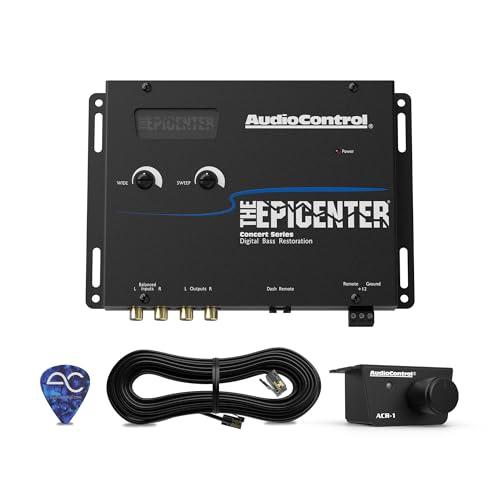
5. AudioControl EPICENTER Digital Bass Restoration Control Processor
Rating: 9.5/10
Get ready to feel the bass like never before with the AudioControl EPICENTER Digital Bass Restoration Control Processor. This black car audio enhancer brings back those lost low-end frequencies, making your music sound fuller and more exciting. It’s designed to boost your bass and give you a truly immersive listening experience right from your car.
What We Like:
- It restores and enhances your car’s bass, making music sound much better.
- You get a wired remote control to easily adjust bass levels while driving.
- The built-in circuit lets you fine-tune your bass sound.
- Advanced technology offers customized bass settings.
- Para-Bass lets you precisely control the center frequency and width of your bass.
- The subsonic filter can be adjusted for specific sound preferences.
- It can connect with AudioControl amps for an even better system.
What Could Be Improved:
- The setup might require some car audio knowledge.
- The 20-foot remote cable might be too long or too short for some car setups.
The AudioControl EPICENTER is a powerful tool for any music lover wanting deeper, more impactful bass. It gives you the control to make your car audio system truly shine.
Your Guide to Awesome Bass: Choosing the Right Bass Equalizer
Want your music to rumble and shake? A bass equalizer is your secret weapon. It lets you tweak the low-end sounds, making them deeper, punchier, or just right for your ears. This guide helps you find the best one.
What to Look For: Key Features of a Bass Equalizer
1. Frequency Control
This is the most important part. You want to be able to adjust different bass frequencies. Think of it like having knobs for different parts of the bass sound. Some equalizers have just a few knobs, while others have many for super-fine control. More knobs usually mean more power.
2. EQ Bands
These are the specific frequency ranges you can adjust. For bass, you’ll want control over the really low notes (sub-bass) and the slightly higher bass notes (mid-bass). Look for equalizers with at least one or two bands dedicated to these lower frequencies.
3. Boost/Cut Range
This tells you how much you can turn the bass up (boost) or down (cut). A wider range gives you more options. You might want to make your bass super loud for a party, or dial it back for a more mellow sound.
4. Type of EQ
There are a few types. Graphic EQs have sliders for different bands, which are easy to see and use. Parametric EQs give you even more control, letting you choose the exact frequency and how wide or narrow the adjustment is. For most people, a good graphic EQ is plenty.
5. Bypass Function
This lets you easily switch the equalizer on and off. It’s super handy for comparing the sound with and without the EQ to hear the difference you’re making.
Materials Matter: What Your Bass Equalizer is Made Of
Most bass equalizers are made of sturdy plastic or metal. For a pedal that sits on the floor, metal is usually tougher and can handle being stepped on. Inside, good quality electronic components make a big difference in how clean and accurate the sound is. You can often tell good components by the brand’s reputation.
Quality Check: What Makes a Bass Equalizer Great (or Not So Great)
Factors that Improve Quality:
- Clean Sound: A great EQ adds bass without adding unwanted noise or fuzz.
- Precise Control: When you turn a knob, the sound changes exactly how you expect it to.
- Durability: It should feel solid and last a long time, especially if it’s a stompbox.
- Low Noise Floor: This means it doesn’t add hiss or hum to your music when it’s on.
Factors that Reduce Quality:
- Adding Noise: If you hear extra buzzing or humming when you use it, the quality isn’t great.
- Muddy Sound: Sometimes, EQs can make the bass sound unclear or boomy instead of tight and punchy.
- Flimsy Build: Cheap plastic or wobbly knobs suggest it won’t last long.
- Limited Control: If you can’t get the sound you want because the EQ doesn’t offer enough adjustment, it’s not a good choice.
User Experience and Use Cases: Who Needs a Bass Equalizer and Why?
A bass equalizer is great for musicians. Guitarists and bassists use them to shape their tone. A bassist might use it to get a really deep, booming sound for reggae or a tight, punchy sound for rock. DJs also use them to control the bass in their mixes. Even if you just want to make your home stereo sound better, a bass EQ can help.
For Musicians: You can use it to make your bass guitar cut through the mix during live shows. Or, you can use it in the studio to fine-tune your recorded bass sound.
For Home Audio Enthusiasts: If your speakers struggle with low bass, an EQ can help boost those frequencies. You can also use it to make your favorite songs sound more exciting.
For DJs: Control the energy of your set by adjusting the bass. Make the dance floor move with powerful lows!
Frequently Asked Questions about Bass Equalizers
Q: What are the main Key Features I should look for?
A: You should look for good frequency control, adjustable EQ bands, a decent boost/cut range, and a bypass function. The type of EQ (graphic or parametric) is also important.
Q: Do the materials really affect the sound quality?
A: The materials of the housing (like metal vs. plastic) mostly affect durability. The internal electronic components are what really impact the sound quality, making it cleaner or noisier.
Q: How do I know if a bass equalizer is good quality?
A: A good quality EQ adds bass without adding noise, offers precise control over the sound, and is built to last. Poor quality EQs can add unwanted hiss or make your bass sound muddy.
Q: Can I use a bass equalizer with my headphones?
A: Yes, if the equalizer is designed to connect to your audio source before it reaches your headphones, or if it’s a headphone amplifier with EQ capabilities.
Q: What’s the difference between a graphic EQ and a parametric EQ for bass?
A: A graphic EQ has fixed frequency sliders, making it easy to use. A parametric EQ gives you more control by letting you choose the exact frequency, its width, and how much you boost or cut it.
Q: Will a bass equalizer make my bass sound “boomy”?
A: It can, if you boost the wrong frequencies. A good EQ lets you control specific bass ranges to get a tight, punchy sound, not just a muddy boom.
Q: Is a bass equalizer necessary for every musician?
A: Not strictly necessary, but it’s a very useful tool for shaping your sound and can greatly improve your tone, especially for bass players and sound engineers.
Q: Can I use a bass equalizer to fix bad-sounding speakers?
A: It can help compensate for some speaker limitations, especially if your speakers lack deep bass. However, it can’t magically create bass that the speakers aren’t capable of producing.
Q: How much should I expect to spend on a good bass equalizer?
A: Prices vary widely. You can find basic ones for around $30-$50, while professional-grade units can cost several hundred dollars. For good quality, aim for something in the $50-$150 range.
Q: What is “sub-bass” and why is it important for bass equalizers?
A: Sub-bass is the very lowest range of frequencies, usually below 60Hz. It’s what you feel more than hear, providing that deep rumble. Controlling sub-bass is key to getting a powerful and satisfying low end.
In conclusion, every product has unique features and benefits. We hope this review helps you decide if it meets your needs. An informed choice ensures the best experience.
If you have any questions or feedback, please share them in the comments. Your input helps everyone. Thank you for reading.