
Ever cranked up your music only to find the bass sounds muddy and undefined, or worse, completely missing? It’s a common frustration for music lovers and sound engineers alike. Getting that perfect low-end punch can feel like a guessing game, with a dizzying array of knobs and sliders that all seem to do… something. You want your music to thump, to rumble, to feel alive, but figuring out the right equalizer settings for your bass often leaves you scratching your head.
This is where understanding bass equalizer settings becomes your superpower. We’re here to cut through the confusion. By the end of this post, you’ll know exactly how to tweak your equalizer to get that deep, rich bass you’ve been dreaming of. No more guesswork, just pure, powerful sound. Let’s dive in and unlock the secrets to amazing bass!
Our Top 5 Bass Equalizer Settings Recommendations at a Glance
Top 5 Bass Equalizer Settings Detailed Reviews
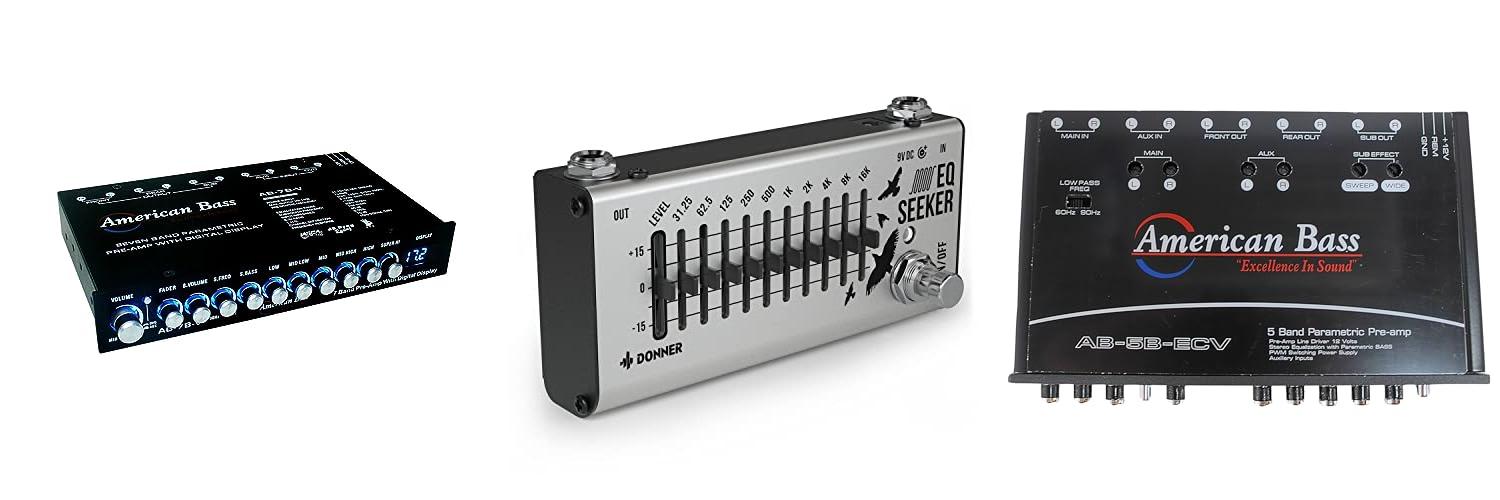
1. American Bass High End 7 Band Equalizer Voltage Display

Rating: 9.4/10
Take control of your car’s sound with the American Bass High End 7 Band Equalizer Voltage Display. This device lets you fine-tune your music’s bass, mids, and treble. You can shape your audio exactly how you want it. It also shows you the system voltage, so you know your power is good.
What We Like:
- Offers precise sound adjustments with 7 frequency bands: 50Hz, 125Hz, 315Hz, 750Hz, 2.2KHz, 6KHz, and 12KHz.
- Provides a strong 7V preamp output for a clean and powerful signal to your amplifiers.
- Includes 2 RCA inputs, making it easy to connect multiple audio sources.
- Features a fader control to balance sound between front and rear speakers.
- Has a dedicated sub frequency control (30-300Hz) and volume control for your subwoofer.
- Includes a voltage display to monitor your car’s electrical system.
What Could Be Improved:
- The dimensions (9″Lx 8″Wx 2″H) might require careful planning for installation in some vehicles.
- While powerful, the 7-band adjustment might not be enough for extreme audiophiles seeking highly specialized tuning.
This equalizer is a fantastic tool for any car audio enthusiast. It delivers excellent sound customization and valuable system monitoring.
2. Donner EQ Pedal

Rating: 8.6/10
The Donner EQ Pedal, also known as the EQ Seeker, is a compact and versatile tool for guitar and bass players. It helps you fine-tune your sound with its 10-band equalizer. This pedal works well with any music style and is built with good parts for great sound and reliability on the road.
What We Like:
- It has a convenient, small size that fits easily on your pedalboard.
- The 10 bands give you lots of control over your instrument’s tone.
- Each band can be adjusted by 15 dB, so you can boost or cut frequencies a lot.
- It’s made from strong aluminum, so it can handle being used a lot.
- True bypass means your guitar’s original sound stays pure when the pedal isn’t on. It doesn’t add any extra noise.
What Could Be Improved:
- The power adapter is not included, so you’ll need to buy one separately.
This Donner EQ Seeker is a solid choice for musicians who want precise control over their tone. It offers excellent sound shaping in a tough, compact package.
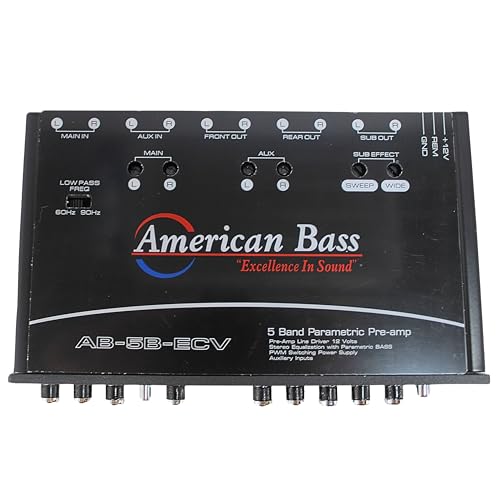
3. American Bass 5 Band Equalizer with Built in Voltmeter Digital Display AB-5B-ECV
Rating: 8.5/10
Get ready to seriously upgrade your car’s sound system with the American Bass 5 Band Equalizer with Built in Voltmeter Digital Display AB-5B-ECV. This awesome gadget gives you total control over your music, making every drive a concert experience. Its built-in voltmeter keeps an eye on your power, and the powerful 7V line driver makes your audio sound amazing.
What We Like:
- It lets you fine-tune your music with five different sound bands. You can boost or cut the sound by 12dB, which is a lot!
- You get to control the volume for the front, back, and even your subwoofer separately. This means you can make your bass thump just the way you like it.
- The digital voltmeter is a neat bonus. It shows you exactly how much power your system is getting.
- It has three RCA outputs, so you can connect it to your front, rear, and subwoofer amplifiers easily.
- The sound quality is top-notch. It has a wide frequency range and very little distortion, so your music will sound clear and powerful.
What Could Be Improved:
- The instructions might be a little tricky for beginners to understand.
- While it offers great control, adding more advanced features like digital signal processing could make it even better for true audiophiles.
This equalizer is a fantastic tool for anyone serious about car audio. It offers impressive control and delivers excellent sound quality, making your music come alive.
4. BOSS GEB-7 Seven-Band Graphic Bass Equalizer Guitar Pedal

Rating: 8.6/10
The BOSS GEB-7 Seven-Band Graphic Bass Equalizer is a powerful tool for bass players. It lets you shape your sound with seven different frequency bands. This pedal works great with all kinds of basses, even those with extra strings like five and six-string models. It’s also a good choice for acoustic-electric basses.
What We Like:
- It has a full range response, meaning it sounds good with all bass guitars, including five and six-string ones.
- It’s great for electric-acoustic bass players.
- You can use the level control knob to make your sound louder or quieter. This means it can act like a boost or a cut pedal.
- It’s easy to use and understand.
- BOSS pedals are known for being tough and reliable.
What Could Be Improved:
- Some players might want more than seven bands to fine-tune their sound even further.
- While it’s versatile, it doesn’t have some of the more advanced features found on higher-end EQs.
The BOSS GEB-7 is a solid and dependable equalizer for any bass player. It gives you the control you need to make your bass sound its best.
5. Denpetec Car Bass Controller

Rating: 8.9/10
Take control of your car’s sound system with the Denpetec Car Bass Controller. This handy device lets you easily adjust your amplifier’s power, stereo settings, equalizer, or crossover volume right from your dashboard. No more fumbling with your main stereo! You can fine-tune your music’s bass and overall sound to perfection, making every drive more enjoyable. It’s like having a DJ booth in your car, but much simpler to use.
What We Like:
- Easy to adjust amplifier power, stereo, equalizer, or crossover volume from the dashboard.
- Offers two ways to adjust: by gain and by frequency, letting you change the feel of your music.
- Adds convenient subwoofer level controls or helps balance multiple amplifiers.
- Simple to operate with just a turn of a button.
- Universal fit for most cars with easy plug-and-play connections, no extra wiring needed.
What Could Be Improved:
- The instructions could be a bit clearer for absolute beginners.
- While universal, some very specific or older car audio systems might have compatibility quirks.
The Denpetec Car Bass Controller is a fantastic upgrade for any car audio enthusiast. It brings powerful sound customization right to your fingertips, making it simple to get the best sound out of your system.
Unlock Deeper Bass: Your Essential Buying Guide to Bass Equalizer Settings
Getting the right bass sound is a game-changer for your music. Whether you love thumping hip-hop beats, rumbling movie sound effects, or the rich tones of an upright bass, a good bass equalizer setting makes all the difference. This guide helps you find the perfect settings for your audio gear.
Key Features to Look For
When you’re looking for bass equalizer settings, here’s what matters:
- Frequency Range: Good equalizers let you adjust a wide range of bass frequencies. This means you can tweak low bass (like the deep rumble) and mid-bass (where the punch of a kick drum lives). Look for settings that cover from around 20Hz up to 200Hz.
- Adjustable Gain: Gain controls how much you boost or cut a specific frequency. You want controls that let you make small, precise changes or bigger, bolder ones.
- Q Factor (Bandwidth): This tells you how wide or narrow the adjustment is. A narrow Q affects only a small range of frequencies, while a wide Q affects a broader range. This helps you fine-tune your sound without messing up other parts of the audio.
- Presets: Many equalizers come with pre-set options for different music genres or listening situations. These are great starting points. You might find presets for “Rock Bass,” “EDM Boom,” or “Subwoofer Boost.”
- User-Friendly Interface: The controls should be easy to understand and use. Buttons, sliders, or knobs that are clearly labeled make adjusting your sound much simpler.
Important Materials and Design
While the “materials” for equalizer settings are digital, the hardware they run on matters.
- Quality Hardware: If you’re using a physical equalizer or an audio interface, the quality of its components affects the sound. Good quality chips and circuits create cleaner sound.
- Software Stability: For digital equalizers (like those in apps or music software), the software needs to be stable. Bugs or crashes can ruin your listening experience.
Factors That Improve or Reduce Quality
Several things can make your bass sound amazing or muddy.
- Room Acoustics: The room where you listen to music greatly affects bass. Hard surfaces can make bass sound boomy, while soft surfaces can absorb it. Adjusting your equalizer can help compensate for these issues.
- Speaker Quality: Your speakers are crucial. Even the best equalizer settings can’t make bad speakers sound great. Good speakers reproduce bass accurately.
- Source Audio Quality: The original recording matters. A poorly recorded track won’t sound good no matter how you EQ it. High-quality audio files give you the best foundation.
- Over-Boosting: Pushing the bass too hard can make it sound distorted and muddy. This reduces clarity and can even damage your speakers over time. It’s better to make subtle adjustments.
- Incorrect Frequencies: Boosting the wrong bass frequencies can make your music sound unnatural. For example, boosting too high in the mid-bass can make things sound “honky.”
User Experience and Use Cases
Using bass equalizer settings is about making your audio sound just right for you.
- For Music Lovers: You can boost the low-end for more impact in songs with heavy basslines. Or, you can cut muddy frequencies to make vocals clearer.
- For Gamers: Feel the rumble of explosions or the roar of engines. A good bass boost can make your gaming experience more immersive.
- For Movie Buffs: Experience the full power of movie sound effects. Deep bass settings can make action scenes truly thrilling.
- For Home Theater: Fine-tune your surround sound system. You can adjust the subwoofer’s output to blend perfectly with your other speakers.
- For Podcasters and Voiceovers: Sometimes, a slight bass boost can add warmth and richness to a voice. However, too much can make it sound muffled.
Frequently Asked Questions: Bass Equalizer Settings
Q: What is the most important part of bass EQ settings?
A: The most important part is adjusting the low frequencies (around 20Hz to 200Hz) to get the right amount of boom and punch.
Q: How do I know if I’m boosting bass too much?
A: If the bass sounds distorted, muddy, or overwhelms the other sounds in the music, you’re likely boosting too much.
Q: Can equalizer settings help bad speakers sound better?
A: Equalizer settings can help a little by boosting or cutting certain frequencies. However, they can’t fix fundamental problems with low-quality speakers.
Q: What are bass “presets” for?
A: Presets are pre-set equalizer configurations designed for specific types of music or listening experiences. They offer a quick way to get a good sound.
Q: What does “frequency range” mean for bass EQ?
A: Frequency range refers to the span of low notes you can adjust. A wider range lets you control more types of bass sounds.
Q: Is it better to boost or cut bass frequencies?
A: It depends on the source audio and your preference. Sometimes you need to boost to add impact, and other times you need to cut to remove muddiness.
Q: How does my room affect bass sound?
A: Your room’s shape and the materials in it can make bass sound boomy or weak. You might need to adjust your EQ to compensate for your room.
Q: Can I use bass EQ settings on my phone?
A: Yes, many music apps and devices have built-in equalizer settings that allow you to adjust bass.
Q: What is the “Q factor” in EQ?
A: The Q factor controls how wide or narrow the adjustment is for a specific frequency. A narrow Q affects a small range, while a wide Q affects a larger range.
Q: Should I always boost the bass when listening to music?
A: Not necessarily. Boosting bass too much can make music sound unclear. It’s best to listen and adjust based on the specific song and your personal taste.
In conclusion, every product has unique features and benefits. We hope this review helps you decide if it meets your needs. An informed choice ensures the best experience.
If you have any questions or feedback, please share them in the comments. Your input helps everyone. Thank you for reading.