
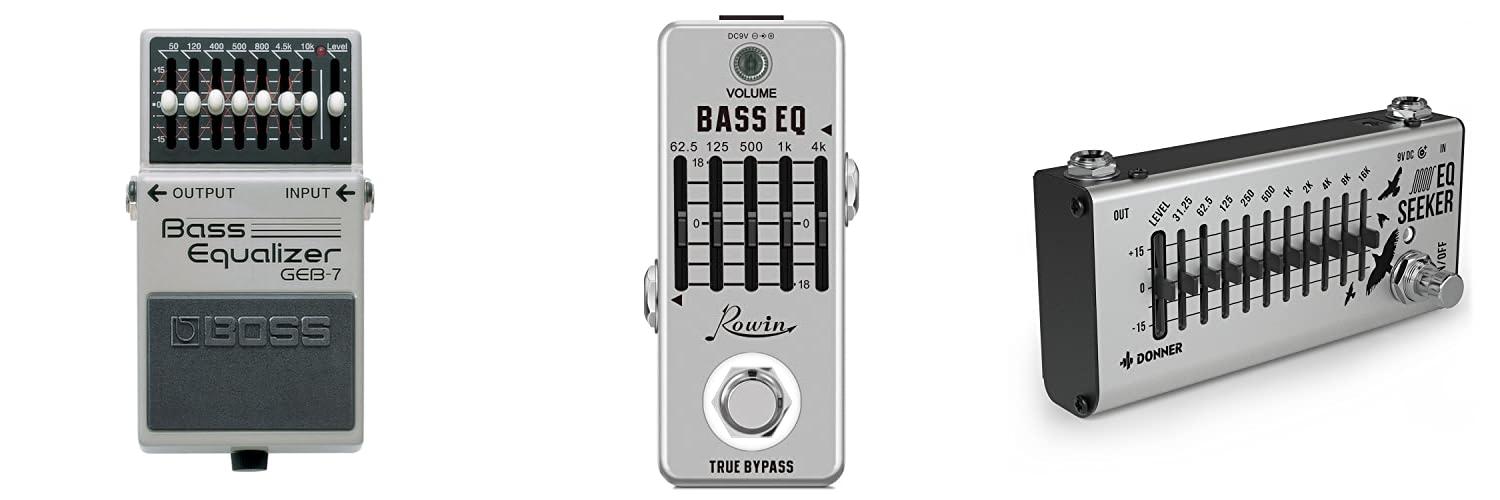
Ever feel like your bass guitar’s sound is just… okay? Maybe it’s a little muddy, or perhaps it lacks that punch you hear in your favorite songs. You’re not alone! Many bassists dream of a richer, more defined tone, but finding the perfect tool to get there can feel like a quest.
That’s where the magic of a bass equalizer pedal comes in. But with so many on the market, how do you pick the one that will truly transform your sound? It can be confusing to know what features matter most and which pedal will actually help you overcome those common tone troubles. You want to avoid wasting money on something that won’t deliver.
This post is your compass! We’ll dive deep into the world of bass equalizer pedals, breaking down what they do and what to look for. By the end, you’ll understand how to choose a pedal that will unlock your bass’s full sonic potential and make your playing shine. Get ready to shape your sound like never before!
Our Top 5 Bass Equalizer Pedal Recommendations at a Glance
| Image | Product | Rating | Links |
|---|---|---|---|
 |
BOSS GEB-7 Seven-Band Graphic Bass Equalizer Guitar Pedal | 9.1/10 | Check Price |
 |
Rowin Bass Equalize Pedal 5 Band for Bass with True Bypass | 8.8/10 | Check Price |
 |
Donner EQ Pedal | 9.2/10 | Check Price |
 |
STRICH EQ Pedal for Electric Guitar | 9.2/10 | Check Price |
 |
BOSS GE-7 Equalizer | 8.8/10 | Check Price |
Top 5 Bass Equalizer Pedal Detailed Reviews
1. BOSS GEB-7 Seven-Band Graphic Bass Equalizer Guitar Pedal
Rating: 9.4/10
The BOSS GEB-7 Seven-Band Graphic Bass Equalizer is a powerful tool for any bassist. It lets you shape your sound with seven different frequency bands. You can make your bass sound deeper, brighter, or anything in between. It works great for all types of basses, including those with more strings.
What We Like:
- It has a full range response, meaning it handles everything from low notes on a five-string bass to higher notes on a six-string bass with no problem.
- This pedal is fantastic for electric-acoustic bass players. It helps you get a clean and clear sound when you plug in.
- The level control knob is very useful. You can use it to boost your signal and make your bass louder, or cut it to make it quieter. This gives you a lot of control over your volume.
- It’s built tough, like most BOSS pedals, so it can handle life on the road.
What Could Be Improved:
- While it’s great for shaping tone, it doesn’t offer the same kind of overdrive or distortion that some other bass pedals do.
- Some players might want more than seven bands of EQ for super-fine adjustments.
The BOSS GEB-7 is a solid choice for bassists who want more control over their sound. It’s a reliable pedal that can help you dial in your perfect tone for any situation.
2. Rowin Bass Equalize Pedal 5 Band for Bass with True Bypass
Rating: 8.9/10
Bass players, get ready to dial in your perfect tone with the Rowin Bass Equalize Pedal! This little powerhouse packs a punch, offering precise control over your sound in a super compact package. It’s designed by original professional manufacturers, so you know you’re getting top-notch quality that’s built to last.
What We Like:
- It’s the smallest bass EQ around, making it easy to fit on any pedalboard.
- You get five bands of graphic EQ to shape your sound: 62.5Hz, 125Hz, 500Hz, 1kHz, and 4kHz, each with a huge +/- 18dB adjustment range.
- A master volume knob lets you control the overall output level.
- The pedal is built tough with a high-quality aluminum alloy casing.
- True bypass means your original signal stays pure when the pedal isn’t engaged.
What Could Be Improved:
- The DC 9V power adapter is not included, so you’ll need to buy that separately.
This Rowin Bass EQ pedal is a fantastic tool for any bassist looking to fine-tune their tone without breaking the bank or sacrificing pedalboard space. It’s a solid, reliable choice for achieving your ideal bass sound.
3. Donner EQ Pedal
Rating: 8.9/10
The Donner EQ Pedal, the EQ Seeker, is a fantastic tool for any guitarist or bassist. It’s small and works with any kind of music. This equalizer pedal uses good parts to make sure it sounds great and holds up on the road. It gives you a lot of control over your sound.
What We Like:
- Compact size makes it easy to fit on any pedalboard.
- Works well for all music styles, so it’s very versatile.
- Has 10 bands of EQ, giving you precise control over your tone.
- Each band can be boosted or cut by 15 dB, which is a big range.
- Built with tough aluminum alloy, it can handle life on the road.
- True bypass means your signal stays clear and strong when the pedal is off.
What Could Be Improved:
- The power adapter is not included, so you’ll need to buy one separately.
The Donner EQ Seeker is a solid and reliable equalizer pedal. It offers excellent sound shaping and robust construction for musicians of all levels.
4. STRICH EQ Pedal for Electric Guitar
Rating: 9.0/10
The STRICH TEN BAND EQ pedal is a powerful tool for any guitarist or bassist. It lets you shape your sound with ten different frequency bands. This pedal is built tough with an aluminum alloy body. It’s designed to be used on the go, fitting easily into your gig bag.
What We Like:
- It’s made of strong aluminum alloy. This makes it very durable.
- It has ten frequency bands for detailed sound control.
- You can boost or cut each frequency by ±12dB. This gives you lots of tone options.
- The true bypass design keeps your original sound clean.
- It’s portable and compact, perfect for traveling musicians.
- It works with both guitars and basses.
What Could Be Improved:
- You need to buy a 9V DC adapter separately.
This STRICH EQ pedal offers fantastic control over your tone. It’s a reliable pedal for musicians who want to fine-tune their sound.
5. BOSS GE-7 Equalizer
Rating: 8.6/10
The BOSS GE-7 Equalizer is a small but mighty pedal that helps guitarists shape their sound. It gives you seven sliders to adjust different sound frequencies. These frequencies are picked specifically for guitars, so you can make your guitar sound exactly how you want it. You can boost or cut each frequency by a lot, up to 15 decibels. This means you have a lot of control over your tone. There’s also a level slider to adjust your overall volume, which is great for solos or matching different guitars.
What We Like:
- It has 7 bands of EQ sliders that are perfect for guitar.
- You can boost or cut each sound band by a lot, giving you tons of tone shaping options.
- The separate Level slider lets you control the overall volume.
- It’s a compact pedal, so it won’t take up much space on your pedalboard.
- BOSS offers a solid five-year warranty for peace of mind.
What Could Be Improved:
- Some users might find the specific frequency bands a bit limiting if they want to tweak very specific, narrow sound ranges.
The BOSS GE-7 is a fantastic tool for any guitarist wanting to fine-tune their sound. It offers great control and reliability in a small package.
Unlock Your Bass Tone: The Ultimate Buying Guide to Bass Equalizer Pedals
Are you a bassist looking to sculpt your sound? A bass equalizer pedal, or EQ pedal, is your secret weapon. It lets you fine-tune the frequencies of your bass guitar, shaping your tone from deep rumble to punchy growl. This guide will help you choose the perfect EQ pedal for your needs.
1. Key Features to Look For
Graphic vs. Parametric EQ
- Graphic EQ: These pedals have sliders for specific frequency bands. Think of them like a graphic equalizer on a stereo. They are easy to use. You slide the knobs up or down to boost or cut those frequencies.
- Parametric EQ: These pedals offer more control. They usually have knobs for frequency, gain (how much you boost or cut), and Q (the width of the frequency band you’re affecting). Parametric EQs let you target very specific sounds.
Number of Bands
More bands mean more control. Pedals can have anywhere from 3 bands (bass, mid, treble) to 10 or more. For most players, 5 to 7 bands are plenty.
True Bypass
When a pedal is in bypass mode (turned off), true bypass means your signal goes straight from the input to the output without being colored by the pedal’s circuitry. This keeps your pure bass tone intact.
Foot Switch Quality
You’ll be stomping on this thing a lot. A sturdy, reliable foot switch is crucial. Metal switches are generally more durable than plastic ones.
Power Options
Most EQ pedals run on 9V power, often from a battery or a power supply. Check if a power supply is included or if you need to buy one separately.
2. Important Materials
Construction
Look for pedals built with a strong metal casing. Aluminum or steel enclosures protect the delicate electronics inside from bumps and drops. Plastic pedals are cheaper but less durable.
Components
High-quality internal components, like resistors and capacitors, contribute to better sound and reliability. While you can’t always see these, reputable brands often use better parts.
3. Factors That Improve or Reduce Quality
Noise Floor
A good EQ pedal should add very little unwanted noise or hum to your signal. Cheap pedals might introduce hiss, especially when you boost frequencies.
Frequency Range
The range of frequencies a pedal can control matters. For bass, you want pedals that can effectively shape the low-end (bass frequencies) and the mids, where much of your instrument’s character lies.
Build Quality
A pedal that feels solid and well-built will likely last longer and perform better. Loose knobs or flimsy switches are red flags.
4. User Experience and Use Cases
Ease of Use
Graphic EQs are very straightforward. Parametric EQs might take a little more learning but offer greater precision.
Live Performance
EQ pedals are essential for live shows. They help you cut through a mix, adapt to different room acoustics, and prevent feedback. You can boost your bass for solos or dial it back to let other instruments shine.
Recording
In the studio, an EQ pedal gives you instant tone-shaping capabilities. You can quickly dial in the perfect sound without needing complex studio gear.
Sound Sculpting
Even if you love your amp’s sound, an EQ pedal lets you add your personal touch. Want a fatter tone? Boost the lows. Need more definition? Boost the upper mids.
Frequently Asked Questions (FAQ)
Q: What is a bass equalizer pedal?
A: A bass equalizer pedal is a guitar effect that lets you change the volume of different sound frequencies in your bass guitar’s signal. It helps you shape your tone.
Q: Do I really need a bass EQ pedal?
A: If you want more control over your bass tone, an EQ pedal is very useful. It helps you sound better in different situations.
Q: What’s the difference between graphic and parametric EQ?
A: Graphic EQs have sliders for set frequencies, which are easy to use. Parametric EQs have knobs for more precise control over frequency, gain, and Q.
Q: What does “true bypass” mean?
A: True bypass means that when the pedal is off, your guitar signal goes straight through without being changed by the pedal’s electronics.
Q: How many frequency bands should I look for?
A: For most players, 5 to 7 frequency bands are enough to get good control over your tone.
Q: Will an EQ pedal add noise to my sound?
A: Good quality EQ pedals add very little noise. Cheaper ones might add hiss, especially if you boost frequencies a lot.
Q: Can I use a bass EQ pedal with my amp’s EQ?
A: Yes! You can use both. Your amp’s EQ gives a general sound, and the pedal lets you make fine adjustments.
Q: Are EQ pedals good for playing live?
A: Absolutely. They help you cut through the mix and adapt your sound to different venues.
Q: What kind of power do most EQ pedals use?
A: Most use a 9V power source, either from a battery or a power supply. Some come with a power supply, others don’t.
Q: Is it hard to learn how to use a parametric EQ pedal?
A: Parametric EQs can take a little practice, but they offer much more detailed control over your sound once you learn them.
In conclusion, every product has unique features and benefits. We hope this review helps you decide if it meets your needs. An informed choice ensures the best experience.
If you have any questions or feedback, please share them in the comments. Your input helps everyone. Thank you for reading.