
Imagine this: you’re cruising down the road, your favorite song blasting. But something’s missing. The bass just doesn’t hit hard enough. It’s a common problem for car audio enthusiasts. You want that deep, powerful sound that makes your chest vibrate, but finding the perfect bass car amplifier can feel like a confusing maze.
The world of car amplifiers is huge. There are so many brands, wattages, and features to consider. It’s easy to get lost and end up with an amp that doesn’t quite deliver the boom you’re looking for. You might worry about buying the wrong one and wasting money, or worse, damaging your speakers. That’s where we come in.
In this post, we’re going to break down everything you need to know about bass car amplifiers. We’ll help you understand the basics, like what wattage really means and how to match an amp to your subwoofer. By the end, you’ll feel confident in choosing an amplifier that will transform your car’s sound system and give you the head-rattling bass you crave.
Our Top 5 Bass Car Amplifier Recommendations at a Glance
Top 5 Bass Car Amplifier Detailed Reviews
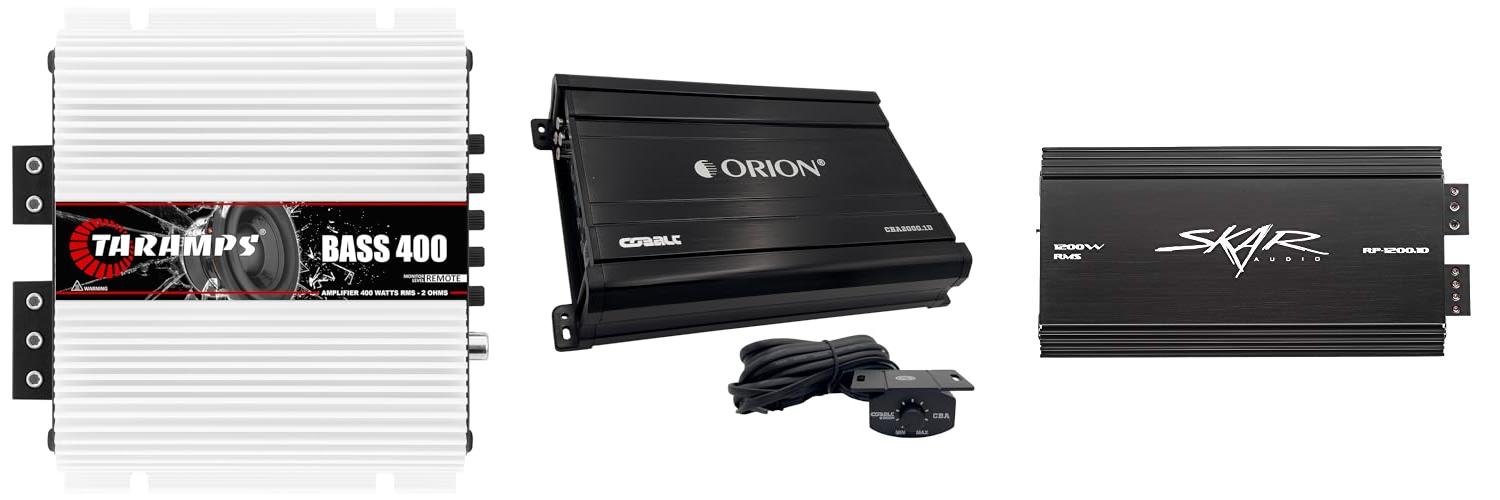
1. Taramps Bass 400 2 Ohms Monoblock Amplifier 400 Watts Rms 1 Channel 14.4VDC Out Power Full Range

Rating: 9.1/10
Unleash the power of your car’s audio system with the Taramps Bass 400. This monoblock amplifier is built for serious bass lovers. It pumps out a massive 400 watts RMS at 2 ohms, delivering thunderous lows. Its full-range capability means it can handle everything from the deepest sub-bass to punchy mid-bass. This amp is designed to make your music shake the ground.
What We Like:
- Powerful Bass: Delivers an impressive 400 watts RMS, perfect for subwoofers.
- Extreme Low Frequencies: Handles frequencies as low as 8Hz for truly deep bass.
- Customizable Sound: Features adjustable bass boost, a subsonic filter, and a low-pass filter for fine-tuning your sound.
- Versatile Inputs: Accepts both RCA and high-level inputs, making it easy to connect to most car stereos.
- Compact Design: Its monoblock design is space-saving, fitting easily into most car setups.
What Could Be Improved:
- Detailed Manual: The included manual could offer more in-depth explanations for advanced users.
- Heat Management: Under very heavy, prolonged use, it can get warm, suggesting good airflow is important.
If you crave earth-shaking bass and want to upgrade your car’s sound, the Taramps Bass 400 is an excellent choice. It brings serious power and control to your low-end frequencies.
2. Orion Cobalt CBA2000.1D Monoblock 1-Channel Class D Amplifier for Car Subwoofer

Rating: 9.0/10
The Orion Cobalt CBA2000.1D Monoblock Amplifier brings serious power to your car’s subwoofer. This amplifier is designed to give your subwoofers the energy they need to sound amazing. It’s built tough and works very efficiently, making it a standout choice for anyone wanting better bass in their car.
What We Like:
- It delivers excellent frequency response and has a great crossover network.
- Its design is strong and it performs very well, meaning it won’t overheat.
- This amp can handle 1-ohm loads easily, perfect for subwoofers that need a lot of power.
- It comes with both low-level (RCA) and high-level (wire) inputs, so it connects to most car stereos.
- You get cool features like Bass Boost, a Subsonic Control, and a Remote Bass Knob to fine-tune your sound.
- The MOSFET power supply and 2-way protection circuitry keep it safe and running smoothly.
- Its power ratings are solid: 500W RMS at 1 ohm, 260W RMS at 2 ohms, and 160W RMS at 4 ohms.
What Could Be Improved:
- While powerful, the 2000W MAX is a peak rating, and the RMS ratings are more realistic for continuous power.
- For some users, understanding the technical terms for input types might be a bit tricky.
If you’re looking to upgrade your car’s bass, the Orion Cobalt CBA2000.1D is a powerful and reliable option that offers great control over your sound.
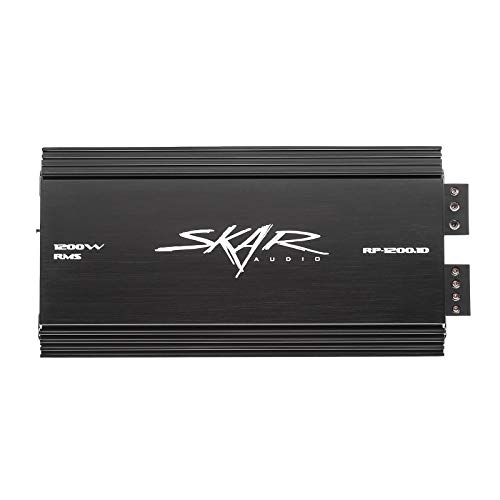
3. Skar Audio RP-1200.1D Monoblock Class D MOSFET Amplifier with Remote Subwoofer Level Control
Rating: 8.6/10
Get ready to feel the bass! The Skar Audio RP-1200.1D is a powerful monoblock amplifier that’s built to make your subwoofers rumble. It’s a Class D MOSFET amp, meaning it’s super efficient and doesn’t waste a lot of energy as heat. This amp packs a serious punch, delivering 1200 watts of RMS power at 1 ohm, and even a whopping 1600 watts at its peak. This means your speakers will get all the juice they need to sound amazing. Plus, it comes with a handy remote control so you can adjust your subwoofer volume right from your seat.
What We Like:
- It delivers incredible power, especially at 1 ohm, making your bass hit hard.
- The onboard Bass EQ lets you easily boost the bass at 45Hz, giving you more control over your sound.
- It has built-in protection circuits to keep it safe from overheating or short circuits.
- The 4-gauge power and ground terminals allow for plenty of electricity to flow, which is important for good performance.
- It’s designed to stay cool with a good heatsink, so it can perform at its best for a long time.
- The remote subwoofer level control is a convenient feature for on-the-fly adjustments.
What Could Be Improved:
- The frequency response range is a bit limited, focusing mainly on bass frequencies.
- While stable at 1 ohm, pushing it to its absolute limits might require careful setup and good wiring.
This Skar Audio amplifier is a fantastic choice for anyone looking to seriously upgrade their car’s bass. It offers impressive power and useful features for a truly immersive audio experience.
4. Crunch Ground Pounder GP-2000.2 2000 Watt 2 Channel Amplifier

Rating: 8.5/10
The Crunch Ground Pounder GP-2000.2 is a powerful 2-channel amplifier designed to bring serious sound to your car audio system. With a massive 2000 watts of peak power, it can easily drive your speakers and subwoofers, making your music sound amazing.
What We Like:
- It delivers a huge 1000 watts per channel at 2 ohms, so your speakers will be loud and clear.
- You can run it in stereo mode for a full sound experience or bridge it to one channel for a massive 2000 watts of mono power for a subwoofer.
- It can even run in stereo and bridged mono at the same time, giving you lots of flexibility.
- The variable electronic crossover lets you fine-tune the sound for the best performance.
- This amp is built tough to handle the demands of a car audio system.
What Could Be Improved:
- The sheer power might be too much for some factory speaker setups.
- Bridging the amplifier to mono requires careful wiring and understanding of speaker loads.
For those looking to significantly upgrade their car’s sound, the Crunch Ground Pounder GP-2000.2 is a fantastic option. It offers incredible power and versatility for a truly immersive listening experience.
5. Car Audio Amplifier ZE1000.1 2000W Monoblock Class D MOSFET Subwoofer Audio

Rating: 9.0/10
Unleash the thunder in your car with the ZE1000.1 Monoblock Amplifier. This powerhouse pumps out a massive 2000 watts of pure audio energy, making your subwoofers roar like never before. Its advanced Class D technology means more sound and less heat, keeping everything running smoothly. This amp is built tough, designed to handle demanding 1-ohm loads and keep your system safe with built-in protections.
What We Like:
- Incredible power output for deep, impactful bass.
- Highly efficient Class D design means less wasted energy and a smaller size.
- 1-ohm stable operation is perfect for pushing your subwoofers to their limits.
- Robust built-in protection against overheating, overloads, and short circuits keeps your gear safe.
- Compact dimensions (11” x 6.9” x2”) and a manageable weight (6.6 lbs) make installation easier.
What Could Be Improved:
- While powerful, some users might desire even more power for extreme systems.
- The “Stereo” in the title might be slightly confusing as it’s a monoblock amplifier designed for subwoofers.
The ZE1000.1 is a fantastic choice for anyone serious about their car’s bass. It delivers serious power in a smart, efficient package.
Your Guide to Awesome Bass Car Amplifiers
Ready to feel the rumble? A great bass car amplifier makes your music come alive. It boosts the power of your speakers, especially your subwoofer. This means deeper, richer bass that you can feel. Let’s find the perfect amp for your car.
What to Look For: Key Features
Power Output (Watts RMS)
This is how much power the amp can give to your speakers. Look for Watts RMS (Root Mean Square). It’s a steady power rating. More RMS watts usually mean louder and cleaner bass. Match the RMS watts of your amp to your subwoofer’s power handling. You don’t want to damage your sub!
Number of Channels
Channels are like separate power paths for your speakers. A 1-channel (mono) amp is best for a subwoofer. A 2-channel amp can power two speakers. A 4-channel amp can power four speakers, or two speakers and a subwoofer (if it can be bridged).
Frequency Response
This shows the range of sound frequencies the amp can handle. For bass, you want an amp that works well with low frequencies (around 20 Hz to 200 Hz).
Signal-to-Noise Ratio (SNR)
A higher SNR means less unwanted noise in your music. Aim for an SNR of 90 dB or higher for clear sound.
Class of Amplifier
Amplifiers come in different classes (A, B, AB, D). Class D amps are very popular for car audio. They are small, efficient, and create less heat. This is great for saving space in your car.
Materials Matter
Build Quality
A good amp feels solid. Look for a sturdy metal casing. This helps with heat dissipation and protects the internal parts. Cheaper amps might use plastic parts that can break easily.
Heat Sinks
These metal fins help keep the amplifier cool. Good heat sinks are important for preventing the amp from overheating and shutting down.
What Makes an Amp Great (or Not So Great)
Factors That Improve Quality:
- High-Quality Components: Better capacitors and transistors inside the amp make for cleaner sound and more power.
- Good Wiring and Connections: Solid, gold-plated connectors help ensure a good electrical connection and prevent corrosion.
- Efficient Design: Well-designed circuits use power wisely and produce less heat.
Factors That Reduce Quality:
- Cheap Materials: Thin metal casings or plastic parts can make an amp less durable.
- Poor Heat Management: If an amp gets too hot too quickly, its performance suffers.
- Low SNR: Hissing or buzzing sounds can ruin your listening experience.
Using Your Amp: User Experience and Use Cases
For the Bass Lover
If you want booming bass that shakes your car, a powerful mono (1-channel) Class D amplifier is your best friend. Pair it with a good subwoofer. You’ll feel the beat!
For a Full System Upgrade
A 4-channel amplifier can power your front and rear speakers, plus a subwoofer (when bridged). This gives you a balanced sound throughout your car.
Easy Installation
Some amps are designed for simpler installation. Look for clear labels and straightforward connections if you’re new to car audio.
User-Friendly Features
Features like adjustable gain, crossovers, and bass boost can help you fine-tune your sound. Gain controls how much signal the amp receives. Crossovers direct different sound frequencies to the right speakers. Bass boost adds extra punch to low frequencies.
Frequently Asked Questions (FAQ)
Q: What is the most important feature when buying a bass amplifier?
A: The most important feature is the Watts RMS. It tells you how much power the amp can deliver to your subwoofer for strong bass.
Q: How many watts do I need?
A: You need an amp with RMS wattage close to your subwoofer’s RMS power handling. Too little power, and it won’t sound good. Too much, and you could damage your sub.
Q: Can I use a 4-channel amp for just a subwoofer?
A: Yes, you can often bridge a 4-channel amp. Bridging combines two channels into one more powerful channel, perfect for a subwoofer.
Q: What does “Class D” mean for amplifiers?
A: Class D amplifiers are very efficient. They use less power, create less heat, and are smaller than other amplifier classes.
Q: How do I connect an amplifier to my car stereo?
A: You’ll need to run power wires from your battery, RCA cables from your stereo, and speaker wires to your speakers or subwoofer.
Q: What is a crossover?
A: A crossover is a circuit that separates audio frequencies. It sends low bass frequencies to the subwoofer and higher frequencies to other speakers.
Q: Is a higher SNR always better?
A: Yes, a higher Signal-to-Noise Ratio (SNR) means less unwanted noise and cleaner sound from your amplifier.
Q: Do I need a special wiring kit for my amplifier?
A: Yes, it’s highly recommended. A good wiring kit has the correct gauge wires for power and grounding, which is crucial for safety and performance.
Q: How do I prevent my amplifier from overheating?
A: Make sure the amp has good ventilation. Don’t block its heat sinks. Also, ensure your wiring is correct and the amp isn’t overloaded.
Q: Can I install a bass amplifier myself?
A: Yes, many people do. However, if you’re not comfortable with car wiring, it’s best to have a professional install it to ensure it’s done safely and correctly.
In conclusion, every product has unique features and benefits. We hope this review helps you decide if it meets your needs. An informed choice ensures the best experience.
If you have any questions or feedback, please share them in the comments. Your input helps everyone. Thank you for reading.