
Do you ever wonder why your favorite records don’t sound quite as rich and full as they used to? Maybe you’ve noticed a little hiss or a lack of crispness when you spin your favorite albums. Choosing the right amplifier for your vinyl setup can feel like navigating a maze. So many technical terms, so many different brands – it’s easy to get lost and end up with something that just doesn’t do your music justice.
This is where we come in. We understand that you want to hear every detail, every strum of the guitar, and every breath of the singer. You want that warm, immersive sound that only vinyl can provide. That’s why we’ve put together this guide. We’re going to break down what makes a great amplifier for your turntable.
By the time you finish reading, you’ll know exactly what to look for. We’ll help you understand the key features and avoid common pitfalls, so you can finally experience your vinyl collection the way it was meant to be heard. Let’s dive in and find the perfect match for your sound.
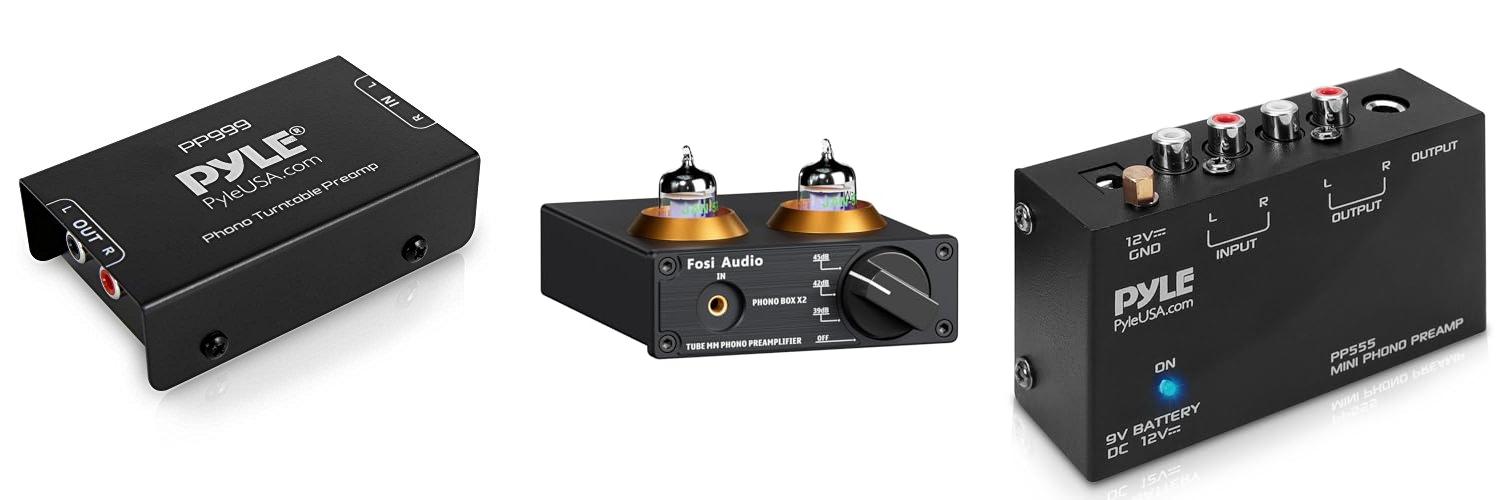
Our Top 5 Amplifier For Vinyl Recommendations at a Glance
Top 5 Amplifier For Vinyl Detailed Reviews
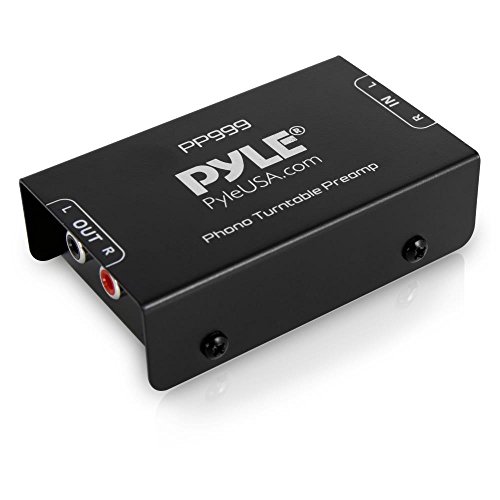
1. Pyle Mini Phono Turntable Preamp – Low Noise Stereo Preamplifier with RCA Input/Output – 12V DC Adapter – High-Fidelity Audio for Vinyl – Phonograph – Home Audio – PP999
Rating: 8.5/10
This Pyle Mini Phono Turntable Preamp is a handy device for anyone who wants to connect their turntable to modern audio systems. It’s designed to boost the sound from your vinyl records so you can enjoy your music on speakers, computers, or other devices that don’t have a special phono input. This little box makes it easy to get your old-school tunes sounding great on new equipment.
What We Like:
- It easily converts the special signal from your turntable into a signal that most audio gear can understand.
- It works with magnetic cartridges, which are common on many turntables.
- The preamp uses special low-noise parts to keep your music sounding clear without annoying hums or buzzes.
- It connects simply with standard RCA cables, making setup a breeze.
- You can connect it to almost any sound system, like speakers or your computer, so you can hear your vinyl anywhere.
- It’s a straightforward plug-and-play device; you just connect the wires and you’re ready to go.
What Could Be Improved:
- For the best sound and to avoid extra noise, it’s a good idea to place the preamp close to your turntable.
This Pyle Mini Phono Turntable Preamp is a fantastic and affordable way to bring your vinyl collection into the digital age. It offers a simple solution for better audio quality from your records.
2. Fosi Audio Box X2 Phono Preamp

Rating: 9.5/10
The Fosi Audio Box X2 Phono Preamp is a small but mighty device that helps your turntable sound its best. It takes the sound from your records and makes it clearer and richer. This little box can also act as a tube preamp, giving your music a warm and smooth tone.
What We Like:
- It cleans up your turntable’s sound, removing unwanted noise for clearer audio.
- You can adjust the sound to your liking with three different gain settings (39, 42, or 45 dB).
- It works as a tube preamp too, adding a warm and smooth sound to your music.
- You can easily swap out the included vacuum tubes to experiment with different sounds.
- It comes with everything you need to get started, including cables and a power supply.
- It’s designed to protect your turntable with a grounding post.
What Could Be Improved:
- While it’s great for MM cartridges, it doesn’t work with MC (Moving Coil) cartridges.
- The user manual could be a bit clearer for absolute beginners.
If you want to improve the sound of your turntable and enjoy a warmer audio experience, the Fosi Audio Box X2 is a fantastic option. It offers great sound quality and customization for its price.
3. Pyle Phono Turntable Preamp – Mini Stereo Preamplifier with 9V Battery – 12V DC Power Adapter – RCA Input/Output – Low Noise – Ideal for Phonograph and Vinyl – PP555

Rating: 8.7/10
Are you looking to bring your vinyl collection into the digital age or connect your turntable to modern speakers? The Pyle Phono Turntable Preamp PP555 is a compact and powerful solution. It takes the weak signal from your turntable and boosts it so your receiver or speakers can play it loud and clear. This little box makes it easy to enjoy your records on almost any audio setup.
What We Like:
- It easily turns your turntable’s phono signal into a line-level signal. This means you can connect your turntable to almost anything with an audio input.
- It works well with magnetic pickups, accepting a sensitivity of 3mV at 50K Ohms.
- You get clear sound thanks to its low-noise operation. It uses special operational amplifiers to keep unwanted hum and buzz away.
- It’s super easy to set up. You just plug in your turntable and then connect the preamp to your speakers or receiver.
- You have two power options: a standard 12V DC power adapter or a convenient 9V battery. This makes it great for use anywhere.
- It’s small and won’t take up much space.
What Could Be Improved:
- For the best sound quality and to reduce noise, you need to place the preamp close to your turntable.
Overall, the Pyle PP555 is a fantastic way to upgrade your vinyl listening experience. It’s simple to use and delivers good sound for the price.
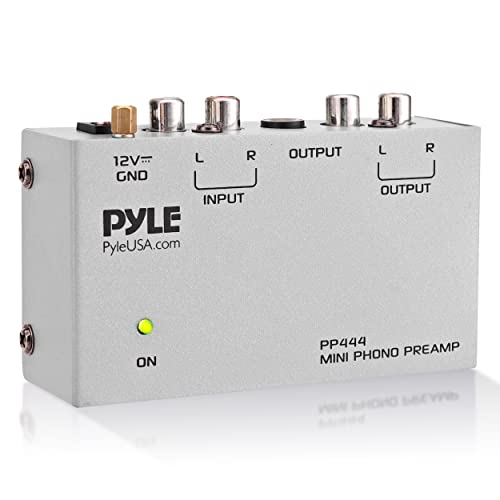
4. Pyle Ultra Compact Phono Preamp – Mini Turntable Preamp for Audio – Guitar
Rating: 9.1/10
Are you looking to get the best sound from your turntable or even your guitar and microphone? The Pyle Ultra Compact Phono Preamp, model PP444, is a small but mighty device that can help. It takes your phono signals and turns them into line-level signals. This means you can connect your record player to almost any modern audio system. It works with magnetic pickups and is built with low-noise parts for clear sound.
What We Like:
- It converts phono signals to line-level signals, making your turntable compatible with more gear.
- It uses low-noise audio amplifiers for clear sound quality.
- You can easily connect your turntable to speakers, computers, and more.
- Setup is simple plug-and-play with RCA inputs and outputs.
- It comes with a 1-year manufacturer’s guarantee and a 30-day money-back return policy.
What Could Be Improved:
- The user manual recommends placing the preamp close to the sound source to avoid noise, which might limit placement options.
- While it handles magnetic pickups well, it might not be the best choice for all types of audio inputs beyond turntables, guitars, and microphones.
This Pyle preamp is a fantastic tool for anyone wanting to enhance their audio setup. It’s a simple solution for better sound quality.
5. Fluance PA10 High Fidelity Phono Preamp (Preamplifier) with RIAA Equalization for MM Turntables/Vinyl Record Players

Rating: 9.4/10
The Fluance PA10 High Fidelity Phono Preamp is a fantastic tool for anyone who loves listening to vinyl records. It takes the weak signal from your turntable and makes it strong enough for your stereo system. This little box ensures your music sounds just as the artist intended.
What We Like:
- It makes your music sound super clear.
- It uses good parts to make sure the sound is accurate.
- It keeps the left and right channels of your music separate for a wider sound.
- It has a special filter to get rid of annoying low rumbles.
- It’s built with metal inside to stop unwanted electronic noise.
What Could Be Improved:
- It only works with MM (Moving Magnet) turntables.
- The rumble filter’s roll-off is gentle, so very loud listening might still have some subtle issues.
If you want to hear your vinyl records with amazing detail and clarity, the Fluance PA10 is an excellent choice. It’s designed to bring out the best in your music collection.
Choosing the Best Amplifier for Your Vinyl Setup
Getting a great sound from your vinyl records is a special experience. A good amplifier is the heart of your system. It takes the tiny signal from your turntable and makes it loud and clear enough for your speakers. Let’s find the right one for you.
Key Features to Look For
1. Phono Input (Essential!)
This is the most important thing. Your turntable needs a special connection called a “phono input.” This input has extra power to boost the weak signal from your record. Without it, your music will be super quiet and sound thin. Many amplifiers have this built-in. If yours doesn’t, you’ll need a separate “phono preamplifier.”
2. Power Output (Watts)
This tells you how loud the amplifier can make your speakers. More watts usually mean more power. Think about the size of your room. A small room might not need a super powerful amp. Big rooms or speakers that are hard to drive will need more watts. Don’t just focus on the number, though. How the amp uses its power is also important.
3. Connectivity Options
Think about what else you want to connect. Do you have other music players? A CD player? A streamer? Most amps have RCA inputs for these. Some newer ones might have digital inputs like USB or optical. Make sure the amp has enough ports for all your gear.
4. Build Quality and Materials
The way an amplifier is built matters. Look for a sturdy metal case. This helps protect the electronics inside and can reduce buzzing. Inside, good quality components like capacitors and resistors make a big difference in sound. Brands that use premium parts often sound better.
Important Materials
The materials used in an amplifier’s construction affect its performance and longevity. High-quality internal components, such as robust capacitors and well-made resistors, contribute to cleaner sound and durability. The casing is often made of brushed aluminum or steel. This provides structural integrity and helps to shield the internal circuitry from external interference. The power supply unit is also a critical component, often featuring a substantial transformer that is built with quality copper windings.
Factors That Improve or Reduce Quality
What Makes it Better:
- Good Power Supply: A strong and stable power supply makes the amplifier work better. It gives your music a solid foundation.
- High-Quality Components: Using top-notch parts inside the amp means cleaner sound. You’ll hear more detail in your music.
- Solid Construction: A well-built amp with a metal case is less likely to have humming or buzzing sounds. This lets you hear just the music.
- Clean Signal Path: When the music signal travels through the amp with few detours, it stays clearer.
What Can Make it Worse:
- Cheap Components: Low-quality parts can make the sound muddy or introduce unwanted noise.
- Poor Power Supply: A weak power supply can lead to distorted sound, especially at higher volumes.
- Vibrations: If the amp isn’t built solidly, vibrations can travel through it and affect the sound.
- Interference: A poorly shielded amp can pick up radio waves or other electrical noise, which you’ll hear as buzzing.
User Experience and Use Cases
An amplifier should be easy to use. The knobs and buttons should feel good and work smoothly. You want to be able to adjust the volume and switch between inputs without any fuss. A good user experience means you can focus on enjoying your music.
Use Cases:
- The Music Lover: If you love listening to records, a good amp will make your favorite albums sound amazing. You’ll hear details you never noticed before.
- The Beginner: If you’re new to vinyl, an amp with a built-in phono input is a great starting point. It simplifies your setup.
- The Audiophile: Those who want the absolute best sound might look for amps with more advanced features and higher-end components.
Frequently Asked Questions (FAQ)
Q: What is a phono input, and why is it so important?
A: A phono input is a special connection on an amplifier designed for turntables. It boosts the very weak signal from your record player and also adjusts the sound to make it sound right. Without it, your music would be too quiet.
Q: Do I need a separate phono preamplifier?
A: You only need a separate phono preamplifier if your amplifier does not have a built-in phono input. If your amplifier has a “PHONO” marked input, you likely don’t need a separate one.
Q: How much power (watts) do I need?
A: The amount of power you need depends on your room size and your speakers. For small to medium rooms and efficient speakers, 20-50 watts is usually enough. Larger rooms or less efficient speakers might need 50 watts or more.
Q: Can I connect my smartphone to an amplifier?
A: Yes, you can usually connect your smartphone using an auxiliary cable (often a 3.5mm jack to RCA cables) or Bluetooth if the amplifier has it. You’ll plug this into a regular line-level input, not the phono input.
Q: What’s the difference between an integrated amplifier and a power amplifier?
A: An integrated amplifier has both a preamplifier (controls volume and input selection) and a power amplifier (makes the sound loud) in one box. A power amplifier only does the “loud” part and needs a separate preamplifier.
Q: Should I worry about the brand of the amplifier?
A: Brand can matter because some brands are known for making high-quality audio equipment. However, don’t just buy a brand name. Always check reviews and see if the specific model fits your needs.
Q: How does the material of the amplifier casing affect sound?
A: A sturdy metal casing helps to reduce vibrations and block electrical interference. This can lead to a cleaner, more detailed sound by preventing unwanted noise from getting into the audio signal.
Q: What does “damping factor” mean?
A: Damping factor is a measure of how well an amplifier controls the speakers. A higher damping factor means the amplifier can stop the speaker cones from vibrating freely after the signal stops, which can result in tighter bass.
Q: Is it better to buy a new or used amplifier?
A: Both can be good options. New amplifiers come with warranties and the latest technology. Used amplifiers can offer great value if you find a well-maintained unit from a reputable brand.
Q: How important is the amplifier’s “sound signature”?
A: Every amplifier has a slightly different “sound signature,” which is how it colors the music. Some are very neutral, while others might sound warmer or brighter. It’s good to read reviews to understand an amp’s sound signature and see if it matches your preferences.
In conclusion, every product has unique features and benefits. We hope this review helps you decide if it meets your needs. An informed choice ensures the best experience.
If you have any questions or feedback, please share them in the comments. Your input helps everyone. Thank you for reading.