
Yes, you can file for bankruptcy and keep your car and house, but it depends on several factors, including the type of bankruptcy you file, the amount of equity you have in these assets, and your state’s exemption laws. This article will explore the bankruptcy options available to help you retain your vehicle and home.
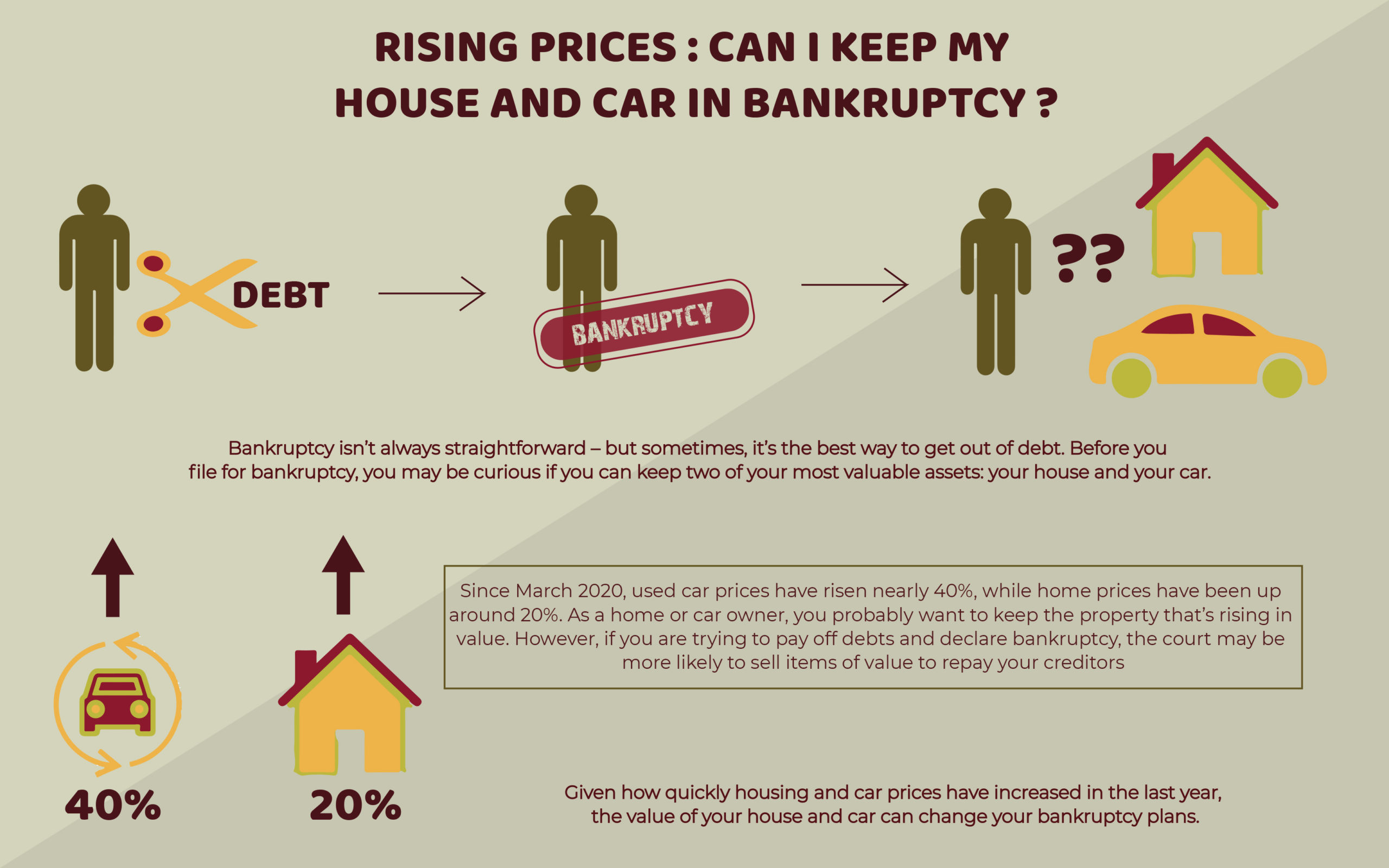
Image Source: www.therollinsfirm.com
Keeping Your House and Car During Bankruptcy
Facing overwhelming debt can feel like an insurmountable challenge. Many individuals worry that filing for bankruptcy means losing their most prized possessions, like their home and car. Fortunately, this is often not the case. Various provisions within bankruptcy law are designed to allow debtors to keep these essential assets. This guide delves into the nuances of bankruptcy asset protection, specifically focusing on keeping my house bankruptcy and keeping my car bankruptcy. We will explore different bankruptcy chapters and the strategies employed to protect your vehicle and home from creditors.
Deciphering Bankruptcy Chapters for Asset Retention
The type of bankruptcy you choose significantly impacts your ability to keep your property. The two most common types for individuals are Chapter 7 and Chapter 13.
Chapter 7 Bankruptcy: Liquidation with Exemptions
Chapter 7 bankruptcy, often called liquidation, involves selling non-exempt assets to pay creditors. However, a critical aspect of Chapter 7 is the use of exemptions. These are legal provisions that shield certain types of property up to a specified value.
Chapter 7 Car Exemption
The ability to keep your car in Chapter 7 hinges on the Chapter 7 car exemption. Every state has its own set of exemptions, and there are also federal exemptions. You can generally choose between state and federal exemptions, but you must use either all state exemptions or all federal exemptions.
- Equity is Key: The crucial factor is the amount of equity you have in your car. Equity is the difference between the car’s market value and the amount you owe on the loan. For example, if your car is worth $10,000 and you owe $6,000, you have $4,000 in equity.
- State Exemptions: Many states offer generous exemptions for vehicles. Some states allow you to exempt the entire value of your car, while others have a specific dollar amount. For instance, a state might allow you to exempt up to $5,000 in car equity. If your $4,000 equity falls within this limit, you can typically keep the car.
- Federal Exemptions: Federal exemptions also include a wildcard exemption that can be applied to any asset, including a car. The federal car exemption amount can vary, and it’s often combined with other federal exemptions.
- Keeping the Car When There’s Debt: If you have an ongoing car loan, you have a few options to keep the vehicle:
- Reaffirmation Agreement: You can sign a reaffirm car loan agreement. This means you agree to continue making payments on the car loan despite filing for bankruptcy. The debt is effectively removed from your bankruptcy, and you remain personally liable for the loan. The court must approve reaffirmation agreements to ensure they are not an undue hardship.
- Redemption: In some cases, you might be able to redeem the car by paying its current market value in a lump sum. This is often an option if your car loan is for more than the car’s value.
- Paying Off the Loan: If you can pay off the car loan entirely before filing or during the process, you can usually keep the car without reaffirmation, as long as the equity is covered by exemptions.
Chapter 13 Bankruptcy: Reorganization and Repayment
Chapter 13 bankruptcy, also known as wage earner’s bankruptcy, allows individuals to reorganize their debts and pay them back over a three-to-five-year period through a repayment plan. This chapter is often a preferred option for Chapter 13 home retention and keeping your car, especially if your equity exceeds the exemption limits in Chapter 7.
Chapter 13 Home Retention
Chapter 13 home retention is one of the primary advantages of this chapter. If you are behind on your mortgage payments, Chapter 13 allows you to catch up on missed payments over the life of your repayment plan, thus preventing foreclosure.
- Catching Up on Arrears: You can include past-due mortgage payments in your Chapter 13 plan. Your regular monthly mortgage payment plus a portion of the arrears will be paid to the mortgage lender.
- Modifying Loans: In some situations, particularly with investment properties or certain types of mortgages, you may be able to modify the loan terms to make payments more affordable.
- Keeping the House Bankruptcy: By consistently making your plan payments, including those for your mortgage, you can avoid losing your home to foreclosure.
Keeping Your Car in Chapter 13
Keeping your car in Chapter 13 is generally more straightforward than in Chapter 7, especially if you are current on your payments.
- Ongoing Payments: If you are current on your car payments, you will continue to make those payments as part of your Chapter 13 plan. The amount you pay for the car will be based on your regular car payment.
- “Cramdown” Option: If you owe more on your car than it’s worth, Chapter 13 offers a powerful tool called a “cramdown.” This allows you to reduce the secured debt on the car to its current market value. For example, if your car is worth $8,000 and you owe $12,000, a cramdown would reduce the secured portion of your loan to $8,000, which you would pay through your plan. The remaining $4,000 would be treated as unsecured debt, which may be paid at a lower rate or discharged entirely.
- Reaffirm Mortgage: Similar to Chapter 7, you can reaffirm mortgage obligations in Chapter 13. This means you continue to be personally responsible for the mortgage debt under its original terms. This is often done to maintain a good credit rating with the mortgage lender.
Understanding Bankruptcy Equity Limits
Bankruptcy equity limits are crucial when determining if you can keep your assets in Chapter 7. These limits are set by state and federal exemption laws and dictate the maximum value of property you can protect.
State vs. Federal Exemptions
- State Exemptions: Each state has its own set of exemptions. Some states are considered “generous” with their exemptions, allowing debtors to protect more equity. For example, Texas has unlimited exemptions for homesteads and vehicles.
- Federal Exemptions: The federal bankruptcy exemptions offer a different set of protections. If your state does not allow you to use federal exemptions, you are limited to your state’s exemptions. The federal exemptions are periodically updated.
Common Exemptions for Cars and Homes
| Asset | Exemption Type (Example) | Maximum Value (Illustrative, Varies by State/Federal) | Notes |
|---|---|---|---|
| Vehicle | State Car Exemption | $5,000 – $15,000+ | Varies significantly by state. Some states offer unlimited vehicle exemptions. |
| Federal Car Exemption | $4,000 (Standard) + $7,000 (Wildcard) | Federal exemptions are often chosen in states that don’t offer robust state exemptions. | |
| Home | State Homestead | $100,000 – Unlimited | Most states have a homestead exemption, protecting equity in your primary residence. |
| Federal Homestead | $27,900 (2024, subject to change) | Can be paired with other federal exemptions. |
Note: The values provided are for illustrative purposes and are subject to change and state-specific variations. It is essential to consult with a bankruptcy attorney to determine the specific exemptions applicable in your jurisdiction.
Strategies for Bankruptcy Asset Protection
Effective bankruptcy asset protection involves careful planning and understanding the rules.
Protecting Your Car
- Keep Payments Current: If you can manage your car payments, keeping them current is often the simplest way to ensure you retain your vehicle, especially in Chapter 13.
- Reaffirmation: As discussed, a reaffirm car loan agreement allows you to keep the car by agreeing to continue payments. This is beneficial if the car is essential and you can afford the payments.
- Exemption Planning: If you have significant equity, ensure your equity falls within the applicable exemption limits. If it doesn’t, you might need to consider reducing the equity before filing or opting for Chapter 13.
- Voluntary Repossession/Surrender: If you have little equity and cannot afford the payments, you might consider voluntarily surrendering the car to avoid potential deficiency judgments after bankruptcy.
Protecting Your Home
- Mortgage Payments: The most critical factor in keeping my house bankruptcy is being current or able to catch up on mortgage payments through a Chapter 13 plan.
- Homestead Exemption: Utilize your state’s or federal homestead exemption to protect the equity in your home. If your equity is less than the exemption amount, it’s generally safe in Chapter 7.
- Chapter 13 for Arrears: If you have fallen behind on mortgage payments, Chapter 13 is usually the best path to Chapter 13 home retention. It provides a structured way to cure the arrears over time.
- Lien Stripping: In certain limited circumstances, Chapter 13 might allow for “lien stripping,” where a second mortgage or home equity loan that is entirely unsecured (meaning the first mortgage equity exceeds the home’s value) can be treated as unsecured debt and potentially discharged.
Making Informed Decisions: Bankruptcy Options for Home and Car
When considering bankruptcy, it’s essential to weigh the advantages and disadvantages of each chapter concerning your specific financial situation and assets.
When Chapter 7 Might Be Best
- You have minimal equity in your car and home, well within exemption limits.
- You are current on all secured loan payments.
- You have limited income and want a quick discharge of debts.
- You want to avoid a long-term repayment plan.
When Chapter 13 Might Be Best
- You have significant equity in your home or car that exceeds Chapter 7 exemption limits.
- You are behind on mortgage or car payments and need time to catch up.
- You have regular income and can afford to make monthly payments through a repayment plan.
- You want to protect assets that would be lost in Chapter 7.
- You wish to explore debt “cramdowns” for secured loans.
The Role of a Bankruptcy Attorney
Navigating the complexities of bankruptcy law, especially when it comes to protecting valuable assets like your home and car, is challenging. A qualified bankruptcy attorney can provide invaluable assistance.
- Assessing Your Situation: An attorney can help you accurately assess your equity in your car and home, determine the applicable exemption limits in your state, and advise on the best chapter to file.
- Explaining Reaffirmation: They can explain the implications of reaffirm car loan and reaffirm mortgage agreements and help you decide if they are the right choice for you.
- Developing a Repayment Plan: For Chapter 13 filers, an attorney can help create a feasible repayment plan that allows for Chapter 13 home retention and car ownership.
- Maximizing Exemptions: They can guide you on how to best utilize exemptions to maximize bankruptcy asset protection.
- Negotiating with Creditors: In some cases, an attorney can negotiate with creditors on your behalf.
Frequently Asked Questions (FAQ)
Q1: Can I keep my car if I owe more than it’s worth when filing Chapter 7?
A1: Yes, you might be able to keep it through reaffirmation if you can afford the payments, or potentially through redemption by paying the car’s current market value. If the equity is fully covered by exemptions, you can simply continue payments without reaffirmation.
Q2: What happens to my mortgage in Chapter 13 if I’m behind on payments?
A2: Chapter 13 allows you to catch up on missed mortgage payments over the course of your repayment plan, which typically lasts three to five years. This is a key mechanism for Chapter 13 home retention.
Q3: Will filing bankruptcy affect my spouse’s car or house if it’s not jointly owned?
A3: Generally, if the assets are solely in your spouse’s name and they are not filing bankruptcy with you, their property is protected. However, if there are joint debts or co-ownership, the situation can become more complex.
Q4: What is “bankruptcy equity limits”?
A4: Bankruptcy equity limits refer to the maximum value of an asset that you can protect from creditors through exemptions when filing for bankruptcy, primarily in Chapter 7.
Q5: Is it always necessary to reaffirm a car loan in Chapter 7?
A5: No, it’s not always necessary. If you are current on your payments and your equity is fully protected by exemptions, you may be able to simply continue making payments without a reaffirmation agreement. However, reaffirmation provides clarity and ensures the lender continues to accept payments.
Q6: Can I sell my car or house after filing bankruptcy?
A6: You generally need permission from the bankruptcy trustee to sell any assets, especially those that might be considered non-exempt or have significant equity. The proceeds from a sale of non-exempt property would typically be used to pay creditors.
Q7: How does the “cramdown” work for cars in Chapter 13?
A7: In Chapter 13, if you owe more on your car than it is worth, a “cramdown” can reduce the principal balance of the loan to the car’s current market value. You then pay this reduced amount through your Chapter 13 plan.
Q8: What if my state doesn’t have generous exemptions?
A8: If your state’s exemptions are not sufficient to cover your car or home equity, you may need to consider federal exemptions if your state allows them, or you might find Chapter 13 to be a more suitable option for asset protection. Consulting an attorney is crucial in this scenario.
Q9: How can Chapter 13 help me keep my house if I’ve missed payments?
A9: Chapter 13 allows you to propose a repayment plan that includes a component to cure your mortgage arrearages over time, thereby preventing foreclosure and enabling keeping my house bankruptcy.
Q10: What does it mean to “reaffirm a mortgage”?
A10: To reaffirm mortgage obligations in bankruptcy means you agree to continue making your mortgage payments under the original terms, keeping the loan in place and remaining personally liable for it, rather than having it discharged.
By understanding the different bankruptcy chapters and the available exemptions, individuals can navigate the process with greater confidence, often securing their most valuable assets. Seeking professional legal advice is always recommended to ensure the best outcome for your specific situation.