
Do you ever feel like your music is missing that deep, satisfying rumble? That perfect bass that makes you want to nod your head or feel it in your chest? Getting that amazing bass sound can be tricky. It’s like trying to find the right key for a lock – you have so many options, and it’s easy to get them wrong.
Many people struggle with equalizer (EQ) settings for bass. They turn knobs and sliders, but the sound just doesn’t come out right. It can sound muddy, weak, or even distorted. This is frustrating, especially when you just want to enjoy your favorite songs or make your own music sound its best. You want that punchy, clear bass that makes everything sound complete.
But don’t worry! By reading on, you’ll learn how to unlock the secrets of EQ for bass. We’ll break down what each setting does and how to use them to make your bass sound incredible. You’ll go from guessing to knowing exactly how to get that powerful, clean bass you’ve been dreaming of.
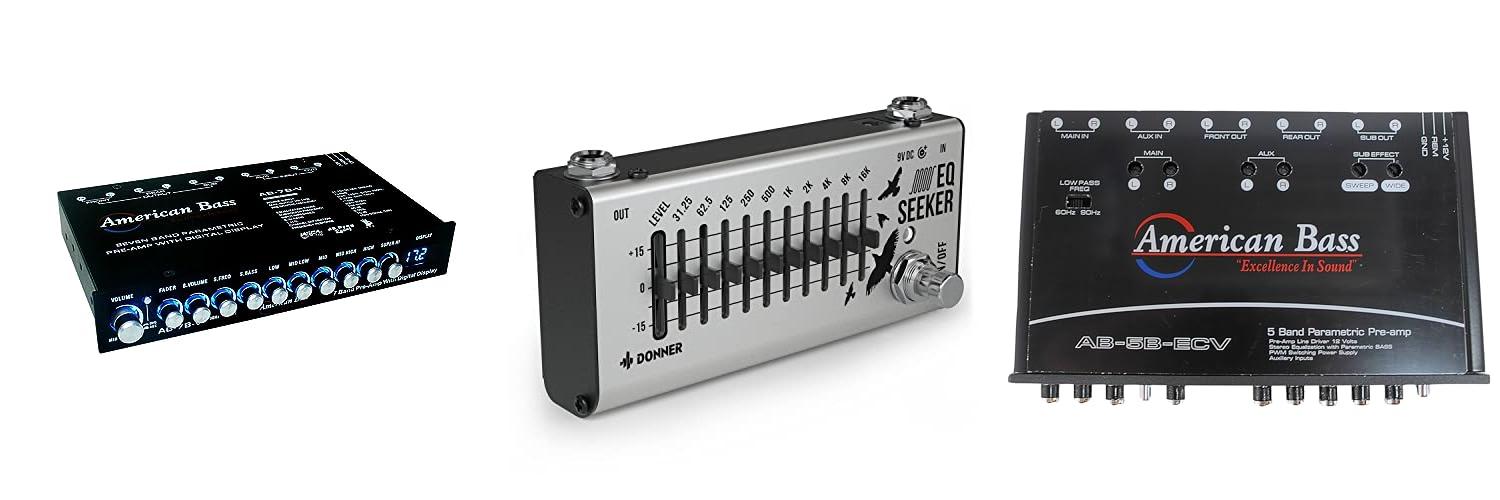
Our Top 5 Equalizer Settings For Bass Recommendations at a Glance
Top 5 Equalizer Settings For Bass Detailed Reviews
1. American Bass High End 7 Band Equalizer Voltage Display

Rating: 8.8/10
Take control of your car’s sound with the American Bass High End 7 Band Equalizer Voltage Display. This device lets you fine-tune your audio experience. You can adjust seven different sound frequencies to get the perfect balance. It also shows you the voltage of your car’s electrical system. This helps you make sure everything is running smoothly.
What We Like:
- It offers precise control over your music with seven adjustable frequency steps: 50Hz, 125Hz, 315Hz, 750Hz, 2.2KHz, 6KHz, and 12KHz.
- You get a powerful 7 V preamp output for a strong signal to your amplifiers.
- It comes with two RCA inputs, so you can connect multiple audio sources.
- A fader control lets you adjust the sound balance between the front and rear speakers.
- The dedicated sub frequency control (30-300Hz) and volume control allow you to easily manage your bass.
- The built-in voltage display keeps you informed about your car’s power supply.
- Its compact dimensions (9″L x 8″W x 2″H) make it easy to install in most car dashboards.
What Could Be Improved:
- Some users might find the extensive frequency options a bit overwhelming at first.
- While the voltage display is useful, it doesn’t offer detailed diagnostics.
This equalizer is a fantastic tool for any music lover who wants to customize their car audio. It delivers excellent sound shaping and practical features for a better listening experience.
2. Donner EQ Pedal

Rating: 9.0/10
The Donner EQ Pedal, 10 Band Equalizer Pedal, EQ Seeker for Guitar and Bass True Bypass is a fantastic tool for any musician. This compact pedal fits easily on your pedalboard. It works well for all kinds of music. The EQ Seeker uses good parts to make sure your sound is great and the pedal lasts a long time on stage.
What We Like:
- It’s a superior EQ pedal that fits easily on your pedalboard.
- It is suitable for any music style and works with any instrument.
- It has 10 bands of EQ so you can shape your sound precisely.
- Each band can be adjusted by 15 dB up or down, giving you a lot of control.
- The pedal is made of strong aluminum alloy, making it very durable.
- It has a true bypass feature, which means your guitar’s original sound stays clear and strong when the pedal is off.
- It doesn’t add any unwanted noise like popping or buzzing.
What Could Be Improved:
- The power adapter is not included with the pedal.
This Donner EQ pedal offers excellent sound control and durability for guitarists and bassists. It’s a valuable addition to any player’s setup.
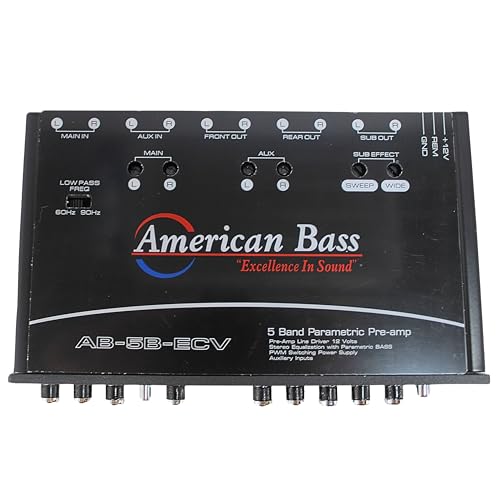
3. American Bass 5 Band Equalizer with Built in Voltmeter Digital Display AB-5B-ECV
Rating: 8.7/10
Get ready to take your car’s sound system to the next level with the American Bass 5 Band Equalizer AB-5B-ECV. This awesome gadget gives you total control over your music. It even has a cool digital display that shows you the voltage. Plus, it has a strong 7V line driver to make your audio sound its best.
What We Like:
- You can really fine-tune your sound. It has five bands to adjust.
- You can boost or cut the sound by 12dB. This gives you lots of flexibility.
- It helps you get the perfect bass. There’s a special control for the subwoofer.
- It’s easy to connect to your amps. It has three stereo RCA outputs.
- The digital voltmeter is a neat feature. It shows you the voltage in real-time.
- It handles a wide range of sound frequencies. It goes from 10Hz to 50KHz.
What Could Be Improved:
- The instructions could be clearer for beginners.
- The digital display could be brighter for daytime viewing.
This equalizer is a fantastic tool for any car audio enthusiast. It offers great control and impressive sound quality.
4. BOSS GEB-7 Seven-Band Graphic Bass Equalizer Guitar Pedal

Rating: 9.4/10
The BOSS GEB-7 Seven-Band Graphic Bass Equalizer is a powerful tool for bass players. It lets you shape your sound with seven different frequency bands. This means you can tweak your bass tone to fit any song or style. It works great for all kinds of basses, even those with extra strings. It’s also a good choice for acoustic basses. The pedal has a special knob that lets you make your sound louder or quieter.
What We Like:
- It has a full range of sound control, so it works well with five- and six-string basses.
- It’s a great option for electric-acoustic bass guitars.
- The level control knob lets you easily boost or cut your sound.
- It’s a very versatile pedal for bassists.
What Could Be Improved:
- Some users might find the seven bands a bit overwhelming at first.
- It would be nice if it had more advanced features for super-detailed sound sculpting.
Overall, the BOSS GEB-7 is a solid and reliable equalizer pedal. It gives bassists the control they need to dial in their perfect tone.
5. Dopro Pre-wired 3 Band Active & Passive EQ Equalizer Electric Bass Preamp Circuit

Rating: 9.5/10
Upgrade your electric bass with the Dopro Pre-wired 3 Band Active & Passive EQ Equalizer Electric Bass Preamp Circuit. This high-quality preamp lets you fine-tune your sound with precision. It offers control over volume, bass, middle, and treble frequencies. You can boost or cut your bass at 80Hz, your mids at 900Hz, and your treble across a wider range from 3-7KHz. This circuit is designed for both active and passive pickups, giving you flexibility. It’s a step up from cheaper options, made with better quality components.
What We Like:
- Offers versatile tone shaping with 3-band EQ.
- Works with both active and passive bass pickups.
- Includes separate controls for volume, bass, middle, and treble.
- Crafted with high-quality components for better sound.
- Pre-wired for easier installation.
What Could Be Improved:
- Installation might require some technical knowledge; professional help is recommended for beginners.
- Specific wiring instructions for P1, P2, and GND are provided, but a diagram would be helpful for some users.
This Dopro preamp is a fantastic way to enhance your bass guitar’s sonic capabilities. It provides the tools to sculpt your ideal tone for any musical style.
Your Guide to Awesome Bass Equalizer Settings
Want your music to thump? Getting the right bass sound is key. An equalizer (EQ) helps you do just that. It lets you boost or cut different sound frequencies. This guide will help you choose and use EQ settings for amazing bass.
Key Features to Look For
When you’re looking for an EQ, think about these things:
- Number of Bands: More bands mean more control. A simple EQ might have 3 bands (bass, mid, treble). A pro EQ can have 10 or even 31 bands. For bass, having dedicated low-frequency bands is super helpful.
- Frequency Range: Make sure the EQ covers the low frequencies where bass lives (around 20 Hz to 200 Hz). Some EQs let you adjust the exact frequencies.
- Boost/Cut Amount: How much can you make the bass louder or quieter? Look for EQs that offer a good range, like +/- 12 dB or more.
- Q Factor (Bandwidth): This controls how wide or narrow the EQ band is. A narrow Q affects only a small range of frequencies. A wide Q affects a broader range. For bass, you might want a wider Q to shape the overall warmth.
- Bypass Function: This lets you quickly turn the EQ on and off. It’s great for comparing your changes.
- Presets: Some EQs come with pre-set EQs for different music styles. These are good starting points.
Important Materials
For physical EQs (like those in stereos or guitar amps), the materials matter for durability and sound quality.
- Metal Casing: A sturdy metal case protects the electronics inside and often feels more premium.
- Quality Potentiometers (Knobs): Smooth, precise knobs give you better control. Cheap plastic knobs can feel loose or jumpy.
- Internal Components: Good quality capacitors and resistors inside the EQ can lead to cleaner sound.
Factors That Improve or Reduce Quality
Several things make your EQ sound better or worse.
- Improves Quality:
- Clean Power Supply: A stable power source prevents humming or buzzing.
- Good Circuit Design: A well-designed EQ circuit minimizes unwanted noise.
- High-Quality Components: Better parts inside mean clearer sound.
- Reduces Quality:
- Noisy Components: Cheap parts can add hiss or hum to your audio.
- Overdriving the Signal: Pushing the EQ too hard can cause distortion.
- Poor Grounding: This can lead to annoying electrical interference.
User Experience and Use Cases
How you use your EQ depends on what you’re doing.
- Home Stereo/Computer Speakers: You can adjust bass to make music sound fuller or to match your room’s acoustics. If your speakers lack deep bass, an EQ can help.
- Car Audio: Car interiors can make bass sound muddy or weak. An EQ lets you fix this. You can make the bass punchy for hip-hop or smooth for rock.
- Live Music (Guitar Amps/PA Systems): Musicians use EQs to shape their instrument’s tone. For bass guitar, you can boost low-end for warmth or cut muddy mids.
- Headphones: Some headphones have weak bass. An EQ can boost it for a more exciting listening experience.
- Gaming: You might want to boost bass for explosions and action sounds to feel more immersed.
Frequently Asked Questions (FAQ)**
Q: What are the main Key Features to look for in an EQ for bass?
A: Look for EQs with dedicated low-frequency bands, a good range of boost/cut, and adjustable Q factors for precise control over the bass frequencies.
Q: How do materials affect EQ quality?
A: Sturdy metal casings and quality knobs improve durability and user experience. High-quality internal components lead to cleaner sound reproduction.
Q: What factors can make my EQ sound worse?
A: Cheap internal components can add noise. Overdriving the EQ or poor grounding can also reduce sound quality and introduce unwanted hums.
Q: What is a good starting EQ setting for general music listening?
A: Try a slight boost around 60-100 Hz for warmth. You might also want to cut frequencies around 200-400 Hz if the bass sounds muddy.
Q: How can I make my bass sound punchier?
A: Boost frequencies between 80-150 Hz. You can also try a slight cut around 200-300 Hz to clean up the low-mids.
Q: What if my bass sounds too boomy or muddy?
A: Try cutting frequencies between 100-250 Hz. A narrow Q factor can help you pinpoint and reduce the muddy frequencies precisely.
Q: Can I use an EQ to make small speakers sound like they have more bass?
A: Yes, an EQ can boost the existing bass frequencies. However, it cannot create bass that isn’t physically there. Don’t boost too much, or you’ll get distortion.
Q: How do I adjust EQ for different genres of music?
A: For hip-hop and electronic music, you might want more sub-bass (boost around 40-80 Hz). For rock, you might want more mid-bass punch (boost around 100-200 Hz).
Q: What is the bypass function on an EQ for?
A: The bypass function lets you instantly switch the EQ on and off. This helps you compare the sound with and without the EQ applied, so you can hear if your adjustments are improving the sound.
Q: Where can I find EQ settings for my specific headphones or speakers?
A: Many headphone and speaker manufacturers offer recommended EQ settings on their websites. Online forums and audio enthusiast communities are also great resources for shared EQ profiles.
In conclusion, every product has unique features and benefits. We hope this review helps you decide if it meets your needs. An informed choice ensures the best experience.
If you have any questions or feedback, please share them in the comments. Your input helps everyone. Thank you for reading.