
A car sounding like a lawn mower typically points to issues with the exhaust system, engine misfires, or problems with the engine’s internal components. What is causing this unusual noise? This blog post will break down the common culprits behind this distinct, often irritating, vehicle sound.
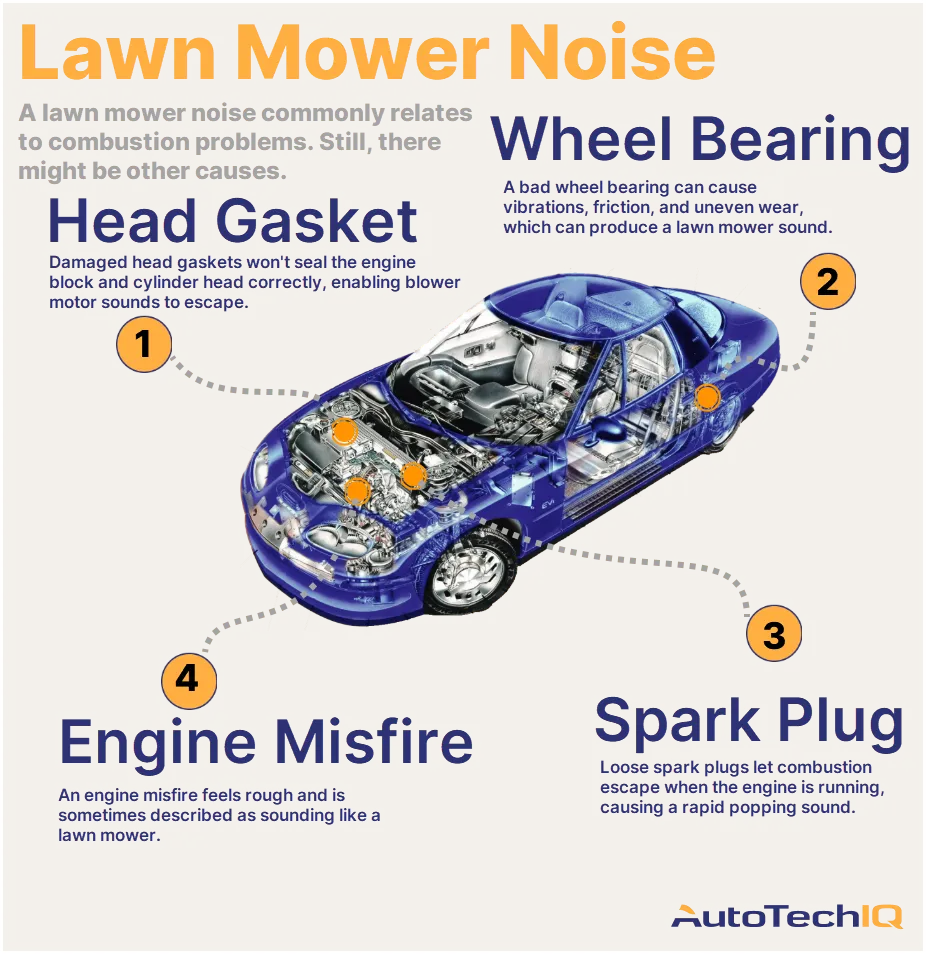
Image Source: www.autotechiq.com
Deciphering the Rattle: Common Causes of Lawn Mower Sounds
That unmistakable sputtering, rattling, or roaring sound that mimics a lawn mower can be unsettling. It’s your car’s way of telling you something isn’t quite right. This noise isn’t usually a single issue but rather a symptom of several potential problems. Let’s dive into the most frequent reasons your car might be sounding more like a garden tool than a finely tuned machine.
Exhaust System Woes: The Primary Suspects
The exhaust system is a complex network of pipes, catalytic converters, mufflers, and resonators that manage and quiet the engine’s exhaust gases. Any breach or damage in this system can lead to a significant change in sound, often resulting in that lawn mower-like drone.
The Culprit: Exhaust Leak
An exhaust leak is perhaps the most common reason for a car to sound like a lawn mower. This happens when there’s a hole or crack in any part of the exhaust piping, from the exhaust manifold (where gases exit the engine) all the way to the tailpipe.
- How it happens: Exhaust gases are under high pressure. When they escape through a leak before reaching the muffler, they create a loud, puffing, or sputtering sound. This sound is often most noticeable when you accelerate.
- Locations of leaks:
- Cracked exhaust manifold: The manifold is directly attached to the engine block. Cracks can form due to heat cycles and vibration.
- Leaky exhaust gaskets: These seals between exhaust components can degrade over time.
- Holes in exhaust pipes: Rust and road debris can cause holes to form.
- Loose or damaged exhaust hangers: These support the exhaust system. If they break, the pipes can sag and rub, potentially creating leaks or other noises.
- Why it sounds like a lawn mower: The un-muffled, high-pressure gases escaping create a rough, unrefined sound, much like an old, struggling lawn mower engine.
Muffler Damage: Silencing the Roar
The muffler’s primary job is to reduce the noise produced by the engine. If the muffler itself is damaged, its ability to quiet the exhaust is compromised.
- What goes wrong:
- Internal baffles rusted out: Mufflers have internal chambers and baffles to absorb sound waves. If these rust and break apart, they can rattle or fall loose, allowing more noise to escape.
- Perforations in the muffler casing: Rust can create holes in the outer shell of the muffler.
- Loose or broken muffler hangers: Similar to exhaust pipes, a sagging muffler can cause additional stress and potential damage.
- The resulting sound: A damaged muffler often produces a louder, deeper, and more continuous droning or rumbling sound, which can easily be mistaken for a lawn mower.
Catalytic Converter Failure: More Than Just a Sound
The catalytic converter is a vital part of the exhaust system that converts harmful pollutants into less harmful gases. However, when it fails, it can also create a distinct sound.
- What happens when it fails:
- Clogged converter: The internal honeycomb structure can break apart or become clogged with carbon deposits. This restricts exhaust flow, leading to a loss of power and a sputtering sound.
- Loose ceramic substrate: The precious metals that facilitate the chemical reaction are coated on a ceramic honeycomb. If this ceramic breaks, the loose pieces can rattle inside the converter.
- The sound profile: A failing catalytic converter might produce a rattling sound, especially on acceleration, or a muffled, restrictive sound if it’s clogged. While not always a direct lawn mower sound, the restricted exhaust can contribute to a rougher, louder exhaust note.
Engine Misfires: The Heart of the Problem
An engine misfire occurs when one or more cylinders fail to combust the fuel-air mixture properly. This can lead to a variety of sounds, including a rough idle and a distinct sputtering or popping noise that can resemble a lawn mower.
- How a misfire happens:
- Ignition problems: Worn spark plugs, faulty spark plug wires, or a bad ignition coil can prevent a proper spark.
- Fuel delivery issues: Clogged fuel injectors or a weak fuel pump can mean the cylinder isn’t getting enough fuel.
- Air intake problems: Vacuum leaks or clogged air filters can disrupt the air-fuel ratio.
- Mechanical issues: Low compression in a cylinder due to worn piston rings or valves can also cause misfires.
- The auditory evidence: When a cylinder misses a combustion cycle, the exhaust stroke from that cylinder still occurs, but without the controlled explosion. This unburnt or partially burnt fuel can enter the exhaust system and create a popping or backfiring sound, which, when combined with other exhaust noises, can sound very much like a lawn mower.
Piston Slap: A Mechanical Grumble
Piston slap is a mechanical issue where the piston moves side-to-side within the cylinder bore more than it should. This usually happens when the engine is cold.
- Why it occurs:
- Worn pistons or cylinder walls: Over time, the piston skirts and cylinder walls can wear down, increasing the clearance between them.
- Incorrect piston size: If pistons were replaced and are not the correct size for the cylinders, this can happen.
- The sound: Piston slap typically creates a knocking or slapping sound that is most pronounced when the engine is cold and may quiet down as the engine warms up and the metal expands. While not a direct lawn mower sound, this internal engine noise can contribute to an overall rougher, louder engine operation.
Valve Train Noise: The Rhythmic Ticking
The valve train consists of components like lifters, pushrods, rocker arms, and valves, all working in sync to control the flow of air and fuel into the cylinders and exhaust gases out. Issues here can create a distinct sound.
- Common valve train problems:
- Worn lifters: Hydraulic lifters can fail to pump up properly, leading to excessive clearance between the lifter and the camshaft or rocker arm.
- Loose rocker arms: The adjustment nuts on rocker arms can loosen over time.
- Worn camshaft lobes: The shape of the camshaft lobes can wear down, affecting valve timing.
- The sound: Valve train noise often manifests as a ticking or clattering sound, usually more noticeable at the top of the engine. While typically a distinct tick, if it’s severe or combined with other issues, it can contribute to a rougher overall engine sound.
Belt Squeal: A High-Pitched Distress Call
While not directly a lawn mower sound, a worn or misaligned drive belt can produce a high-pitched squeal that, when coupled with other engine noises, can add to the overall cacophony.
- What causes belt squeal:
- Worn or glazed belt: The rubber on the belt can become smooth and hard, losing its grip on the pulleys.
- Misaligned pulleys: If a pulley isn’t perfectly aligned, it can cause the belt to slip and squeal.
- Tensioner issues: A faulty belt tensioner might not keep the belt tight enough, leading to slippage.
- Contamination: Oil or coolant on the belt can also cause it to slip and squeal.
- The sound: This is usually a sharp, high-pitched squeal, often heard on startup or when turning the steering wheel (which engages the power steering pump, putting more load on the belt).
Bearing Failure: A Grinding Complaint
A failing bearing, whether in a pulley, alternator, water pump, or even within the engine itself, can produce a variety of sounds.
- Types of bearings: Pulleys for accessory belts, wheel bearings, and internal engine bearings (like rod bearings or main bearings) are all susceptible to wear.
- The sound of failure:
- Pulley/Accessory bearing: Often a grinding or rumbling sound, sometimes accompanied by a squeal. If the bearing is severely damaged, it might make a chattering noise.
- Wheel bearing: Typically a humming or grinding noise that gets louder with speed and often changes when turning.
- Internal engine bearing: Can produce a deep knocking or grinding sound, indicative of very serious engine trouble.
- Lawn mower connection: While not a direct lawn mower sound, a failing bearing that causes a pulley to seize or wobble could put extra strain on the belt system and contribute to unusual engine noises.
Loose Heat Shield: The Rattling Menace
Heat shields are metal plates designed to protect components from the high temperatures of the exhaust system. They are often attached with bolts or clips that can loosen or rust over time.
- How it leads to noise: When a heat shield becomes loose, it can vibrate against the exhaust pipes or other parts of the car body. This vibration often produces a metallic rattling or buzzing sound, particularly at certain engine speeds or on rough roads.
- The lawn mower link: The resonant rattling of a loose heat shield, especially when the engine is also running rough due to another issue, can add to the overall noisy impression and contribute to the perception of a lawn mower sound.
Pinpointing the Noise: Diagnostic Steps
When you hear that lawn mower sound, the first step is to try and isolate where the sound is coming from and under what conditions it occurs.
Listening Carefully: Where and When?
- Engine Start-up: Does the sound appear immediately when you start the car?
- Acceleration: Is it worse when you press the gas pedal?
- Deceleration: Does it change when you let off the gas?
- Idling: Is the sound consistent when the car is stopped but the engine is running?
- Turning: Does the sound change when you turn the steering wheel?
- Cold vs. Hot Engine: Is the noise more pronounced when the engine is cold?
Visual Inspection: A Look Under the Hood and Car
If you are comfortable doing so, a quick visual inspection can sometimes reveal obvious problems.
- Exhaust System: Look for any obvious rust holes, loose connections, or hanging components.
- Belts: Check the drive belts for cracks, fraying, or signs of glazing.
- Under the Car: With the car safely elevated, check for any loose heat shields or components dangling from the undercarriage.
Professional Diagnosis: When to Call in the Experts
For most people, the complex nature of car engines and exhaust systems means professional help is the most reliable way to diagnose and fix the issue. A qualified mechanic has the tools and experience to accurately identify the source of the sound.
- Listening Devices: Mechanics use specialized stethoscopes to pinpoint the exact location of noises within the engine or exhaust.
- Scan Tools: Diagnostic tools can read error codes from the engine control module (ECM), which can indicate specific problems like an engine misfire or issues with the emissions system.
- Exhaust Gas Analyzer: This can help detect leaks or problems with the catalytic converter.
Common Scenarios and Their Sounds
Let’s break down how different issues can combine to create that “lawn mower” sound.
| Potential Cause | Primary Sound | Contributing Factors / Other Sounds | Lawn Mower Similarity |
|---|---|---|---|
| Exhaust Leak | Loud puffing, sputtering, or roaring | Leaks at manifold, pipe, or gasket; louder on acceleration | Unmuffled exhaust gases escaping create a rough, unrefined noise. |
| Muffler Damage | Deep, continuous drone or rumble | Internal baffles rusted, holes in casing; louder exhaust note | Similar to a struggling, old engine with a compromised silencing system. |
| Engine Misfire | Rough idle, sputtering, popping, backfiring | Faulty spark plugs, coils, injectors; uneven engine performance | Inconsistent combustion creates a choppy, uneven sound that can mimic a failing engine. |
| Catalytic Converter Failure | Rattling (loose substrate), restricted drone (clogged) | Restricted exhaust flow, potential loss of power | A clogged converter can create a muffled, struggling sound. |
| Loose Heat Shield | Metallic rattling or buzzing | Vibrations against exhaust or bodywork; often speed-dependent | Can add a metallic resonance to an already rough engine sound. |
| Worn Piston Rings/Cylinder Walls | Piston Slap (knocking when cold) | Increased clearance; noise may decrease as engine warms up | Internal engine roughness contributing to overall unrefined sound. |
| Valve Train Issues | Ticking or clattering (usually top of engine) | Worn lifters, loose rocker arms | Can contribute to a rougher idle, but usually distinct from a lawn mower sound. |
| Failing Accessory Bearing | Grinding or rumbling (from pulley location) | Worn bearing in alternator, idler pulley, etc. | Can create an additional unpleasant noise layer. |
Can I Drive My Car If It Sounds Like a Lawn Mower?
In most cases, driving a car that sounds like a lawn mower is not advisable, especially if the issue is related to the exhaust or engine misfires.
- Exhaust Leaks: While small leaks might seem minor, they can allow toxic exhaust fumes into the cabin, posing a health risk. Larger leaks can also affect engine performance.
- Engine Misfires: Ignoring engine misfires can lead to further damage to the engine, catalytic converter, and other components. It also significantly reduces fuel efficiency and can cause the car to stall.
- Catalytic Converter Failure: Driving with a severely clogged catalytic converter can cause the engine to overheat and potentially fail.
It’s best to address the issue promptly to prevent further damage and ensure your safety.
Frequently Asked Questions (FAQ)
What is engine knocking?
Engine knocking, also known as detonation or pinging, is a sharp, metallic sound that occurs when the fuel-air mixture in one or more cylinders ignites prematurely or uncontrollably. This can be caused by low octane fuel, excessive carbon buildup, or an incorrect ignition timing. While distinct from a lawn mower sound, severe engine issues could exacerbate overall noise.
Can a loose heat shield cause a lawn mower sound?
A loose heat shield typically produces a metallic rattling or buzzing sound, especially at certain engine speeds or when going over bumps. While not a direct lawn mower sound on its own, it can contribute to an overall rough and noisy experience, potentially making the engine sound rougher.
What does a catalytic converter failure sound like?
A failing catalytic converter can make various noises. If the internal ceramic honeycomb is broken, it might rattle, especially on acceleration. If it’s clogged, it can restrict exhaust flow, leading to a muffled, struggling engine sound and loss of power.
If my car has an engine misfire, will it sound like a lawn mower?
An engine misfire causes uneven combustion, leading to sputtering, popping, or a rough idle. When combined with exhaust leaks or muffler issues, this uneven firing can indeed contribute to a sound reminiscent of a lawn mower.
Is bearing failure related to lawn mower sounds?
Bearing failure, particularly in accessory pulleys driven by the serpentine belt, can cause grinding or rumbling noises. If a bearing seizes, it could put abnormal stress on the belt or other components, indirectly contributing to unusual engine sounds.
What is piston slap and how does it sound?
Piston slap is a mechanical noise caused by excessive clearance between the piston and cylinder wall, resulting in a knocking sound, often most noticeable when the engine is cold. This internal engine noise can make the engine sound rougher and louder.
What does valve train noise sound like?
Valve train noise usually manifests as a ticking or clattering sound originating from the top of the engine. It’s caused by worn or improperly adjusted components like lifters, rocker arms, or valves.
My car is making a loud noise from the exhaust. What is muffler damage?
Muffler damage refers to a problem with the muffler, which is designed to quiet the engine’s exhaust. If the internal baffles are rusted or the muffler casing is breached, it will produce a louder, rougher exhaust note, often described as a drone or rumble.
What is an exhaust leak?
An exhaust leak is a hole or crack in the exhaust system that allows gases to escape before they reach the muffler or tailpipe. This escape of high-pressure gases creates a loud, sputtering, or puffing sound, commonly heard during acceleration.
Conclusion: Silence the Racket
Hearing your car sound like a lawn mower is a clear signal that something needs attention. The most likely culprits lie within the exhaust system – leaks, damaged mufflers, or failing catalytic converters – or stem from internal engine issues like misfires. Regular maintenance, paying attention to unusual sounds, and seeking professional diagnosis promptly will help keep your car running smoothly and quietly. Don’t ignore that lawn mower sound; it’s your car asking for a tune-up!