
Can a key fob be reprogrammed for another car? Generally, no, a key fob cannot be reprogrammed for just any other car; it needs to be compatible with the specific make, model, and year of the vehicle it’s intended for. While the idea of a universal car key is appealing, especially when you need a key fob replacement or are looking for aftermarket car keys, the reality of car key programming is more complex. This guide will delve into the intricacies of key fob cloning, key fob duplication, and vehicle key reprogramming to shed light on this common automotive question.
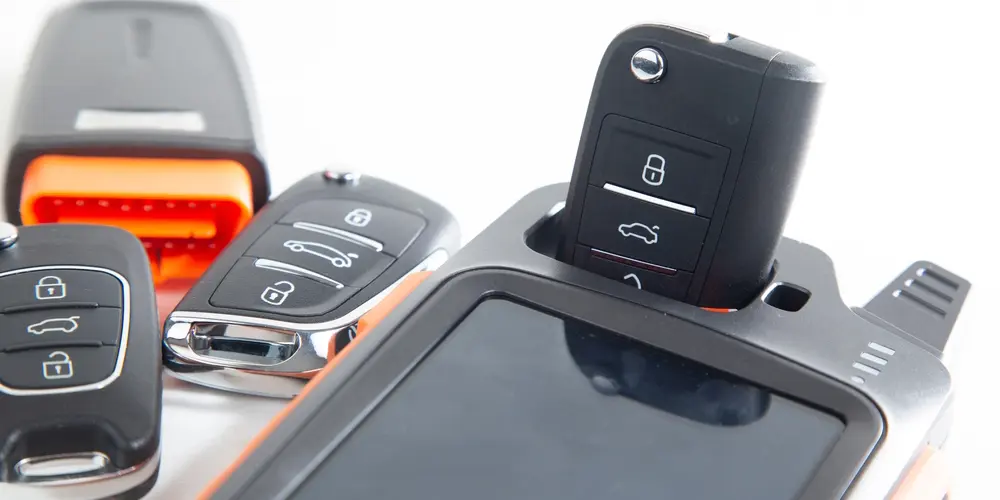
Image Source: unitedlocksmith.net
The Inner Workings of a Modern Car Key Fob
Modern car key fobs are more than just simple buttons. They are sophisticated pieces of technology that communicate wirelessly with your car’s immobilizer system and central locking mechanism. This communication is secured through unique codes and frequencies, often encrypted.
Components of a Key Fob
- Transmitter: This is the part that sends the signal to your car. It contains a small circuit board and a battery.
- Buttons: These activate the transmitter to send specific commands (lock, unlock, trunk release, panic).
- Immobilizer Chip (Transponder Chip): In most modern vehicles, the key fob also contains a transponder chip. This chip has a unique identification code that the car’s engine control unit (ECU) needs to recognize before it will allow the engine to start. This is a critical aspect of transponder key programming.
- Battery: Powers the electronic components within the fob.
How Key Fobs Communicate with Cars
When you press a button on your key fob, it sends a radio frequency (RF) signal. Your car’s receiver picks up this signal. The car then decodes the signal and, if the code is recognized as valid for that specific vehicle, it will execute the requested action (e.g., unlock the doors). The transponder chip works differently; it passively communicates with an antenna in the car’s ignition cylinder or dashboard. The car powers the chip via a magnetic field, and the chip transmits its unique ID back to the car.
Why a Direct Reprogramming to Any Car Isn’t Possible
The primary reason you can’t simply reprogram any key fob for any car lies in the security and unique coding systems employed by manufacturers.
Vehicle-Specific Programming
Each car manufacturer, and often each model and year, uses specific frequencies, protocols, and rolling codes for their key fobs.
- Frequency: Key fobs operate on different radio frequencies (e.g., 315 MHz, 433 MHz). A fob designed for a 315 MHz system will not communicate with a car expecting a 433 MHz signal.
- Protocol: The way the fob’s signal is structured and interpreted by the car is also unique. Think of it like different languages; even if the frequency is the same, if the “language” of the code is different, the car won’t understand.
- Rolling Codes: Many modern fobs use rolling codes, also known as hopping codes. Each time you press a button, the fob sends a new, unique code. The car’s receiver keeps track of the sequence, so a previously used code is rejected for security reasons. This prevents “replay attacks” where someone could record your fob’s signal and use it later.
- Immobilizer Matching: The transponder chip’s ID must be registered with the car’s immobilizer system. Without this specific match, the car’s ECU will not permit the engine to start, even if the doors unlock.
Key Fob Cloning vs. Key Fob Duplication
It’s important to differentiate between key fob cloning and key fob duplication.
- Key Fob Cloning: This process involves reading the unique data from an existing, working key fob and copying it onto a blank, programmable fob. This is essentially creating an exact replica. However, this is typically only effective for older systems that use fixed codes (not rolling codes) and for the remote unlock/lock functions, not usually for the transponder immobilizer chip itself unless the blank fob is also programmed with the correct transponder data.
- Key Fob Duplication: This term can sometimes be used interchangeably with cloning. However, in a broader sense, it can also refer to the process of programming a new fob (either a manufacturer-original or a compatible aftermarket one) to a vehicle, which involves registering its unique code with the car’s system.
When Reprogramming or Duplication is Possible: Compatible Fobs
While you can’t reprogram a fob for any car, it is often possible to get a new key fob for your car or even use certain compatible aftermarket car keys and program them.
Using a Manufacturer-Original Fob for Your Car
If you have a working key fob for your car, you can often get a new, original manufacturer fob programmed to work with your vehicle. This process is typically referred to as vehicle key reprogramming or car key programming. The new fob’s unique ID will be added to the car’s list of authorized keys.
Compatible Aftermarket Fobs
The market for aftermarket car keys and fobs has grown significantly. Many companies produce fobs that are designed to be compatible with specific makes and models. These fobs are engineered to mimic the original fobs’ frequencies, protocols, and even their transponder chip types.
Table 1: Factors Affecting Aftermarket Key Fob Compatibility
| Factor | Description | Impact on Compatibility |
|---|---|---|
| Frequency | The radio frequency the fob operates on (e.g., 315 MHz, 433 MHz). | Must match the car’s receiver frequency. |
| Chip Type | The specific type of transponder chip used (e.g., Texas Instruments, Philips, Megamos). | Must be compatible with the car’s immobilizer system for the engine to start. |
| Protocol | The communication language or data structure used by the fob and car. | Determines if the car can correctly interpret the fob’s signals for locking, unlocking, etc. |
| FCC ID | The Federal Communications Commission Identification number, unique to each approved transmitter. | While not directly about compatibility with a specific car, it indicates regulatory compliance and can sometimes hint at similar technologies. |
| Button Layout | The number and arrangement of buttons on the fob. | Primarily cosmetic, but must align with the car’s features (e.g., a 4-button fob for a car with only lock/unlock/trunk). |
| Rolling Code | Whether the fob uses a fixed code or a rolling code system. | Older systems with fixed codes are easier to clone. Rolling code systems require a more sophisticated programming process. |
What About a Universal Car Key Fob?
The concept of a truly universal car key that can be programmed to any car is largely a myth for modern vehicles. While some universal fobs exist, they typically require specific programming for a limited range of vehicles or models. They are not a “one-size-fits-all” solution. They usually work by being programmed with the correct data for a specific car during the automotive key programming process.
The Process of Key Fob Reprogramming and Duplication
If you need a new key fob, either a replacement for a lost one or an additional one, the process usually involves specialized equipment and procedures.
Methods for Car Key Programming
There are generally three ways to get a key fob programmed:
- Dealership: The most straightforward but often the most expensive option. Dealerships have the original manufacturer’s equipment and software to program new key fobs accurately. They can usually handle both original manufacturer fobs and sometimes specific OEM-approved aftermarket ones.
- Automotive Locksmiths: Many locksmiths specializing in automotive services have invested in the same programming equipment as dealerships. They are often more affordable and can be more convenient, as they may offer mobile services. They are proficient in key fob replacement, key fob duplication, and transponder key programming.
- DIY Programming (Limited Cases): For some older vehicles, manufacturers built in a self-programming feature. This usually involves a specific sequence of turning the ignition on and off, inserting and removing a working key, and pressing buttons on the new fob. However, this method is becoming increasingly rare for modern cars due to advanced security systems. Always check your car’s manual or reputable online resources to see if your specific vehicle supports DIY programming.
The Programming Procedure (General Steps)
While the exact steps vary greatly depending on the car’s make and model, a typical car key programming session might involve:
- Connecting to the Vehicle’s OBD-II Port: A diagnostic tool is plugged into the On-Board Diagnostics (OBD-II) port, usually located under the dashboard.
- Selecting the Vehicle and Key Type: The technician or locksmith uses the diagnostic tool’s software to select the car’s make, model, and year, and specifies whether they are programming a new fob, replacing a lost key, or cloning an existing one.
- Reading Existing Key Data: The system may read the immobilizer codes from the car’s ECU.
- Registering the New Fob: The new key fob (or the blank fob to be programmed) is brought near the car’s ignition or security antenna. The technician follows on-screen prompts, which might involve pressing buttons on the new fob or inserting it into a specific slot.
- Confirmation: The system will usually confirm if the programming was successful. The new fob should now be able to lock/unlock the doors and start the engine (if it’s a transponder key).
- Testing: The programmed key fob is tested to ensure all functions work correctly.
Table 2: Key Fob Programming Costs (Estimated)
| Service Provider | Estimated Cost Range (USD) | Notes |
|---|---|---|
| Dealership | $100 – $300+ | Highest cost, most reliable for specific OEM parts and software updates. May include programming multiple keys at once. |
| Automotive Locksmith | $75 – $200 | Generally more affordable, convenient, and often offers mobile service. Quality of aftermarket fobs can vary. |
| DIY (If Applicable) | $10 – $50 (for blank fob) | Only for older vehicles with self-programming capabilities. Cost is for the blank fob, not the programming itself. Requires careful execution. |
What Happens During Key Fob Cloning?
Key fob cloning involves using a specialized cloning device.
- Reading the Original Fob: The working key fob is placed on the reader of the cloning device. The device reads the fixed code or rolling code data from the fob.
- Preparing a Compatible Blank: A blank fob that is compatible with the car’s frequency and protocol is prepared. This blank fob often has a programmable chip that can receive the cloned data.
- Writing Data to the Blank: The cloned data is then written onto the chip of the blank fob.
- Testing: The cloned fob is tested to see if it operates the car’s locks and, if applicable, starts the engine.
Important Note on Cloning: Cloning typically only works for the remote entry functions (lock/unlock) on older vehicles with fixed codes. For vehicles with rolling codes or transponder immobilizer chips, cloning is either impossible or requires much more advanced and specialized equipment that can mimic the car’s rolling code sequence. It’s crucial to ensure the blank fob is indeed compatible with your specific vehicle’s transponder chip type and the car’s security system.
Why Some Key Fobs Can’t Be Reprogrammed
Even for the same car model, there can be instances where a key fob cannot be reprogrammed.
Different Hardware Revisions
Manufacturers sometimes update the internal hardware of their key fobs, even within the same model year. A fob designed for an early production run might not be compatible with a later one due to changes in the internal components or communication chips.
Immobilizer System Variations
The immobilizer system itself can be complex. If a key fob’s transponder chip is not the exact type or has a different security protocol than what the car’s ECU is expecting, it will not be recognized. This is a common issue when trying to use generic or incorrectly sourced aftermarket car keys.
Programming Limits
Some car models have a limit on the number of key fobs that can be programmed to the vehicle. If you’ve reached this limit, you might need to erase an old key’s data to make room for a new one.
Damaged Fobs or Car Systems
If the original key fob is significantly damaged, its data might be corrupted, making cloning or reprogramming difficult or impossible. Similarly, if the car’s receiver or immobilizer system has a fault, it might prevent new key fobs from being programmed.
Replacing Lost or Broken Key Fobs
When you lose a key fob or it breaks, you have several options:
Obtaining a Replacement
- Manufacturer-Original Fob: The safest bet for guaranteed compatibility. You’ll need your car’s VIN and proof of ownership.
- Compatible Aftermarket Fob: Often a more budget-friendly option. Ensure the seller explicitly states it’s compatible with your car’s make, model, and year. Look for reputable sellers that offer guarantees.
- Used Fobs: While sometimes an option, buying used fobs can be risky. If the fob was not properly cleared of its previous vehicle’s programming, it might not work, or worse, could cause issues. Reputable locksmiths can often reprogram used fobs if they are compatible.
The Importance of Having a Spare Key
It’s highly recommended to have at least two working key fobs for your vehicle. If you lose one, you still have a backup that can be used to program a replacement. Losing your only key fob can be a very costly and time-consuming ordeal, especially if your car is towed to a dealership.
Frequently Asked Questions (FAQ)
Q1: Can I program a key fob from a different brand of car to my car?
A1: No, you cannot program a key fob from a different brand of car to your car. Key fob systems are brand-specific due to proprietary frequencies, protocols, and security encryption.
Q2: If I buy a used key fob from eBay, can I program it to my car?
A2: It depends. If the used fob is for the exact same make, model, and year of your car, and if it has been properly “reset” or “cleared” of its previous vehicle’s programming, it might be possible. However, many used fobs cannot be reset and will not program to a new vehicle. It’s often best to purchase new or specifically refurbished fobs from reputable sources.
Q3: What is key fob cloning?
A3: Key fob cloning is the process of copying the unique signal or data from an existing, working key fob onto a blank, programmable fob. This is usually for the remote entry functions on older cars and is less effective for modern cars with rolling codes or integrated transponder security.
Q4: How much does it cost to reprogram a car key fob?
A4: The cost varies depending on the service provider and the complexity of the vehicle’s system. Dealerships typically charge more ($100-$300+), while automotive locksmiths are usually more affordable ($75-$200).
Q5: Can any locksmith reprogram my key fob?
A5: No, not all locksmiths have the specialized equipment and software required for automotive key programming. You need to find an automotive locksmith who specifically offers key fob programming services.
Q6: What is a transponder key?
A6: A transponder key is a car key that contains a small electronic chip (transponder chip) embedded within the plastic head of the key. This chip communicates with the car’s immobilizer system to prevent the engine from starting without the correct key. This is a key part of transponder key programming.
Q7: What are aftermarket car keys?
A7: Aftermarket car keys are key fobs or transponder keys made by third-party manufacturers, rather than the original car manufacturer. When designed and programmed correctly, they can be a more affordable alternative to OEM keys.
Q8: Is key fob duplication the same as key fob cloning?
A8: While often used interchangeably, key fob duplication can also refer to the broader process of programming a new key fob to a vehicle. Cloning is a specific method of copying data from one fob to another.
Q9: Can I reprogram an old key fob to work with a new car I just bought?
A9: No, an old key fob, even if it’s a perfectly working fob from another car, cannot be reprogrammed to work with a completely different car, especially if it’s a different make or model. The programming is tied to the specific vehicle’s security system.
Q10: What is the difference between a key fob and a transponder key?
A10: A key fob typically refers to the remote that controls the car’s locks, alarm, and trunk. A transponder key is a key that has a chip for immobilizing the engine. Many modern car keys are a combination of both – they have buttons for remote functions and an embedded transponder chip for starting the car. The process of car key programming often involves both aspects.
In conclusion, while the convenience of a universal car key is a tempting thought, the intricate security systems of modern vehicles mean that a key fob is generally tied to a specific car. However, with the availability of compatible aftermarket car keys and the expertise of automotive locksmiths and dealerships, obtaining a key fob replacement or adding new fobs through vehicle key reprogramming is a readily achievable, albeit specific, process. Always ensure you are sourcing compatible fobs and using qualified professionals for automotive key programming to avoid unnecessary complications.