
Yes, you can generally have a gun in your car in California, but with very strict rules and regulations. California has some of the most complex and restrictive gun laws in the United States, and this extends to firearm transportation within vehicles. Possessing a firearm in a vehicle without adhering to these laws can lead to serious legal consequences, including hefty fines and imprisonment. This guide will delve into the specifics of California gun laws and firearm transportation California, focusing on California vehicle gun possession and what is permissible.
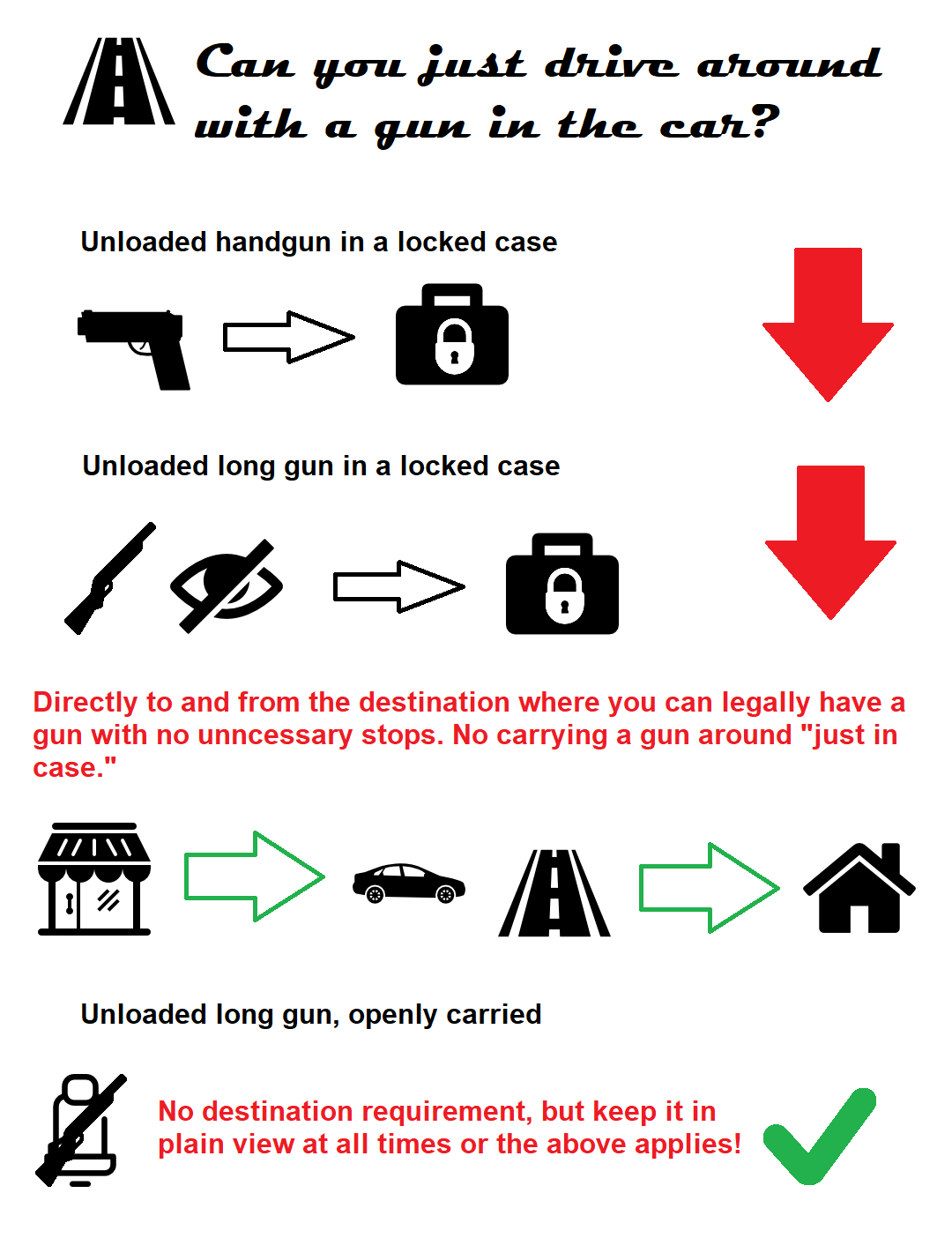
Image Source: www.californiacarry.org
Carrying Handguns in Cars California
When it comes to carrying handguns in cars California, the rules are particularly stringent. Unlike many other states where a concealed carry permit automatically allows you to carry a handgun in your vehicle, California does not recognize permits from other states for this purpose.
Legal Framework for Handguns in Vehicles
The primary law governing firearm transportation California for handguns is found in California Penal Code Section 25400, which deals with carrying a concealed firearm. However, for vehicles, specific provisions apply.
- Unloaded and Cased: Generally, if you do not have a California Firearm Safety Certificate and a valid Firearm Owner’s Identification Certificate (which is now the FSC), you may transport a handgun in your vehicle, but it must be unloaded and in a locked container.
- Locked Container Requirement: The “locked container” must be a hard-sided case that is secured with a lock. This container cannot be readily accessible from the passenger compartment of the vehicle. This means it should be in the trunk or a separate locked compartment that is not easily reached by the driver or passengers.
- Unloaded Ammunition: The ammunition must also be stored separately from the handgun and in a locked container. This is a critical aspect of ammunition laws California car regulations.
Concealed Carry in a Vehicle
Concealed carry California car is a complex area. Simply possessing a concealed weapon in your vehicle without a permit is illegal. California issues Concealed Carry Weapon (CCW) permits at the county level, and these permits are generally restricted to carrying the firearm on your person or in your home.
- CCW Permit and Vehicle Carry: While a CCW permit allows you to carry a concealed handgun, the scope of its validity within a vehicle can be limited by local regulations and interpretations. Some counties may allow concealed carry in a vehicle with a permit, while others may have stricter interpretations. It is crucial to check the specific terms of your CCW permit and the regulations in the county where you are driving.
- Open Carry in a Vehicle: Open carry California car is generally prohibited. Even if you have a CCW permit, openly displaying a firearm in a vehicle is not permitted.
Transporting Handguns to and From Specific Locations
There are specific exceptions for transporting handguns, such as taking them to or from a licensed firearms dealer, a gunsmith, a shooting range, or a competition. In these instances, the handgun must still be unloaded and in a locked container.
Transporting Rifles and Shotguns in Cars California
Transporting rifles in cars California and shotguns has slightly different rules, though still subject to strict regulations.
Legal Framework for Rifles and Shotguns
California Penal Code Section 25400 also indirectly affects the transport of long guns. However, the specific requirements for long guns are often dictated by broader public safety and firearm storage laws.
- Unloaded and Cased: Similar to handguns, rifles and shotguns must be unloaded when transported in a vehicle.
- Locked Container: While not always explicitly mandated in the same way as handguns, it is highly advisable and often legally prudent to transport rifles and shotguns in locked cases, especially if they are visible. The trunk is generally the safest and most legally compliant place to store them.
- No Handgun Safety Certificate Needed: Unlike handguns, you generally do not need a Handgun Safety Certificate to transport unloaded rifles and shotguns, provided you are legally allowed to possess them.
California Vehicle Gun Possession: Key Distinctions
The term “California vehicle gun possession” can be a bit misleading. It’s not about general “possession” in the same way as carrying a handgun openly on your person. Instead, it refers to the lawful transportation and storage of firearms within a vehicle.
- Prohibited Persons: It is illegal for any person prohibited from owning or possessing firearms under federal or state law to have a firearm in their vehicle. This includes individuals with felony convictions, domestic violence restraining orders, and those who have been adjudicated as mentally defective.
- Federal Law: Federal law also plays a role. The Firearm Owners’ Protection Act (FOPA) of 1986 provides some protections for interstate firearm transportation, but California’s stricter state laws often override these protections for individuals residing in or traveling through California.
CHP Firearm Regulations and Enforcement
The California Highway Patrol (CHP) is responsible for enforcing California gun laws, including those related to firearms in vehicles. Understanding their perspective and the specifics of CHP firearm regulations is crucial for compliance.
CHP’s Role in Enforcement
CHP officers are trained to enforce all firearm laws. They will conduct traffic stops for various reasons, and if a firearm is discovered in a vehicle, they will verify its legality based on current California gun laws.
- Open Carry During Traffic Stops: If you are lawfully carrying a concealed firearm with a CCW permit, you must inform the CHP officer if they ask if you have a firearm. If you are open carrying (which is generally not permitted in vehicles), this will likely lead to immediate enforcement action.
- Searches and Seizures: CHP officers have the authority to search your vehicle if they have probable cause to believe it contains illegal items, including unlawfully possessed firearms.
Common Violations and Consequences
Failure to comply with firearm transportation California laws can result in significant penalties.
- Unlawful Possession: Carrying a loaded firearm in a vehicle outside of the limited exceptions is a serious offense.
- Improper Storage: Not storing firearms and ammunition separately and in locked containers can also lead to charges.
- Concealed Without Permit: Carrying a concealed firearm in a vehicle without a valid California CCW permit is illegal.
Ammunition Laws California Car
The regulations surrounding ammunition laws California car are an integral part of firearm transportation.
- Separation Requirement: Ammunition must be stored separately from the firearm itself.
- Locked Container for Ammunition: For handguns, ammunition must also be in a locked container. For rifles and shotguns, while not always explicitly mandated to be in a separate locked container, keeping it separate and secured is the safest and most legally sound practice.
Exceptions and Special Circumstances
There are limited exceptions to these stringent rules.
Law Enforcement and Security Personnel
Sworn law enforcement officers and licensed security guards, while on duty and in uniform, have specific allowances for carrying firearms in their vehicles as part of their official duties. These exceptions are clearly defined by law and do not apply to the general public.
Recreational Activities
For activities like hunting or sport shooting, specific guidelines apply for transporting firearms to and from hunting grounds or shooting ranges. These typically involve ensuring the firearm is unloaded, cased, and stored securely.
Key Takeaways for Firearm Transportation in California Vehicles
To summarize the crucial points regarding California gun laws and firearm transportation California:
- Handguns: Must be unloaded and in a locked container, separate from ammunition which also needs to be in a locked container. Concealed carry in a vehicle requires a California CCW permit, and even then, local interpretations can vary.
- Rifles and Shotguns: Must be unloaded and preferably in locked cases, stored in a manner that prevents easy access.
- Prohibited Persons: Absolutely cannot possess firearms in vehicles.
- CHP Enforcement: Be aware that the CHP actively enforces these laws.
Frequently Asked Questions (FAQ)
Q1: Can I legally keep a loaded gun in my glove compartment in California?
No, it is illegal to keep a loaded firearm in your glove compartment or any other accessible part of your vehicle in California unless you have specific permits and are adhering to strict guidelines. Generally, firearms in vehicles must be unloaded and stored in locked containers.
Q2: Do I need a concealed carry permit to have a gun in my car in California?
Yes, to carry a concealed firearm in your vehicle in California, you generally need a California Concealed Carry Weapon (CCW) permit. Even with a permit, the specific rules for carrying in a vehicle can depend on the issuing county.
Q3: Can I transport a handgun from my home to a gun shop for repair in California?
Yes, you can transport a handgun to a gun shop for repair, but it must be unloaded and in a locked container. The ammunition must also be stored separately and in a locked container.
Q4: Is it legal to transport a rifle in the trunk of my car in California?
Yes, it is legal to transport a rifle in the trunk of your car in California, provided it is unloaded. While not always mandated by law to be in a locked case, it is highly recommended for safety and legal compliance.
Q5: What are the rules for transporting ammunition in a car in California?
Ammunition laws California car dictate that ammunition must be stored separately from the firearm. For handguns, ammunition must also be in a locked container.
Q6: Can I open carry a handgun in my car in California?
No, open carry California car is generally prohibited. Firearms must be concealed when transported in a vehicle and only carried by individuals with a valid California CCW permit.
Q7: What is the difference between concealed carry California car and open carry California car?
Concealed carry California car means the firearm is hidden from plain view within the vehicle, typically requiring a CCW permit. Open carry California car means the firearm is visible, which is generally illegal in vehicles in California.
Q8: Are there any exceptions for carrying a firearm in a vehicle in California?
Limited exceptions exist for sworn law enforcement officers and licensed security personnel on duty. For the general public, transporting unloaded and securely stored firearms for specific lawful purposes (like repairs or range visits) is permitted under strict conditions.
Q9: What happens if I am caught with a loaded gun in my car in California without a permit?
If you are caught with a loaded gun in your car in California without the proper permits and adhering to all regulations, you could face serious criminal charges, including felony charges, significant fines, and imprisonment.
Q10: Does California recognize concealed carry permits from other states for vehicle transport?
No, California does not recognize concealed carry permits from other states. To carry a concealed firearm in California, including in your vehicle, you must obtain a California CCW permit.
Q11: What are the CHP firearm regulations regarding firearm transportation in California?
CHP firearm regulations align with California state law, emphasizing that firearms in vehicles must be unloaded and securely stored. They enforce strict rules regarding firearm transportation California, particularly focusing on lawful possession and secure storage.
Q12: Can I transport a handgun in the passenger compartment of my car in California?
Only if it is unloaded, in a locked container that is not readily accessible, and you possess the necessary permits (like a CCW for concealed carry). Generally, the trunk is the most legally sound location.
Q13: Are there specific rules for transporting semi-automatic pistols in California?
Yes, carrying handguns in cars California means semi-automatic pistols, like all handguns, must be unloaded and stored in a locked container, separate from ammunition which also must be in a locked container.
Q14: What constitutes a “locked container” for firearm transportation in California?
A locked container is a hard-sided receptacle that is secured with a lock. This could be a dedicated gun case with a key or combination lock, or a locked compartment within the vehicle.
Q15: What are the penalties for violating California vehicle gun possession laws?
Penalties for California vehicle gun possession violations vary depending on the specific offense but can include heavy fines, jail time, and a criminal record, which can permanently affect your ability to own firearms.