
A self-serve car wash can generate anywhere from $15,000 to over $100,000 per year per bay, with overall profitability heavily influenced by location, services offered, and operational efficiency. Many aspiring entrepreneurs wonder about the car wash business profit potential, and the truth is, it can be a lucrative venture. This guide will delve into the specifics of self service car wash revenue, car wash income potential, and what it takes to succeed in the auto wash business earnings.
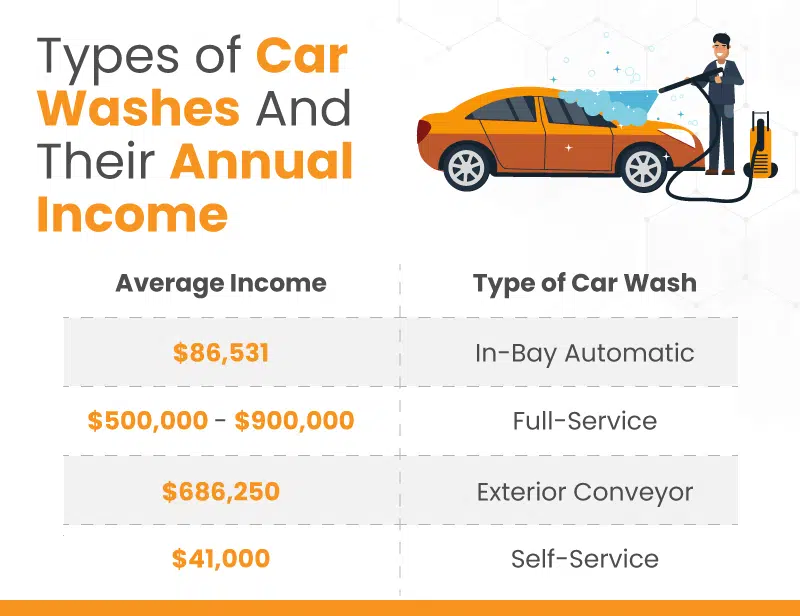
Image Source: koronapos.com
Deciphering the Revenue Streams
The primary way a self-serve car wash makes money is through the sale of wash cycles. Customers pay a set fee to use the bays and the equipment. However, savvy operators diversify their income to maximize car wash profitability analysis.
Core Revenue Generators:
- Wash Bays: This is the bread and butter. Customers choose from various wash packages, from a basic rinse to a premium wax and shine. Pricing can vary significantly based on location and the level of service.
- Vacuum Stations: Most self-serve washes offer vacuum cleaners. These are typically coin-operated or token-based and can be a significant contributor to overall revenue.
- Additional Services/Upgrades: Many modern self-serve car washes offer extras that boost car wash revenue. These can include:
- Tire shine applicators
- Bug and tar removers
- Undercarriage washes
- High-pressure wax applicators
- Air freshener dispensers
Ancillary Income Streams:
- Vending Machines: Offering snacks, drinks, and car care products (like microfiber cloths, cleaning sprays, or air fresheners) in vending machines can add a nice passive income stream.
- Detailing Supplies Retail: Some locations might have a small retail space selling premium car care products.
- Subscription Services: For loyal customers, offering monthly or annual wash club memberships can provide consistent revenue and predictable car wash income potential.
- Partnerships: Collaborating with local businesses (like mechanics or car dealerships) for referral programs or package deals can bring in new customers.
Factors Influencing Car Wash Profitability
The car wash business profit isn’t a simple equation. Numerous factors contribute to how much a self-serve car wash can earn.
Location, Location, Location:
This is arguably the most critical factor. A self-serve car wash needs to be:
- Visible and Accessible: Easy to see from the road and easy to enter and exit.
- In a High-Traffic Area: Proximity to residential areas, commercial centers, or major roadways is crucial.
- Demographically Suitable: Areas with a high concentration of car owners and a disposable income are ideal.
- Competitively Priced: Understanding the local market and competitor pricing is essential.
Operational Efficiency:
How smoothly the business runs directly impacts car wash earnings.
- Equipment Reliability: Downtime means lost revenue. Investing in quality, durable equipment and performing regular maintenance is key.
- Water and Chemical Management: Efficient use of water and chemicals not only reduces costs but also contributes to a positive environmental image.
- Staffing (Even Minimal): While “self-serve” implies less staff, having someone on-site during peak hours can improve customer experience and handle minor issues. This impacts the car wash owner salary as they might be taking on these roles.
- Marketing and Promotions: Attracting and retaining customers through targeted marketing efforts is vital for sustained car wash revenue.
Service Quality and Customer Experience:
Even in a self-serve model, the experience matters.
- Cleanliness and Maintenance: A well-maintained, clean facility is more appealing to customers.
- Working Equipment: Nothing frustrates a customer more than broken vacuums or spray guns.
- Ease of Use: Clear instructions and intuitive controls make the process simple.
- Payment Options: Offering various payment methods (cash, credit cards, mobile payments) caters to a wider customer base.
Understanding Self Serve Car Wash Startup Costs
Before you can analyze car wash income potential, you need to know what it costs to get started. Self serve car wash startup costs can be substantial, but they vary widely based on the scale and scope of the project.
Key Startup Cost Components:
- Land Acquisition or Lease: Purchasing land is a major expense, while leasing can reduce upfront capital but incurs ongoing costs.
- Site Development and Construction: This includes grading, paving, building the wash bays, and installing drainage systems.
- Equipment Purchase and Installation: This is one of the largest investments. It includes:
- High-pressure pumps and sprayers
- Water reclaim systems (if applicable)
- Soap, wax, and foam applicators
- Vacuum units
- Control consoles and payment systems
- Boilers and heating systems
- Water treatment systems
- Permits and Licenses: Local government regulations require various permits and licenses, which come with fees.
- Initial Inventory: Chemicals, cleaning supplies, and vending machine stock.
- Marketing and Signage: Initial advertising and prominent signage to attract customers.
- Working Capital: Funds to cover operating expenses during the initial period before the business becomes consistently profitable.
Table 1: Estimated Self-Serve Car Wash Startup Costs (Illustrative)
| Cost Category | Estimated Range (USD) | Notes |
|---|---|---|
| Land (Purchase/Leasehold) | $50,000 – $500,000+ | Highly location-dependent. |
| Site Development | $100,000 – $300,000+ | Includes paving, concrete, drainage, utility hookups. |
| Building/Shelters | $50,000 – $200,000+ | For bays and equipment. |
| Wash Equipment | $150,000 – $500,000+ | Pumps, sprayers, vacuums, control systems. |
| Water Reclaim System | $20,000 – $100,000+ | Optional but environmentally friendly and cost-saving. |
| Payment Systems | $5,000 – $20,000+ | Coin/card readers, tokens. |
| Permits & Licenses | $2,000 – $10,000 | Varies by municipality. |
| Initial Marketing | $5,000 – $15,000 | Signage, local ads. |
| Working Capital | $20,000 – $50,000 | For initial operating expenses. |
| Total Estimated Startup | $402,000 – $1,700,000+ | This is a broad range; actual costs vary. |
Analyzing Car Wash Operating Expenses
Understanding car wash operating expenses is crucial for determining the net profit. These are the ongoing costs of running the business.
Major Operating Expenses:
- Utilities: Water, electricity, and gas (for heating water) are significant ongoing costs. Water reclamation systems can help reduce water bills.
- Chemicals and Supplies: Soaps, waxes, polishes, cleaning agents, and vending machine inventory.
- Labor: While self-serve, some sites may require attendants for maintenance, customer service, or cleaning. If the owner is actively involved, this is a reduction in their car wash owner salary expectation.
- Maintenance and Repairs: Regular upkeep of equipment is essential to prevent costly breakdowns.
- Insurance: General liability, property insurance, and potentially workers’ compensation.
- Property Taxes and Rent/Mortgage: If you own the land, property taxes apply. If you lease, rent is a primary expense.
- Marketing and Advertising: Ongoing efforts to attract and retain customers.
- Credit Card Processing Fees: If you accept credit cards, these fees add up.
- Licenses and Permits Renewal: Annual renewals for operating permits.
Estimating Car Wash Profitability and Returns
Calculating car wash profitability analysis involves looking at revenue minus expenses. The car wash investment returns are what an owner can expect to earn from their initial investment.
Key Metrics for Profitability:
- Revenue per Bay: This is a good indicator of how well each individual wash bay is performing.
- Customer Volume: The number of cars washed daily or weekly.
- Average Revenue per Car: The average amount each customer spends.
- Operating Margin: (Total Revenue – Total Operating Expenses) / Total Revenue. This shows how much profit is generated from each dollar of revenue.
- Return on Investment (ROI): (Net Profit / Total Investment) × 100. This measures the profitability relative to the initial investment.
Factors Affecting ROI:
- Initial Investment: Lower startup costs generally lead to higher ROI.
- Revenue Generation: Higher self service car wash revenue directly improves ROI.
- Expense Management: Efficiently controlling operating costs is critical.
- Longevity of the Business: A business that operates for many years will have a better overall ROI.
Example Scenario (Simplified):
Let’s consider a small self-serve car wash with 4 bays.
-
Assumptions:
- Each bay is used an average of 15 times per day.
- The average revenue per wash cycle is $10.
- The wash operates 365 days a year.
- Total annual revenue from bays = 4 bays * 15 cars/day * $10/car * 365 days = $219,000.
- Additional revenue from vacuums and extras = $30,000 per year.
- Total Gross Revenue = $249,000.
-
Estimated Operating Expenses (Annual):
- Utilities: $30,000
- Chemicals/Supplies: $25,000
- Maintenance/Repairs: $10,000
- Insurance: $5,000
- Marketing: $5,000
- Credit Card Fees: $7,000
- Property Taxes/Rent: $20,000
- Total Operating Expenses = $102,000
-
Net Profit: $249,000 (Gross Revenue) – $102,000 (Operating Expenses) = $147,000
-
Car Wash Owner Salary: From this net profit, the owner would then take their salary. This could be reinvested, or taken as income.
-
Car Wash Investment Returns: If the initial investment was, for example, $750,000, the ROI would be ($147,000 / $750,000) * 100 = 19.6%. This is a good return, but highly dependent on achieving the assumed customer volume and revenue per car.
The Self-Serve Car Wash Business Model
The car wash business model for self-serve operations is generally straightforward: provide a clean, functional space with equipment that allows customers to wash their own vehicles for a fee.
Key Components of the Model:
- Infrastructure: The physical site with bays, vacuums, and payment systems.
- Equipment: The machinery that delivers water, soap, wax, and vacuum suction.
- Consumables: The chemicals, water, and energy needed to operate.
- Customer Service (Basic): Ensuring the facilities are clean and equipment is working.
- Pricing Strategy: Setting competitive and profitable prices for wash cycles and add-ons.
Variations and Enhancements:
- Attended Service: Some self-serve locations may offer a basic attendant service for a small fee or offer basic detailing services.
- Touchless Automatic: While not strictly self-serve, some businesses combine self-serve bays with an automatic wash.
- Pet Washes: Adding a dedicated pet wash station can attract a niche market.
- Detailing Bays: Offering enclosed bays for customers who want to do more extensive detailing themselves.
Maximizing Car Wash Income Potential
To truly maximize car wash income potential, owners need to go beyond simply offering basic washes.
Strategies for Growth:
- Loyalty Programs: Encourage repeat business through punch cards or digital loyalty apps.
- Seasonal Promotions: Offer discounts during slower periods or themed washes for holidays.
- Bundled Services: Combine wash cycles with vacuum time or detailing products.
- Upgraded Equipment: Invest in newer, more efficient, or feature-rich equipment that attracts customers.
- Water Reclamation Systems: Not only good for the environment but can significantly cut water bills, improving car wash profitability analysis.
- High-Quality Chemicals: Using good quality soaps and waxes can lead to better results for the customer, encouraging repeat business.
- Cleanliness and Maintenance Focus: A spotless facility and perfectly working equipment are your best marketing tools.
- Local Partnerships: Collaborate with local car dealerships, repair shops, or community organizations for cross-promotion.
The Car Wash Owner Salary: What to Expect
The car wash owner salary is directly tied to the net profit of the business. For a successful self-serve car wash, a car wash owner salary can be quite comfortable, often ranging from $50,000 to $150,000+ per year, after all expenses and reinvestments are accounted for. However, in the initial years or for less successful operations, the owner might draw a lower salary or reinvest all profits back into the business.
It’s important to remember that this salary is not guaranteed and depends heavily on achieving consistent customer traffic and managing costs effectively. Some owners might choose to work full-time in the business, while others might manage it semi-passively, especially if they have reliable staff or systems in place.
Frequently Asked Questions (FAQ)
Q1: Is a self-serve car wash a good investment?
A self-serve car wash can be a good investment if planned and executed correctly. Factors like location, competition, and operational efficiency play a massive role in its success. It offers a relatively straightforward business model with recurring revenue potential.
Q2: How much can a single bay at a self-serve car wash make per year?
A single bay can generate anywhere from $15,000 to over $100,000 annually, depending on usage, pricing, and the number of services offered through that bay.
Q3: What are the biggest challenges in running a self-serve car wash?
Common challenges include high startup costs, intense competition, equipment maintenance and breakdowns, managing utility costs (especially water), and attracting and retaining customers in a market that can be price-sensitive.
Q4: How important is marketing for a self-serve car wash?
Marketing is crucial. Even with a good location, you need to inform potential customers about your existence, your services, and what makes you stand out. Promotions, loyalty programs, and local advertising can significantly boost self service car wash revenue.
Q5: Can I operate a self-serve car wash without much technical knowledge?
While the equipment is designed for customer use, some technical aptitude or a good maintenance plan is necessary. You’ll need to understand basic troubleshooting for equipment issues, manage chemical levels, and ensure the overall facility is in good working order. Hiring a technician or having a reliable service contract is often advisable.
Q6: What are the typical profit margins for a self-serve car wash?
Profit margins can vary widely, but many self-serve car washes aim for net profit margins between 20% and 40% after accounting for all operating expenses. This is influenced by how well costs are managed and the effectiveness of revenue generation strategies.
Conclusion
The journey to understanding how much do self serve car washes make reveals a business with significant potential, but one that demands careful planning, strategic investment, and diligent operation. By focusing on prime locations, efficient management of car wash operating expenses, and innovative ways to boost self service car wash revenue, entrepreneurs can build a profitable enterprise. The car wash business model is robust, and with a keen eye on customer satisfaction and ongoing service enhancements, the car wash income potential can be substantial, leading to rewarding car wash investment returns and a respectable car wash owner salary.