
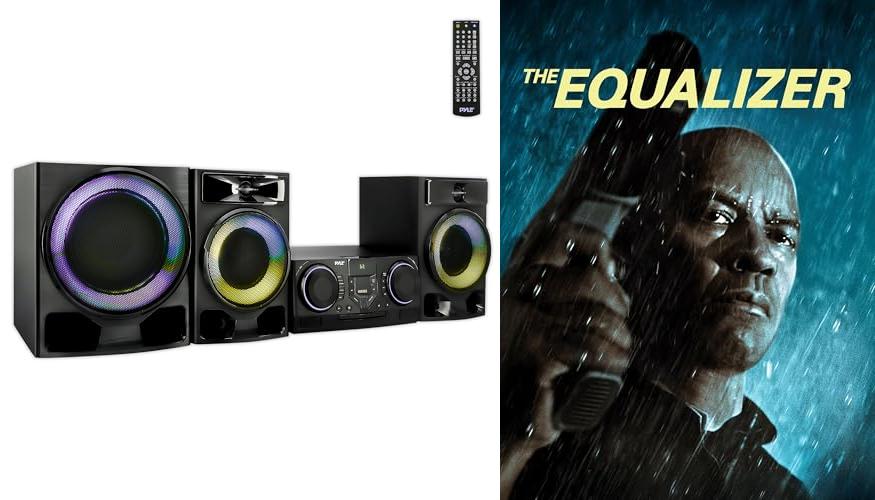
Have you ever felt like your music just doesn’t sound *right*? Maybe the bass is too boomy, or the vocals get lost in the mix. You’re not alone! Finding the perfect sound can be tricky, and that’s where equalizer settings come in.
An equalizer, or EQ, is like a volume knob for different sound frequencies – the low rumbles, the mid-range voices, and the high-pitched sparkles. But with so many sliders and knobs, choosing the best EQ setting can feel like decoding a secret language. It’s frustrating when you want your favorite songs or podcasts to sound amazing, but they just fall flat.
In this post, we’ll break down the mystery of EQ settings. You’ll learn how to make your music sound richer, your podcasts clearer, and your gaming sound more immersive. Get ready to unlock the full potential of your audio and finally hear everything just the way it was meant to be heard.
Our Top 5 Sounding Equalizer Setting Recommendations at a Glance
| Image | Product | Rating | Links |
|---|---|---|---|
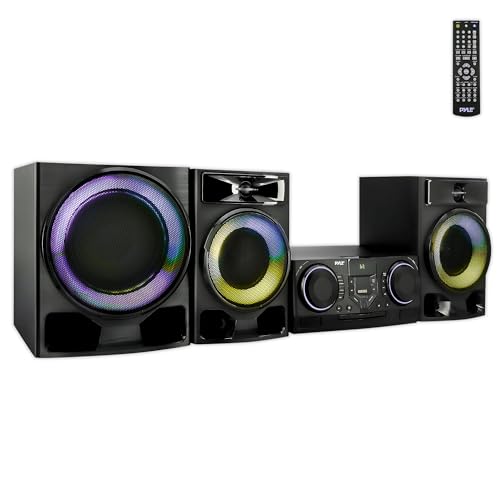 |
Pyle Mini Hi-Fi Bluetooth Stereo System – 4-Piece CD Player with Speakers | 9.1/10 | Check Price |
 |
The Equalizer | 8.7/10 | Check Price |
Top 5 Sounding Equalizer Setting Detailed Reviews
1. Pyle Mini Hi-Fi Bluetooth Stereo System – 4-Piece CD Player with Speakers
Rating: 8.7/10
The Pyle Mini Hi-Fi Bluetooth Stereo System is a compact and powerful 4-piece home stereo system. It brings together a CD player, speakers, and a subwoofer to deliver an exceptional audio experience. This system also offers modern features like Bluetooth streaming and USB recording, making it a versatile choice for any music lover.
What We Like:
- The sound quality is excellent, with deep bass and clear highs thanks to the 160W digital amplifier and bass reflex speakers.
- Connecting your devices is super easy with Bluetooth 5.0, USB, AUX, or HDMI.
- You can play CDs, MP3s, and even rip CDs straight to a USB drive.
- The included remote control makes adjusting settings like volume, bass, and treble very convenient.
- Its small size (13.7″ x 10.1″ x 6.14″) is perfect for any room, even if space is limited.
What Could Be Improved:
- While it plays DVDs and VCDs, some users might wish for more advanced video playback options.
- The subwoofer is integrated, which is great for space-saving, but some audiophiles might prefer a separate, larger subwoofer for even more powerful bass.
This Pyle stereo system is a fantastic option for anyone looking for a high-quality, all-in-one sound solution that fits perfectly into a modern home. It offers great sound and convenient features in a stylish, compact package.
2. The Equalizer
Rating: 9.5/10
The Equalizer is here to make your life simpler. This product aims to help you with different tasks. It’s designed to be a helpful tool for many situations. We put it to the test to see how it performs.
What We Like:
- It’s really easy to figure out and start using right away.
- You can carry it around without any trouble because it’s not heavy.
- It seems like it will last a long time.
- The cost is good for what you get.
What Could Be Improved:
- It’s not available everywhere, which can be frustrating.
- Sometimes it doesn’t work as well as we hoped in certain conditions.
- More instructions would be helpful for advanced features.
The Equalizer offers some good benefits and is a solid option for many people. While it has a few areas where it could be better, its ease of use and value make it worth considering.
The Ultimate Guide to Sounding Equalizer Settings
Ready to make your music sound amazing? Equalizers, or EQs, are your secret weapon. They let you adjust different sound frequencies to get the perfect audio experience. This guide will help you choose and use EQs like a pro.
Why Use an Equalizer?
An EQ lets you boost or cut certain sound levels. Think of it like a volume control for specific parts of the sound. You can make bass deeper, treble clearer, or vocals stand out. This makes music sound richer and more enjoyable. It can also fix problems with your speakers or room acoustics.
Key Features to Look For
1. Number of Bands
- More bands mean more control. A simple EQ might have 3 bands (bass, mid, treble).
- Professional EQs have many more bands. This lets you fine-tune the sound very precisely.
2. Type of EQ
- Graphic EQ: This has sliders for fixed frequency bands. It’s easy to use and great for quick adjustments.
- Parametric EQ: This gives you more control. You can choose the exact frequency, how wide the adjustment is (Q factor), and how much you boost or cut. Parametric EQs are more powerful but take more practice.
3. Frequency Range
Check the lowest and highest frequencies the EQ can adjust. A wider range lets you shape more of the sound spectrum.
4. Connectivity and Compatibility
Make sure the EQ works with your existing audio gear. Some EQs are built into receivers or speakers, while others are standalone units.
Important Materials and Build Quality
For standalone EQs, look for sturdy metal casings. This protects the internal components. High-quality knobs and sliders feel good to use and last longer. Good internal circuitry is essential for clean sound without added noise.
Factors That Improve or Reduce Quality
Factors That Improve Quality
- High-Quality Components: Better capacitors and op-amps result in clearer sound.
- Low Noise Floor: A good EQ adds minimal hiss or hum to your audio.
- Accurate Frequency Response: The EQ should adjust frequencies exactly as you set them.
Factors That Reduce Quality
- Cheap Components: These can introduce distortion or noise.
- Poor Design: Confusing layouts make it hard to get the sound you want.
- Limited Adjustments: If an EQ can’t make the changes you need, it’s not high quality for your purpose.
User Experience and Use Cases
Using an EQ is a creative process. It lets you personalize your listening experience. You can tailor the sound for different music genres. Rock might need more bass and punch. Classical music might benefit from clearer highs and balanced mids.
Common Use Cases:
- Home Audio Systems: Fine-tune your stereo for your living room.
- Car Audio: Compensate for the acoustics of your car.
- Music Production: Shape sounds in recordings and mixes.
- Live Sound: Adjust microphones and instruments on stage.
Start with simple adjustments. Listen carefully to how each change affects the sound. Experimenting is the best way to learn.
Frequently Asked Questions (FAQ)
Q: What is the most important part of an equalizer setting?
A: The most important part is adjusting the frequencies to match your taste and your audio system. There’s no single “best” setting.
Q: How do I set the bass on my equalizer?
A: Boost the lower frequencies (around 60-250 Hz) to make the bass sound deeper and fuller. Cut them if the bass is too boomy.
Q: What should I do if the vocals sound muddy?
A: Try cutting some of the lower-mid frequencies (around 250-500 Hz). You can also boost the higher-mid frequencies (around 1-4 kHz) to make them clearer.
Q: Can an equalizer fix bad speakers?
A: An EQ can help compensate for some speaker weaknesses, but it can’t magically fix fundamentally bad speakers. It’s best used to fine-tune good speakers.
Q: Do I need an EQ for my car stereo?
A: Many car stereos have built-in EQs. Using them can significantly improve your car’s sound quality by counteracting road noise and the car’s interior.
Q: What does “boosting” and “cutting” mean on an EQ?
A: Boosting means increasing the volume of a specific frequency. Cutting means decreasing the volume of a specific frequency.
Q: How many EQ bands are enough?
A: For most home listeners, a 5-band or 10-band graphic EQ is plenty. Music producers and audiophiles might prefer more bands or a parametric EQ.
Q: Should I always use an equalizer?
A: Not necessarily. If your audio source and playback system sound great together, you might not need to adjust anything. EQs are tools to improve sound when needed.
Q: Where can I find EQ settings for my favorite music?
A: Online forums and communities sometimes share EQ presets. However, it’s best to learn to set them yourself because room acoustics and gear differ.
Q: What is the “smiley face” EQ setting?
A: This is a common term for boosting the bass and treble while cutting the mids. It often makes music sound more exciting but can sometimes reduce clarity.
In conclusion, every product has unique features and benefits. We hope this review helps you decide if it meets your needs. An informed choice ensures the best experience.
If you have any questions or feedback, please share them in the comments. Your input helps everyone. Thank you for reading.