

Imagine listening to your favorite song, but something is missing. The deep bass notes, the rumbling lows, they just aren’t there. That’s where a good subwoofer comes in, especially in a studio setting. But choosing the right one can feel like navigating a maze. You want that perfect, accurate low end for your music or projects, but the options out there can be confusing and overwhelming. Many people get stuck trying to figure out what features really matter and what will actually improve their sound.
This is why we’re diving deep into the world of studio subwoofers. We’ll cut through the jargon and explain what makes a subwoofer great for your creative space. By the end of this post, you’ll understand the key things to look for, helping you avoid common mistakes and find a subwoofer that truly enhances your listening experience. Get ready to discover how to make your music sound fuller and more complete.
Our Top 5 Subwoofer Studio Recommendations at a Glance
Top 5 Subwoofer Studio Detailed Reviews
1. PreSonus Eris Sub 8BT — 8″ Inch Powered Subwoofer

Rating: 9.4/10
The PreSonus Eris Sub 8BT is an 8-inch powered subwoofer that brings big bass to your home audio, music production, and gaming setups. It’s a compact, front-firing studio subwoofer with Bluetooth wireless, delivering accurate sound that’s perfect for listening or creating.
What We Like:
- It delivers clear, accurate audio with deep bass thanks to its woven-composite woofers.
- The 100-watt power pushes sound down to a deep 30 Hz, letting you hear every detail.
- Bluetooth 5.0 wireless connectivity makes it easy to connect your devices, and wired options are available too.
- It has controls to fine-tune the sound to your room and speakers, and a headphone output with its own amplifier.
- It can connect to professional audio gear with balanced TRS inputs, consumer electronics with RCA inputs, and even your phone with a front aux input.
- A power-saving mode automatically turns it off after 40 minutes of no use.
What Could Be Improved:
- While powerful for its size, it might not satisfy those seeking extremely room-shaking bass for very large spaces.
- The “ultra-wide listening sweet spot” is a marketing term; true subwoofers often have more noticeable sweet spots than full-range speakers.
This subwoofer is a fantastic addition for anyone wanting to enhance their low-end sound. It offers great features and sound quality for its price point.
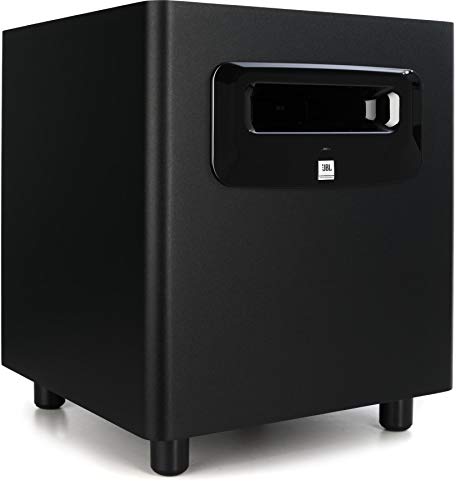
2. JBL Professional LSR310S – Studio Monitor Subwoofer
Rating: 8.8/10
The JBL Professional LSR310S is a 10-inch studio monitor subwoofer in black. It’s designed to add serious low-end power to your studio setup. This subwoofer helps you hear the deep bass in your music and productions.
What We Like:
- It has a special JBL port design. This design helps create deep and strong bass. It works well even when you play music loudly.
- The XLF setting is a cool feature. It makes the bass sound like what you hear in dance clubs. This can be inspiring when you’re making dance music.
- The custom-made driver is impressive. It can produce bass down to 20 Hz. It also delivers a loud sound of 113 dB without breaking.
- It has professional connections. You can use balanced XLR and 1/4″ inputs. This makes it easy to connect to your existing studio monitors or use it for surround sound.
- A sensitivity switch helps it work with different sound sources. You can connect it to powerful equipment without worrying about overloading it.
What Could Be Improved:
- The size might be a bit large for very small studios.
- While powerful, it’s an addition to your system, so it adds to the overall cost.
This subwoofer is a powerful tool for producers who want to feel the bass. It brings a professional club sound right into your control room.
3. Yamaha HS8 Studio Subwoofer

Rating: 9.3/10
The Yamaha HS8 Studio Subwoofer in Black is a powerful addition to any home studio. It helps you hear the low-end sounds of your music more clearly. This means you can mix your songs with more confidence. It’s designed to give you a fuller sound experience.
What We Like:
- It has an 8-inch speaker that delivers deep bass.
- The frequency response goes down to 22Hz, so you hear very low notes.
- A 150W amplifier provides plenty of power for clear sound.
- The LOW CUT switch and control let you adjust the bass.
- The HIGH CUT control helps blend the subwoofer with your main speakers.
- The PHASE switch makes it easy to get the best sound from your setup.
What Could Be Improved:
- It is a bit bulky, so it might take up extra space.
- For some, the price might be a little high.
The Yamaha HS8 is a solid choice for producers and musicians. It offers impressive low-end performance and helpful features for fine-tuning your sound.
4. KRK S8.4 S8 Generation 4 8″ 109 Watt Powered Studio Subwoofer

Rating: 8.8/10
The KRK S8.4 S8 Generation 4 is an 8-inch powered studio subwoofer that packs a punch. It’s designed to give your music the deep, rich bass it deserves. This subwoofer helps you hear every low note clearly, making it a great addition to any home studio or listening setup.
What We Like:
- It has an 8-inch woofer made from a strong glass aramid composite.
- This subwoofer can go down to 30Hz, giving you really low bass.
- It can get loud, reaching up to 112 dB.
- The curved design looks cool and the front-firing bass port means you can put it in different places.
- It uses a powerful yet light Class D amplifier.
- You can easily turn the sub and crossover on and off with a footswitch (though it’s sold separately).
What Could Be Improved:
- The footswitch is not included, which is an extra cost.
- For some, the 8-inch size might not be enough for the deepest sub-bass.
The KRK S8.4 S8 Generation 4 is a solid choice for anyone wanting to add serious low-end power to their sound. It delivers impressive bass performance in a flexible and stylish package.
5. ADAM Audio T10S Studio Subwoofer for recording

Rating: 9.4/10
The ADAM Audio T10S Studio Subwoofer is a powerful tool for any producer or engineer looking to get a clearer understanding of their low-end frequencies. This compact subwoofer is designed to add depth and detail to your recordings, mixes, and masters, helping you catch those subtle bass notes you might otherwise miss.
What We Like:
- Extend your low end: It adds serious bass power, letting you hear and feel the low frequencies better.
- Perfect for T-Series Monitors: It works especially well with ADAM Audio’s T5V and T7V speakers, creating a complete sound system.
- Flexible Placement: The downward-facing woofer lets you put it almost anywhere in your studio without losing sound quality.
- Easy Bypass: A footswitch connection lets you quickly turn the subwoofer on and off to compare your mix with and without the extra bass.
- Customizable Sound: You can adjust the crossover, phase, and volume to perfectly match your room and your monitors.
What Could Be Improved:
- Single Unit: This is a single subwoofer, so you’ll need to buy two if you want a stereo setup.
- Room Acoustics Still Matter: While adjustable, the best results will still depend on your studio’s room acoustics.
The ADAM Audio T10S subwoofer is a valuable addition for anyone serious about their audio. It provides the essential low-end detail needed for professional-sounding productions.
Your Guide to Finding the Perfect Subwoofer Studio
Are you ready to feel the music? A subwoofer studio is your secret weapon for deep, rich bass. It’s not just about making noise; it’s about adding life and power to your sound. This guide will help you pick the best one for your needs.
1. Key Features to Look For
When you shop for a subwoofer studio, keep these important features in mind:
A. Size Matters: Driver Diameter
- The driver is the part that makes the sound. Larger drivers (like 10-inch or 12-inch) usually produce deeper and more powerful bass.
- Smaller drivers (like 8-inch) can still sound great, especially in smaller rooms.
B. Power Up: Amplifier Wattage
- Wattage tells you how much power the subwoofer has. More watts mean a louder and more impactful bass.
- For small rooms, 100-200 watts might be enough. Larger spaces or wanting that theater feel? Aim for 300 watts or more.
C. Sound Control: Crossover Frequency and Phase Switch
- Crossover Frequency: This setting helps your subwoofer blend smoothly with your main speakers. A good range is often between 50Hz and 150Hz.
- Phase Switch: This helps the subwoofer’s bass waves line up with your other speakers. You can usually choose between 0 degrees or 180 degrees.
D. Connection Options: Hooking it Up
- Line-Level Inputs (RCA): Most subwoofers have these. They connect to your receiver or sound system.
- Speaker-Level Inputs: Some subs also have these. They let you connect directly from your main speakers. This is handy if your receiver doesn’t have a dedicated subwoofer output.
2. Important Materials
The materials used in a subwoofer studio affect its sound and how long it lasts.
A. Cabinet Construction
- MDF (Medium-Density Fiberboard): This is the most common and best material for subwoofer cabinets. It’s dense and helps stop vibrations, giving you cleaner bass.
- Avoid subwoofers with thin particleboard or plastic cabinets. They can buzz and make your bass sound muddy.
B. Driver Cone Material
- Paper/Pulp: This is a classic material. It’s lightweight and can produce great sound.
- Polypropylene: This is strong and durable. It offers a good balance of performance and cost.
- Kevlar or Carbon Fiber: These are high-end materials. They are very strong and light, leading to excellent, precise bass.
3. Factors That Improve or Reduce Quality
Several things make a subwoofer studio sound better or worse.
A. What Makes it Better:
- Ported Design: A port (a hole in the cabinet) can help boost the bass output and make it feel deeper.
- Sealed Cabinet: A sealed box provides tighter, more accurate bass. It’s often preferred by audiophiles.
- Good Amplifier Quality: A well-designed amplifier inside the subwoofer delivers clean power without distortion.
B. What Makes it Worse:
- Poor Cabinet Damping: If the inside of the cabinet isn’t lined with sound-absorbing material, you’ll get unwanted echoes and muddiness.
- Cheap Components: Low-quality drivers or amplifiers will result in weak, distorted, or boomy bass.
- Vibrations: If the subwoofer itself vibrates too much, it can interfere with the sound. Look for sturdy feet or a solid build.
4. User Experience and Use Cases
Think about how you’ll use your subwoofer studio.
A. For Movies and Gaming:
- You want a subwoofer that can deliver powerful, earth-shaking bass. Look for higher wattage and larger drivers. This makes explosions feel real and adds impact to every scene.
B. For Music Listening:
- Accuracy and clarity are key. A sealed subwoofer or a well-designed ported one with good control features is ideal. This ensures the bass complements the music without overpowering it.
C. For Smaller Spaces:
- An 8-inch or 10-inch subwoofer with moderate wattage might be perfect. You don’t need a huge sub to fill a small room.
D. For Larger Spaces or Home Theaters:
- Consider a 12-inch or even a 15-inch subwoofer with high wattage. This ensures the bass reaches every corner of the room and creates an immersive experience.
Frequently Asked Questions (FAQ) about Subwoofer Studios
Q: What is a subwoofer studio, and why do I need one?
A: A subwoofer studio is a special speaker that adds deep, low-frequency sounds (bass) to your audio system. You need one to feel the rumble in movies, games, and music, making the sound much more exciting.
Q: How big should my subwoofer be?
A: The size of the driver (the part that makes sound) matters. For deeper bass, look for 10-inch or 12-inch drivers. Smaller 8-inch drivers work well in smaller rooms.
Q: How much power (wattage) do I need?
A: For small rooms, 100-200 watts is often enough. For larger rooms or a more powerful sound, aim for 300 watts or more.
Q: What is a crossover frequency, and why is it important?
A: The crossover frequency tells your subwoofer and main speakers how to share the bass sounds. Setting it correctly helps them work together smoothly so the bass sounds natural.
Q: What’s the difference between a ported and a sealed subwoofer?
A: A ported subwoofer has a hole that boosts bass output, making it feel deeper. A sealed subwoofer has a closed box, offering tighter and more precise bass. Both have their fans!
Q: Can I connect any subwoofer to my TV?
A: Usually, you connect a subwoofer to a home theater receiver or soundbar that has a special subwoofer output (often an RCA jack). Some subs can connect directly to speakers.
Q: What materials are best for a subwoofer cabinet?
A: MDF (Medium-Density Fiberboard) is the best material. It’s strong and helps prevent the cabinet from buzzing, which keeps your bass sounding clean.
Q: How do I know if a subwoofer will vibrate too much?
A: Look for a sturdy, well-built cabinet. Subwoofers with good feet and solid construction tend to vibrate less. Reading reviews can also help.
Q: Is a more expensive subwoofer always better?
A: Not always. While higher-end subwoofers often use better materials and technology, you can find great-sounding options at different price points. Focus on the features and sound quality that match your needs.
Q: Can I use a subwoofer studio for just music, or is it only for movies?
A: You can absolutely use a subwoofer studio for music! It adds a wonderful depth and richness to music, especially genres like electronic, hip-hop, or rock that have strong basslines.
In conclusion, every product has unique features and benefits. We hope this review helps you decide if it meets your needs. An informed choice ensures the best experience.
If you have any questions or feedback, please share them in the comments. Your input helps everyone. Thank you for reading.