
Have you ever listened to a song and thought, “This sounds good, but something’s missing”? Or maybe you’ve played a video game where the explosions felt a little weak, or the dialogue was hard to hear over the music? That’s where a graphic equalizer comes in, and understanding how to use one can make a huge difference in your audio experience.
Choosing a graphic equalizer can feel like navigating a maze. There are so many different kinds, and they all promise to make your sound “better.” But what does “better” even mean? It’s easy to get confused by all the buttons and sliders, and you might end up spending money on something that doesn’t quite do what you need. You might worry about messing up the sound or not getting the most out of your speakers or headphones.
In this post, we’re going to break down what a graphic equalizer is and how it works in simple terms. We’ll show you how to use its controls to make your music, movies, and games sound exactly how you want them to. By the end, you’ll feel confident picking out an equalizer and adjusting it to fit your ears and your gear.
Our Top 5 Graphic Equalizer Recommendations at a Glance
Top 5 Graphic Equalizer Detailed Reviews
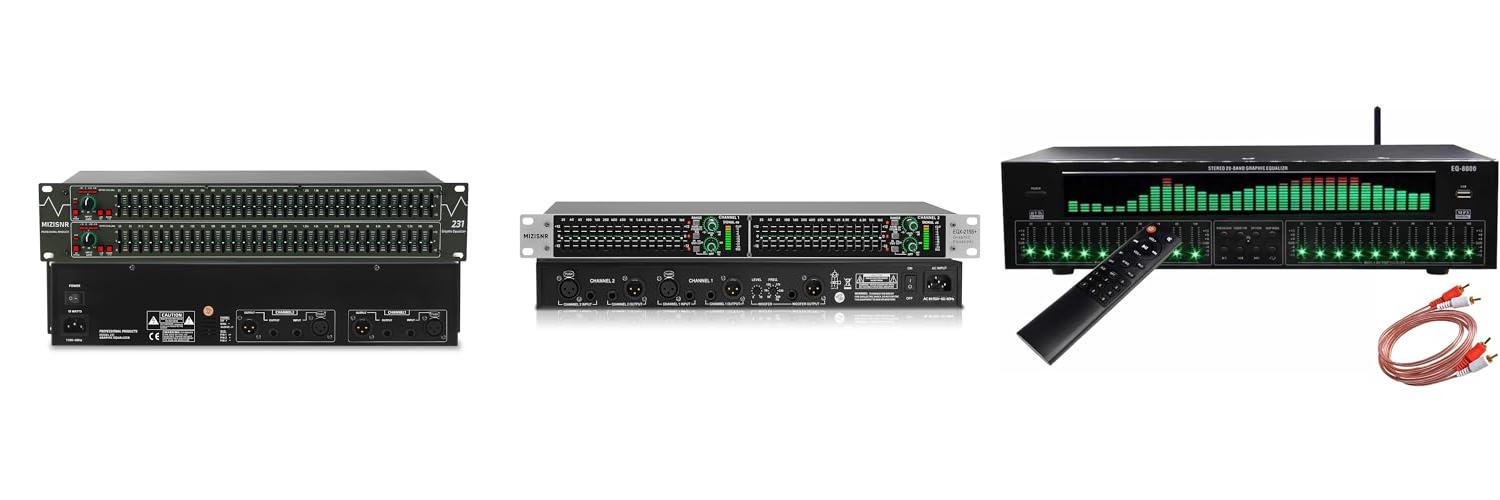
1. MIZISNR Graphic Equalizer 31-Band Stereo EQ for Home Audio

Rating: 8.9/10
The MIZISNR EQ-231 is a professional dual-channel graphic equalizer that brings serious sound control to your home audio system or DJ setup. It offers precise adjustments for both stereo channels, letting you fine-tune every aspect of your sound.
What We Like:
- It’s a professional dual-channel stereo graphic equalizer. This means it delivers excellent sound quality.
- It has a 31-band design on each channel. You can adjust each band by +/-12dB.
- It has a LOW-CUT switch. This switch gets rid of unwanted low-frequency noise like wind or hum.
- It makes your audio sound crystal-clear. It also gives your low-end sound a great punch.
- The BYPASS switch makes it easy to test and use.
- You get great visual feedback with 4-segment LED ladders. These show gain reduction and output levels.
- It works with many different audio setups. It has XLR balanced and 1/4″ TRS unbalanced inputs and outputs.
- It’s good for live shows, installed sound systems, and studio use.
What Could Be Improved:
- The user interface could be a bit simpler for beginners.
- More detailed instructions for advanced features would be helpful.
This equalizer gives you amazing control over your sound. It’s a solid choice for anyone serious about audio quality.
2. MIZISNR Stereo Graphic Equalizer 15-Band EQ for Home Audio System

Rating: 8.8/10
The MIZISNR Stereo Graphic Equalizer EQX-215S is a powerful tool for anyone serious about their sound. It gives you amazing control over your home audio system or professional DJ setup. You can fine-tune every part of your music to make it sound exactly how you want it.
What We Like:
- It has two channels, and each channel has 15 bands of control. This lets you make very precise adjustments to your sound.
- You can adjust each band by ±12dB, and fine-tune gain and decay from ±6dB to ±12dB. This gives you lots of flexibility.
- The Low-Cut feature is great for removing unwanted low-end noise. You can easily adjust the cutoff frequency for clear audio.
- It’s easy to use with a simple EQ switch. It also fits neatly into a 1U rack for easy installation.
- It connects easily with XLR and 1/4″ TRS inputs and outputs. The dedicated subwoofer output with adjustable frequency is a big plus for bass lovers.
- The company offers 24/7 support, so you can get help quickly if you need it.
What Could Be Improved:
- For beginners, the sheer number of controls might seem a little overwhelming at first.
- While it’s built for professional use, the user manual could be a bit more detailed for those new to equalizers.
This equalizer offers exceptional sound shaping capabilities for both home and professional use. It’s a fantastic investment for anyone seeking to perfect their audio experience.
3. Stereo Graphic EQ8000

Rating: 8.9/10
The Stereo Graphic EQ8000 is a powerful 31-band graphic equalizer that’s perfect for anyone who wants to fine-tune their audio. It’s great for stages, concerts, and recording studios. You can connect it to lots of different devices, making it a central hub for your sound system. It also has Bluetooth 5.4, so you can stream music wirelessly. This equalizer helps reduce noise and gives you crystal-clear sound.
What We Like:
- It’s a multi-device signal processing hub. You can connect it using optical, coaxial, USB, and lotus outputs.
- It has a professional 31-band equalizer with real-time frequency levels. This helps you get the best sound and get rid of unwanted noise.
- The design is sturdy yet portable. It’s made of aluminum and is thin enough to carry around easily, but strong enough for studio racks.
- The interface is easy to use with a big LED display and color-coded buttons. You can save your EQ settings to switch them quickly.
- It offers pro audio solutions for many situations, from car speakers to studio vocals. It also has 12 rhythm patterns for cool effects.
What Could Be Improved:
- While the portability is good, some users might want more advanced wireless features beyond basic Bluetooth.
- The user manual could be more detailed for beginners exploring all 31 bands and advanced settings.
This equalizer is a fantastic tool for anyone serious about their sound. It offers great control and flexibility for a professional audio experience.
4. MICNAUX Equalizer for Home Stereo Audio System

Rating: 8.8/10
The MICNAUX 31-Band Graphic Equalizer brings professional-level sound control right into your home stereo or studio. This digital EQ lets you fine-tune every aspect of your audio, making your music sound exactly how you want it. It’s packed with features to give you precise control and a cleaner listening experience.
What We Like:
- It has a precise 31-band equalizer with a clear LED spectrum display that shows you exactly what’s happening with your sound frequencies.
- You can save up to 10 custom sound settings, which is super handy for different music or listening situations.
- The intelligent noise reduction cleans up your audio, so you hear more music and less unwanted hiss.
- Bluetooth 5.2 makes wireless streaming easy and stable, and you can also play music directly from a USB drive.
- It has a special output for a subwoofer, letting you boost those deep bass sounds.
- The BYPASS switch lets you quickly turn the EQ on or off for comparison or live adjustments.
- It connects to almost anything with its XLR and 1/4″ TRS inputs and outputs.
- The rack-mount design makes it easy to install in your existing setup.
What Could Be Improved:
- The user interface might take a little time to get used to for complete beginners.
- While great for home use, some advanced users might want even more granular control over certain parameters.
Overall, the MICNAUX equalizer offers impressive sound shaping capabilities for a variety of audio setups. It’s a powerful tool for anyone serious about getting the best sound from their music.
5. Behringer ULTRAGRAPH PRO FBQ3102HD High-Definition 31-Band Stereo Graphic Equalizer with FBQ Feedback Detection System

Rating: 8.9/10
The Behringer ULTRAGRAPH PRO FBQ3102HD is a powerful tool for anyone looking to fine-tune their audio. This high-definition stereo graphic equalizer gives you precise control over your sound. It helps you get rid of unwanted noise and boost the parts of the audio you want to hear. This equalizer is designed to make your music sound its best.
What We Like:
- It has sweepable high and low-cut filters for each channel. These filters get rid of extra noise like floor rumble or hiss.
- It has a dedicated mono subwoofer output. You can adjust the crossover frequency for this output.
- The FBQ Feedback Detection System is amazing. It instantly shows you problem frequencies. It can also be used as an audio analyzer.
- It provides a smoother finish. This also leads to a longer paper life for your printouts.
What Could Be Improved:
- The user interface might take a little getting used to for beginners.
- While powerful, some professional audio engineers might seek even more granular control for highly specialized applications.
This equalizer is a fantastic choice for improving your sound quality. It offers excellent control and helpful features for a great price.
The Ultimate Buying Guide: Mastering Your Sound
Want to make your music sound amazing? A graphic equalizer is your secret weapon. It lets you control the different parts of sound, like bass and treble. This guide helps you pick the best one.
1. Key Features to Look For
When you’re shopping, keep these important features in mind:
- Number of Bands: This is how many sliders the equalizer has. More bands mean more control. For simple adjustments, 10 bands might be enough. For serious sound shaping, look for 15 or even 31 bands.
- Frequency Range: This tells you which sounds the equalizer can adjust. A wider range means you can tweak more sounds, from the lowest rumblings to the highest squeaks.
- EQ Type (Graphic vs. Parametric): Graphic equalizers have sliders for specific frequencies. Parametric equalizers let you choose the exact frequency, how wide the adjustment is, and how much you boost or cut. Graphic is usually easier for beginners.
- Input and Output Options: Make sure the equalizer has the right connections for your gear. Common options include RCA, XLR, and 1/4-inch jacks.
- Bypass Function: This lets you quickly switch between your EQ’d sound and the original sound. It’s great for comparing your changes.
- Build Quality: Look for sturdy metal casings and smooth, responsive sliders. This means it will last longer.
2. Important Materials
The materials used affect how well your equalizer works and how long it lasts.
- Metal Casing: A strong metal case protects the electronics inside. It also helps reduce unwanted electrical noise.
- High-Quality Potentiometers (Sliders): Good sliders feel smooth and precise. Cheap sliders can be loose and inaccurate.
- Durable Circuitry: Inside, good quality components ensure clean sound and reliable performance.
3. Factors That Improve or Reduce Quality
Some things make an equalizer better, while others can make it worse.
- Noise Floor: A good equalizer adds very little unwanted noise to your sound. A high noise floor makes your music sound fuzzy.
- Frequency Response Accuracy: The equalizer should accurately boost or cut the frequencies you select. Poor accuracy means the sound changes in ways you don’t expect.
- Low Distortion: When you boost or cut frequencies, the sound should stay clear. High distortion makes the sound muddy or harsh.
- Power Supply Quality: A clean and stable power supply is crucial. A bad power supply can introduce hum or other noise.
- Build Quality (again!): As mentioned before, a well-built equalizer with good components will sound better and last longer.
4. User Experience and Use Cases
How you use your equalizer and how easy it is to use matters a lot.
Who is it for?
- Musicians: To fine-tune their instrument’s sound in a live show or recording.
- Audio Engineers: To shape the sound of a mix or a room.
- Home Audio Enthusiasts: To make their stereo system sound better in their listening space.
- DJ’s: To adjust music during a set.
Ease of Use
Graphic equalizers are generally user-friendly. You see the sliders, and you move them. The more bands, the more detailed control you have. For beginners, starting with a 10-band equalizer is a good idea. Experienced users might prefer more bands for greater precision.
Common Uses
- Fixing Room Acoustics: Rooms can make sound bounce in weird ways. An EQ can help fix this.
- Enhancing Music: You can boost the bass for more thump or the treble for more sparkle.
- Controlling Feedback: In live sound, unwanted squeals (feedback) can be reduced by cutting specific frequencies.
- Tailoring Sound for Different Environments: A concert hall needs different sound than a small club.
Frequently Asked Questions (FAQ)
Q: What is a graphic equalizer?
A: A graphic equalizer is a device that lets you boost or cut the volume of specific sound frequencies. It uses sliders to represent these frequencies.
Q: How many bands do I need?
A: For basic adjustments, 10 bands are often enough. For more precise control, especially in professional settings, 15 or 31 bands are better.
Q: What’s the difference between graphic and parametric EQ?
A: Graphic EQs have fixed frequency sliders. Parametric EQs let you choose the exact frequency, its width, and how much you boost or cut.
Q: Can an equalizer fix bad speakers?
A: An equalizer can help improve the sound from speakers, but it can’t magically fix fundamentally bad speakers. It’s best for fine-tuning.
Q: Will a graphic equalizer make my music sound louder?
A: While you can boost certain frequencies, the main purpose is to shape the tone, not just increase overall volume. Over-boosting can lead to distortion.
Q: Do I need an equalizer for my home stereo?
A: It depends on your room and your speakers. If your system sounds a bit muddy or too bright, an EQ can help. Many modern receivers have built-in EQ features.
Q: What is “boosting” and “cutting” frequencies?
A: Boosting means making a specific sound frequency louder. Cutting means making it quieter.
Q: How do I know which frequencies to adjust?
A: This comes with practice and listening. You can also use test tones. For example, low frequencies are bass, and high frequencies are treble.
Q: Are expensive graphic equalizers worth it?
A: For professional use where every detail matters, yes. For casual listening, a good quality but more affordable unit might be sufficient.
Q: Can I use a graphic equalizer with my computer?
A: Yes, there are many software equalizers for computers, and you can also use external hardware equalizers with your computer’s audio output.
In conclusion, every product has unique features and benefits. We hope this review helps you decide if it meets your needs. An informed choice ensures the best experience.
If you have any questions or feedback, please share them in the comments. Your input helps everyone. Thank you for reading.