
Absolutely, you can trade in a leased car for another car. Many people believe that once a car is leased, you’re locked in until the contract ends, but that’s not the case. You have several options for trading in a leased vehicle, even if you’re not at the end of your lease term. This guide will walk you through the process, explain your choices, and help you determine if it’s the right move for you.
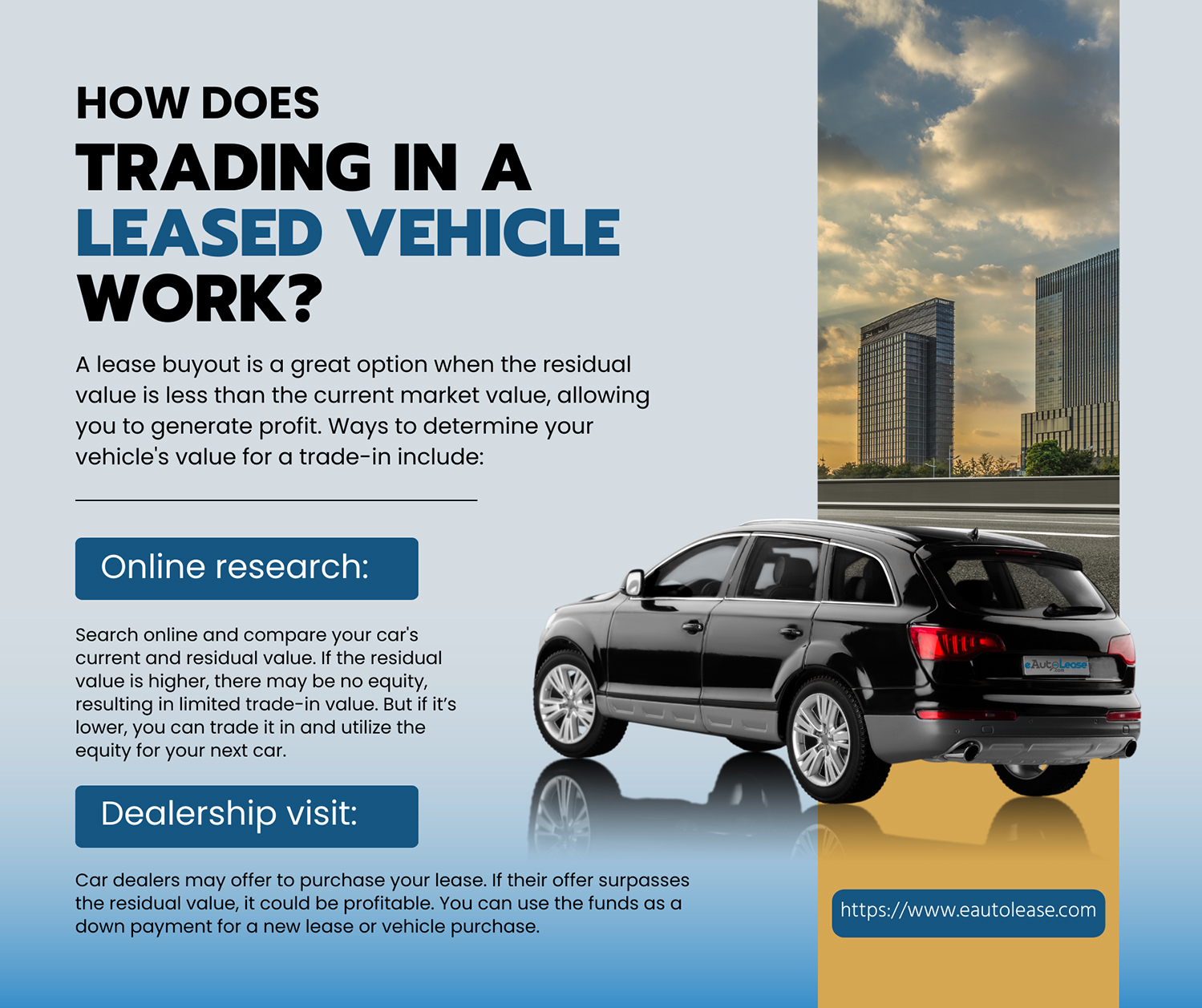
Image Source: www.eautolease.com
Why Consider Trading in a Leased Car?
Life changes, and so do your driving needs and desires. You might find yourself needing a larger vehicle for a growing family, or perhaps you’ve fallen in love with a newer model that wasn’t available when you signed your lease. Maybe your financial situation has improved, and you want to upgrade to a more premium vehicle, or conversely, you need to downsize to a more economical option. Whatever the reason, selling a leased car before its term is up is a common practice.
Here are some common scenarios where trading in a leased car makes sense:
- Needing a Different Vehicle Type: Your current lease might be a sedan, but you now need an SUV for family trips or a truck for work.
- Desiring a Newer Model: A new generation of your favorite car has been released, and you can’t wait to get behind the wheel.
- Mileage Overages: You’re consistently driving more miles than your lease contract allows, and the end-of-lease penalty will be substantial.
- Early Lease Termination: You need to get out of your lease agreement early for personal or financial reasons.
- Lower Monthly Payments: You’ve found a better deal on a new lease or purchase that offers a lower monthly cost.
- Equity Position: In some cases, your leased car might be worth more than your lease buyout price, giving you positive equity.
How Does Trading In a Leased Car Work?
The process of trading in a leased vehicle is similar to trading in a car you own, with a few key differences. The main distinction is that the dealership will need to pay off the remaining balance of your lease directly to the leasing company.
The Key Steps Involved:
-
Determine Your Lease Payoff Amount: This is the first and most crucial step. You need to know exactly how much you owe on your lease. This isn’t simply the remaining monthly payments; it includes any remaining lease payments, an early termination fee (if applicable), and any other charges stipulated in your lease contract. You can obtain this by contacting your leasing company and requesting a lease payoff quote. This quote is usually valid for a specific period, often 10-14 days.
-
Get a Valuation of Your Leased Car: You’ll need to find out how much your current leased car is worth on the market. You can get quotes from several sources:
- Dealerships: Local car dealerships, especially those of the same brand as your leased car, will be happy to give you a trade-in appraisal.
- Online Valuation Tools: Websites like Kelley Blue Book (KBB), Edmunds, and NADA Guides can provide estimated market values.
- Car Buying Services: Companies like Carvana or Vroom will often give you an online offer for your car.
-
Compare Your Car’s Value to Your Lease Payoff: This is where you’ll determine your trade in lease equity.
- Positive Equity: If your car’s market value is higher than your lease payoff amount, you have positive equity. This excess amount can be applied as a down payment towards your new car.
- Negative Equity: If your car’s market value is lower than your lease payoff amount, you have negative equity. This means you owe more than the car is worth. The difference will need to be paid out of pocket or rolled into your new car loan or lease.
-
Negotiate with the Dealership: Once you have your payoff quote and car valuation, you can approach a dealership. Explain that you want to trade in your leased vehicle. The dealership will appraise your car and then work with the leasing company to handle the payoff.
-
The Dealership Pays Off Your Lease: The dealership will pay the leasing company the amount specified in your lease payoff quote. They will then transfer the title of the car to themselves.
-
Finalize Your New Car Purchase/Lease: You’ll then proceed with purchasing or leasing your new vehicle. Any positive equity from your trade-in will be applied to the new transaction. If you have negative equity, you’ll need to decide how to handle it – by paying it upfront or by financing it into your new car deal.
Early Lease Buyout and Trading In
One common strategy when considering trading in a leased vehicle before your lease term is up is an early lease buyout. This involves paying off your lease contract earlier than scheduled. There are two primary ways this can happen in the context of a trade-in:
1. The Dealership Handles the Buyout
This is the most straightforward method and what we’ve discussed above. The dealership you’re trading in with purchases the car from the leasing company. They will pay the lease payoff quote amount, effectively buying out your lease. You then trade the car in to them.
2. You Buy Out the Lease First, Then Trade In
In some situations, you might choose to buy out lease early yourself before approaching a dealership. This converts the leased vehicle into a car you own outright.
Why might you do this?
- More Negotiating Power: Owning the car can give you more flexibility when negotiating its sale price with other dealerships or private buyers.
- Avoid Dealership Fees: Some dealerships might add their own fees for handling the lease payoff. Buying it out yourself can avoid these.
- Potentially Better Offers: You might get a better offer from a private buyer or a dealership that specializes in used cars if you own it free and clear.
How to do it:
- Contact Your Leasing Company: Request a vehicle lease buyout quote. This quote will be similar to the payoff quote but might be structured slightly differently if you are the one purchasing it.
- Secure Financing (if needed): If you don’t have the cash to buy out the lease, you might need to secure a loan. This could be through your bank, a credit union, or even the dealership.
- Purchase the Vehicle: Complete the purchase, pay any applicable sales tax and registration fees.
- Get a Title: You will receive a title for the car, making you the legal owner.
- Trade In Your Now-Owned Vehicle: Once you own the car, you can trade it in like any other vehicle you own. You’ll get the market value for it.
Considerations for an Early Lease Buyout:
- Early Termination Fees: Check your lease contract carefully. Some leases include an early lease buyout fee or penalty.
- Sales Tax: When you buy out a lease, you may have to pay sales tax on the purchase price, depending on your state’s regulations. This is often a significant cost.
- Unpaid Lease Payments: While a payoff quote includes all outstanding payments, be aware of how they are factored in.
- Depreciation: You’re buying the car at its residual value (the estimated value at the end of the lease term), which might be higher than its current market value, especially if you’re very early in the lease.
Factors Affecting Your Trade-In Value
Several factors influence how much your leased car is worth when you trade in a leased vehicle:
1. Mileage
The number of miles driven is a significant factor. Most leases have annual mileage limits (e.g., 10,000, 12,000, or 15,000 miles per year). If you’re approaching or exceeding your limit, your car’s market value will be lower, and you may be looking at significant mileage penalties at the end of the lease anyway. Trading it in can be a way to avoid those penalties.
2. Vehicle Condition
Just like any car, the physical and mechanical condition of your leased vehicle plays a crucial role.
* Exterior: Dents, scratches, rust, and paint damage will reduce its value.
* Interior: Stains, tears, burns, and excessive wear on seats, carpets, and trim will also negatively impact the appraisal.
* Mechanical: Any mechanical issues, such as engine problems, transmission issues, or worn tires, will lower the trade-in value. Regular maintenance is key.
3. Maintenance History
A well-maintained vehicle typically fetches a higher price. Keeping up with scheduled maintenance, oil changes, and tire rotations, and having records to prove it, can bolster your car’s value. This is a good practice regardless of whether you plan to lease, buy, or trade.
4. Market Demand
The popularity of your car’s make, model, and trim level in the current market can affect its trade-in value. Some cars hold their value better than others. Factors like fuel efficiency, reliability ratings, and consumer trends play a part.
5. Lease Contract Terms
Your lease contract itself has stipulations that can affect your trade-in value.
* Early Termination Fees: As mentioned, these can significantly increase the cost of getting out of your lease early.
* Wear and Tear Policy: Leases have specific guidelines for acceptable wear and tear. Exceeding these can result in charges that reduce your equity.
Leasing vs. Buying: A Quick Comparison
When you’re considering changing your vehicle situation, it’s helpful to briefly revisit leasing vs. buying.
| Feature | Leasing | Buying |
|---|---|---|
| Monthly Payment | Generally lower | Generally higher |
| Down Payment | Often lower or none | Can be substantial |
| Term Length | Typically 2-4 years | Can be 3-7 years |
| Ownership | You don’t own the car; you pay for its use | You own the car after payments are complete |
| Mileage Limits | Yes, penalties for exceeding | No limits |
| Customization | Limited; modifications often not allowed | Generally unrestricted; you can customize as you wish |
| Depreciation | The leasing company absorbs most depreciation | You are responsible for depreciation |
| End of Term | Return car, buy it out, or lease a new one | Keep it, sell it, or trade it in |
| Maintenance | Often covered by warranty for the lease term | You are responsible for all maintenance |
Trading in a leased car is essentially an early exit from the leasing agreement. It allows you to move into a new vehicle without waiting for your current lease to expire, often by leveraging the car’s current market value.
Calculating Your Potential Equity
Let’s walk through a hypothetical example to illustrate how trade in lease equity is calculated.
Scenario:
- Your Leased Car: A 2022 Sedan.
- Lease End Date: Still 18 months away.
- Current Mileage: 30,000 miles (annual limit is 12,000 miles).
- Lease Payoff Quote: $18,000 (this includes remaining payments, any fees, etc.).
- Market Value Appraisal: A dealership offers you $20,000 for the car as a trade-in.
Calculation:
- Market Value: $20,000
- Lease Payoff Amount: $18,000
- Trade In Lease Equity: $20,000 – $18,000 = $2,000
In this scenario, you have $2,000 in positive equity. This $2,000 would then be applied as a down payment towards your new car.
What if the numbers were different?
- Market Value Appraisal: $16,000
- Lease Payoff Amount: $18,000
- Negative Equity: $16,000 – $18,000 = -$2,000
In this case, you have $2,000 in negative equity. This means you owe $2,000 more than the car is worth. You would need to decide how to handle this:
* Pay the $2,000 upfront.
* Roll the $2,000 into the financing of your new car. This will increase your new loan amount and your monthly payments.
Understanding Lease Termination Options
When you want to get out of your lease before the contract term is up, you essentially have a few main lease termination options, and trading in a leased vehicle is one of them.
1. Trade-In (The Focus of This Article)
As detailed, you can trade your leased car into a dealership. They handle the payoff to the leasing company. This is often the simplest route if you’re buying another car from the same dealership.
2. Sell It Privately
You can try to sell a leased car yourself. This is a more involved process because you’ll likely need to perform an early lease buyout first. You’d buy the car from the leasing company, get the title, and then sell it. This can sometimes yield a higher price than a dealership trade-in, but it requires more effort and upfront cost.
3. Lease Transfer
Some leasing companies allow you to transfer your lease to another person. This can be a good option if you want to get out of your lease without incurring significant costs, and there’s someone willing to take over your payments and responsibilities. However, lease transfers can be complex to arrange and may require credit approval from the leasing company for the new person.
4. Voluntary Vehicle Return (Less Common for Early Termination)
While you can voluntarily return a car at the end of a lease, doing so before the lease term is usually penalized heavily. If you try to return it early without a buyout or trade-in, you’ll likely be responsible for all remaining lease payments plus any early termination fees. This is generally the least financially sensible option for early exit.
Key Considerations When Trading In a Leased Car
- Read Your Lease Contract: This cannot be stressed enough. Your contract outlines all the terms, including early termination clauses, fees, and the process for buying out or selling the vehicle.
- Timing is Crucial: The market value of your car fluctuates. Getting an appraisal when your car is in good condition and when demand for that type of vehicle is high can maximize your equity.
- Dealership Incentives: Sometimes, dealerships offer special incentives for trading in leased vehicles, which can sweeten the deal.
- Negotiate Smartly: Don’t accept the first offer. Shop around for the best trade-in value for your leased car.
- Be Prepared for Negative Equity: If you owe more than your car is worth, understand how you will cover the difference and factor it into your budget for a new car.
Frequently Asked Questions (FAQ)
Q1: Can I trade in a leased car if I still owe money on it?
A1: Yes, you can. The dealership will pay off the remaining balance of your lease to the leasing company as part of the transaction. This is how trading in a leased vehicle typically works.
Q2: What is an early lease buyout?
A2: An early lease buyout is when you decide to purchase your leased vehicle before the end of your lease contract term. This converts the leased car into a vehicle you own outright.
Q3: How do I get my lease payoff quote?
A3: You can obtain a lease payoff quote by contacting your leasing company directly. They will provide you with the exact amount you owe to terminate or buy out your lease, usually valid for a specific period.
Q4: What happens if my leased car is worth less than what I owe?
A4: If your leased car’s market value is less than your lease payoff quote, you have negative equity. This difference will need to be paid. You can either pay it in cash upfront or roll it into the financing of your new car, which will increase your new loan amount and monthly payments.
Q5: Is it better to trade in a leased car or buy it out and then sell it?
A5: This depends on your specific situation. Buying out your lease early might allow you to get a better price if you sell it privately, but it involves more steps and potentially upfront costs like sales tax. Trading it directly to a dealership is often simpler and quicker, especially if you are leasing or buying another vehicle from them. You need to compare quotes and calculate the net financial outcome for both scenarios.
Q6: What if my lease contract has an early termination fee?
A6: Any early termination fees stipulated in your lease contract will be included in your lease payoff quote. This fee is factored into the total amount the dealership will pay to the leasing company, and it will affect your overall equity. It’s essential to know these fees when considering selling a leased car.
Q7: Can I trade in a leased car to a dealership that doesn’t sell the same brand?
A7: Yes, you can. While dealerships of the same brand might be more familiar with your leased vehicle, any reputable dealership can handle the process of trading in a leased vehicle. They will still need to obtain your lease payoff quote and sell the car back to the leasing company or another dealer.
By carefully assessing your lease terms, getting accurate valuations, and understanding your financial options, you can successfully navigate the process of trading in a leased vehicle for your next car.