

Remember the days of fuzzy TV reception, where your favorite shows flickered in and out? If you still battle with a weak signal, you know how frustrating it can be. Choosing a television antenna amplifier can feel like navigating a maze. There are so many choices, and it’s tough to know which one will actually boost your signal and bring crystal-clear pictures to your screen.
Don’t worry, we’ve all been there! This guide is here to help you cut through the confusion. We’ll break down what makes a good antenna amplifier and show you how to find the perfect one for your home. By the end, you’ll understand how these devices work and feel confident picking the right amplifier to finally enjoy your favorite channels without a single glitch.
Our Top 5 Television Antenna Amplifier Recommendations at a Glance
Top 5 Television Antenna Amplifier Detailed Reviews
1. THE CIMPLE CO Antenna Amplifier Kit

Rating: 9.4/10
Are you tired of fuzzy TV pictures and lost channels? The THE CIMPLE CO Antenna Amplifier Kit is here to help! This kit boosts your digital TV signal, making sure you get the best reception possible for all your favorite shows. It comes with everything you need, including the amplifier and a special coaxial cable, to get started right away. You can easily adjust the signal strength to find the sweet spot for your antenna. It works with all sorts of TV signals, including digital (ATSC), older analog (NTSC), and even FM radio.
What We Like:
- It significantly strengthens your TV signal for clearer pictures.
- The adjustable gain control lets you fine-tune the signal for your specific location.
- It includes a high-quality RG6 coaxial cable for a complete setup.
- The sturdy metal housing means it’s built to last.
- It’s compatible with a wide range of TV and radio signals (VHF, UHF, FM, ATSC, NTSC, FTA, OTA).
- A power indicator light lets you know it’s working.
What Could Be Improved:
- This amplifier is designed for indoor use only, so you can’t use it outside.
- For the best results, you need to set it up within 300 feet of your antenna.
This amplifier kit is a fantastic solution for improving your TV reception. It’s easy to set up and helps you get the most out of your antenna.
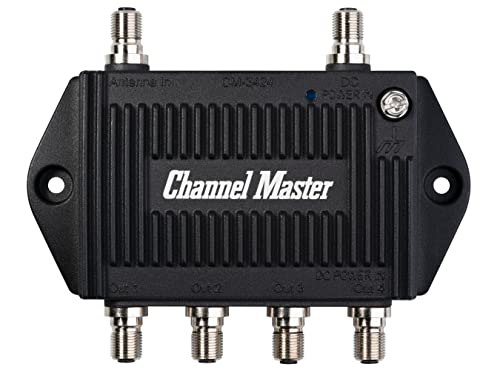
2. Channel Master TV Antenna Booster 4-4-Port TV Antenna Distribution Amplifier
Rating: 9.4/10
Tired of a weak TV signal or pixelated pictures? The Channel Master TV Antenna Booster 4-4-Port Distribution Amplifier is here to help! This handy device takes your existing TV antenna signal and splits it to up to four different rooms. It’s designed to work with any indoor or outdoor antenna and is built tough for indoor, outdoor, or attic installation thanks to its weatherproof housing. Plus, it has a special filter to block unwanted signals from cell phones, ensuring a cleaner picture.
What We Like:
- Cleverly splits your antenna signal to four rooms without losing strength.
- Works with all types of TV antennas, whether they are inside or outside.
- Built to last with a strong, weatherproof case for any location.
- Helps reduce pixelation and might even let you find more channels.
- It’s an upgraded version of a popular older model, offering better performance.
- Includes a built-in filter to block annoying LTE cell phone signals.
What Could Be Improved:
- It’s a distribution amplifier, not a pre-amplifier, so it won’t fix very weak signal areas on its own.
If you’re looking to improve your antenna’s signal distribution to multiple TVs, this Channel Master amplifier is a solid choice. It’s a reliable way to get a better viewing experience throughout your home.
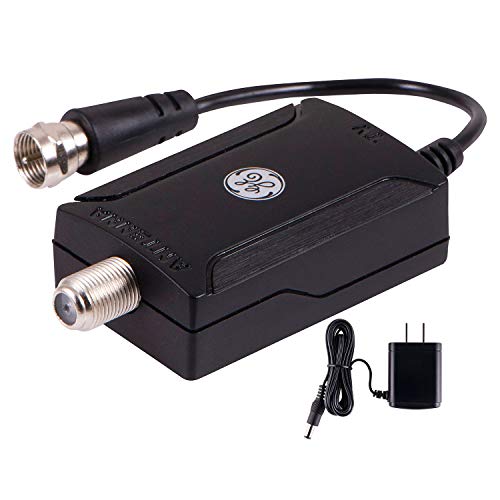
3. GE Indoor TV Antenna Amplifier
Rating: 9.2/10
The GE Indoor TV Antenna Amplifier, Antenna Signal Booster, HD TV Digital VHF UHF, Low Noise, AC Power Adapter, Black, 42178 helps you get a better TV signal. It boosts the signal from your antenna so you can watch your favorite shows in high definition. This little device is easy to use and works with almost any TV antenna.
What We Like:
- It boosts your TV signal to get rid of choppy pictures and lost channels.
- It works with any TV and any antenna, so you don’t have to worry about compatibility.
- It’s ready for future broadcasts and supports full 1080p HD for clear pictures and great sound.
- Setting it up is simple, and it comes with everything you need, including a power adapter.
- GE is a trusted brand, and they offer a lifetime warranty and free U.S.-based tech support.
What Could Be Improved:
- It requires an AC power outlet to work.
- The effectiveness can depend on your specific location and the strength of the original signal.
If you’re having trouble getting a clear TV signal, this amplifier is a simple solution. It’s a good way to improve your viewing experience without buying a new antenna.
4. Channel Master Titan 2 High-Gain Preamplifier – TV Antenna Pre-Amplifier

Rating: 9.0/10
The Channel Master Titan 2 High-Gain Preamplifier is a powerful tool for boosting your TV antenna’s signal. It’s designed to work with antennas that don’t have built-in amplifiers. This pre-amplifier can make your TV signal stronger, helping to reduce fuzzy pictures and maybe even let you see more channels. You can use it inside or outside your home. It’s built tough and can handle different weather. It also has special shielding to keep out unwanted interference.
What We Like:
- It really improves your TV signal quality.
- It helps stop your picture from pixilating.
- It might help you get more channels.
- It offers a strong 26dB amplification with very little noise.
- You can choose to let FM radio signals pass through.
- Its strong housing and rubber seal protect it from rain and moisture.
- It has RF shielding to block out interference.
What Could Be Improved:
- This high-gain model is best for homes far from broadcast towers (80+ miles).
- If you live close to a strong TV signal, it might amplify the signal too much, causing you to lose channels.
- For most homes closer to broadcast towers, a medium-gain amplifier like the CM-7778V3 is usually a better choice.
- Reading the instruction video and user manual is very important before using it.
The Channel Master Titan 2 is a powerful amplifier for specific situations. Make sure it’s the right fit for your antenna setup to get the best results.
5. Antennas Direct DAX 4-Output TV Antenna Distribution Amplifier

Rating: 9.2/10
The Antennas Direct DAX 4-Output TV Antenna Distribution Amplifier is a smart way to get the best free TV signals to all your screens. This compact silver box boosts your antenna’s signal so you can split it among up to four TVs or digital converter boxes. It works with the latest ATSC 3.0 NEXTGEN TV and is ready for super sharp 4K and 8K pictures. You can even use it outdoors because it’s built tough and has special connectors to keep water out. It also protects your equipment from power surges.
What We Like:
- Boosts your antenna signal to four TVs without losing picture quality.
- Ready for the newest TV technologies like NEXTGEN TV, 4K, and 8K.
- Small size makes it easy to place indoors.
- Can be used outdoors thanks to its weather-resistant design.
- Strong housing protects it from dust, water, and static electricity.
- Excellent surge protection on all ports keeps your devices safe.
- Comes with everything you need to get started, including a coaxial cable and power adapter.
What Could Be Improved:
- The 90-day manufacturer warranty is a bit short.
This amplifier is a fantastic solution if you want to share your free over-the-air TV signal with multiple televisions. It delivers clear pictures and is built to last, making it a solid investment for any cord-cutter.
Boost Your Signal: The Ultimate Buying Guide to TV Antenna Amplifiers
Are you tired of fuzzy TV channels or losing your favorite shows mid-broadcast? A TV antenna amplifier, also known as a signal booster, can be your secret weapon. It takes the weak signal your antenna picks up and makes it stronger. This guide will help you find the best amplifier for your home.
1. Key Features to Look For
Gain: The Power of the Boost
Gain is measured in decibels (dB). Higher dB means a stronger boost. For most homes, an amplifier with 10-20 dB is usually enough. If you live far from broadcast towers, you might need more. Be careful, though! Too much gain can actually make your signal worse by overloading your TV.
Number of Outputs
How many TVs do you want to connect to amplified signals? Most amplifiers have one or two outputs. If you have multiple TVs, make sure the amplifier can handle them all. Some powerful amplifiers can split the signal to four or more TVs.
Frequency Range
TV signals use different frequencies. Make sure the amplifier works with the frequencies your local channels broadcast on. Most amplifiers cover the UHF (Ultra High Frequency) and VHF (Very High Frequency) bands, which are common for TV signals.
Noise Figure
This is how much extra “noise” the amplifier adds to the signal. A lower noise figure is better. It means the amplifier is cleaner and won’t add as much static or interference.
Power Source
Some amplifiers plug into a wall outlet. Others get power through the coaxial cable from your TV or a power inserter. Make sure you have a convenient power source available where you plan to install the amplifier.
2. Important Materials
Most TV antenna amplifiers are made with durable plastic casings. This protects the internal electronic components. The connectors are usually made of metal, like brass or gold-plated metal, for a good, secure connection. Good quality materials help the amplifier last longer and perform better.
3. Factors That Improve or Reduce Quality
Signal Strength
The biggest factor is how strong the signal is to begin with. If the signal is already very weak, even a good amplifier might struggle. Living closer to broadcast towers helps a lot.
Distance from Towers
The farther you are from the TV towers, the weaker the signal will be. An amplifier is most useful when you’re in a fringe reception area.
Obstructions
Buildings, trees, and even hills can block or weaken TV signals. These physical barriers can make it harder for your antenna to pick up a clear signal, and an amplifier can help overcome some of this.
Antenna Quality
A good antenna is just as important as a good amplifier. If your antenna isn’t designed to pick up the channels you want, an amplifier can’t magically create a signal that isn’t there.
Cable Quality and Length
Old or damaged coaxial cables can lose signal. Long cable runs also weaken the signal. Using high-quality, short cables helps maintain signal strength.
4. User Experience and Use Cases
Easy Setup
Most amplifiers are plug-and-play. You connect your antenna to the amplifier’s input, and then connect the amplifier’s output to your TV. Some might require plugging into a power outlet.
Improved Reception
The main user experience is clearer pictures and more channels. You’ll notice fewer pixelated images and fewer dropped channels.
Use Cases
- Urban Fringe Dwellers: If you live in the suburbs but are a bit far from the city’s broadcast towers, an amplifier can bring in those channels you’re missing.
- Rural Homes: People living in the countryside often have weaker signals. An amplifier is almost essential for good TV reception.
- Multi-TV Households: If you have several TVs and want them all to receive good antenna signals, an amplifier with multiple outputs is a great solution.
- Improving Existing Setup: Even if you get most channels, an amplifier can sometimes boost the signal enough to get a few extra or improve the quality of existing ones.
Frequently Asked Questions (FAQ)
Q: What is a TV antenna amplifier?
A: A TV antenna amplifier, also called a signal booster, makes the TV signal from your antenna stronger so you can get more channels or clearer pictures.
Q: Do I really need a TV antenna amplifier?
A: You might need one if you live far from broadcast towers, have a weak signal, or get a lot of fuzzy channels. If you get all the channels you want clearly, you probably don’t need one.
Q: How much gain do I need?
A: For most homes, 10-20 dB is good. If you’re very far from towers, you might need more, but too much can hurt reception.
Q: Will an amplifier give me more channels than I can get now?
A: It can help you get channels that are too weak for your antenna to pick up alone. It won’t create channels that aren’t being broadcast in your area.
Q: Can I use an amplifier with any TV antenna?
A: Yes, most amplifiers work with most passive TV antennas. Make sure the connectors match.
Q: Where should I install the amplifier?
A: It’s usually best to install it as close to the antenna as possible, before the signal splits to multiple TVs or runs a long distance.
Q: Will an amplifier help with digital TV signals?
A: Yes, digital TV signals benefit greatly from good signal strength, so an amplifier can improve digital reception.
Q: How do I know if my signal is too strong for an amplifier?
A: If you’re very close to broadcast towers and already get many channels perfectly, adding an amplifier might cause overload and make reception worse.
Q: Do I need to plug the amplifier into the wall?
A: Some do, and some get power through the coaxial cable. Check the product details to see its power needs.
Q: Can I connect an amplifier to a splitter?
A: It’s generally better to amplify the signal *before* splitting it to multiple TVs. Amplifying after splitting weakens the signal too much for each TV.
In conclusion, every product has unique features and benefits. We hope this review helps you decide if it meets your needs. An informed choice ensures the best experience.
If you have any questions or feedback, please share them in the comments. Your input helps everyone. Thank you for reading.