
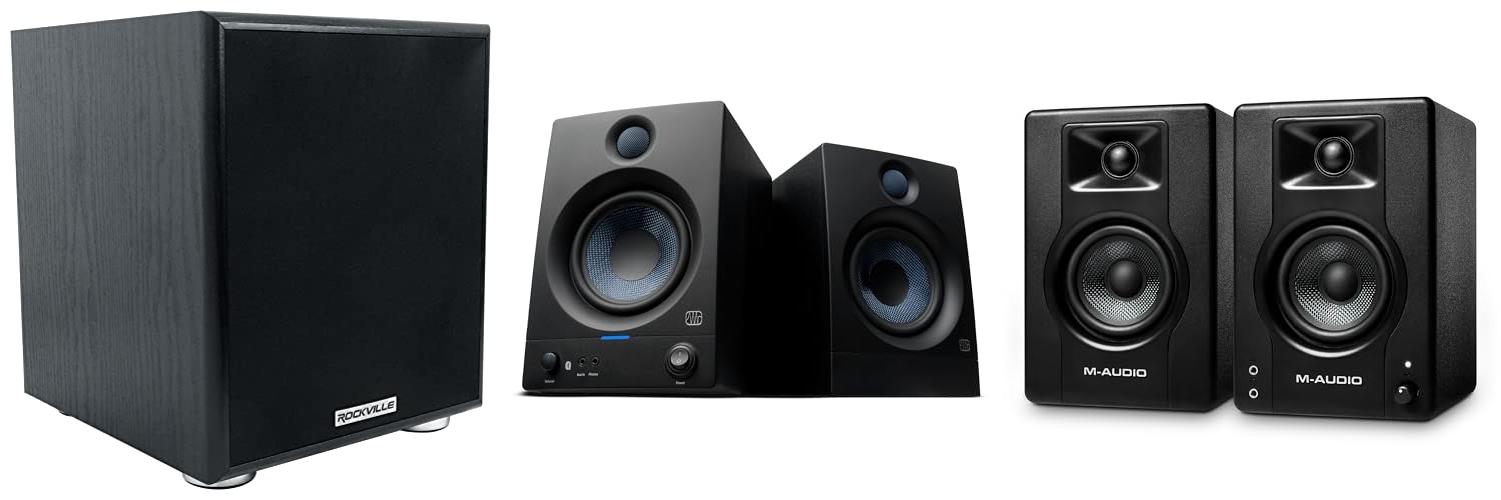
Ever mixed a song and wondered why the bass just doesn’t sound right? Maybe it’s too boomy, or maybe you can’t even hear the lowest notes at all. That’s a common problem for music makers, and it often comes down to a missing piece in their studio: a good subwoofer.
Choosing the right subwoofer for music production can feel like navigating a maze. There are so many different kinds, and they all promise to make your music sound amazing. But if you pick the wrong one, you might end up with more problems than solutions. It’s tough to know which one will truly help you hear every detail in your low-end frequencies.
But don’t worry! By the end of this post, you’ll understand exactly what makes a subwoofer great for making music. We’ll break down what to look for, how to set it up, and why it’s such an important tool. Get ready to unlock a whole new level of clarity and power in your mixes.
Our Top 5 Subwoofer For Music Production Recommendations at a Glance
Top 5 Subwoofer For Music Production Detailed Reviews
1. Rockville Rock Shaker 6.5 Black 200W Peak/100W RMS Powered Home Theater Subwoofer

Rating: 8.6/10
Bring your movies, music, and games to life with the Rockville Rock Shaker 6.5 Black subwoofer. This powerful yet compact subwoofer delivers deep, rumbling bass that you can truly feel. Its stylish design fits into any room, and you can easily adjust the sound to perfectly match your existing speakers.
What We Like:
- DEEP BASS PERFORMANCE: Experience rich, low-frequency sound from its 200W peak power and 6.5″ woofer. It makes movies, music, and games feel more exciting.
- CUSTOMIZABLE AUDIO: Easily adjust the crossover and phase controls. This lets you fine-tune the bass to sound great in your specific room.
- VERSATILE CONNECTIVITY: Connect it to almost any audio system with RCA and speaker-level inputs and outputs. Setup is simple and flexible.
- COMPACT AND STYLISH: Its sleek black finish and small size (11″ x 11.8″ x 12.6″) mean it won’t take up too much space. It looks good in any living room.
- HIGH-QUALITY BUILD: A Class-D amplifier and a well-built woofer ensure clean, distortion-free bass. The foam surround and Y30 magnet add to its durability.
What Could Be Improved:
- While powerful for its size, those seeking extreme, room-shaking bass might need a larger subwoofer.
- The 4-ohm impedance might limit some very specific amplifier pairings, though it works with most standard systems.
The Rockville Rock Shaker 6.5 is a fantastic choice for anyone wanting to upgrade their home audio. It offers impressive bass performance in a small package, making it a great value.
2. PreSonus Eris 5BT Bluetooth Studio Monitors

Rating: 9.3/10
The PreSonus Eris 5BT Bluetooth Studio Monitors offer a fantastic way to experience clear, accurate sound for all your audio needs. Whether you’re mixing music, enjoying your favorite tunes, or referencing audio for projects, these 5.25-inch powered bookshelf speakers deliver impressive performance.
What We Like:
- Honest Sound: These monitors provide studio-quality, accurate sound that is great for making music, listening to hi-fi audio, or just checking your multimedia.
- Expressive Bass: The woven-composite woofers give you tight, powerful bass you can feel, along with cleaner overall sound.
- Powerful Output: With 100 Watts of power (50W per speaker), these compact speakers get loud without losing sound quality.
- Easy Bluetooth Connectivity: Bluetooth 5.0 makes it simple to connect wirelessly to your devices. You can also use wired connections.
- Wide Sweet Spot: The silk-dome tweeters create excellent stereo sound, so you can hear great audio from many different listening spots.
- Plenty of Connections: They have balanced TRS, unbalanced RCA, and a front-panel aux input for easy hookups to different gear.
- Room Tuning: You can adjust the high and low frequencies to make the sound perfect for your room and how you place the speakers.
- Headphone Ready: A front-panel headphone jack with a built-in amplifier lets you easily switch to headphones.
- Subwoofer Ready: You can add the Eris Sub 8BT for even more powerful bass if you want a 2.1 system.
- Power Saver: The speakers automatically go into power-saving mode after 40 minutes of not being used.
What Could Be Improved:
- While the Bluetooth is great, some users might prefer even more advanced wireless codec support for critical listening.
- The power-saving mode can be a bit sensitive for some users who might want the speakers to stay on longer between uses.
Overall, the PreSonus Eris 5BT Bluetooth Studio Monitors are a strong choice for anyone seeking accurate sound and convenient features.
3. M-AUDIO BX3 Pair 3.5″ 120W Studio Monitors

Rating: 8.8/10
The M-AUDIO BX3 Pair 3.5″ 120W Studio Monitors are powerful speakers that bring studio-quality sound to your computer setup. Whether you’re making music, gaming, or just enjoying your favorite tunes, these speakers offer a clear and rich listening experience. They are designed to give you the best sound possible for all your audio needs.
What We Like:
- The 120-watt power delivers loud and clear sound, making them great for many uses like gaming, podcasting, and DJing.
- They have premium parts, like Kevlar woofers and silk dome tweeters, which create deep bass and crisp highs.
- The special design helps create a wide soundstage and precise imaging, so you hear sounds exactly where they should be.
- You can adjust the sound with High and Low EQ knobs to get the perfect tone for any audio.
- They connect easily to almost anything with 1/4″, 1/8″, and RCA inputs, making them very versatile.
- Everything you need is in the box, including cables and even music production software (MPC Beats).
What Could Be Improved:
- While good for their size, the bass might not be as deep as larger, more expensive studio monitors for very demanding music production.
- The rear bass ports can sometimes make the sound a bit boomy if placed too close to a wall.
Overall, the M-AUDIO BX3 speakers are a fantastic choice for anyone wanting to upgrade their desktop audio. They offer excellent sound quality and versatility at a great value.
4. Mackie CR3.5 3.5″ Creative Reference Powered Studio Monitors with Tone Knob and Location Switch — Active Speakers for Music Production

Rating: 8.8/10
The Mackie CR3.5 3.5″ Creative Reference Powered Studio Monitors are like a Swiss Army knife for your audio needs. They deliver crisp, clear sound that’s great for making music, playing games, or just enjoying your favorite tunes. Plus, they’re easy to connect to almost anything you own.
What We Like:
- They sound amazing for music production, gaming, and casual listening.
- You can connect them to almost anything with different kinds of cables.
- The tone knob lets you tweak the sound to be brighter or bassier.
- The location switch helps them sound best whether they’re on your desk or on a shelf.
- They have a headphone jack for private listening.
What Could Be Improved:
- You need to buy the subwoofer separately for extra bass.
- The 3.5″ woofer is small, so the deep bass isn’t as strong as larger monitors.
These Mackie CR3.5 monitors offer a lot of bang for your buck. They’re a fantastic choice for anyone who wants great sound for various uses without breaking the bank.
5. Ehaho 10″ 1200W Slim Underseat Car Powered Subwoofer with Amplifier & RGB Lights – APP/Remote Control

Rating: 9.3/10
Get ready to transform your car’s sound system with the Ehaho 10″ 1200W Slim Underseat Car Powered Subwoofer. This all-in-one package packs a punch with its powerful amplifier and vibrant RGB lights, all designed to fit discreetly under your seat. Whether you love hip-hop, rock, or EDM, this subwoofer will bring your music to life with deep, rich bass.
What We Like:
- Powerful 1200W peak power delivers impressive bass for music lovers.
- Ultra-slim 10″ design fits easily under most car seats, saving space.
- Over 100 dynamic RGB lighting effects with millions of color options.
- Control lights and bass easily with the “Magic Lantern” app or remote.
- Wireless remote allows precise bass adjustment without changing volume.
- Advanced thermal design and built-in safeguards ensure reliable performance.
- Includes premium RCA cables for a clear, noise-free audio connection.
What Could Be Improved:
- The provided specifications list RMS power at 220W, which is significantly lower than the 1200W peak power, potentially leading to confusion for some users.
- While the app offers extensive customization, some users might prefer a simpler, more direct control interface for basic functions.
This Ehaho subwoofer package is a fantastic upgrade for anyone seeking enhanced audio quality and a personalized in-car experience. It offers a great blend of power, style, and user-friendly control.
Choosing the Right Subwoofer for Your Music Production Studio
Making great music means hearing every detail. A good subwoofer helps you do just that. It lets you hear the deep bass notes in your songs. This guide will help you find the perfect subwoofer for your music production needs.
Why You Need a Subwoofer for Music Production
Your main studio monitors might not play the lowest bass frequencies. A subwoofer fills this gap. It reproduces those deep sounds accurately. This lets you mix your basslines, kick drums, and other low-end elements with confidence. You can make sure your music sounds good on any speaker system.
Key Features to Look For
1. Size and Power (Wattage)
Subwoofers come in different sizes, usually measured by the diameter of the speaker cone (e.g., 8-inch, 10-inch, 12-inch). Larger cones generally move more air and produce deeper bass. The power, measured in watts, tells you how loud the subwoofer can get. For most home studios, an 8-inch or 10-inch subwoofer with 100-200 watts is a good starting point. Larger rooms or more powerful setups might need a bigger or more powerful unit.
2. Frequency Response
This tells you the range of bass frequencies the subwoofer can reproduce. Look for a subwoofer that extends as low as possible, ideally down to 20Hz or even lower. This ensures you can hear the very deepest bass notes. A wider frequency response means more accurate bass reproduction.
3. Ported vs. Sealed Enclosure
Subwoofers are housed in either a ported or sealed box.
- Ported (or Vented): These boxes have a hole (port) that lets air escape. They usually produce more bass output and can sound more “boomy.”
- Sealed: These boxes are completely closed. They tend to offer tighter, more accurate bass. They are often preferred for critical listening and mixing.
4. Connectivity and Controls
Check the types of inputs and outputs the subwoofer has. Most will have line-level inputs (like RCA or XLR). Some also offer speaker-level inputs, which let you connect directly from your amplifier. Look for controls like a volume knob, a crossover frequency adjustment (which lets you set the point where your main speakers stop playing bass and the subwoofer starts), and a phase switch (to help match the subwoofer’s sound to your main speakers).
Important Materials and Construction
The materials used in a subwoofer’s construction affect its sound quality and durability.
- Cabinet Material: High-density fiberboard (HDF) or medium-density fiberboard (MDF) are common and good choices. They are dense and rigid, which helps prevent unwanted vibrations and resonances.
- Driver Cone Material: Cones are often made from paper, treated paper, polypropylene, or composite materials. Paper cones are known for their natural sound. Treated paper and composites can offer better stiffness and durability.
- Amplifier Quality: The built-in amplifier is crucial. Look for reliable, well-designed amplifiers that can provide clean power without distortion, especially at higher volumes.
Factors That Improve or Reduce Quality
Improving Quality:
- Room Acoustics: Even the best subwoofer won’t sound great in a poorly treated room. Bass frequencies are particularly affected by room shape and reflections.
- Proper Placement: Where you put your subwoofer in your room makes a big difference. Experiment with different locations to find the spot with the smoothest bass response.
- Calibration: Using measurement tools and software can help you fine-tune the subwoofer’s output to match your room and monitors.
- High-Quality Components: Better drivers, a more powerful and cleaner amplifier, and a well-built cabinet all contribute to superior sound.
Reducing Quality:
- Underpowered Amplifiers: An amplifier that struggles to power the speaker can lead to distortion and poor sound.
- Cheap Cabinet Materials: Thin or flimsy cabinets can vibrate and color the sound.
- Poorly Designed Ports: In ported subwoofers, bad port design can create unwanted “chuffing” noises or uneven bass.
- Incorrect Setup: Not setting the crossover correctly or placing the subwoofer poorly will make it hard to integrate with your main monitors.
User Experience and Use Cases
A subwoofer is essential for anyone serious about music production. Producers working with hip-hop, electronic music, EDM, film scores, or any genre with significant low-end content will benefit the most. It helps you:
- Mix basslines so they are clear and punchy.
- Ensure kick drums have the right impact.
- Hear subtle low-frequency details that might otherwise be missed.
- Check how your music translates to different playback systems, especially those with subwoofers.
For mixing engineers, a subwoofer acts as an extension of their main monitors, giving them a complete picture of their sound. It helps avoid common mixing mistakes like over- or under-emphasizing the bass.
Frequently Asked Questions (FAQ)
Q: What is a subwoofer’s main job in music production?
A: A subwoofer’s main job is to play the very low bass sounds that regular studio monitors might miss. This helps you hear and mix the deep parts of your music accurately.
Q: How big should my subwoofer be?
A: For most home studios, an 8-inch or 10-inch subwoofer is a good size. If you have a larger room or need more power, you might consider a 12-inch or larger model.
Q: What does “frequency response” mean for a subwoofer?
A: Frequency response shows the range of bass notes a subwoofer can play. A lower number, like 20Hz, means it can play deeper bass sounds.
Q: Should I get a ported or sealed subwoofer?
A: Sealed subwoofers usually give you tighter, more accurate bass for critical mixing. Ported subwoofers can offer more bass output, which might be good for enjoying music but less precise for mixing.
Q: What is a crossover frequency?
A: The crossover frequency is a setting on your subwoofer. It tells your main speakers when to stop playing bass and let the subwoofer take over. Setting it correctly helps blend the sounds smoothly.
Q: How much power (wattage) do I need?
A: For home studios, 100-200 watts is usually enough. More power lets the subwoofer play louder without distorting.
Q: Can I use any subwoofer for music production?
A: While any subwoofer will play bass, studio subwoofers are designed for accuracy. They are built to reproduce bass sounds faithfully, which is important for mixing.
Q: Does the room I put the subwoofer in matter?
A: Yes, the room is very important! The shape and size of your room can affect how bass sounds. Placing the subwoofer in the right spot can make a big difference.
Q: What are the best materials for a subwoofer cabinet?
A: Dense materials like MDF or HDF are best. They help reduce unwanted vibrations and make the bass sound cleaner.
Q: How do I know if my subwoofer is working well with my monitors?
A: You should hear a smooth transition between your main monitors and the subwoofer. The bass should sound balanced, not too boomy or too weak. Experimenting with placement and the phase switch can help.
In conclusion, every product has unique features and benefits. We hope this review helps you decide if it meets your needs. An informed choice ensures the best experience.
If you have any questions or feedback, please share them in the comments. Your input helps everyone. Thank you for reading.